Tag Archives: cruises

Cruise the Great Lakes or the St Lawrence

Pearl of the Seas, one of several Great Lakes cruise companies.

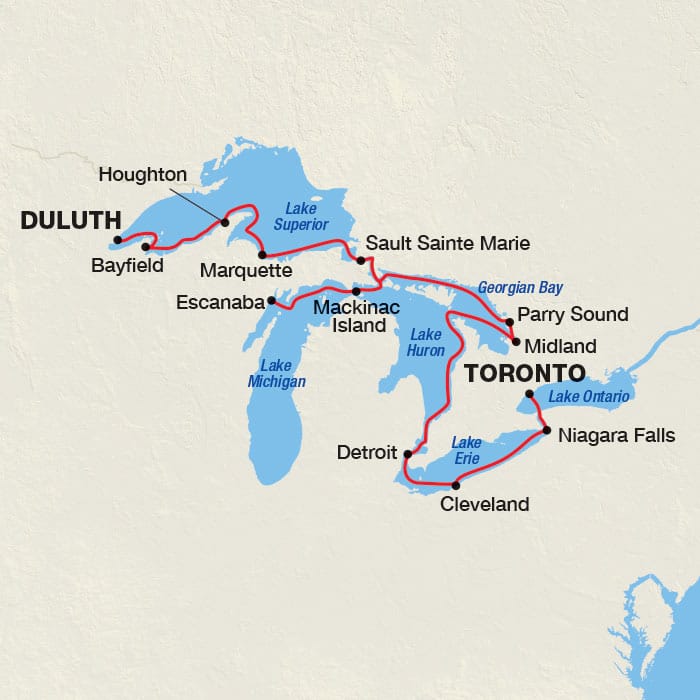
The Great Lakes system presents a growing summer cruise opportunity, relatively untraveled, but so far relatively expensive. There’s great scenery, including Niagara Falls, Mackinac, Painted Rocks, Chicago, and the Soo Locks: interesting sites, and the options are growing. As a cheaper alternative, as interesting, IMHO, is the lower Saint Lawrence seaway, including Quebec City, Montreal, Portland and Prince Edward Island, leaving from Boston, NYC, or Philadelphia.

The 2026 Great Lakes season includes seven cruise lanes and 10 largish ships and 7 cruise lines, up from six lines and eight ships in 2025. Major lines include VikingPearl SeasPonant, and American Cruise Lines who provide over 800 port visits in 2026, up from 700 in 2025. The largest of the Great Lakes ships are smaller than those for Alaska and the Caribbean cruises, but more luxurious. On the St Lawrence, the ships are bigger, the prices lower, and you get more or less what you’d expect on an Alaska cruise, with an open bar, typically.
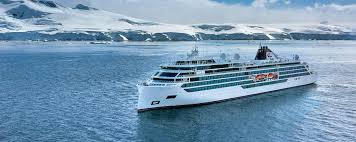
Viking Oceanis

The cost differences are more than I would expect, but coming down, I expect. Currently, a nine-day Great Lakes cruise from a Viking Oceanis cruise from Cleveland costs a minimum of $8,675 per person. The 14-day version in the map above costs $14,270+. Details: https://l.cleveland.com/g2f86w. By comparison, a Boston to Quebec City cruise costs about $1200 per person, similar to a one week European or Alaska tour, on average.

I put the blame for the high cost of Great Lakes cruising on the size limits of the locks on the St Lawrence canal and on the Niagara Falls, Welland Canal: 740 feet (225.5 m) in length, 78 feet (23.8 m) in width (beam), and 26.5 feet (8.08 m) of depth (draft). The largest cruise ship now operating on the Great Lakes, the Viking Oceanis, show above measures 665 feet (205 meters) length, by 77 feet (23.5 meters) width, by 19 feet, 8″ draft, barely smaller than the canal. It boasts a capacity for 378 guests and 256 crew members. By contrast, the Norwegian Jewel, a popular ship for the New York and Boston to Quebec City route holds 2,870 passenger and a crew of about 1,069. This explains some of the price difference but not all. The rest, perhaps is competition. A standard European cruise ship can be rerouted to the St. Lawrence, but not to the Great Lakes.
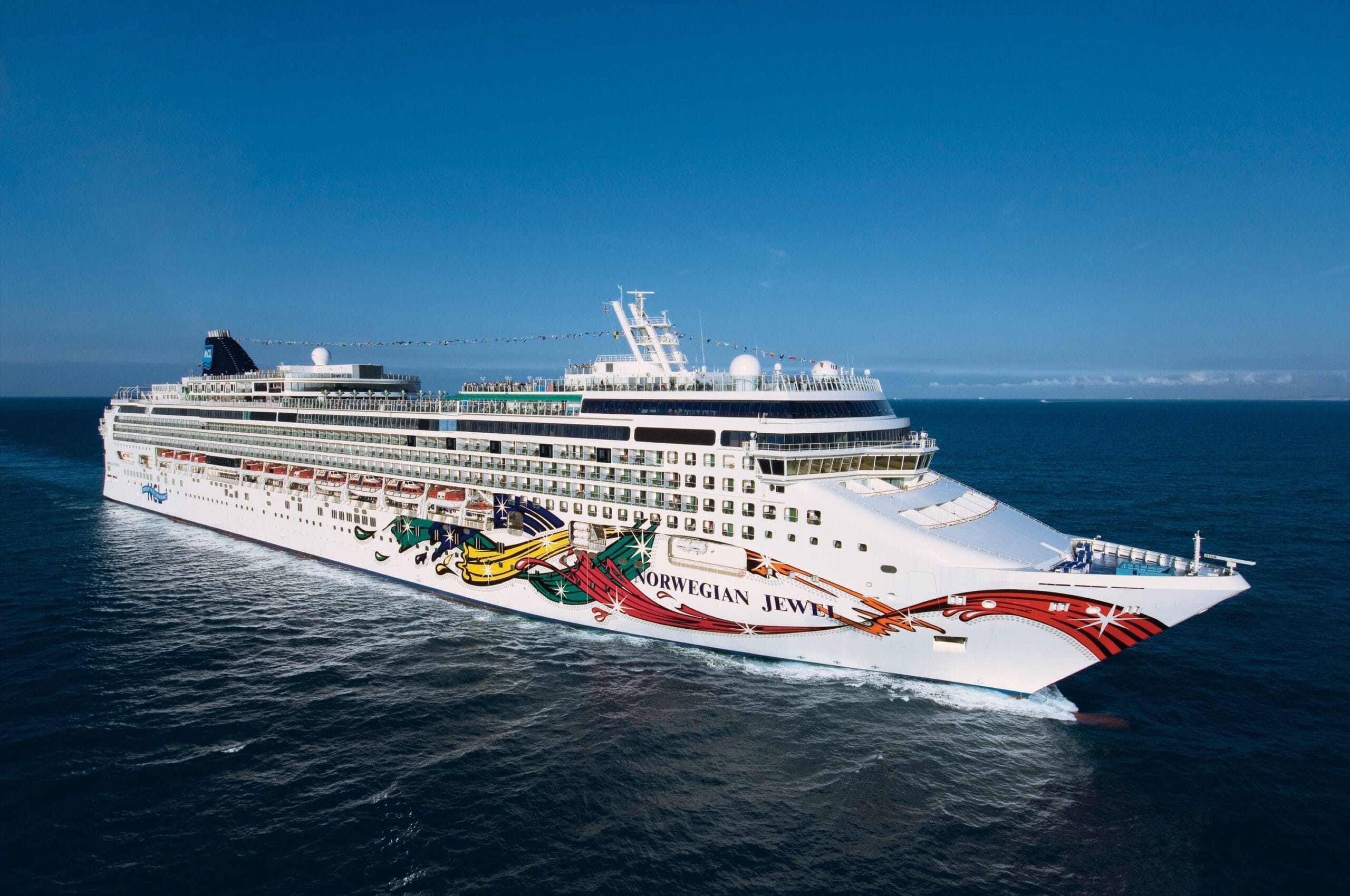
Aerial Norwegian Jewel Norwegian Jewel – Norwegian Cruise Line

If one wanted to run a large cruise ship on the Great Lakes, it would have to be built there. It could be done, but isn’t currently. We make very large ore carriers that operate entirely on the Great Lakes, so the capacity exists. The other alternative would be to expand one of the canals. IF this were done, there would be a lot more competition and ships, and we could be served by much larger container ships as well. An unfortunate aspect of the small lock size of the Welland and upper St. Lawrence is that currently, only very small container ships can enter or leave the Great Lakes. The result is that cargo prices are much higher than for any of the US coastal ports or the Mississippi. Both the US and Canada would benefit from a larger connection to the sea.

Robert Buxbaum, July 7, 2026
I’d like to expand the Jones act so more ships can do US trade.

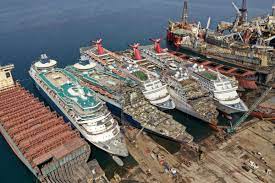
If you visit most any European port city, you’ll see a lot more shipping than in the Midwestern US. In Detroit, where I am, your’ll see an occasional ore boat from Wisconsin, and an occasional tourist cruise, but nothing to compare to German, Belgian, or Turkish ports. The reason for the difference is “The Jones act.”

The port of Istanbul with many ships

The Jones act , also known as “The Merchant Marine Act of 1920”, requires that all ships depositing cargo or people between US ports must be US owned, US built, US captained, US flagged, and at least 70% US manned. This raises costs and reduces options. The result is that few ships can move people or cargo between US cities, and these ships are older and less efficient than you’ll see elsewhere. World wide water traffic costs about 1/8 that of rail traffic per ton-mile, but in the US, the prices are more comparable. The original justification was to make sure the US would always have a merchant marine. The Jones act does that, sort of, but mostly, it just makes goods more expensive and travel more restrictive.

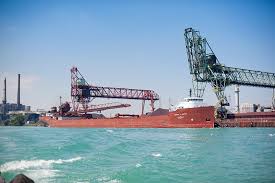
The port of Detroit — we rarely see more than one ship at a time.

Because it does some good, I don’t want to get rid of the Jones act entirely, but I’d like to see US shipping options expanded. Almost any expansion would do, e.g. allowing 50% US manned ships delivering along US rivers, or expanding to allow Canadian built ships or flagged, and ships that are more than 50% US owned, or expanding to any NAFTA vessel that meets safety standards. Any expansion of the number of ships available and would help.

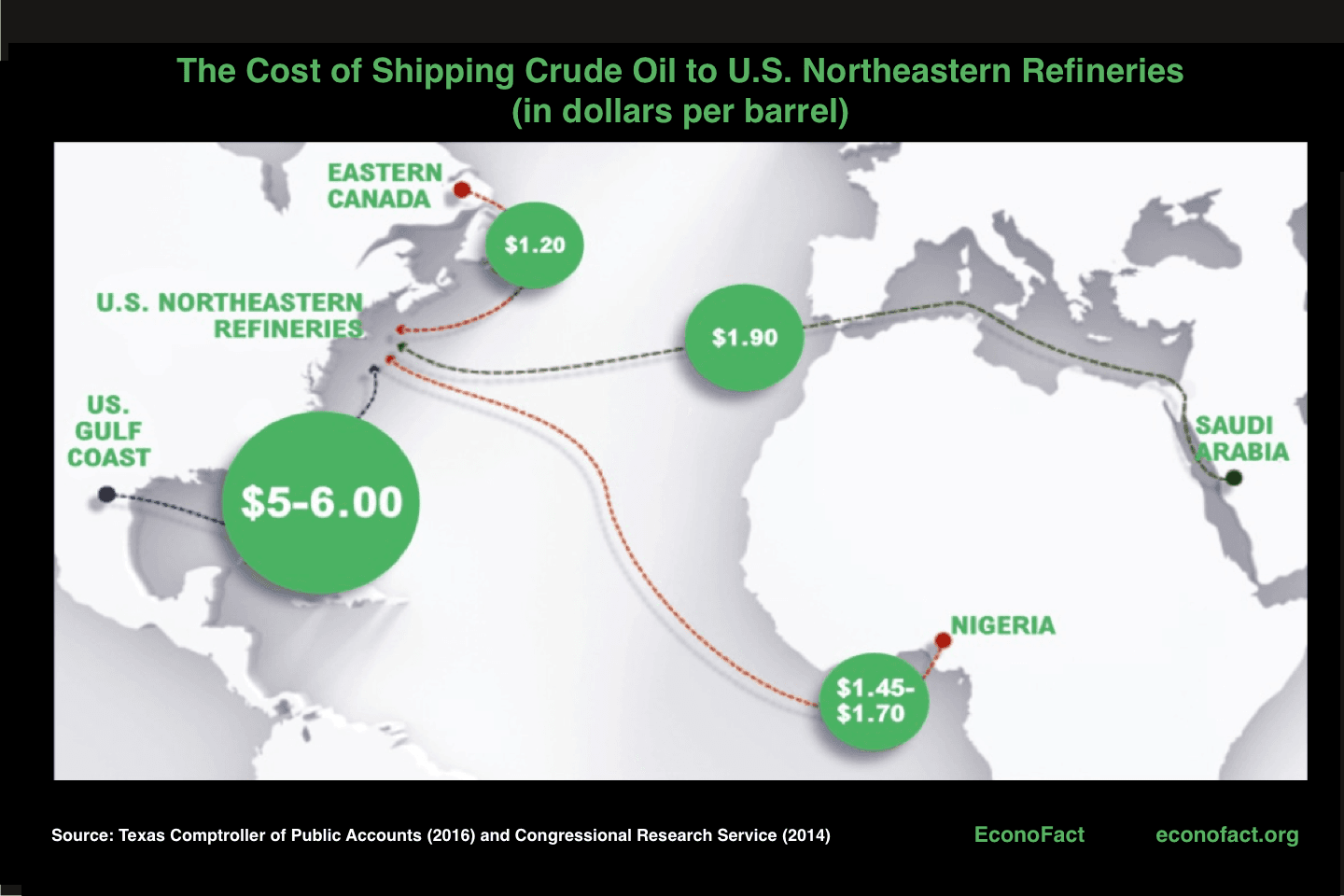
The jones act increase the price of oil transport by a factor of five, about.

Currently, the only exceptions to the Jones act are for emergencies (Trump voided the act during several storms) and for ships that visit a foreign port along the route. This exception is how every cruise ship between California and Hawaii works. They’re all foreign, but they stop in Mexico along the way. Similarly, cruises between Florida and Puerto Rico will stop in Bermuda typically, because the ships are foreign owned. Generally, passengers are not allowed to get off in Puerto Rico, but must sleep on board. This is another aspect of the Maritime act that I’d like to see go away.

Because of the Jones act, there is some US freight-ship building, and a supply of sailors and captains. A new, US ore-ship for the Great Lakes was launched last year, so far it’s been used to carry salt. There is also a US built and operated cruise ship in Hawaii, the “Pride of America,” that makes no stop in Mexico. I’d like to see these numbers expanded, and the suggestions above seem like they’d do more good than harm, lowering prices, and allowing modern container ships plus roll-on-roll-off car transports. Our rivers and lakes are super highways; I’d like to see them used more.

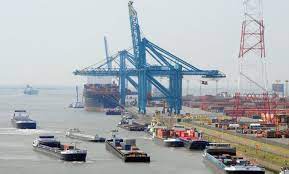
The port of Antwerp – far busier than Detroit.

Another way to expand the Jones act while perhaps increasing the number of US-built and operated ship would be through a deal with Canada so that ships from either country could ply trade on either countries rivers. As things stand, Canada has its own version of the Jones act, called the Coastal Trade Act where Canadian vessels must be used for domestic transport (cabotage) unless no such vessel is available. Maybe we can strike a deal with Canada so that the crew can be Canadian or US, and where built ships in either country are chosen on routes in either country, providing they meet the safety and environmental requirements of both.

Robert Buxbaum, June 14, 2023.