Dubai is a gorgeous, clean, modern city in the Emirates state of Abu Dhabi. As such it is Abu Dhabi’ as it were, Abu Dhabi’s gateway into being a modern Islamic Republic. All religions are respected in the city of Dubai, though not elsewhere in the Emirates. Alcohol and nightclubs are permitted, even encouraged, along with western books, movies, and music. There’s fast Internet, low taxes, free newspapers, and great plane connections via Emirates Air, along with premiere hotels, Ferraris, lots of them, and villas on peninsulas shaped like palm trees. Dubai is promoted with the phrase, “It’s better in Dubai,” Other promotions included having the Sex in the City movie filmed there and hosting the 2022 FIFA World Cup. And then Iran attacked with 5000 drones and missiles, hitting hotels, below and oil shipping. Three Emirates oil ships struck in the last week alone, leaving one crew member dead, 20 injured. Some rich people are fleeing, while others are staying. The airport is still open, as are the eyes of some rich folks in the US and Europe. It’s not so great in Dubai, but not that bad either. I don’t think Dubai is going away, and expect it to grow, slowly.

A similar pattern is playing out in Qatar’s western-style area of Doha. This is a section of the capital city that allows alcohol, and has fast internet, air-conditioning, western religion, movies, and books. I’d written, with wonder about Qatar, with its rich citizens and indentured, workers. I would have thought Doha would be safe from Iranian missiles since Qatar is Shia Mulsim, like Iran. It too is being hit, and not only in the western areas. Iran also destroyed Qatar’s largest natural gas and oil facilities, and their helium plant. The problem for Iran is that Qatar isn’t Shia Islamic enough to make them happy. Alternately, Qatar is rich, and Iran is jealous. Destruction is the answer, but the city endures, and I expect it will grow.
Saudi Arabia was in the process of building the beginnings of its own, modern gateway city, NEOM. It’s more conservative religiously than Dubai, but more technically advanced, envisioned with robots, solar energy, and zero cars. It’s in the early stages, but already attacked by Iran. The motivation, I expect, is to insure that the king doesn’t sign the Abraham accords with Israel and Abu Dhabi. The king has slowed construction, but not stopped, or stopped working with the US.
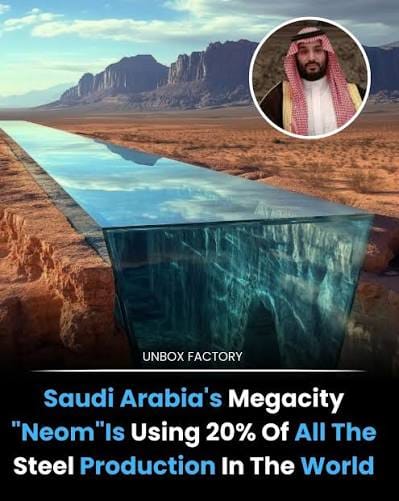
While these attacks are clearly a setback for these western-enclaves, I don’t expect Saudi Arabia, Qatar, and Abu Dhabi will shut them down. Dubai, Doha, and Neom are attractive, and seen as a necessary part of a post oil future. I suspect the attacks only bring resentment of Iran and its mullahs, plus a desire for increased spending on defense. The attacked countries may ally with each other, something unlikely before the attacks perhaps through expended Abraham accords, or via some other defense cooperation. I also imagine that the gateway cities will grow, allowing conservative Muslims to become more comfortable with Western ideas and behaviors.
I don’t expect Iran to change, nor copy these cities, nor do I expect their influence to weaken much. They have oil and a powerful ally, China, who depends on Iranian oil. China benefits by Iran fighting China’s western rivals, or it did before sanctions. I expect Iran to make more trouble for us and their neighbors, especially when Democrats win congress in a few months. I’m not totally sure why Democrats are sanguine about a nuclear Iran as negotiated by Obama, or seem OK with Iran bombing their neighbors for no good reason. Then again, I don’t quite understand “Queers for Palestine.” Most liberals are unhappy, and my guess is that the Iran leadership is too. Both are happy seeing Dubai and Doha bombed. Even with the bombs falling, I see these cities as a gate to a more peaceful, more tolerant Middle East.
Robert Buxbaum September 14, 2026