Sewage jokes, limericks, and a song.

I ran for water commissioner (sewer commissioner) of Oakland county, Michigan last year, lost, but enjoyed my run. It’s a post that has a certain amount of humor built-in. If you can’t joke about yourself, you’ve got no place in the sewer. So here are some sewage jokes, and poems, beginning with an old favorite; one I used often in my campaign:3b37b9cab2d27693de2aa7004a3d90ef

Why was Piglet staring into the toilet?
He was looking for Poo.

Last week someone broke into the police station and stole all the toilets. The cops are still searching. So far, they have nothing to go on.paperwork

On administration: In life as on the toilet, the job isn’t done until the paperwork is finished.

Speaking of toilet paper: do you know why Star Trek is like toilet paper? They both go past Uranus and capture Klingons. I wrote an essay on Toilet paper — really. 

Here’s my campaign song and video. It’s sung by Art Carney (I’ve no rights, but figure they’ve expired). The pictures are of me, my daughter, and various people we met visiting sewage treatment plants around the county. Great men and a few great women who don’t mind getting their hands dirty. 

septic12

The Turd Burglar, We’re No.1 in the No. 2 business. What a motto!

And now for sewage Limericks:

There once was a man named McBride.
Who fell in the sewer and died.
The same day his brother
Fell in another,
And they were interred side by side.

There is a double intent in that Limerick, in case you missed it

By the sewer she lived, by the sewer she died. Some said t’was disease, but I say, Suicide

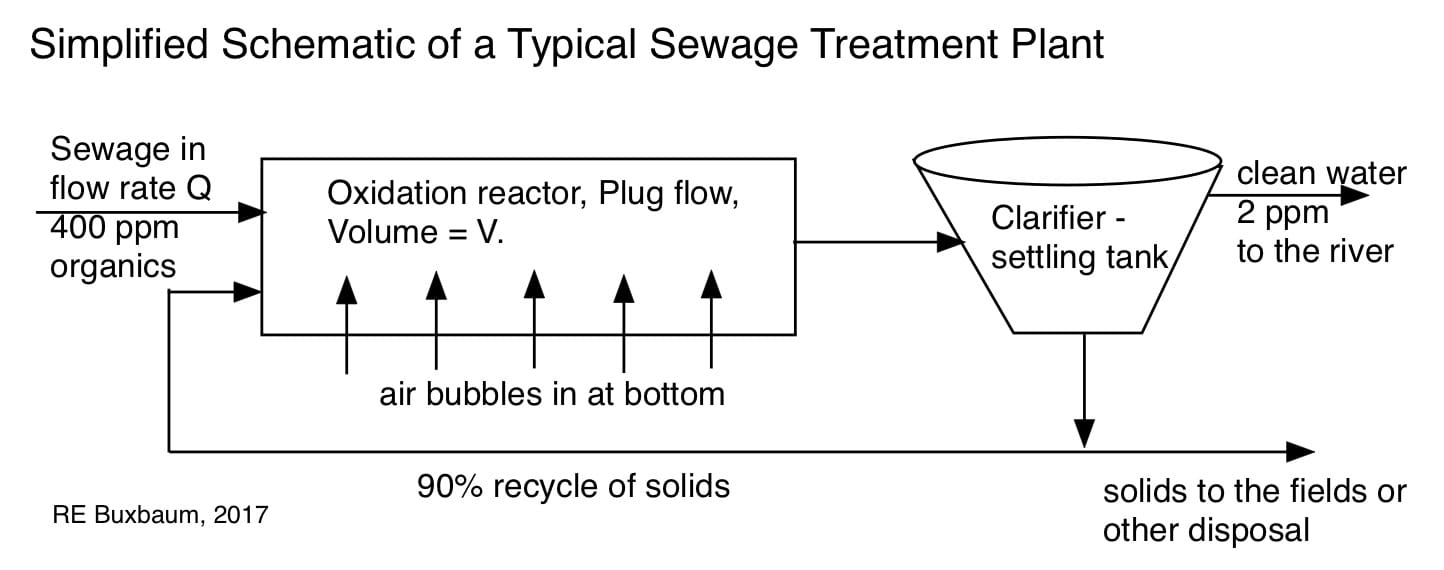
sewage treatment

sewage treatment plant in Pontiac, MI — the county’s largest.

How do you describe a jocular sewage joker? pun gent.

Life is like a sewer, what you get out of it is what you put into it (Tom Lehrer). And sometimes it stinks.

Robert E. Buxbaum, June 4, 2017. There is just one more sewage joke I know, but I thought I’d leave it out. It concerns the sewage backup at the prom. Unfortunately, the punchline stinks.

A clever, sorption-based, hydrogen compressor

Hydrogen-powered fuel cells provide weight and cost advantages over batteries, important e.g. for drones and extended range vehicles, but they require highly compressed hydrogen and it’s often a challenge compressing the hydrogen. A large-scale solution I like is pneumatic compression, e.g. this compressor. One would combine it with a membrane reactor hydrogen generator, to fill tanks for fuel cells. The problem is that this pump is somewhat complex, and would likely add air impurities to the hydrogen. I’d now like to describe a different, very clever hydrogen pump, one that suited to smaller outputs, but adds no impurities and and provides very high pressure. It operates by metallic hydride sorption at low temperature, followed by desorption at high temperature.

Hydride sorption -desorption pressures vs temperature.

Hydride sorption -desorption pressures vs temperature, from Dhinesh et al.

The metal hydriding reaction is M + nH2 <–> MH2n. Where M is a metal or metallic alloy and MH2n is the hydride. While most metals will undergo this reaction at some appropriate temperature and pressure, the materials of practical interest are exothermic hydrides that is hydrides that give off heat on hydriding. They also must undergo a nearly stoichiometric absorption or desorption reaction at reasonable temperatures and pressures. The plot at right presents the plateau pressure for hydrogen absorption/ desorption in several, exothermic metal hydrides. The most attractive of these are shown in the red box near the center. These sorb or desorb between 1 and 10 atmospheres and 25 and 100 °C.

In this plot, the slope of the sorption line is proportional to the heat of sorption. The most attractive materials for this pump are the ones in the box (or near) with a high slope to the line implying a high heat of sorption. A high heat of sorption means you can get very high compression without too much of a temperature swing.

To me, NaAlH4 appears to be the best of the materials. Though I have not built a pump yet with this material, I’d like to. It certainly serves as a good example for how the pump might work. The basic reaction is:

NaAl + 2H2 <–> NaAlH4

suggesting that each mol of NaAl material (50g) will absorb 2 mols of hydrogen (44.8 std liters). The sorption line for this reaction crosses the 1 atm horizontal line at about 30°C. This suggests that sorption will occur at 1 am and normal room temperature: 20-25°C. Assume the pump contains 100 g of NaAl (2.0 mols). Under ideal conditions, these 100g will 4 mols of hydrogen gas, about 90 liters. If this material in now heated to 226°C, it will desorb the hydrogen (more like 80%, 72 liters) at a pressure in excess of 100 atm, or 1500 psi. The pressure line extends beyond the graph, but the sense is that one could pressure in the neighborhood of 5000 psi or more: enough to use filling the high pressure tank of a hydrogen-based, fuel cell car.

The problem with this pump for larger volume H2 users is time. It will take 2-3 hours to cycle the sober, that is, to absorb hydrogen at low pressure, to heat the material to 226°C, to desorb the H2 and cycle back to low temperature. At a pump rate of 72 liters in 2-3 hours, this will not be an effective pump for a fuel-cell car. The output, 72 liters is only enough to generate 0.12kWh, perhaps enough for the tank of a fuel cell drone, or for augmenting the mpg of gasoline automobiles. If one is interested in these materials, my company, REB Research will be happy to manufacture some in research quantities (the prices blow are for materials cost, only I will charge significantly more for the manufactured product, and more yet if you want a heater/cooler system).

Properties of Metal Hydride materials; Dhanesh Chandra,* Wen-Ming Chien and Anjali Talekar, Material Matters, Volume 6 Article 2

Properties of Metal Hydride materials; Dhanesh Chandra,* Wen-Ming Chien and Anjali Talekar, Material Matters, Volume 6 Article 2

One could increase the output of a pump by using more sorbent, perhaps 10 kg distributed over 100 cells. With this much sorbent, you’ll pump 100 times faster, enough to take the output of a fairly large hydrogen generator, like this one from REB. I’m not sure you get economies of scale, though. With a mechanical pump, or the pneumatical pump,  you get an economy of scale: typically it costs 3 times as much for each 10 times increase in output. For the hydride pump, a ten times increase might cost 7-8 times as much. For this reason, the sorption pump lends itself to low volume applications. At high volume, you’re going to want a mechanical pump, perhaps with a getter to remove small amounts of air impurities.

Materials with sorption lines near the middle of the graph above are suited for long-term hydrogen storage. Uranium hydride is popular in the nuclear industry, though I have also provided Pd-coated niobium for this purpose. Materials whose graph appear at the far, lower left, titanium TiH2, can be used for permanent hydrogen removal (gettering). I have sold Pd-niobium screws for this application, and will be happy to provide other shapes and other materials, e.g. for reversible vacuum pumping from a fusion reactor.

Robert Buxbaum, May 26, 2017 (updated Apr. 4, 2022). 

Future airplane catapults may not be electric

President Trump got into Hot Water with the Navy this week for his suggestion that they should go “back to god-damn steam” for their airplane catapults as a cure for cost over-runs and delays with the Navy’s aircraft carriers. The Navy had chosen to go to a more modern catapult called EMALS (electromagnetic, aircraft launch system) based on a traveling coil and electromagnetic pulses. This EMAL system has cost $5 Billion in cost over-runs, has added 3 years to the program, and still doesn’t work well. In response to the president’s suggestion (explosion), the Navy did what the rest of Washington has done: blame Trump’s ignorance, e.g. here, in the Navy Times. Still, for what it’s worth, I think Trump’s idea has merit, especially if I can modify it a bit to suggest high pressure air (pneumatics) instead of high pressure steam.


Tests of the navy EMALS, notice that some launches go further than others; the problem is electronics, supposedly.

If you want to launch a 50,000 lb jet fighter at 5 g acceleration, you need to apply 250,000 lbs of force uniformly throughout the launch. For pneumatics, all that takes is 250 psi steam or air, and a 1000 square inch piston, about 3 feet in diameter. This is a very modest pressure and a quite modest size piston. A 50,000 lb object accelerated this way, will reach launch speed (130 mph) in 1.2 seconds. It’s very hard to get such fast or uniform acceleration with an electromagnetic coil since the motion of the coil always produces a back voltage. The electromagnetic pulses can be adjusted to counter this, but it’s not all that easy, as the Navy tests show. You have to know the speed and position of the airplane precisely to get it right, and have to adjust the firing of the pushing coils accordingly. There is no guarantee of smooth acceleration like you get with a piston, and the EMALS control circuit will always be vulnerable to electromagnetic and cyber attack. As things stand, the control system is thought to be the problem.

A piston is invulnerable to EM and cyber attack since, if worse comes to worse, the valves can be operated manually, as was done with steam-catapults throughout WWII. And pistons are very robust — far more robust than solenoid coils — because they are far less complex. As much force as you put on the plane, has to be put on the coil or piston. Thus, for 5 g acceleration, the coil or piston has to experience 250,000 lbs of horizontal force. That’s 3 million Newtons for those who like SI units (here’s a joke about SI units). A solid piston will have no problem withstanding 250,000 lbs for years. Piston steamships from the 50s are still in operation. Coils are far more delicate, and the life-span is likely to be short, at least for current designs. 

The reason I suggest compressed air, pneumatics, instead of steam is that air is not as hot and corrosive as steam. Also an air compressor can be located close to the flight deck, connected to the power center by electric wires. Steam requires long runs of steam pipes, a more difficult proposition. As a possible design, one could use a multi-stage, inter-cooled air compressor connected to a ballast tank, perhaps 5 feet in diameter x 100 feet long to guarantee uniform pressure. The ballast tank would provide the uniform pressure while allowing the use of a relatively small compressor, drawing less power than the EMALS. Those who’ve had freshman physics will be able to show that 5 g acceleration will get the plane to 130 mph in only 125 feet of runway. This is far less runway than the EMALS requires. For lighter planes or greater efficiency, one could shut off the input air before 120 feet and allow the remainder of the air to expand for 200 feet of the piston.

The same pistons could be used for capturing an airplane. It could start at 250 psi, dead-ended to the cylinder top. The captured airplane would push air back into the ballast tank, or the valve could be closed allowing pressure to build. Operated that way, the cylinder could stop the plane in 60 feet. You can’t do that with an EMAL. I should also mention that the efficiency of the piston catapult can be near 100%, but the efficiency of the EMALS will be near zero at the beginning of acceleration. Low efficiency at low speed is a problem found in all electromagnetic actuators: lots of electromagnetic power is needed to get things moving, but the output work,  ∫F dx, is near zero at low velocity. With EM, efficiency is high at only at one speed determined by the size of the moving coil; with pistons it’s high at all speeds. I suggest the Navy keep their EMALS, but only as a secondary system, perhaps used to launch drones until they get sea experience and demonstrate a real advantage over pneumatics.

Robert Buxbaum, May 19, 2017. The USS Princeton was the fanciest ship in the US fleet, with super high-tech cannons. When they mis-fired, it killed most of the cabinet of President Tyler. Slow and steady wins the arms race.

Nestle pays 1/4,000 what you pay for water

When you turn on your tap or water your lawn, you are billed about 1.5¢ for every gallon of water you use. In south-east Michigan, this is water that comes from the Detroit river, chlorinated to remove bacteria, e.g. from sewage, and delivered to you by pipe. When Nestle’s Absopure division buys water, it pays about 1/4000 as much — $200/ year for 218 gallons per minute, and they get their water from a purer source, a pure glacial aquifer that has no sewage and needs no chlorine. They get a far better deal than you do, in part because they provide the pipes, but it’s mostly because they have the financial clout to negotiate the deal. They sell the Michigan water at an average price around $1/gallon, netting roughly $100,000,000 per year (gross). This allows them to buy politicians — something you and I can not afford.

Absopure advertises that I t will match case-for-case water donations to Flint. Isn't that white of them.

Absopure advertises that I t will match case-for-case water donations to Flint. That’s awfully white of them.

We in Michigan are among the better customers for the Absopure water. We like the flavor, and that it’s local. Several charities purchase it for the folks of nearby Flint because their water is near undrinkable, and because the Absopure folks have been matching the charitable purchases bottle-for bottle. It’s a good deal for Nestle, even at 50¢/gallon, but not so-much for us, and I think we should renegotiate to do better. Nestle has asked to double their pumping rate, so this might be a good time to ask to increase our payback per gallon. So far, our state legislators have neither said yes or no to the proposal to pump more, but are “researching the matter.” I take this to mean they’re asking Nestle for campaign donations — the time-honored Tammany method. Here’s a Detroit Free Press article.

I strongly suspect we should use this opportunity to raise the price by a factor of 400 to 4000, to 0.15¢ to 1.5¢ per gallon, and I would like to require Absopure to supply a free 1 million gallons per year. We’d raise $300,000 to $3,000,000 per year and the folks of Flint would have clean water (some other cities need too). And Nestle’s Absopure would still make $200,000,000 off of Michigan’s, clean, glacial water.

Robert Buxbaum, May 15, 2017. I ran for water commissioner, 2016, and have occasionally blogged about water, E.g. fluoridationhidden rivers, and how you would drain a swamp, literally.

Why did Hamilton wear his glasses at the duel?

The musical play “Hamilton” ends with his duel with Burr. A song leading up to it, the world was wide enough tells the audience that Hamilton “wore his glasses” at the duel, and that he “methodically fiddled with the trigger.” It doesn’t say why, but tries to imply a sort of death-wish where Hamilton “threw away his shot” (fired into the air) because he didn’t want to kill his first friend, or because he thought of his son, who died near the spot. The theory is supported by popular myth, though the details of the events are, by necessity, muddy. All the witnesses testified that they looked away before the shooting started –customary in duels at the time.

There are some problems I find with this theory, and I’d like to present another: that Hamilton was so eager to kill Burr that he over-stacked the deck in his favor. The witnesses noted that Hamilton performed some provocative actions that seem out of character for someone who wants to commit suicide: “As they were taking their places, he (Hamilton) asked that the proceedings stop, adjusted his spectacles, and slowly, repeatedly, sighted along his pistol to test his aim”[1]. This seems like a taunt, if anything. As I reading the letters too, I find Hamilton taunting Burr to duel. He could have bowed out in many ways, as Washington always had, or been neutral. Why taunt? Why wear glasses and fiddle with the trigger? Why test your aim and then throw away your shot?

The choice of guns is important too, along with where the shot actually went. First the shot: While Hamilton’s second originally thought Hamilton had shot in the air, when the seconds went back the next day they found the shot in a cedar limb, “at an elevation of about twelve feet and a half, perpendicularly from the ground, between thirteen and fourteen feet from the mark on which General Hamilton stood, and about four feet wide of the direct line between him and Col. Burr, on the right side”.[2] The men stood 10 paces apart (16-18 feet), so apparently the shot hit about 6 feet above Burr’s head on a line reasonably towards him. That’s not quite shooting in the air.

The pair of Wogdon dueling pistols used in the Hamilton - Burr duel.

The Wogdon pistols used in the Hamilton – Burr duel. Currently the property of the JP Morgan Chase Manhattan Bank, in 1976 they were found to have a hidden hair trigger, something Hamilton knew, but Burr would not have known.

The choice of pistols is also suggestive. The pistols were the property of John Church, a brother-in-law to Hamilton, and a business partner of both men. Church had fought a duel with Burr some years before and, using Burr’s pistols, shot a button off Burr’s coat. Burr missed completely. Church then bought these new pistols in London — Wogdon pistols, with an extra-large bore and sights. Sights were not considered “sporting” for duels, and not ordinarily allowed. With sights on the pistols, one could not miss if one aimed. As for the bigger bore, this too was unusual. If you hit, you killed; most gentlemen preferred a less-deadly duel. Hamilton chose to use these pistols even though he owned two, “legal” pistols (smaller bore, no sight). As the challenged party, it was his right. Still, why not choose your own, if not to make use of the sight and the large-bore. And, according to his second, he seems to have practiced with the pistols beforehand [4].

Analysis of the guns, done in the late 1970s [3] turned up another illegal feature. While they appear to be normal dueling pistols, these guns have a hidden feature. If you move the trigger a fraction of an inch forward it sets a hidden, hair-trigger. It’s a hidden feature that Hamilton knew about [3] but Burr almost certainly did not. If Hamilton surreptitiously set the hair-trigger, it would give him a tremendous advantage. He would be able to shoot more quickly and more accurately, with a much lighter squeeze on the trigger. The sights ensured it would be a kill. Burr’s gun, unset, would have required the normal, heavy, 10-15 pound pull. His shot would have been slower and less accurate. As it was, it seems Burr fired second.

Ten paces is not very far apart. People missed because of the 10-20 lb pull and lack of sights made it hard to hit. Besides, many people who were hit survived.

Ten paces is not very far apart. People missed because of the 10-20 lb pull and the lack of sights made it hard to hit anyone. Besides, with a small bore, you didn’t kill.

There are a couple of problems with using hair-trigger pistols, though. They can go off prematurely, even if you know the trigger’s been set [4], and it’s worse if you are not quite sure you’ve set the trigger. The Wogdon guns intentionally made it hard to tell if you have set the trigger or not, and made it impossible to unset the trigger without firing. I suspect that Hamilton cleaned his glasses, fiddled with the trigger, and sighted his aim because he was unsure whether he’d set the hair-trigger. My theory is he came to the wrong conclusion. According to the seconds, Burr’s shot was almost simultaneous, but his apparently achieved a lucky/ un-lucky hit. Burr killed his rival, but also killed his own political career, the unhappy end to a beautiful animosity, discussed in the play, and discussed by me from a different angle. [5]

References:

1. Testimony at trial, Centinel of Freedom, November 24, 1807, cited in Winfield, 1874, p. 220.

2.  Nathanial Pendelton’s Amended testimony of Nathaniel Pendleton and William P. Ness’s Statement of July 11, 1804. Amended after the pair revisited the site and found the bullet.

3. “Pistols shed light on famed duel”, Merrill Lindsay, Smithsonian Magazine. 1976.

4. ibid. Hamilton told his second not to set the hair-trigger, and then seems to have set his own. Linsay’s theory is that Hamilton knew he’d set the trigger, but squeezed it too early.

5. Since the witnesses looked away, you might think of another explanation: that Burr fired first and Hamilton’s gun then went off in death throw, in the general direction of Burr. A couple of problems with this theory: for the gun to go off like that, Hamilton would have had to set the hair-trigger. The ordinary 10-15 lb trigger would require a determined squeeze. Also, for the bullet to hit the tree like that, Hamilton would have had to raise his gun past Burr, though not to the side or down as one might if he wished to throw away his shot. And Burr would have to have set the trigger himself to shoot so fast and so well. Randall’s book, “Alexander Hamilton, a life”, claims he did, p. 424, but looking at this video of the hair-trigger mechanism, I find the mechanism is too cleverly hidden for Burr to have noticed. It escaped detection for 170 years. Finally, for Burr to shoot to kill without provocation, would require that he murder in cold blood, and Burr shows no evidence of that. Besides, Burr would have had to worry that the witnesses might turn around and see his dastardly deed. As it was, even with Hamilton’s gun going off, Burr’s reputation was ruined. I reject this theory, and assert as others have: “Hamilton did fire his weapon intentionally, and he fired first.”

Robert E. Buxbaum, May 10, 2017. You may like these other songs from Hamilton, “your obedient servant,” and “the ten duel commandments.” And you may like this essay about Burr, Tammany Hall and the Manhattan bank.

summer science: a toad or turtle terrarium

Here’s an easy summer science project, one I just made: a toad habitat. It’s similar to a turtle terrarium (I’ll show how to make that too). I’d made the turtle terrarium ten years ago for my 8-year-old daughter (here’s some advice I gave her on her 16th birthday).

For this project you’ll need: a large flower-pot, fish tank, or plastic clothes bin. You’ll need some dirt for the bottom, and a small plastic bin, jar, or Tupperware for toad (or turtle) transport. You’ll also need a smallish plastic dish or tub (~6″ by 1″ deep) to serve as a lake in the toad habitat. For the turtle version you don’t need the lake, but will need a rock or brick. And that’s all, besides your toad or turtle. The easy way to get your pet is to find one by a river. If that doesn’t work, go to a pet-store and get one that is native to your area of the country. Local fauna (fauna= animals) will be heartier and cheeper, and will allow you to keep your terrarium outside if you choose. Keeping my toad outside means he (or she) can catch bugs without me having to buy them all the time. It also seems more “natural” to study animals in their natural temperature cycles. I caught my toads three weeks ago, in mid April after the last frost — I plan to set one free in the fall –the other I gave away.

For my toad habitat, I used a large, old flower-pot that I had sitting outside my house. It is 21″ across at the top and 18″ tall. I put 6″ of dirt in it. six inches is deep enough for the toad to dig in, and it left 12″ of airspace — I don’t think the toad can jump a foot in the air to get out. I made sure the soil was muddy, and had worms. Toads seem to like mud and they eat worms. Toads drink water through their skin, and may not like chlorinated water. I also added some leaves and a small flower pot for shade, and put in some bits of fruit and some bugs, and planted a single plant. My hope was to develop a colony of ants and bugs for the toads to eat. I buried my plastic water bowl, my mini-lake, slightly below ground level with the top 1/2″ above. I then went off with my toad transport to catch a toad or three in the wetlands areas near me (I live in Oak Park, MI).

Some good toad hunting spots in Keego Harbor MI

Some good toad hunting spots in Keego Harbor MI

The first place I went was the banks of the Rouge river near Lawrence Tech. Sorry to say, the area showed no signs of toads, frogs, turtles, or even fish. There was an illegally connected drain, though — not good. I plan to bring the illegal grain up with the “Friends of the Rouge” (good group). I then went to an oak swamp on the Rouge. The area was beautiful and scenic, but there was no oxygen in the water and so no fish or toads; oxygen is important for the health of a river; without it, you’ve got  a swamp. I finally hit pay-dirt in Keego Harbor, MI, see map, a rural community 10 miles away from my home. In Keego harbor I found American toads aplenty: jumping all over, and big, hollow toad-mounds by the river. The locals were friendly too. Toad catching is a good conversation starter. I put two toads in my bin with some lake water and took them home to the terrarium, see movie.

My neighbor got the other toad and put him/her in a fish-tank terrarium in his bathroom. His terrarium has a screen on top with holes small enough to keep the toad and his food from escaping. He is feeding his toad meal worms, but I don’t have a movie. Apparently they like it.

I left my pot outside, as I mentioned, so my toad can catch insects that fly by, and spiders. My toad seems to like spiders. I also tried putting in wax-worms ($1 for 12). The good thing about wax worms is they move slowly, unlike crickets (crickets cost more and can jump out). My toad ate all 12 worms in 2 days. I have not put a lid on my pot yet. Perhaps that’s a mistake. My colony of bugs seems to be breeding fast enough to make up for escapees and eating, but perhaps that’s because the toad doesn’t eat many. A fellow at the pet store sold me ten small crickets for $3.00, but I don’t think the toad ate any before they escaped. See what your toad eats; it’s science. I think my toad is a female: it doesn’t vibrate or croak at night. Male toads vibrates and croak. Toads can be gender fluid, though; somethings two “female” toads will breed. Your job is to watch, enjoy, and perhaps learn something.

The main difference between this project, and the turtle terrarium I’d made is that the turtle terrarium was mostly water, with a brick, and this is mostly mud with a lake. I made the turtle terrarium in a laundry bin, a bigger environment, and flooded it except for the brick. I bought the turtles (a red-ears and a snapping) and fed it chicken bits and dandelion leaves. As with this terrarium, I kept the turtles outside through the spring, summer, and fall, but I brought the turtles in the winter. They lasted that way for about 8 years. Toads only live for 2-3 years, and mime may be a year or two old already. I won’t be too surprised if it croaks on my watch. For now, she seems safe and hoppy.

Robert Buxbaum, May 3, 2017. Here are some other science fair projects, chemical, and biological.

May 1, St. Tammany day

May 1 is St. Tammany day, a day to rejoice in the achievements of Tammany Hall, and of St Tammany, the guardian of crooked politicians everywhere. The Sons of St. Tammany started in 1773 as a charitable club of notable revolutionary-era individuals including Benjamin Franklin, John Hancock, and John Dickenson, but evolved into perhaps the most corrupt, and American, of political organizations. The picture of a US politician – the cartoon version at least — is the Tammany Democrat: a loud, drunken, womanizer, willing to do or promise whatever the people seem to want at the moment. Tammany and its bosses helped form this image. They helped new immigrants, but did so by creating needless government jobs, by filling them often with incompetent loyalists, and by overcharging on government contracts. Today, these Tammany ways rule in every major American city; the other clubs of the day are gone or influence-less.

John Hancock leads a meeting of the St. Tammany (Columbian) society. Note the "Appeal to Heaven flag and the Indian, real or imagined. Indians participated in several, early St. Tammany meetings.

John Hancock leads a meeting of the St. Tammany society. Note the “Appeal to Heaven” flag. While Indians participated in some, early meetings, the one here is, I suspect, a ghost: St. Tammany.

In revolutionary-era America, the Sons of St. Tammany was just one of many social-charitable clubs (Americans like to form clubs), in many ways it was similar to the Masons and the Cincinnati, but those clubs were international and elitist. The sons of Tammany was purely American, and anti-elitist. It was open to anyone born on this side of the Atlantic, and had Indian customs. The Cincinnati society, for comparison, started with members who were as notable (Alexander Hamilton, George Washington, Marie, Marquis de Lafayette, Henry Knox, etc.) but was originally open only to high officers of the regular army, including foreigners like Lafayette, but not ordinary soldiers, minutemen (militia), or the general public. The symbols of the Tammanies were American: the liberty-cap and the “Appeal to Heaven” flag, now a popular symbol of the Tea Party; the leader was called by an Indian name: Sachem. By contrast, the Cincinnati society symbol was the Imperial Eagle (Washington’s was gold with diamonds), and the leader was called “general”. The Tammany society began admitting immigrants in 1810 or so, while the Cincinnati society remains closed to this day, except to descendants of Revolutionary officers — an aristocratic affectation in the eyes of some.

It was Aaron Burr who first saw the opportunity to use the Tammany organization as a for-profit, political machine. In the years 1795-9, New York was suffering from yellow fever and a variety of other diseases that were taken to be caused by a lack of clean water. Burr proposed, with Tammany support, the creation of a corporation to build a new water system to bring fresh, clean water from the Bronx River to lower Manhattan via iron pipes. The Manhattan company was duly chartered, with directors who were primarily Tammany men, Republican-Democrats, and not Federalists. Federalists (Hamilton, primarily) controlled the only NY banks at the time and controlled the directorate of every chartered company in the city. The Manhattan company requested a $2,000,000 perpetual charter, twice as big as the charter of Hamilton’s Bank of New York, and a monopoly on water distribution. These were reasonable requests given the task, but unusual in the lack of Federalist or governmental oversight. But the Manhattan company was a water company, and water was needed. But Burr’s intent, all along, it seems was to build a bank, not a water company. After the charter was approved, but before signing, he amended it to allow any excess funds to be used for any legal purpose. 

In this cartoon by Dr. Seuss, The Tammany Tiger says, "Today is the Big Day Folks. Vote Early and Often."

In this cartoon by Dr. Seuss, The Tammany Tiger says, “Today is the Big Day Folks. Vote Early and Often.”

Money was raised, but only $100,000 used for the water system. The remaining 95% of the charter funds, $1,900,000, went to found “The Bank of The Manhattan company” — later to be known as “The Chase Manhattan Bank” or “The Manhattan Bank of Cholera.” Instead of building the reservoir in upper Manhattan and filling it with clean water as originally proposed, Burr’s Tammany trustees voted to dig wells in lower Manhattan, and placed its reservoir in lower Manhattan too, near Chamber’s St,  next to a cemetery where Cholera victims were buried. New York suffered with Cholera, Typhoid, and leaky, wooden pipes until 1842 when Peter Cooper brought clean water to lower Manhattan from the Groton River via iron pipes. To this day, crooked water contracts are a staple of Tammany politics

The Bank of the Manhattan company opened at 40 Wall St on September 1, 1799, a mere four months after the water company’s incorporation. Hamilton was furious. The company continues today as The JP Morgan, Chase Manhattan Bank, one of the largest banking institutions in the world. Burr used the money and power of his company to reward supporters and to run for vice president with Thomas Jefferson’s tacit support. Except for his Tammany candidacy, John Adams would have won New York and a second term as president. Burr’s career pretty-well died after the Hamilton duel, but Tammany did well without him. By 1812, the Society built its first Tammany Hall, officially called the Wigwam, a $55,000, five-story building with a meeting hall for 2000. New York Democratic politics would center on Tammany Hall for the next century at least.

Following disappointment with John Quincy Adams, “the bitter branch of the bitter tree,” Tammy leaders went national. They recruited Andrew Jackson, a war hero and early recruit of Burr’s. They’d support Jackson if he’d hand over spoils, control of government jobs. He agreed and, as president, fired perfectly good, long-standing government employees He replaced them with Democratic loyalists. When Jackson stepped down in 1833, Tammany elected an equally corrupt New Yorker, Martin van Buren. Though there were periodic Whig and Republican reforms, Tammany learned they could wait those out. They always re-emerged like mushrooms after a rain.

Boss Tweed and other Tammany leaders: who stole the money?

Boss Tweed and other Tammany leaders in a cartoon by Nast, Tammany Ring. “Who stole the money? He did.”  

A key vote-getter in the Tammany system is to provide Thanksgiving dinners and other charitable giveaways for the poor, as well as promises of jobs. By the late 1800s, William J. Brian added promises of soft money and wealth redistribution, cornerstones of the Democratic platform to this day. Tammany also tends to be for low tariffs as opposed to the high tariff ideas of Hamilton and many Whigs and 19th century Republicans. A case can be made for either view.

Tammany helped New York immigrants, particularly the Irish to get citizenship and avoid legal troubles in return for votes and occasional muscle. In other cities, Democratic clubs were less open to Catholics, reflecting the views of the common voter in each state. In the North they were pro-union, in the South anti, electing Klu Kluxers like George Wallace, Sam Ervin, and Robert Byrd. This lead to a famous split in the Democratic party about the 1968 convention. Famous Tammany leaders include William M. “Boss” Tweed, “Big” Tim Sullivan, and “Gentleman” Jimmy Walker. Sullivan famously authored the first anti-gun law, the Sullivan act; it was designed to protect his thugs against private citizens shooting them. It didn’t always work.

Edwin Edwards, Democratic Governor of Louisiana. 1972-1996. Who would not trust this man?

Hon. (?) Edwin Edwards, Governor of Louisiana. 1972-1996. Tammany lives

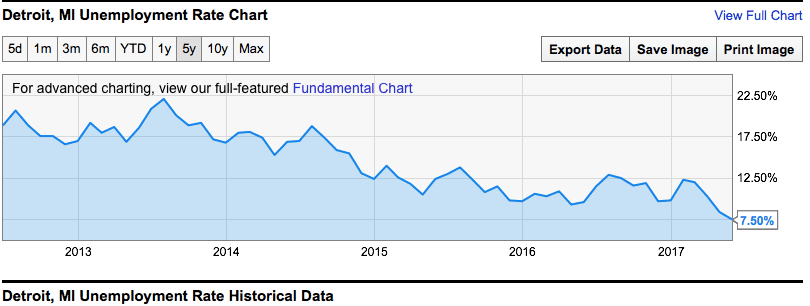
If you want to see Tammany politics in action, visit almost any large US city, or read its newspaper. In Chicago, the dead vote, and 4 of the last 6 governors have gone to jail. Mayor Daily famously told Kennedy that 90 percent of the registered voters of Cook County would vote for him. They did (sort of); because of this, JFK won Illinois and the presidency. In New York, voters discovered only in the 1960s that Tammany’s leader, Carmine DeSapio had been working for 30 years with known gangland murderer, Charles “Lucky” Luciano. In Detroit, where I live and corruption in the water department is legendary. Race-based job handouts, unemployment is high along with high minimum (living) wages. We’re now in the process of a $70,000,000 project to replace 100 feet of sewer pipe, and we’re building a $140 million, 3.3 mile trolley. Tammany loves all public works.

Then there is Louisiana, home to St Tammany parish. Louisiana Democrats like Huey Long and Edwin Edwards (shown at left) are unusual in that they’re proud to say that their corrupt methods are corrupt. Edwards has had two long runs as governor despite several convictions for doing illegal things he admits to doing. When Edwards was asked why he did favors for his friends. He responded: “Who should I do them for? My enemies?” Or, to quote one of Edwin Edwards campaign ads. Vote Edwin EdwardsPeople seem to love it, or did until the levy broke. There is a particularly American grandeur to all this. As Will Rodgers said, “America has the best politicians money can buy.” Today is the day to be proud of that uniquely American tradition. You too can grow up to buy a president.

Robert Buxbaum, April 28, 2017. I ran for water commissioner, and have written about sewage treatment, flood avoidance, and fluoride, as well as the plusses and minuses of trade unionization, and the difference between Republicans and Conservatives.

Solving the savings dilemma (how to have savings)

A few days ago, I wrote a post about the lack of savings in America, the social causes for it, and the damage it causes. I had some governmental suggestions, but suspect I didn’t emphasize that the main responsibility is personal: if you want savings, you’ve got to save.

Every rich person spends less than he earns. If you aspire to be rich, spend less on clothes than you can afford.

Every rich person spends less than he earns. If you aspire to be rich, spend less on clothes than you can afford.

If you want to have savings, it is up to you to spend less than you earn. If you don’t, you’ll never be rich, you won’t even have net-economic worth, and you’ll always be strung-out over emergencies. Income and gifts can’t help if spending rises to match. At all incomes, the people who get richer are those who tailor spending to be less than earnings.

There is another personal honesty issue here, and a marriage issue too. If you spend more than you earn, someone will be cheated, and that person (your wife, husband, neighbor, friend) is likely to get mad. Earn $100 and spend $99.99, you can be honest and well liked. if you earn $1000 and spend $1000.01 and you will cheat someone you love sooner or later. Be an honest fellow and spend less. Clothes is a good place to start: say no to the fancy dress and the fancy wedding, and to fancy clothes in general. If you smoke, vaping can be a life and money saver. And try to avoid pot-smoking, at $400/oz that’s got to be a killer. And here are some water savers.

A good way to know if you are doing things right :Start a bank account, and check the balance and resolve to see it $10 higher at the end of the week than before. And that’s my two cents.

Robert Buxbaum, April 26, 2017.

Black folks have no savings (poor whites too)

The wealth of the mean American household has dropped since 2007, a result of  de-industrialization, and unmet expectations. On average, America is richer, but we’ve increased the economic divide. The richest have left behind the working and bourgeoise classes. Though we are beginning to come back, with home ownership rising, a particularly nasty legacy remains, especially among black families. Some 47% of black families have no liquid savings  — a far greater fraction than in 2007. This. has to change if black folks are ever to get ahead as a group.

College graduation rates have increased among black students, and black salaries, but I’m not sure the degrees are in productive fields (true for white students too). As of 2015, 22.5% of black students and 15.5% of Hispanic students had completed four years of college. That’s less than the 36.2% of white students, an inequality, but not a horrible one. As of 2013, the average salary of a black college grad was over $1000/week, somewhat less than the average for white grads, but enviable compared to the world as whole. The big problem I see is that black workers save very little compared to other ethnic groups, or compared to previous savings rates as shown by the graphic below. By 2013, the net worth of the median black family (savings, plus paid-off part of home and car) was $11,000 (Pew Research Data, below), down from $19,200 six years earlier. This is much lower than the net worth of white families (also down since 2007). In terms of liquid savings the mean is near zero, and this is the mean. Half of all black families are doing worse.

Net worth disparity 2007 - 2011. Black folks are doing poorly and it's getting worse.

Net worth disparity 2007 – 2011. Black folks are doing poorly and it’s getting worse.

The combination of low savings and low net worth puts black folks at a distinct disadvantage to their condition six years earlier. Without savings, it is near-impossible to weather the loss of a job, or even to fix a car or pay a ticket; a major disease is basically a one-way ticket to the welfare office. Six years ago, when people saved more and prices were lower, problems like this were annoyances. Now, it’s a family disaster.

A person without savings will not have a savings account or a checking account. As such, he or she will not have a credit card or check cashing privileges. The only way to cash a check will be via a for-fee service, and these tend to come at a steep cost (2-5%). The growth of check-cashing services in black neighborhoods is a symptom of this. People with savings accounts cash checks essentially for free, and can usually borrow money by way of a credit card. Black people and poor whites tend to use debit cards instead. They look and work like credit cards, but they incur fees upon use, and do not provide instant loans. When black folks and poor whites need quick cash, their options are the loan-shark or the pawn shop: high-cost options.

While black individuals have lower incomes than whiteindividuals, most of the blame seems to be family stability. Employed, college-educated blacks earn, on average, 95% as much as employed, college-educated whites — not great, and I trust that will improve. The bigger problem is not being able to show up for work because of family instability., Single-parent families are significantly more common among black folks. Roughly 40% of black families are single-mother, or mother+grandparent households compared to “only” 26% in the population generally. In both populations, the number of single parent households have increased dramatically in the last few years, a result I suspect of the government’s desire to help. The government gives more aid to a split-up couple than to one that stays together, but the aid brings with it long-term damage to net worth. A family with one parent will naturally have a lower-income and savings rate than a family with two. The lack of stability that comes from a single parent family, I suspect, has contributed to crime, births out-of-wedlock, and the tendency of black folks to drop out of college.

Black families don't benefit as much from college --in part a result of the choice of courses.

Black families don’t benefit much from college –in part a result of course choices, in part the result of borrowing. (Forbes, 2015).

Some white do-gooders want to eliminate check cashing businesses and pawn shops in a misguided desire to help the low-income neighborhoods, but the success of these companies tell me that they are needed. Though check services and pawn brokers take a nasty bite, urban life would be much worse without them, I suspect.

Another so-called solution of the do-gooders, is to tax savings and transfer the wealth to the poor. This form of wealth redistribution has been a cornerstone of the Democratic party for the last century. The idea of the tax is that it will transfer “idle wealth” from rich savers to poor folks who will spend it immediately. The problem is that great swathes of the nation don’t save at all currently; net worth is down all across the US — among white and black families both. Taxing savings will almost-certainly reduce the savings rate even further. Besides, savings are the stuff of self-determination and dreams — far more than spending, it is savings that allows a person to start a new business. One does not provide for the dreams of one group by taking them from another — particularly when the merit of the receiving group is that they are immediate spenders. The danger of this is seen by looking at Detroit.

As it is, inner city children do not see a path out via education. Detroit school attendance hovers around 50%, and business startups are lacking. With higher savings rates and higher family stability, folks could start businesses, and/or take advantage of job opportunities that come along, and that would help the community more than redistribution.  It sometimes seems that the only successful businesses in Detroit are check cashing, pawn brokers, churches, hair-salons, fast food, and medical marijuana — businesses that provide little community return. Detroit has lost its manufacturing center, and now has more medical marijuana providers than groceries — a sad state of affairs.

The Check cashing services of south-eastern MI are concentrated in poor black and white neighborhoods.

The Check cashing services of south-eastern MI are concentrated in poor black and white neighborhoods.

In 2016, both presidential candidates touted major building projects to help the inner city poor. In principle this could help, but the  inner city youth lack the training or licenses to build roads and bridges. They have barely the math skills to manage a McDonald’s. For another thing, many of the project aren’t needed. They’re form of income redistribution and graft. Surely we can do better. Trump makes the case for tariffs (reducing free trade) as a way to rebuild the industrial base of cities like Detroit. It’s an approach with merit, I think. He’s also and has suggested closing the border to low-wage workers. This is expected to raise the price of California lettuce and NY hotel stays, but it’s likely to increase employment and wages among lower-skilled, black and white Americans. Small steps, I think, to solving a serious problem.

One more thing: open a bank account if you don’t have one. Mine is at a credit union. I opened it with $5, and opened a checking account at the same time. Have your wages deposited automatically, if you can. And avoid the check cashing services. Let your savings grow.

Robert E. Buxbaum, April 21, 2017.  I ran for water commissioner 2016 (Republican) and lost. If you find my comments insensitive, that could be why I lost.

pee in the shower and other water savers

Do you want to save the planet and save money at the same time? Here are some simple tips:

The first money and planet saver, is to pee in the shower. For those who don’t have a lawn, or who don’t water, your single biggest water cost is likely the toilet. Each person in your household will use it several times per day, at roughly 1.6 gallons per flush. In Oak Park, Michigan the cost of water is 1.5¢/gallon, so each flush costs you, roughly 2.5¢. If you pee in the shower every morning, you’ll save yourself about one flush per day, or 2.5¢. Over the course of a year you’ll have used about 500 gallons less, and will have saved yourself somewhere between $5 and $10. Feel good about yourself every morning; the effort involved is truly minimal.

Related to peeing in the shower, I should mention that many toilets leak. A significant part of your water bill can often be cut by replacing the “flapper valve on the inside of your toilet tank, and/or by cleaning the needle fill valve. To see if you need this sort of help, put a few drops of food dye in the toilet when you leave in the morning. If the color is largely gone by the time you get back, the toilet is leaking the equivalent of a few volumes per day, that is at least as much water as is flushed. If the color goes faster, or you hear the tank refill when no one used it, you’re leaking more. Check the flapper and replace it if it’s worn — it’ll cost about $3 — and check the needle-fill valve. They don’t work forever. Cleanliness is near godliness.

Mulch is good, this is too much concentrated by the tree trunk. Use only 2 inches and spread it out to save water and weeding.

Mulch is good, this is too much concentrated by the tree trunk. Use only 2-3 inches and spread it out from the trunk to save water and weeding without attracting bugs.

If your valve is leaking and you decide to replace it, you may want to replace with a variable flush valve. Typically, there are two options: a big vale for big flush (1.6 gal) and a small valve for small flush (1 gal or less). These are widely used in Europe. You can make up for this cost rather quickly at 1.5¢/gallon.

The next big issue is lawn-care. If you water your lawn and flowers daily, you’ve likely noticed that you pay about $300/month for water in the summer: a lot more than in the winter, or than your lazes-faire neighbor in the summer. Every $150 of summer-excess, water bill you pay represents about 10,000 gallons applied to your lawn. That’s a cubic foot, or 1¢ to 2¢ of water applied per ft2 per month for typical watering. While many sites advise that you can save by adding a rain barrel, I disagree. Rain barrels are costly, ugly, and are a lot of work ago plumb in. And each barrel only holds 55 gallons of water, 82¢ worth when full. You do a lot better, IMHO by putting down an inch or two of mulch around your flowers and vegetables. This mulch requires no work and will keep you from needing to water these areas for the 3-4 days after every rainfall. A layer of 1″ to 2″ will help your soil hold 0.5 to 1 gallon of water per square foot. At typical prices of mulch and water, this will pay for itself in 1-2 years and will help you avoid weeding. Mulch is a far better return than the rain-barrels that are often touted, and there’s far less effort involved. Buy the mulch, not the barrel, but don’t put down too more than 2″ on flowers and vegetable. Trees can take 3 -4″; don’t use more. Avoid a mulch mountain right next to a tree, it causes the roots to grow weird, and provides a home for bugs and undesirable anaerobic molds.

A little more work than the above is to add a complete rain garden or bioswale. Build it at the bottom of any large incline on your property, where the water runs off (It’s likely a soggy swamp already). Dig the area deeper and put, at the bottom of the hole, a several-inch layer of mulch and gravel. Top it off with the soil you just removed, ideally raising the top high enough that, if the rain garden should fill, the water will run off to the street. Plant in the soil at the top long-rooted grasses, or flowers, vegetables, or water-tolerant trees. You may want to direct the water from your home’s sump pump here too (It can help to put a porous pipe at the bottom to distribute this water). If you do this right, you’ll get vegetables or trees and you won’t have to water the garden, ever. Also, you’ll add value to your property by removing the swampy eyesore. You’ll protect your home too, since a major part of home flooding comes from the water surge of sump water to the sanitary sewer.

Robert E. Buxbaum, April 14, 2017. I ran for water commissioner, Oakland County, MI, Nov. 2016. Among my other thoughts: increased retention to avoid flooding, daylighting rivers, and separating the sanitary from the storm sewers. As things stand, the best way to save money on water– get the same deal the state gave to Nestle/ Absopure: they pay only $200/year to pump 200 gal/minute. That is, they pay only 1/3000 of what you and I pay. It helps to have friends in government.