Tag Archives: India

Why did the UK reject Trump’s trade deals?

When the UK left the EU, they gained economic freedom, but lost easy access to their largest trade partner. Trump offered to replace them. No need to follow the EU’s weird green policies, no need to take low cost workers from Poland, Bulgaria, etc. At the beginning of his term, Trump proposed a trade deal during a visit by British PM, Theresa May, the first of four attempts. It, and all others were rejected in a most-forceful and insulting way. Why. Perhaps, at first, May and the British elite worried about a predicted BREXIT crash that never came. May pushed to get back into the EU. If she succeeded, no trade deal would be needed.
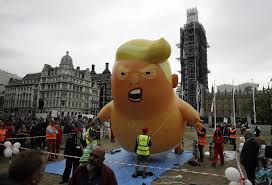
Trump applied for a personal trade visit in July of 2017. Protests ensued with the mayor of London floating a blimp of Trump as a big baby. The British Parliament were divided on allowing the visit at all, with PM May making no strong case either way. The Queen was not sure she had time for tea (she had time for Obama). Trump cancelled the visit in June and tried to negotiate trade from DC, to no success. Britain made trade deals with Norway, Iceland, Israel, and Palestine, but not the US.

Over the next two years Trump made trade deals with Mexico, Canada, Japan, and Korea. He visited the UK in July, 2019. This time Theresa May was more welcoming as the economy was stalling and she was facing an election. Still, the mayor’s blimp was brought out, towed around England following Trumps travels. There was also an official statue of Trump on the toilet, tweeting, and making fart sounds while saying “witch hunt,” “no collusion*”, etc. The statue was placed in front of Trump’s hotel, and followed him like the balloon, preventable insults not done to any other world leader. No deal was signed. These items now sit on display in a UK museum, as art.

I suspect Trump’s trade offers to the UK were similar to those with other partners, like with Japan, and Japan seemed very happy with the deal. Biden offered to renegotiate, and Japan’s Abe said no, and proposed Trump for the Nobel Prize. So why the British antagonism? Even if they would say no, as India did in 2020, they could have said no politely, as India did to Trump and to the UKs trade deal too.

Perhaps PM May was swayed by the anti-Trump German press (see magazine covers). To UK conservatives, Germany was the leader of Europe (this status has diminished), but May was voted out, replaced by Boris Johnson who was pro-Trump. Johnson’s government also rejected Trump’s deal, acting as if they could recreate the British empire of Queen Victoria — a silly thought. He tried for deals with India, Turkey, and Saudi Arabia. All said no. Then COVID came and the UK economy stalled. Johnson was removed, replaced by Rishi Sunak. Still no deal. Then Biden replaced Trump, and Rishi Sunak, got no deal with Biden. Clearly personality clashes are not the problem.

The UK needs a substantial trade partner or two, it seems to me, soon. Partners with bigger economies than Norway. Britain is suited to be a hub of commerce, information, and banking, currently without any good spokes. The US is the obvious partner. If personality clashes were the problem, there would have been a deal, perhaps between Rishi Sunak and Joe Biden. I suspect that a lot of it is national ego now, even though, since leaving the EU, the UK is doing better than Germany, UK leaders don’t like feeling second best to Brazil and India, recalling better times, perhaps before 1776.

Maybe it’s Biden’s fault that there’s been no deal, but I doubt it. Last week, British Foreign secretary, David Cameron, came to visit Trump at Mar a Lago for a good feelings chat and to start on a trade deal should Trump become president. It’s not clear that Trump will become president, and while it’s nice that there are hopes for a deal, and a need for a deal, I have to think they are not quite ready. If they were, we would not have to wait for a Trump presidency.

Robert Buxbaum, April 18, 2024 *”Russian collusion” was a big deal at the time. A dossier was supposed show that Trump was a Russian agent. It turned out the dossier was created by Democrats and the FBI director. They were trying to save America, they say.

Brown’s gas for small scale oxygen production.

Some years ago I wrote a largely negative review of Brown’s gas, but the COVID crisis in India makes me want to reconsider. Browns gas can provide a simple source of oxygen for those who are in need. First, an explanation, Browns gas is a two-to-one mix of hydrogen and oxygen; it’s what you get when you do electrolysis of water without any internal separator. Any source of DC electricity will do, e.g. the alternator of a car or a trickle charger of the sort folks buy for their car batteries, and almost any electrode will do too (I’d suggest stainless steel). You can generate pressure just by restricting flow from the electrolysis vessel, and it can be a reasonable source of small-scale oxygen or hydrogen. The reaction is:

H2O –> H2 + 1/2 O2.

The problem with Brown’s gas is that it is explosive, more explosive than hydrogen itself, so you have to handle it with care; avoid sparks until you separate the H2 from the O2. Even the unseparated mix has found some uses, e.g. as a welding gas, or for putting in cars to avoid misfires, increase milage, and decrease pollution. I think that methanol reforming is a better source of automotive hydrogen: hydrogen is a lot safer than this hydrogen-oxygen mix.

Browns gas to oxygen for those who need it.

The mix is a lot less dangerous if you separate the oxygen from the hydrogen with a membrane, as I show in the figure. at right. If you do this it’s a reasonable wy to make oxygen for patients who need oxygen. The electrolysis cell can be a sealed bottle with water and the electrodes; add a flow restriction as shown to create the hydrogen pressure that drives the separation. The power can be an automotive trickle charger. You can get this sort of membranes from REB Research, here and many other suppliers. REB provide consulting services if you like.

In a pinch, you don’t even need the membrane, by the way. You can rely on your lungs to make the separation. A warning, though, the mix is dangerous. Avoid all sparks. Also, don’t put salt into the water. You can can put in some baking soda or lye to speed the electrolysis, but If you put salt in, you’ll find you don’t make oxygen, but will instead make chlorine. And chlorine is deadly. If you’re not sure, smell the gas. If it smells acrid, don’t use it. This is the chlorine-forming reaction.

2NaCl + 2 H2O –> H2 + Cl2 + 2NaOH

Ideally you should vent the hydrogen stream out the window, but for short term, emergency use, the hydrogen can be vented into your home. Don’t do this if anyone smokes (not that anyone should smoke about someone on oxygen). This is a semi-patentable design, but I’m giving it away; not everything that can be patented should be.

Robert Buxbaum, May 13, 2021.

Are fewer people better?

Part of the push to help the oppressed and save the plant is push to decrease the birthrate both in the developed and undeveloped world. Putting of childbirth is supposed to lead to a more meaningful life, while academic excellence is considered meaningful. Child-raising is considered male oppression of women, while writing mediocre poetry is, we’re told elevating, it’s finding your voice. It’s the new mood, at least in the developed world.

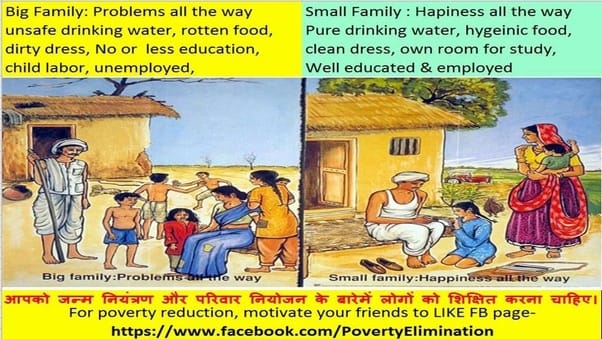
In the undeveloped world, political activism and wealth accumulation are presented as more meaningful, and fewer children is presented as a responsible route to wealth and happiness (see Indian advertisement below). My sense is otherwise, that children bring happiness and long term wealth. My sense is that the best two ways to change the world for the better is to work on yourself and to raise good children. And these Idas are connected; children are little mirrors, sometimes showing hidden flaws, sometimes revealing enthusiasm and greatnesses.

This month’s cover article of National Geographic includes economic justifications for fewer children and ecological justifications. Apparently we’re making life difficult for the polar bears. The assumption is that the bears like it cold, and their opinion is more important than that of animals that like it warm, like most humans.

There is also an assumption that there will be more jobs and better food if we have fewer children, or that people will be happier. Who are the “we” who are better off. I personally would not trade a billion randomly selected lives to lower the earth’s temperature 1 degree, or for the supposed happiness benefit of 1 million empty-nest households.

Robert Buxbaum, April 18, 2021. I like people more than polar bears, sue me.