Pearl of the Seas, one of several Great Lakes cruise companies.
The Great Lakes system presents a growing summer cruise opportunity, relatively untraveled, but so far relatively expensive. There’s great scenery, including Niagara Falls, Mackinac, Painted Rocks, Chicago, and the Soo Locks: interesting sites, and the options are growing. As a cheaper alternative, as interesting, IMHO, is the lower Saint Lawrence seaway, including Quebec City, Montreal, Portland and Prince Edward Island, leaving from Boston, NYC, or Philadelphia.
The 2026 Great Lakes season includes seven cruise lanes and 10 largish ships and 7 cruise lines, up from six lines and eight ships in 2025. Major lines include Viking, Pearl Seas, Ponant, and American Cruise Lines who provide over 800 port visits in 2026, up from 700 in 2025. The largest of the Great Lakes ships are smaller than those for Alaska and the Caribbean cruises, but more luxurious. On the St Lawrence, the ships are bigger, the prices lower, and you get more or less what you’d expect on an Alaska cruise, with an open bar, typically.
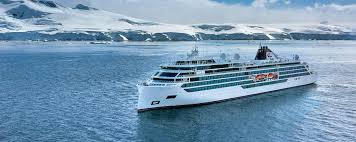
Viking Oceanis
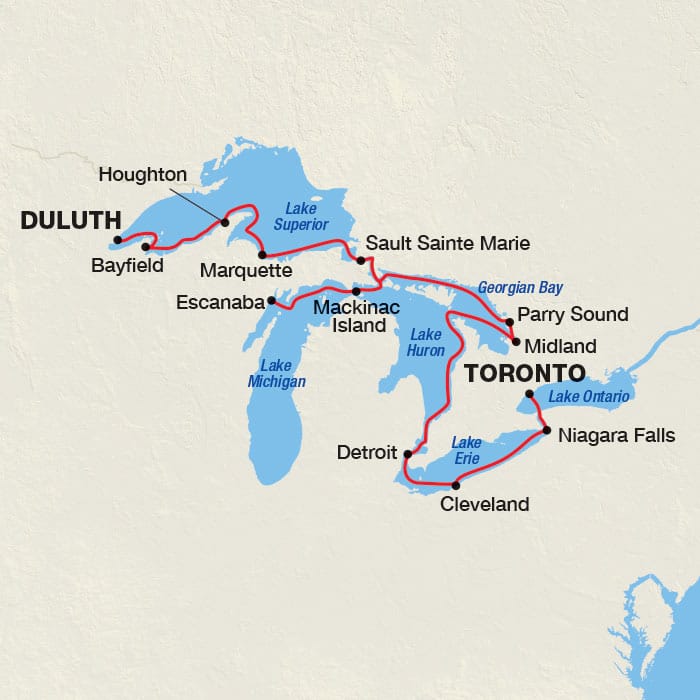
The cost differences are more than I would expect, but coming down, I expect. Currently, a nine-day Great Lakes cruise from a Viking Oceanis cruise from Cleveland costs a minimum of $8,675 per person. The 14-day version in the map above costs $14,270+. Details: https://l.cleveland.com/g2f86w. By comparison, a Boston to Quebec City cruise costs about $1200 per person, similar to a one week European or Alaska tour, on average.
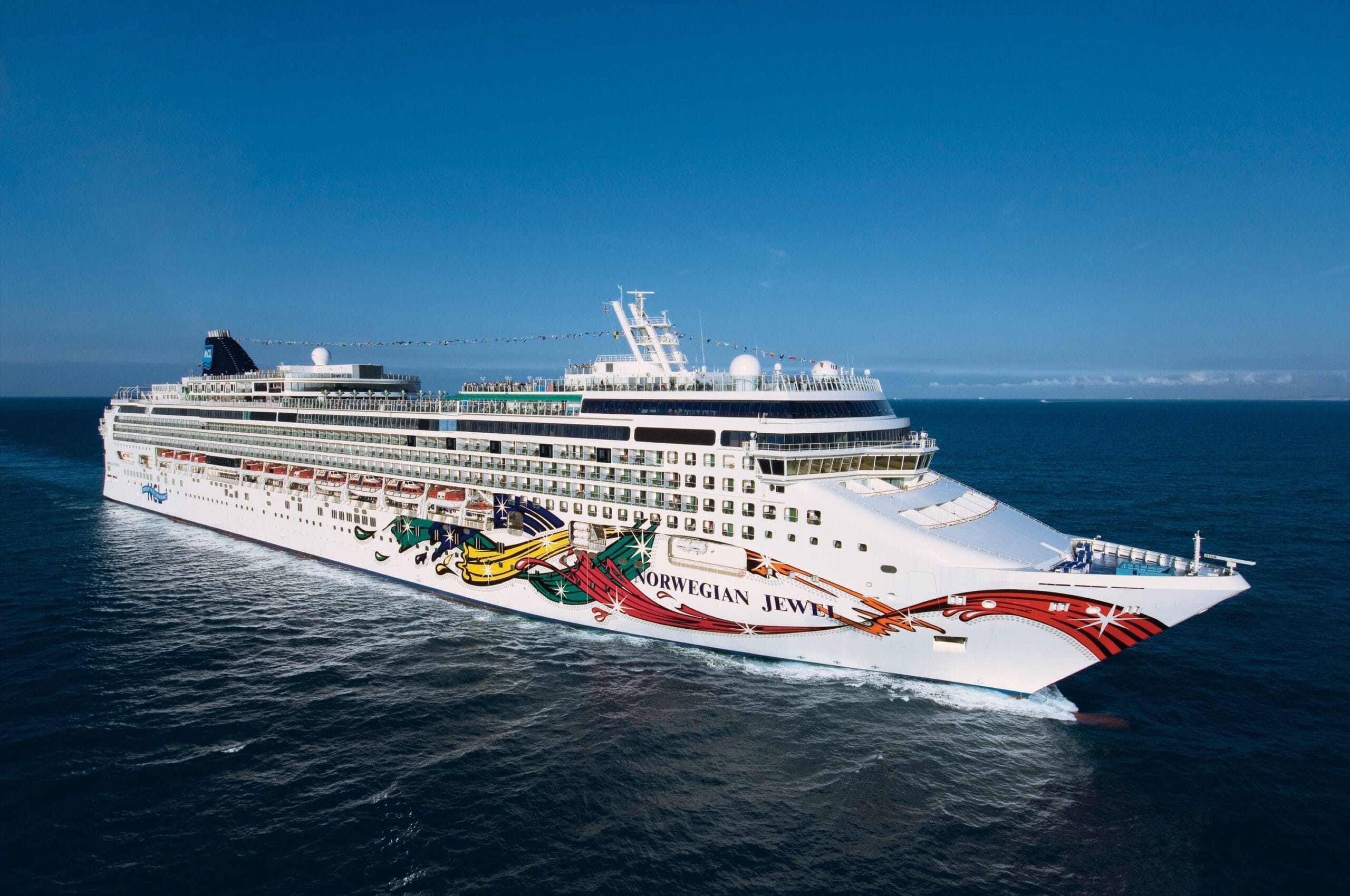
I put the blame for the high cost of Great Lakes cruising on the size limits of the locks on the St Lawrence canal and on the Niagara Falls, Welland Canal: 740 feet (225.5 m) in length, 78 feet (23.8 m) in width (beam), and 26.5 feet (8.08 m) of depth (draft). The largest cruise ship now operating on the Great Lakes, the Viking Oceanis, show above measures 665 feet (205 meters) length, by 77 feet (23.5 meters) width, by 19 feet, 8″ draft, barely smaller than the canal. It boasts a capacity for 378 guests and 256 crew members. By contrast, the Norwegian Jewel, a popular ship for the New York and Boston to Quebec City route holds 2,870 passenger and a crew of about 1,069. This explains some of the price difference but not all. The rest, perhaps is competition. A standard European cruise ship can be rerouted to the St. Lawrence, but not to the Great Lakes.
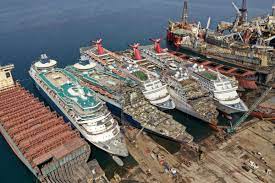
Aerial Norwegian Jewel
Norwegian Jewel – Norwegian Cruise Line
If one wanted to run a large cruise ship on the Great Lakes, it would have to be built there. It could be done, but isn’t currently. We make very large ore carriers that operate entirely on the Great Lakes, so the capacity exists. The other alternative would be to expand one of the canals. IF this were done, there would be a lot more competition and ships, and we could be served by much larger container ships as well. An unfortunate aspect of the small lock size of the Welland and upper St. Lawrence is that currently, only very small container ships can enter or leave the Great Lakes. The result is that cargo prices are much higher than for any of the US coastal ports or the Mississippi. Both the US and Canada would benefit from a larger connection to the sea.
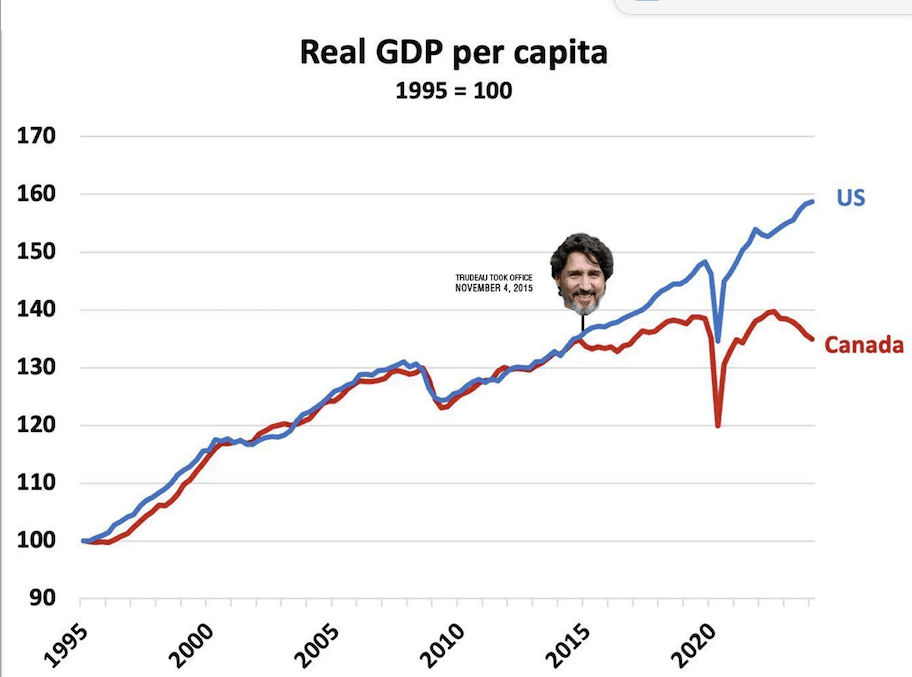
Canada has long-standing economic problems relative to the US, and they have been growing since 2015 as the figure shows (figure from a conservative, Canadian politician, Ryan Williams). These problems infect most of Europe, and will soon extend to the US. They are largely due to a declining birthrate, bad management, and an aging population. The result is a declining Canadian dollar (CAD), rising housing prices, rising national health costs and rising government debt. In both countries, life feels less affordable than in previous years, but the effects hit harder in Canada. Consider, for example, that the average salary in Toronto, Canada’s largest city, is $62,050 CAD. that’s pretty low by US standards, the equivalent of $45,000 US, well below the average salary in Chicago or Houston, two comparable US cities. In those cities the average is ~$63,000 US. Meanwhile rent prices in Toronto are about the same as in Chicago in US dollars, and far above rent prices in Houston. If you wish to buy a home, the price in Chicago is about half that in Toronto. Even with healthcare, life is generally more affordable in the US, and home ownership, though difficult, is not out of reach, especially in Houston.
Image generated by (for) Ryan Williams, a Conservative Canadian politician. It overstates the problems caused by Trudeau. Canada first began falling behind in the 1980s, though problems increased in 2015.
A main reason that Canadian housing is so expensive is permitting is difficult. Canada has plenty of space for housing, but it’s hard to get a permit to build, and it’s hard to sell the home, too. To be a real-estate agent in Canada, for example, you have to take a year-long course, and pass several stages of permitting tests costing $6000 -$10,000 CAD. In the US, it’s cheaper, about $1000 US and generally it requires only a month-long course. These same regulations also cause salaries to be low, by decreasing productivity. It is hard to start a company in Canada, and hard to retain good workers, since low-productivity workers have rights to equal pay for equal work, with no regard to productivity.
Canadian salaries also suffer from high immigration, particularly of low skill labor. Canada accepts about 500,000 immigrants per year, offering free healthcare and social services. During the Biden years, we accepted 6x more, about 3 million per year, mostly illegally, but Canada has 1/8 the population of the US and more generous benefits. As a result the decrease in affordability has been far greater. In the US and Canada, immigrants have been low skill or unemployed, presenting tough competition for native-born, low-skill workers, and burdening the government welfare system. There has been a push-back in Canada, as in the US, and Canada has begun removing illegal immigrants, as have we in the US. It’s less unpopular in Canada because Canadians see themselves as good no matter what they do. The Canadian population shrank by 0.15% last year, while ours continued to grow. In both countries, lower immigration of unemployed individuals, should lower housing prices, and should protect the welfare system. Of course some businesses benefit from low wage immigrant, and from the unemployed, the social services industry for one, Janitorial services for another. Rich folks are alway s complaining for more immigration because they find it’s hard to get cleaning help, and because they rarely pay taxes at any meaningful rate.
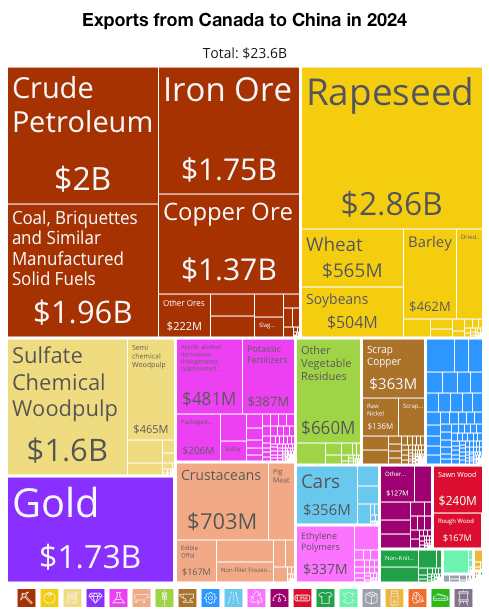
As a band-aide to these economic problems, both in Canada and the US, we have caught to raise government income through a new tax, tariffs. We’ve each put 25% tariffs on automobiles produced in the neighboring country. But Canada has a twist, it can benefit bringing bringing in high-tariff and prohibited imports from China and Cuba hoping the imports cross the border to the US. For example, they import Cuban cigars, and sell them near the border at inflated prices to Americans (largely) who smuggle them to the US. It worked too during prohibition for whiskey. In the last month, Canadian PM Carney reduced the tariff on 50,000 China-made EVs to 6.1%. If large numbers find their way to the US as new or used vehicles, the hope is that Chinese companies will buy manufactured goods from Canada, or evenest up manufacturing. It might work, though Cuba never set up cigar manufacturing in Canada. Typically Chinese companies send abroad nearly finished items, allowing the host country to add finishing touches that involve no technology but that can be claimed to raise the value significantly to avoid taxes. As the chart above, China imports from Canada are virtual all raw goods: food, petroleum, iron ore, gold… Technological expertise stays at home. Canada will need a home grown engine to get out of its funk.
At this point, the most likely home-grown engine is likely to be oil. Canada has oil, and the world needs it, especially China. Currently the Straight of Hormuz is effectively closed because of the war. Many countries are being hurt by this, but particularly China because of troubles in three of its major, sanctioned suppliers, Iran, Venezuela, and Russia. China will need a new source of oil, and will likely pay Canadian prices if the Canadian government can see through to provide infrastructure for export. Selling to China could also avoid a war.
Another thought, both to benefit Canada and the US, I’m pro-immigration, but suggest we target hard working, honest immigrants with usable skills: plumbers, cooks, programmers, cement workers … people who are unlikely to start out on welfare, and likely to provide a decent middle class lifestyle. The children from these immigrants integrate well in the US, and likely will into Canada. They integrate far better than the children of unskilled violent refugees. I also favor tariffs, especially on manufactured and luxury goods, like cars and wine. It provides government income, and promotes technical skill at home.
Japan’s decision to attack the US on December 7, 1941 was made a year earlier, December 1940, largely because of the need for oil, but also because of a perceived need for an empire. An approriate nave was fitted out, and airmen were trained. Nine months later, September, 1941, we cut off oil to Japan following Japan’s invasion of Indonesia and their ceasing the Indonesian oil fields. Japan now had the choice of war with us or of moderating their economy and ambitions. The worry is that China may choose the same if Iran and/or Russia goes off-line. That was my worry at the start of this essay. I’m no longer that concerned.
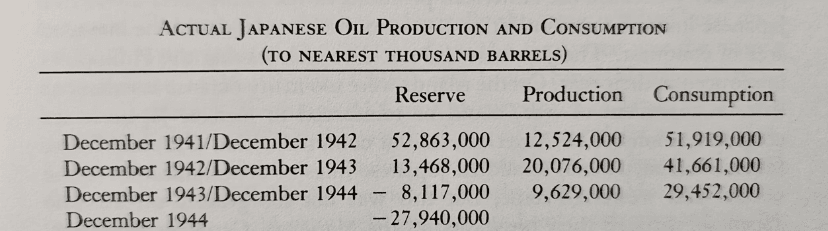
Some background, as I see it: China’s economy is larger than the IMF gives it credit for, In my opinion. I’ve calculated that it is 11% lager than the US calculated here based on food purchasing parity They also have a larger army and navy, 754 ships vs 440 for the US, with military ambitions for Taiwan and new, man-made islands in the China sea. They continue to add aircraft carriers and submarines (we’re still ahead there), and like Japan in 1940, China fuels all this with oil. They use some 17 million barrels per day: 11.3 million imported by ship. They put another million bb/day into a reserve of 2.2 billion barrels, amounting to 6 months of current use. Japan did the same in 1940-41.
This shows how dependent Japan was on foreign oil, before and during WWII. The cut off of imports sues them to attack Pearl Harbor, source = Sarah Paine, military historian
As with Japan, China’s internal production is far below their consumption, 4.5million bbl/day, a big vulnerability. One of their main suppliers, Venezuela, just went off line, sending 800,000 bbl/day of oil to the US. That’s oil that would have gone to China. Two other of their major suppliers, Iran and Russia have had delivery issues too; a disruption in oil could cause a revolt in China. Perhaps this fear will drive China to war with us in a drive for stability and empire.
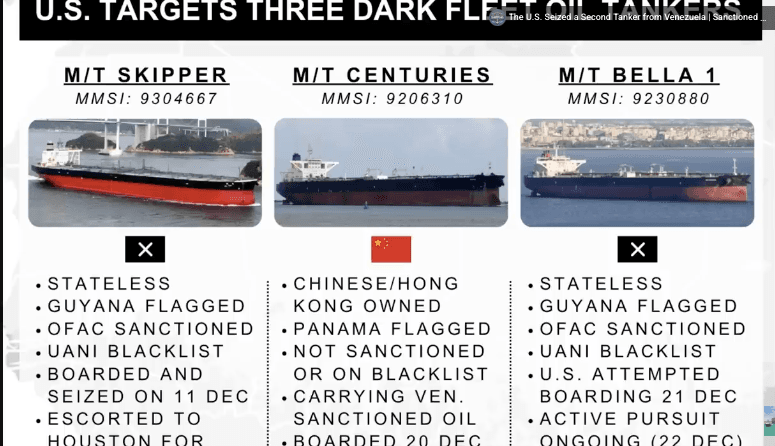
Currently, China buys most of its imported oil from four countries: Russia, Iran, Saudi Arabia, and Iraq; two of these are under sanction. China used to get another 0.8 million barrels per day from Venezuela, another country under sanction, but that route was closed by Trump last week. Buying from sanctioned countries saves them significantly, and supports the BRICS alliance, an alliance specifically against the US and the EU. The money China pays for oil supports the war against Ukraine, plus ISIS’s, war against us, and the mullahs oppression in Iran.
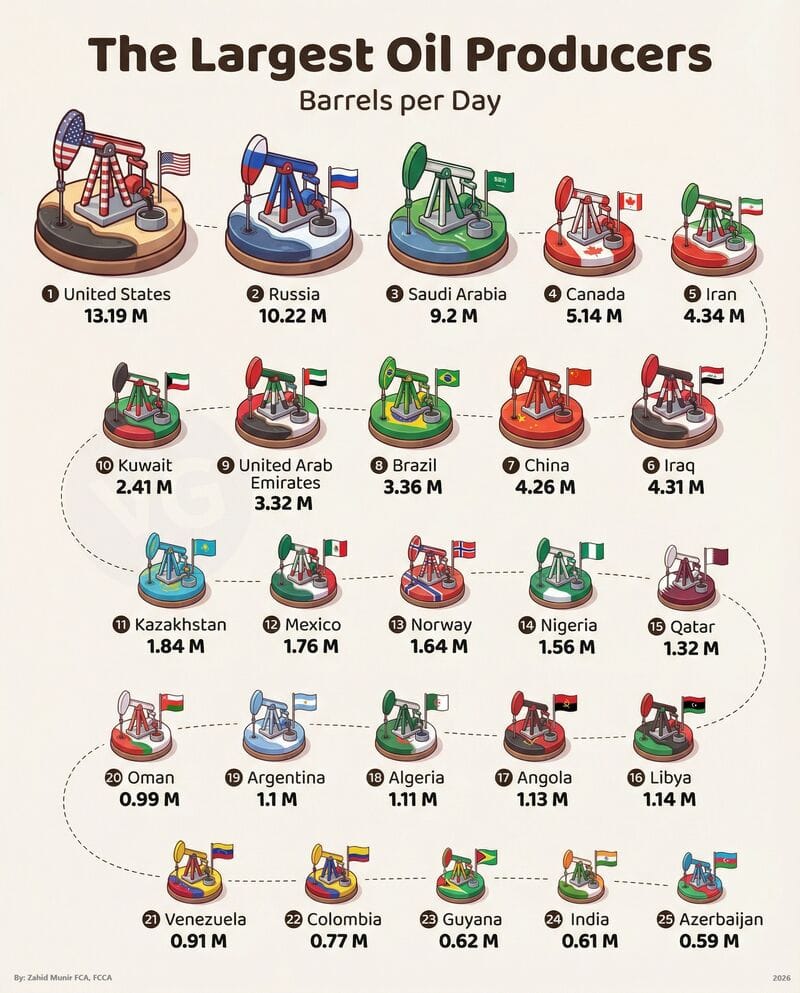
Oil production worldwide, 2024. How much China buys from each varies month to month.
The problem for China is that Russian production is under attack from Ukraine. Ukraine sank or disabled several Russian tankers, and we took some more; they’ve blown up pumping stations, including three on the Caspian Sea, set fire, to a large liquid natural gas terminal and damaged the major off-load platform for Kazakh oil. According to the Foundation for Democracy report, here, by October 2025, China was down to getting only 800,000 bbl/day from Russia, a major blow, and Ukraine’s attacks continue.
Some dark fleet ships captured by the US navy off of Venezuela, on their way to China with sanctioned oil.
Iran too is under attack. Up until recently they provided nearly 2 million barrels of oil per day, 90% of Iran’s seaborne export. Much of that went indirectly, shipped to Indonesia, turkey, Iraq, and Kuwait where it was relabeled, blended or refined to avoid sanction penalties. Everyone makes a profit here. But Iran is in the midst of a revolution, and last week, Trump imposed an across-the board 25% additional tariff on counties that help Iran avoid the sanctions. My guess is that this tariff will be effective and that it will last until the revolution is over. His tariffs have been effective and profitable, it seems, for us. They’re harmful for China, but not exactly a cause for war.
One reason I don’t expect a war with China is that China has many other, non-sanctioned suppliers, something Japan didn’t have. They buy some 1.6 million barrels per day from Saudi Arabia, 1.2 million bbl/day, from Iraq, 1.3 million bbl per day from Malaysia, 700,000/ day from Brazil, and about 900,000/day from the USA. While it would cost more, they could make up any losses in Russian or Iranian supply by buying more on the open market. Trump could cut China off totally, and that would be a devastating cause for war, but I don’t expect it. Still, for all I know, Trump’s activities in Venezuela and Iran are meant to force a war decision on China before they are strong enough to defeat us militarily. It seems to have been part of FDR’s logic in cutting off Japan.
The main peaceful way China has addressed it oil vulnerability, as best I can tell, has been to push EVs development. They’ve financed some 500 new EV companies who now (late 2025) provide about 50% of new Chinese automobiles. Another 19% are hybrids, the rest ICs. In the US, only 8% of new cars are EVs, and 16% hybrids. Large-scale use of EVs lessens the pressure on Chinese leaders to find oil sources, some 40% of oil imports can be assumed to go to fuel automobiles; if China were to go 80% EV, it would save 5.5 million barrels/day, more than it gets from Russia and Iran combined. For now, China still has a big need for gasoline, and has a big excess in EV manufacturing. It’s turned to Canada as a customer for EVs and as a supplier for oil, a smart move.
Last week, Canadian PM, Mark Carney visited China and announced a “Strategic Partnership” on Agriculture, energy, finance, and Global governance.” There’s no specific mention of oil, but it’s implied. China gets most favored nation status sending goods, including EVs to Canada at rates lower than on US goods. China will export some 50,000 EVs in 2026, rising to 70,000 by 2030 with tariffs set to 6.1%. US-made cars are tariffed at 25%. Canadians will get visa-free, tourist visits), plus a loan of $1B to be used buying Chinese ships. In Davos last week, “We are in the midst of a Rupture” away from the US. He urged the EU and other “middle powers” to band together. He talks like China is a good, reliable friend to Canada, and like the US isn’t. I would worry more about his comments and the “global governance” phrase, if the EU seemed to be going along, but it is not. Nor do I see a real move in China for war. I see positive effects of increased EV sales for China, Canada, and the world. Even if the quality isn’t great, Go Canada, go peace.
Per pound mile of material, the transport cost by ship is 1/4 as much as by train, and about 1/8 as much as by truck. Ships are slower, it is true, but they can go where trucks and trains can not. They cross rivers and lakes at ease and can haul weighty freight with ease. I think America could use many more ferries, particularly drive-on, fast ferries. I don’t think we need new fast rail lines, because air travel will always be faster and cheaper. The Biden administration thinks otherwise, and spends accordingly.
Amtrak gets $30 Billion for train infrastructure this year, basically nothing for ferries.
The Biden administration’s infrastructure bill, $1.2 Trillion dollars total, provides $30 Billion this year for new train lines, but includes less than 1% as much for ferries, $220 million, plus $1B for air travel. I think it’s a scandal. The new, fast train lines are shown on the map, above. Among them is a speed upgrade to the “Empire Builder” train running between Chicago and Seattle by way of Milwaukee. I don’t think this will pay off — the few people who take this train, takes it for the scenery, I think, and for the experience, not to get somewhere fast.
There is money for a new line between Cleveland and Detroit, and for completion of the long-delayed, and cost-over-run prone line between LA and San Francisco. Assuming these are built, I expect even lower ridership since the scenery isn’t that great. Even assuming no delays (and there are always delays), 110 mph is vastly slower than flying, and typically more expensive and inconvenient. Driving is yet slower, but when you drive, you arrive with your car. With a train or plane, you need car rental, typically.
New Acela train, 150 mph max. 1/4 as fast as flying at the same price.
Drive-on ferries provide a unique advantage in that you get there with your car, often much faster than you would with by driving or by train. Consider Muskegon to Milwaukee (across the lake), or Muskegon to Chicago to Milwaukee, (along the lake). Cleveland to Canada, or Detroit to Cleveland. No land would have to be purchased and no new track would have to be laid and maintained. You’d arrive, rested and fed (they typically sell food on a ferry), with your car.
There’s a wonderful song, “City of New Orleans”, sung here by Arlo Guthrie describing a ride on the historic train of that name on a trip from Chicago to New Orleans, 934 miles in about one day. Including stops but not including delays, the average speed is 48 mph, and there are always delays. On board are, according to the song, “15 restless riders, 3 conductors, and 25 sacks of mail.” The ticket price currently is $200, one way, or about as much as a plane ticket. The line loses money. I’ve argued, here, for more mail use to hep make this profitable, but the trip isn’t that attractive as a way to get somewhere, it’s more of a land-cruise. The line is scheduled for an upgrade this year, but even if upgraded to 100 mph (14 hours to New Orleans including stops?) it’s still going to be far slower than air travel, and likely more expensive, and you still have to park your car before you get on, and then rent another when you get off. And will riders like it more? I doubt it, and doubt the speed upgrade will be to 100 mph.
Lake Express, 30 mph across Lake Michigan
Ferry travel tends to cost less than train or plane travel because water traffic is high volume per trip with few conductors per passenger. At present, there are only two ferryboats traveling across Lake Michigan, between Michigan and Wisconsin, Milwaulkee to Muskegon. They are privately owned, and presumably make money. The faster is the Lake Express, 30 mph. It crosses the lake in 2.5 hours. Passenger tickets cost $52 one way, or $118 for passenger and car. That’s less than the price of an Amtrak ticket or a flight. I think a third boat would make sense and that more lines would be welcome too. Perhaps Grand Haven to Racine or Chicago.
Route of the Lake Express. I’d like to see more like this; St. Joseph to Milwaukee say, and along Lake Erie.
Currently, there are no ferries across Lake Erie. Nor are there any along Lake Erie, or even across Lake St. Clair, or along the Detroit River, Detroit to Toledo or Toledo to Cleveland. These lines would need dock facilities, but they would have ridership, I think. New York’s Staten Island ferry has good ridership, 35,000 riders on a typical day, plus cars and trucks. In charge are roughly 120 engineers, captains and mates, one employee for every 300 passengers or so. By comparison, Amtrak runs 300 trains that carry a total of87,000 passengers on an average day, mostly on the east coast. These 300 trains are run by 17,100 employees as of fiscal year 2021, one employee for every 4 passengers. Even at the slow speeds of our trains the cost is far higher per passenger and per passenger mile.
The Staten Island ferry is slow, 18.5 mph, but folks don’t seem to mind. The trip takes 20 minutes, about half as long as most people’s trips on Amtrak. There are also private ferry lines in NY, many of these on longer trips. People would take ferries for day-long trips along our rivers, I think. Fast ferries would be nice, 40 mph or more, but I think even slow ferries would have ridership and would make money. A sea cruise is better than a land cruise, especially if you can have a cabin. On the coal-steam powered, Badger, you can rent a state-room to spend the night in comfort. Truckers seem to like that they cover ground during their mandatory rest hours. The advantage is maximized, I think, for ferry trips that take 12 hours or so, 250 to 350 miles. That’s Pittsburgh to Cincinnatti or Chicago to Memphis.
New York’s Staten Island ferry leaves every 15 minutes during rush hour. Three different sizes of boat are used. The largest carry over 5000 passengers and 100 cars and trucks at a crossing.
A low risk way to promote ferry traffic between the US and Canada would be to negotiate bilateral exemption to The Jones Act and its Canadian equivalent. Currently, we allow only US ships with US crews for US travel within the US.* Cabotage it’s called, and it applies to planes as well, with exemptions. Canada has similar laws and exemptions. A sensible agreement would allow in-country and cross-country travel on both Canadian and US ships, with Canadian and/or US crew. In one stoke, ridership would double, and many lines would be profitable.
Politicians of a certain stripe support trains because they look futuristic and allow money to go to friends. Europeans brag of their fast trains, but they all lose money, and Europe had to ban many short hop flights to help their trains compete. Without this, Europeans would fly. There is room to help a friend with a new ferry, but not as much as when you buy land and lay track. We could try to lead in fancy ferries going 40 mph or faster, providing good docks, and some insurance. Investors would take little risk since a ferry route can be moved**. Don’t try that with a train.
In Detroit we have a close up of train mismanagement involving the “People Mover.” It has no ridership to speak of. Our politicians then added “The Q line” to connect to it. People avoid both lines. I think people would use a ferry along the Detroit river, though, St. Claire to Wyandotte, Detroit, Toledo — and to Cleveland or Buffalo. Our lakes and rivers are near-empty superhighways. Let’s use them.
Robert Buxbaum, January 2, 2024. *The US air cabotage act (49 U.S.C. 41703) prohibits the transportation of persons, property, or mail for compensation or hire between points of the U.S. in a foreign civil aircraft. We’ve managed exemptions, though, e.g. for US air traffic with Airbus and Embraer planes. We can do the same with ferries.
** I notice that it was New York’s ferries, and their captains, that rescued the people on Sullenberger’s plane when it went down in the Hudson River — added Jan. 6.
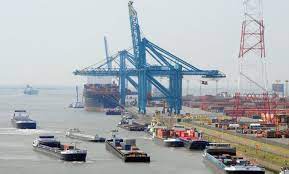
If you visit most any European port city, you’ll see a lot more shipping than in the Midwestern US. In Detroit, where I am, your’ll see an occasional ore boat from Wisconsin, and an occasional tourist cruise, but nothing to compare to German, Belgian, or Turkish ports. The reason for the difference is “The Jones act.”
The port of Istanbul with many ships
The Jones act , also known as “The Merchant Marine Act of 1920”, requires that all ships depositing cargo or people between US ports must be US owned, US built, US captained, US flagged, and at least 70% US manned. This raises costs and reduces options. The result is that few ships can move people or cargo between US cities, and these ships are older and less efficient than you’ll see elsewhere. World wide water traffic costs about 1/8 that of rail traffic per ton-mile, but in the US, the prices are more comparable. The original justification was to make sure the US would always have a merchant marine. The Jones act does that, sort of, but mostly, it just makes goods more expensive and travel more restrictive.
The port of Detroit — we rarely see more than one ship at a time.
Because it does some good, I don’t want to get rid of the Jones act entirely, but I’d like to see US shipping options expanded. Almost any expansion would do, e.g. allowing 50% US manned ships delivering along US rivers, or expanding to allow Canadian built ships or flagged, and ships that are more than 50% US owned, or expanding to any NAFTA vessel that meets safety standards. Any expansion of the number of ships available and would help.
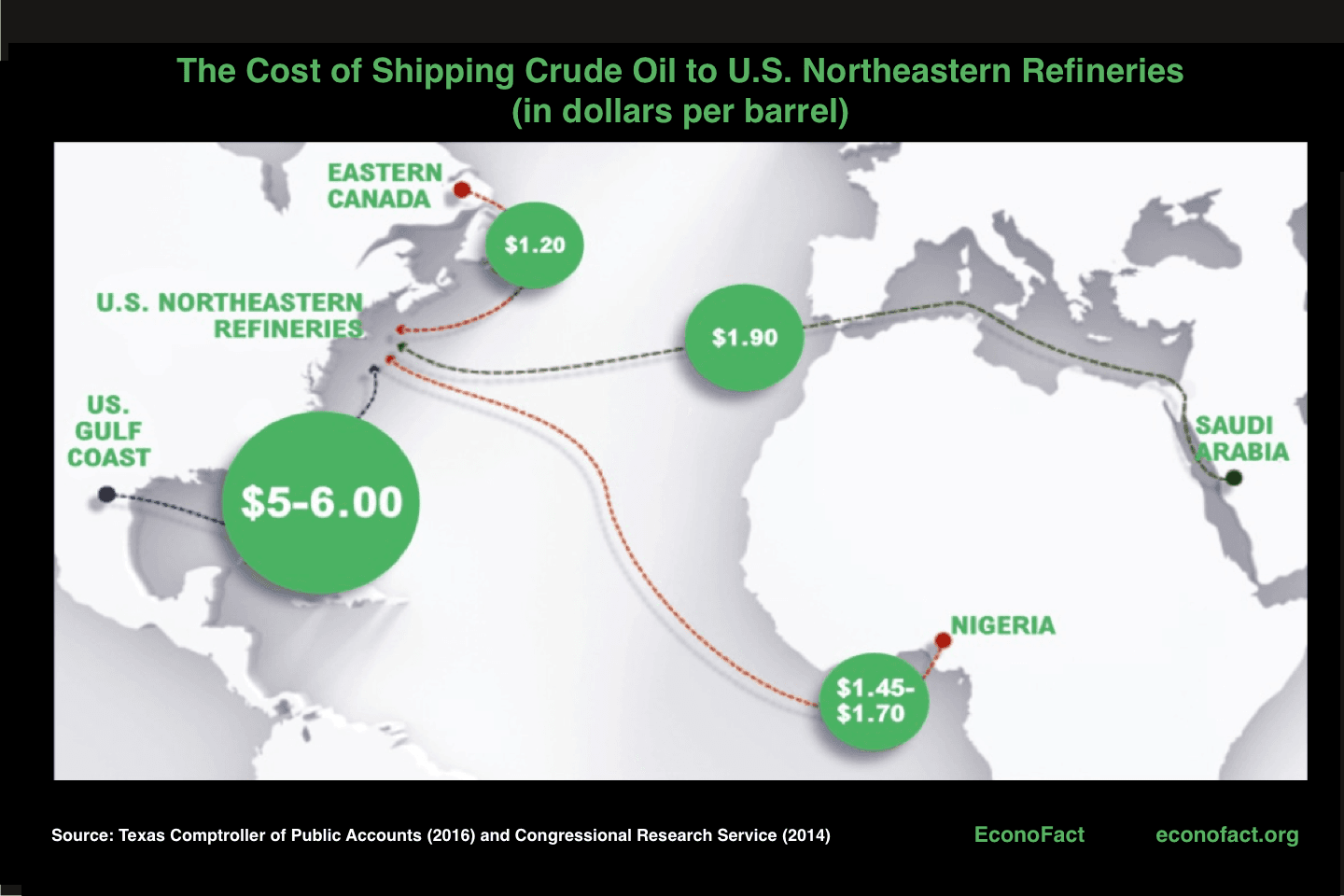
The jones act increase the price of oil transport by a factor of five, about.
Currently, the only exceptions to the Jones act are for emergencies (Trump voided the act during several storms) and for ships that visit a foreign port along the route. This exception is how every cruise ship between California and Hawaii works. They’re all foreign, but they stop in Mexico along the way. Similarly, cruises between Florida and Puerto Rico will stop in Bermuda typically, because the ships are foreign owned. Generally, passengers are not allowed to get off in Puerto Rico, but must sleep on board. This is another aspect of the Maritime act that I’d like to see go away.
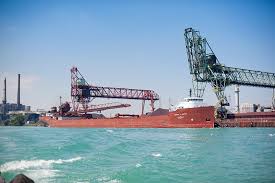
Because of the Jones act, there is some US freight-ship building, and a supply of sailors and captains. A new, US ore-ship for the Great Lakes was launched last year, so far it’s been used to carry salt. There is also a US built and operated cruise ship in Hawaii, the “Pride of America,” that makes no stop in Mexico. I’d like to see these numbers expanded, and the suggestions above seem like they’d do more good than harm, lowering prices, and allowing modern container ships plus roll-on-roll-off car transports. Our rivers and lakes are super highways; I’d like to see them used more.
The port of Antwerp – far busier than Detroit.
Another way to expand the Jones act while perhaps increasing the number of US-built and operated ship would be through a deal with Canada so that ships from either country could ply trade on either countries rivers. As things stand, Canada has its own version of the Jones act, called the Coastal Trade Act where Canadian vessels must be used for domestic transport (cabotage) unless no such vessel is available. Maybe we can strike a deal with Canada so that the crew can be Canadian or US, and where built ships in either country are chosen on routes in either country, providing they meet the safety and environmental requirements of both.
Canada’s healthcare is free to the user. It’s paid for by taxes, and it includes a benefit you can’t get in the US: free, doctor assisted suicide, euthanasia. This is a controversial benefit, forbidden in the Hippocratic oath because it’s close to murder, and includes the strong possibility of misuse of trust. Assistance by a trusted professional can be a bit likes coercion, and that starts to look like murder — especially since the professional often has a financial incentive to see you off.
From Charlie Hebdot (a French, humor magazine): The medical association refuses to participate in euthanasia — Why? People are already dining quite well on their own waiting in the emergency room.
In 2021, according to Statistics Canada, Canada assisted the suicide of 10,064 people, 3.3% of all Canadian deaths. There were about 4,000 more, non-assisted suicides. In Quebec, the Canadian Provence where Medical Assistance in Dying (MAiD) is most popular, 5.1% of deaths result from MAID. The Netherlands has a similar program that results in 4.8% of deaths. In Belgium, it’s 2.3%. These countries’ suicide rates are far higher than in the US, and account for far more deaths, per capita than from guns in the US. My guess is that suicide is common because it is free and professional. It’s called “Dignity in Dying,” in Europe, a title that suggests that old folks who don’t die this way are undignified.
In Canada, about 80% of those who requested MAiD were approved. A lot of the remainder were folks who died or changed their mind before receiving the fatal dose. If you attempt suicide on your own, it’s likely you won’t succeed, and you may not try again. With doctor assisted suicide, you’re sure to succeed (even if you change your mind after you get your lethal shot?)
In Canada you don’t have to be terminally ill to get MAiD, you just have to be in pain, and extreme psychological pain counts. Beginning March 17, 2024, depression will be added as a legitimate reason. According to Canadian TV news, depressives are lining up (read some interviews here). Belgium and Netherlands allows elders to be euthanized for dementia, and children to be euthanized on the recommendation of their parents. France passed similar legislation, but the doctors refused to go along, see cartoon. I applaud the French doctors.
Rodger Foley says he’s being pressured to ask for medical suicide, picture from the NY Post
There have been persistent claims that Canadian doctors and nurses push assisted suicide on poor patients, telling them how much bother they are and how much resources they are using. There has been an outcry in British and American newspapers, e.g. here in the Guardian, and in the NY Post, but not in Canada, so far. Rodger Foley, a patient interviewed by the NY Post, recorded conversations where his doctors and nurses put financial pressure on him. “They asked if I want an assisted death. I don’t. I was told that I would be charged $1,800 per day [for hospital care]. “I have $2 million worth of bills. Nurses here told me that I should end my life.” He claims they went so far as to send a collection agency to further pressure him. In another case, a disabled Canadian veteran asked for a wheelchair ramp, and was told to apply for MAiD.
Even without outside pressure, many people seeking MAiD often cite financial need as part of the reason. A 40 year old writer interviewed by Canadian television said that he can’t work and lives in poverty on a disability payment of just under $1,200 a month. “You know what your life is worth to you. And mine is worthless.”
The center of the argument is the value of a person in a social healthcare state when their economic value is less than the cost of keeping them alive. Here, Sabine Hossenfelder, an excellent physicist, argues that the best thing one could do for global warming and ecology is to have fewer people. Elon Musk says otherwise, but Ms Hossenfelder claims this only shows he is particularly unworthy. There’s a Germanic logic here that gave us forced euthanasia in the 1940s.
I find euthanasia abhorrent, especially when it’s forced on children, the elderly, and depressed folks. I also reject the scary view of global warming, that it is the death of the earth. I’ve argued that a warm earth is good, and that a cold earth is bad. Also, that people are good, that they are the reason for the world, not its misfortune. It seems to me that, if suicide aid must be provided, state-funded hospitals should not provide it. They have a financial incentive to drop non-paying, annoying patients. That seems to be happening in Canada. A patient must be able to trust his or her doctor, and that requires a belief that the doctor’s advice is for his or her good. Unfortunately, Canadian politicians have decided otherwise. I say hurray for the doctors of France for not going along.
Canada is a fine country, rarely appreciated in the USA because most of it is so similar to us — One of my favorite places to visit in Canada was the museum of Canadiana — a museum dedicated to the differences between the US and Canada. Differences do exist, but they are few and small, as you can tell perhaps from the song below, “God Bless You Canada,” by Lee Greenwood, the same fellow who wrote, “God Bless the USA.” The tunes and words are strongly similar, I’d say.
Canadian $2 coin, Elizabeth II, by the grace of god, Queen (it’s in Latin).
Canada has a Queen, Elizabeth II, that it shares with several other countries including England, Australia, and Barbados. This is no to say that Canada isn’t quite independent: the main power of Canada’s Queen, like with the US president, is “the bully pulpit”. As in The United States. The press does its best to rein in this power.
If Canada were to join the US as the 51 state, it be the 3rd largest state in population (after Texas and California) and the 3rd largest in GDP (after New York and California). Not that all of Canada is likely to join, but certain parts might (New Brunswick, Newfoundland, Labrador) if Quebec goes its separate way. Québécois like remember that they were originally French. “Je me Souviens” is the Quebec motto, and having an English Queen irks. One of my favorite Canada facts (maybe true) is that the name Canada is French for Ça nada (nothing here) but tit’s not sure, there is stuff and people there. My wife is from there. Listen to the song, “God Bless you, Canada”, I suspect you’ll like it.
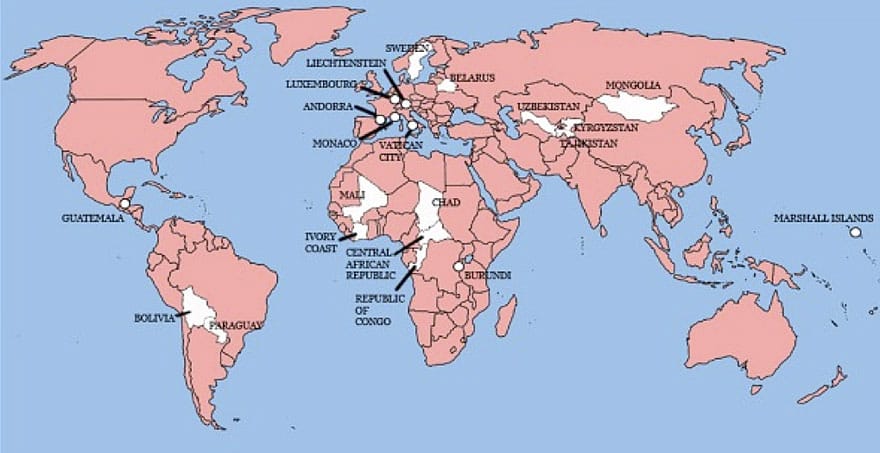
The map below shows, in white, all the countries that England has not invaded.
The white spots on this map are the countries that England has not invaded.
England now controls virtually none of these countries. In most of these, English is the national language, or the language of business, and defeating the British is hailed as the central national experience. Still, many have opted to become part of the British Commonwealth, a loose organization of ex-British states. Generally this requires agreeing to the rule of the Queen, despite having nominally free states. Entering Canada, for example, one finds a picture of Elisabeth II, Queen of Canada, And there are royal colleges where inventions belong to her. The same with Australia and New Zealand. The question to ask, then, the question despots have asked, is how did the English manage it –or perhaps, how can I extend my despotism the same way. Part of the answer, it seems to me, is that England used tall, silly hats: Busbys and Bearskins.
The Queen of Canada reviews her troops. She’s wearing a Busby; he’s in a bearskin.
The Bearskin hat is perhaps the silliest hat in worldwide military use, and certainly the largest. The bearskin is made of the complete skin of a black or a brown (grisly) bear dyed black, The skin is shaped over a wicker frame to stand 16″ tall (a black bear skin is used for enlisted men, and a grisly bear for officers). It is heavy, quite fuzzy, and completely non-aerodynamic and protects the head not at all. As best American military experts have found, it only makes the person wearing it a better target for being shot. And yet, Britons have striven to be given the honor of wearing this thing. There is also a slightly shorter, slightly fuzzier version of the Bearskin worn by officers. It’s called a Busby, and it’s made from beaver skin. Even in this day of social correctness, skins are found for this use, and “harvested”, mostly in Canada.
The front-line British soldiers in the American Revolution wore these hats when they marched in ranks to attack the colonials at Lexington and Concord, and again at Bunker Hill, and again, in the war of 1812 at New Orleans. It made them slow, impressive, and dead. Because of their weight, these hats are often worn with a leather collar to help support them. The collar makes it hard for soldiers to look down, a plus for soldiers on parade, but a minus when walking over uneven ground, e.g. when attacking Bunker Hill. You’d think the British would have given up on these weird hats long ago, but the British won in many conflicts and have come to dominate many countries. They seem to credit the hat, I’m beginning to think it deserves more attention than it’s gotten.
The hat they wore through the war of 1812, through the Crimean war and the Boer war; in the heat of the Indian revolts, in Africa, and to this day for show makes British soldiers look taller, and more elegant. It makes them stand straighter than most, and gives guards an other-worldly appearance. American soldiers uniformly reminisced how hard it was to shoot someone who marched so elegantly. The Queen likes them, and she, after all is nothing if not elegant. Perhaps the unworldly elegance of the bearskin give soldiers the courage to invade countries and die in the name of a sovereign who reigns by Devine right as expressed through the sword Excalibur ‘of pure Semite’, whatever that is. It’s a story that not one adult Britain believes, yet they die for (why?) Perhaps it’s the honor of mass craziness. Perhaps, because they see simple folks are impressed by soldiers wearing the tall funny hats (I guess thats why some US marching bands use them). And then again, it might be pure luck, superstition, and stupidity. The method of science would be to ask if other countries or team bands do better while wearing the silly hats. I suspect not, but it deserves statistical analysis.
Americans are among the richest and best paid people in the world. On a yearly basis, Americans produce and earn about 20% more than Britons and about 30% more than Japanese. On an hourly basis, counter to what you might expect, American workers produce about 30% more than Britons or Canadians, and about 50% more than the vaunted Japanese.
Per hour worker productivity, from the Economist. We do OK for backward hicks.
French and German workers produce about as much as we do, per hour, but tend to work fewer hours. Still, the differences are not quite what you might expect. French workers take many more hours off than we do and are still so much more productive than the British that it appears they could take an extra month off and still beat them in yearly output. Japanese workers meanwhile produce only as much as the French, per year, but take far more hours to do it. One thought is that it’s all the vacation time that makes French so productive and it’s perhaps the lack of vacations that causes the Japanese to be relatively unproductive.
Not that vacation time alone explains our high productivity, nor that of the Germans or Italians relative to the Canadians and Britons. One part of an answer, I suspect, is that we put fewer roadblocks to workers becoming business owners, and to running things their own way. Another thought is that US and Germany have a low minimum wage, comparatively, and Italy has no minimum wage at all; Germany had no minimum wage in 2013, the time of the productivity comparison. In countries like this, there is a larger profit to be had by clever individuals who work hard, think, and start their own businesses. With minimal requirement on how much to pay, the business owner can bring to bear a mix of low-wage, minimally productive workers with labor-saving innovation, allowing them to become rich while decreasing unemployment. It also allows them to serve otherwise under-served parts of the market and profit from it. And profit is a powerful motivator. As Friedrich Nietzsche said, “a why beats a how.”
The nine European countries with no minimum wage are among the richest on the continent, and among those with the lowest unemployment: Iceland, Lichtenstein, Norway, Sweden, Finland, Denmark, Austria, Italy, and Switzerland. By contrast, England, Canada, and Japan have relative high minimum wages and relatively high unemployment. There are also some poor countries with no minimum wage (Egypt, Zimbabwe, Rwanda…) but these countries suffer from other issues, like rampant crime. I’ve argued that the high “Living Wage” in Detroit is a major cause of Detroit’s high unemployment and bankruptcy. If low minimum wage is a major source of American worker productivity and wealth, it would be a real mistake to raise it.
Worker productivity is the best single predictor of long-term national success. As such, the long-term prediction for Britain, Canada, and Japan is not good. Unless something changes in these countries, we may expect to see them off to a long, dark tea-time of declining significance. Perhaps, it is a fear of this that was behind the resounding defeat of the Labour party in British elections last week. The Labour government oversaw England’s last big drop in productivity.
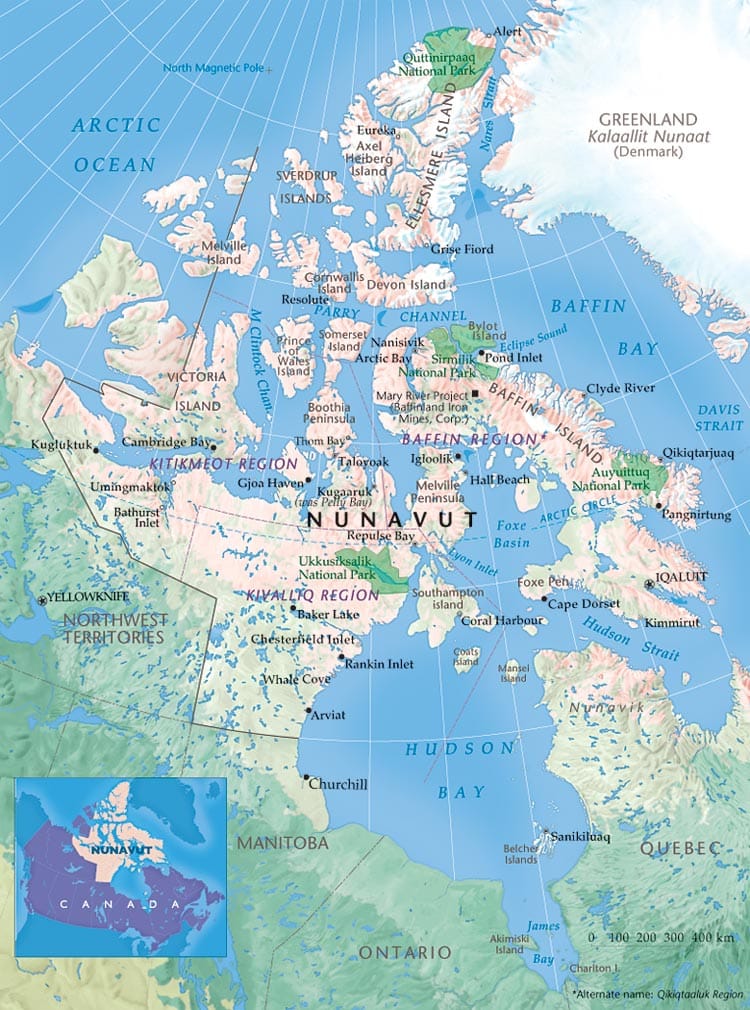
The Northwest passage opened briefly last year, and the two years before allowing some minimal shipping between the Atlantic and the Pacific by way of the Arctic ocean, but was closed in 2013 because there was too much ice. I’ve a business / commercial thought though: we could make a semi-permanent northwest passage if we dredged a canal across the Bootha peninsula at Taloyoak, Nunavut (Canada).
Map of Northern Canada showing cities and the Perry Channel, the current Northwest passage. A canal north or south of the Bootha Peninsula would seem worthwhile.
As things currently stand, ships must sail 500 miles north of Taloyoak, and traverse the Parry Channel. Shown below is a picture of ice levels in August 2012 and 2013. The proposed channels could have been kept open even in 2013 providing a route for valuable shipping commerce. As a cheaper alternative, one could maintain the Hudson Bay trading channel at Fort Ross, between the Bootha Peninsula and Somerset Island. This is about 250 miles north of Taloyoak, but still 250 miles south of the current route.
The NW passage was open by way of the Perry Channel north of Somerset Island and Baffin Island in 2012, but not 2013. The proposed channels could have been kept open even this year.