Category Archives: Business

The main building block of Alzheimer’s research was faked. Now, what.

Much of health research is a search for simple, bio-molecular causes for our medical problems. These can result in pill-solutions. Diseases tend to be more complex, but Alzheimers seemed to work that way, until this summer when it turned out that the data supporting the simple theory was faked. Alzheimer’s is a devastating cognitive disease that is accompanied by a degenerating brain, with sticky, beta-amyloid plaques and tangles. About 16 years ago, this report, published in Nature seemed to show that a beta-amyloid, Aβ*56, caused the plaques and caused cognitive decline independent of any other Alzheimers indicators. 

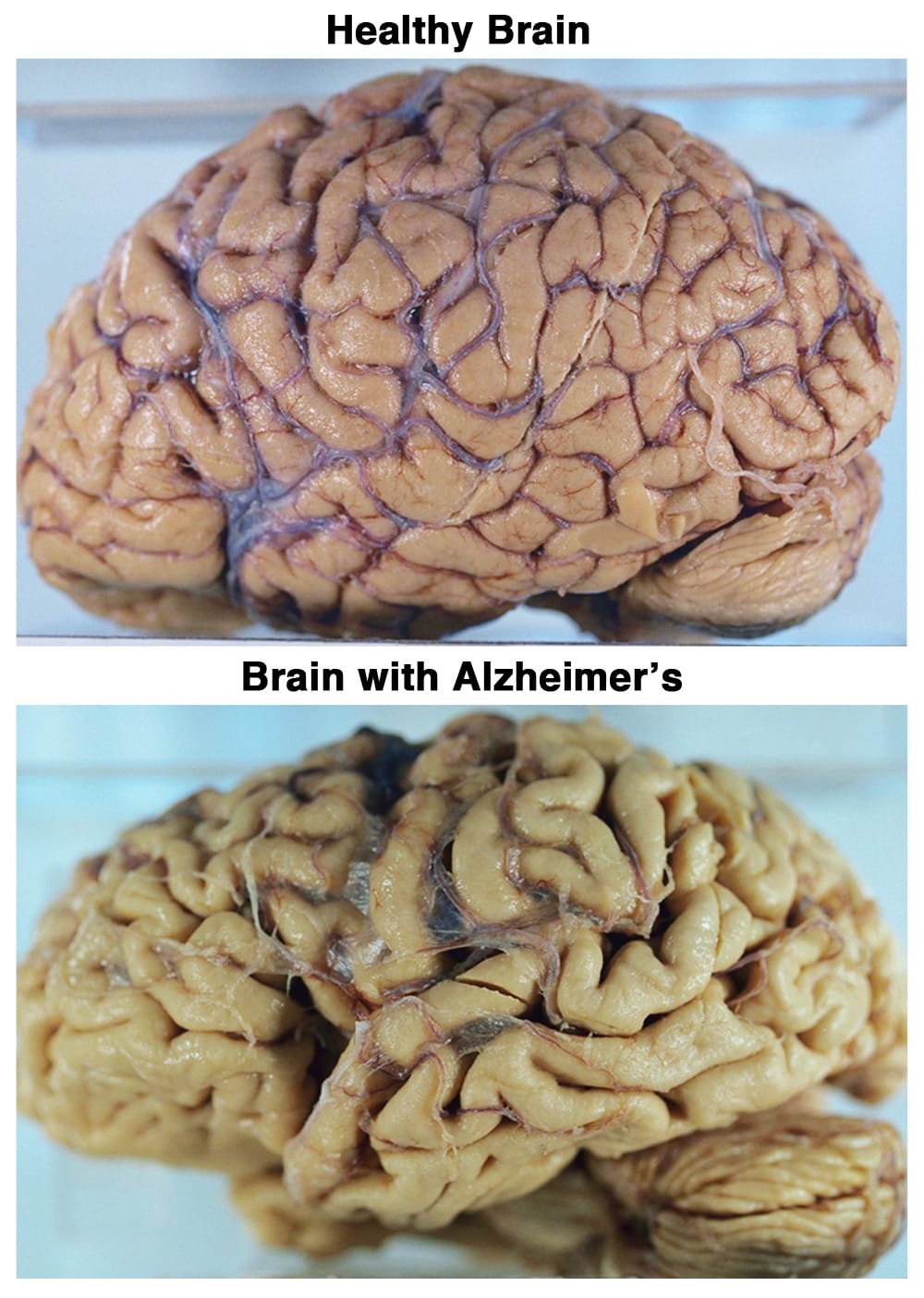
The visual difference between an Alzheimer brain and a normal brain is that the former has shrunk. Maybe fat is relevant, fat body leads to a fat brain, and less AZ, maybe?

We were on the way to a cure, or so it seemed. Several studies by this group backed the initial results, and much of Alzheimer’s research was directed into an effort to fill in the story, and find ways to reduce the amount and bonding of this amyloid and others like it. Several other groups claimed they could not find the amyloid at all, or show that amyloids caused the symptoms described. But most negative results went unpublished. The theory was so satisfying, and the evidence from a few so strong, that the NIH poured billions into this approach, over $1B in this year alone. The FDA approved aducanumab, a drug from Biogen, on the assumption that it should work, even though it showed little to no benefit, and had some deadly side effects. Other firms followed, asking for approval of related anti-amyloid drugs that should work.

When news of the fraud came out, detected by Matthew Scragg and a few lone curmudgeons, stock prices plummeted in the drug companies. It now appears that the original work was made up, presented to journals and to the NIH using photoshopped images. For the group that did the fake work, it may mean jail time, for most other groups, the claim is that their work is still relevant. Doctors still prescribe the medications as they have nothing better to offer (Aducanumab therapy costs $50,000 per year). Maybe it’s time to start looking at alternative approaches and theories, sidelined over the last 16 years.

Some alternative theories posit that another molecule is responsible, particularly tau, associated with the tangles. Another sidelined theory is that amyloids are good. For example, that it’s the loss of soluble amyloids that causes Alzheimer’s. Alternately, that inflammation is the root cause, and that the amyloid plaques and tangles are a response to the inflammation, a bandage, perhaps. These theories could explain why the anti-amyloid drugs so often resulted in patient death.

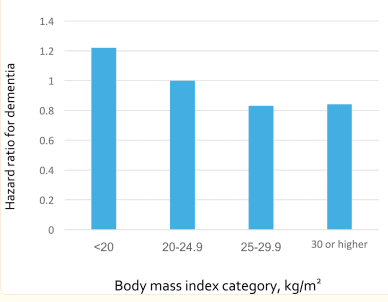
It could be that high bmi protects from dementia. Either that or the diseases that cause weight loss cause dementia. It’s debated here.

It’s also possible that the inability of nerve cells to dispose of waste is the cause of AZ. In heathy people, waste is removed through acidic enzymes within lysosomes. Patients with decreased acid activity have a buildup of waste that includes amyloids. Perhaps the cure is to restore the acid enzymes.

My favorite theory is based on statistical data that shows that fat people are less likely to develop Alzheimers. This might lead to a junk-food cure. The fitness industry is very much against this theory–It’s debated here. They tend to support the inflammation model, claiming that diseases cause Alzheimer’s and cause patients to loose weight first. Could be. I note that Henry Kissinger is the only active politician of my era, the early 70s, still alive and writing intelligently.

Robert Buxbaum, November 17-19, 2022. I hope that Matthew Schragg comes out OK, by the way. Ben Franklin pointed out, that “No good deed goes unpunished.”

Tests designed so that the Ivies pick preppies.

Elite colleges strive to be selective, and they are, just not for the hard-working scholars they claim to select for. They claim to be color-blind, income-blind, and race-blind, aiming for the best: the most intelligent, most ethical, and hardest working scholar-candidates. Then, to their surprise and satisfaction, all the ivies find that the vast majority of the chosen come from the same rich families and prep-schools as 100 years ago. That happens because the selection is crooked with measures tilted to the rich, Protestant, and preppy.

Through most of the 1900s, most of the ivies had a Jewish quota, enforced formally or informally. They also did their best to discourage middle class, black, and Catholic students in the interest of maintaining the proper student mix. Under Woodrow Wilson, Princeton went further and admitted not one black student. When quotas became illegal, schools began to rely on athletics and tests, with blatant cheating as revealed by the “Varsity Blues” sting operation. In that sting, a dozen or more athletic coaches and high-school administrators were caught taking SAT tests for their richer, connected students, and/or making up phony athletic achievements. The Ivies claimed shock after the cheating was revealed, but it is beyond belief that no one had noticed that these top brains and athletes were neither.

Many top athletes are diagnosed as asthmatic. Some actually are. With the right doctor, you can get an advantage

Another version of this is that richer kids can get extra time to do SAT and ACT tests. The extra time doesn’t show up on the SAT or ACT score, you need a doctor to certify that you are dyslectic or have severe ADHD. Most boys are diagnosed with ADHD these days, itself something of a scam, but most boys don’t get extra test time. You need the right doctor and the right documentation, plus enough money and connections to get the test given by certified test-giver in your own private room. It used to be that the SAT and ACT would report the extra time, but this changed in 2004. Now the extra time, and the disease is not documented, just the higher score. There have been complaints, but the scam goes on. Similar to this, top Olympic athletes can be diagnosed with asthma, and allowed to use performance enhancing, anti-asthma steroids. Again complaints, but no change.

Ivy League schools also tilt to the right families by requiring signs of the right sort of leadership as evaluated by an interview and an essay (see my post on John Kennedy’s essay). You score high on leadership if you helped your relative run for governor. By contrast, if you organized a ping-pong or basketball tournament at your Catholic or Jewish school, you’re the wrong sort of leader. Eagle Scout is sort-of the right sort, and speaking against climate change on TV is. Greta Thernberg and Chelsea Clinton are climate leaders; you, probably are not.

The Ivys explicitly state that they choose for athleticism, but not all sports are equal. All the Ivies claim to need a good women’s lacrosse team, a good crew team, and some good high-divers. Are these sports unavailable at your high-school? What a shame, you’re not a real athlete. You can still try to get in based on extreme leadership and academics.

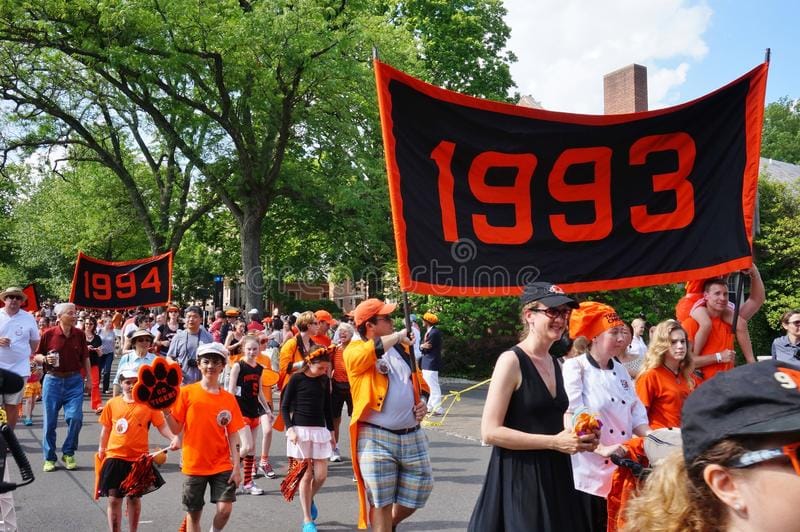
The Princeton alumni of 1993-1994 were primarily white, rich and preppy. Favoring their children helps insure that the class of 2024 is that way too.

There is no real reason that Harvard needs a top crew team, or needs to excel at women’s lacrosse or high-diving. Sport was not an admission criteria in the 1800s. It was added in the 1900s to avoid admitting Catholics, Jews, and Asians who tended to score well but could not compete on the selected sports. The president of Harvard, Abbot Lowell wrote, “Somehow or other the enrollment of the Jewish students must be limited”. The method he chose, and that all the Ivies came to use, included these tests of leadership and sport, plus a preference for legacies. The children and grand-children of alumni are given significant preferential selection at all the ivies. At Harvard, the acceptance rate for legacy students is about 33%, compared with an overall acceptance rate of under 6%. Since legacies are mostly white, rich, protestant, and preppy, the next generation is guaranteed to be the same.

The Ivies’ methods have been challenged many times over the years. Quotas were found to be illegal as early as 1964. Since then there have been claims of effective quotas, a cause that was pushed under the rug until Donal Trump took it up. Most recently, Harvard, Princeton, and UNC were sued by Asians. One of these, from a poor background scored at the top of his class with a 4.4 GPA and had near-perfect SAT scores, but was rejected for no obvious reason beyond race. The Supreme Court is expected to hear the case in 2023. Ahead of this decision, all eight Ivies have decided to dispense with testing for at least for now. The ivies claim that, by making tests optional, they will avoid locking out students who are great (though somewhat illiterate and innumerate). The real purpose seems to be to lock out pushy Asians who might sue them or be so bright they make the legacies feel dumb.

None of the above would matter if the Ivies were not so wonderful, at least the better ones are. I went to Princeton grad school, see photos. It was great despite its waspy leanings. If you can go there, or to Harvard, Yale, Cornell or Penn, go. My feeling for Brown and Columbia are rather the opposite: they’ve gone to the extreme and voted for BDS, see the text here for Brown’s version. Not only did they vote to boycott Israelis and Israeli produce, the “B” of BDS, the’ve also committed to suppress Zionists everywhere. That’s Jews who support Israel. Several, non ivy schools, have committed to the same. In their view, for open debate to flourish anywhere, proud Jews must be excluded. These are no longer colleges, but Klavens.

Robert Buxbaum, October 20, 2022.

John Kennedy’s Nazi spy lover

Photo and biographical background from Julian Wiles

Kennedy was a well-liked president with several character flaws. The most famous were his sexual dalliances. One these was with a Nazi spy, Inga Marie Arvad, “Inga Binga”. He continued with her, on and off, from his days in Naval Intelligence through his election to congress in 1946 despite being informed of her background by the navy and the FBI. When they began their relationship, Inga Marie was beautiful, 28 and married. That didn’t seem to matter, as she was beautiful, the ex-Miss Denmark, charming and instantly in love with Kennedy. She was also a close friend of Hitler, Goring, and Göebbels, and in the employ of both The Washington Times-Herald and of Axel Wenner-Gren, a suspected Nazi spy master who owned the largest private yacht in the world. It was suspected that the fuel Wenner-Gren bought for his yacht was used to refuel German U-boats in the area.

Before becoming involved with Kennedy, Ms Arvand had married Kamak Abdel Nabi, an Egyptian diplomat, and then Paul Fejos, a Hungarian film-maker. She traveled the world with Fejos, financed by Wenner-Gren, meeting, greeting, and film-making. Still married, she left Fejos in 1936 to move to the US and study journalism at Columbia University. Getting a job at the Washington Times-herald, she wrote light hearted articles based on interviews with the movers and shakers of DC, supported by $5000 checks from her friend, Wenner-Gren.

The affair with Kennedy began in the fall of 1941. Kennedy was working at the Office of Naval Intelligence, a post he’d gotten with influence from his ambassador father, “Big Joe Kennedy”. Joe was an opponent of going to war. Ms. Arvand heartily agreed. She met Jack Kennedy through his sister, Kathleen, “Kick”.

The office of Naval Intelligence had rules against adulterous relationships. Kennedy ignored them. In this case it was particularly problematic as Inga was married, Protestant, and an associate of Hitler. The navy told Kennedy to stay away, and transferred him to Charlestown with orders to stay there, “not to venture more than 50 miles”. Ms Arvad visited him there often under an assumed name, Barbara White. They stayed together, took in movies, plays, and golf. The FBI watched as Arvad was thought to be a spy. Kennedy was again told to stay clear; he did not. Eventually, Hoover intervened and got Kennedy transferred to the South Pacific despite his bad back and other health problems. Inga broke off with Kennedy though he continued to write love letters. She ignored them. Perhaps she thought Kennedy was no longer interesting, even a liability. She was trying to get a job with US overseas intelligence, the forerunner of the CIA.

Inga with husband, and two children. Note that the older, Ronald, looks like J. Kennedy. Photo from Geoffrey Gray.

When Inga didn’t get the job, she moved to Los Angeles where she continued in journalism, working for Harpers Bazar, interviewing the movers and shakers in LA and New York, generally pushing for peace. In January, 1944, she started writing to Kennedy again. He was a hero with political ambitions. She reunited with Kennedy in LA, for a private interview, published, about the sinking of his PT boat. They continued dating well into 1946, after Kennedy was elected to congress. Inga got pregnant from someone (Kennedy?) and left to marry an actor she’d been dating, Tim McCoy. Some months later, Inga gave birth to a boy who looks a lot more like Kennedy than like her husband, see photo.

While Inga no longer contacted JFK, nor JFK her, it seems that Inga was a major factor influencing Kennedy to go into politics — where he could make the world more peaceful. Inga died of Colin cancer in 1973. She only revealed her part of the affair to her eldest son, the Kennedy look-alike, near the end of her life.

The FBI’s knowledge of this story this emerged from the private files of J. Edgar Hoover, recently unsealed, reported by investigative writer, Geoffrey Gray. He speculates that Hoover used his knowledge of Kennedy’s affairs to keep from having to retire, though well past retirement age. Hover was eventually removed by Nixon, and FBI got back at Nixon by leaking as much negative as they could to the press, and more-recently helping the Democrats bug the Trump campaign, then helping spread Russian collusion documents. Also, according to the BBC they were behind the plot to kidnap MI governor Whitmer — a crime they immediately “solved”. I’m not convinced that the FBI, isn’t more of a danger than a protection. See a previous essay, “who will protect us from our protectors?”

Regarding John Kennedy, I’m less-bothered by his sexual dalliances, than by his tendency to suddenly reverse himself. Kennedy called for an attack on Cuba, then reversed while the attack was in progress, dooming the attackers. He reversed again in South Vietnam, first first supporting the government then overthrowing it, and on civil rights. Vigorous persistence, even in the face of criticism is a good trait in a president, something I liked about LBJ, Nixon, Clinton, and Reagan.

Robert Buxbaum, October 14, 2022.

How to tell who is productive if work is done in groups

It is a particular skill of management to hog the glory and cast the blame; if a project succeeds, executives will make it understood that the groups’ success was based on their leadership (and their ability to get everyone to work hard for low pay). If the project fails, a executive will cast blame typically on those who spotted the problem some months early. These are the people most likely to blame the executive, so the executive discredits them first.

This being the dynamic of executive oversight, it becomes difficult to look over the work of a group and tell who is doing good and who is coasting. If someone’s got to be fired in the middle of a project, or after, who do you fire? My first thought is that, following a failure, you fire the manager and the guy at the top who drew the top salary. That’s what winning sports teams do. It seems to promote “rebuilding” it’s a warning to those who follow. After the top people are gone, you might get an honest appraisal of what went wrong and what to do next.

A related problem, if you’re looking to hire is who to pick or promote from within. In the revolutionary army, they allowed the conscripts to pick some of their commanders, and promoted others based on success. This may not be entirely fair, as there are many causes to success and failure, but it seemed to work better than the British system, where you picked by birth or education. Here’s a lovely song about the value of university education in a modern major general.

A form of this feedback about who knows what he’d doing and who does not, is to look at who is listened to by colleagues. When someone speaks, do people who know listen. It’s a method I’ve used to try to guess who knew things in a field outside my own. Bull-shitters tend to be ignored when they speak. The major general above is never listened to.

In basketball or hockey, the equivalent method is to see who the other players pass to the most, and who steals the most from the other side. It does not take much watching to get a general sense, but statistics help. With statistics, one can set up a hierarchical system based on who listens to whom, or who passes to whom with a logistic equation as used for chess and dating sites. A lower-paid person at the center-top is a gem who you might consider promoting.

In terms of overall group management, it was the opinion of W Edwards Deming, the name-sake of the Deming prize for quality, that overall group success was typically caused by luck or by some non-human cause. Thus that any manager would be as good as any other. Deming had a lovely experiment to show why this is likely the case– see it here. If one company or team did better year after year, it was common that they were in the right territory, or at the right time. As an example, the person who succeeded selling big computers in New York in the 1960s was not necessarily a good salesman or manager. Anyone could have managed that success. To the extent that this is true, you should not fire people readily, but neither worry that your highest paid manager or salesman is irreplaceable.

Robert Buxbaum, October 9, 2022

A new, higher efficiency propeller

Elytron biplane, perhaps an inspiration.

Sharrow Marine introduced a new ship propeller design two years ago, at the Miami International Boat show. Unlike traditional propellers, there are no ends on the blades. Instead, each blade is a connecting ribbon with the outer edge behaving like a connecting winglet. The blade pairs provide low-speed lift-efficiency gains, as seen on a biplane, while the winglets provide high speed gains. The efficiency gain is 9-30% over a wide range of speeds, as shown below, a tremendous improvement. I suspect that this design will become standard over the next 10-20 years, as winglets have become standard on airplanes today.

A Sharrow propeller, MX-1

The high speed efficiency advantage of the closed ends of the blades, and of the curved up winglets on modern airplanes is based on avoiding losses from air (or water) going around the end from the high pressure bottom to the low-pressure top. Between the biplane advantage and the wingtip advantage, Sharrow propellers provide improved miles per gallon at every speed except the highest, 32+ mph, plus a drastic decrease in vibration and noise, see photo.

The propeller design was developed with paid research at the University of Michigan. It was clearly innovative and granted design patent protection in most of the developed world. To the extent that the patents are respected and protected by law, Sharrow should be able to recoup the cost of their research and development. They should make a profit too. As an inventor myself, I believe they deserve to recoup their costs and make a profit. Not all inventions lead to a great product. Besides, I don’t think they charge too much. The current price is $2000-$5000 per propeller for standard sizes, a price that seems reasonable, based on the price of a boat and the advantage of more speed, more range, plus less fuel use and less vibration. This year Sharrow formed an agreement with Yamaha to manufacture the propellers under license, so supply should not be an issue.

Vastly less turbulence follows the Sharrow propeller.

China tends to copy our best products, and often steals the technology to make them, employing engineers and academics as spys. Obama/Biden have typically allowed China to benefit for the sales of copies and the theft of intellectual property, allowing the import of fakes to the US with little or no interference. Would you like a fake Rolex or Fendi, you can buy on-line from China. Would you like fake Disney, ditto. So far, I have not seen Chinese copies of the Sharrow in the US, but I expect to see them soon. Perhaps Biden’s Justice Department will do something this time, but I doubt it. By our justice department turning a blind eye to copies, they rob our innovators, and rob American workers. His protectionism is one thing I liked about Donald Trump.

The Sharrow Propeller gives improved mpg values at every speed except the very highest.

Robert Buxbaum, September 30, 2022

Eliquis, over-prescribed but better than Coumadin.

Eliquis (apixaban) is blood thinner shown to prevent stroke with fewer side effects than Warfarin (Coumadin). Aspirin does the same, but not as effectively for people over 75. My problem with eliquis is that it’s over-prescribed. The studies favoring it over aspirin found benefits for those over 75, and for those with A-Fib. And even in this cohort the advantage over aspirin is small or non-existent because eliquis has far more serious side effects; hemorrhage, or internal bleeding.

Statistically, the AVERROES study (Apixaban Versus Acetylsalicylic Acid to Prevent Stroke in AF Patients Who Have Failed or Are Unsuitable for Vitamin K Antagonist Treatment) found that apixaban is substantially better than aspirin at preventing stroke in atrial fibrillation patients, but worse at preventing heart attack.

Taking 50 mg of Eliquis twice a day, reduces the risk of stroke in people with A-Fib by more than 50% and reduces the rate of heart attack by about 15%. By comparison, taking 1/2 tablet of aspirin, 178 mg, reduces the risk of stroke by 17% and of heart attack by 42%. The benefits were higher in the elderly, those over 75, and non existent in those with A-Fib under 75, see here, and figure. Despite this, doctors prescribe Eliquis over aspirin, even to those without A-Fib and those under 75. I suspect the reason is advertising by the drug companies, as I’ve claimed earlier with Atenolol.

The major deadly side-effect is hemorrhage, brain hemorrhage and GI (stomach) hemorrhage. Here apixaban is far worse than with aspirin (but better than Warfarin). The net result is that in the AVERROES random-double blind study there was no difference in all-cause mortality between apixaban and aspirin for those with A-fib who were under 75, see here. Or here.

To reduce your chance of GI hemorrhage with Eliquis, it is a very good idea to take a stomach proton pump drug like Pantoprazole. If you have A-Fib, the combination of Eliquis and pantoprazole seems better than aspirin alone, even for those under 75. If you have no A-Fib and are under 75, I see no benefit to Eliquis, especially if you find you have headaches, stomach aches, back pain, or other signs of internal bleeding, you might switch to aspirin or choose a reduced dose.

A Japanese study found that half the normal dose of Eliquis, was approximately as effective as the full dose, 50 mg twice a day. I was prescribed Eliquis, full dose twice a day, but I’m under 70 and I have no A-Fib since my ablation.

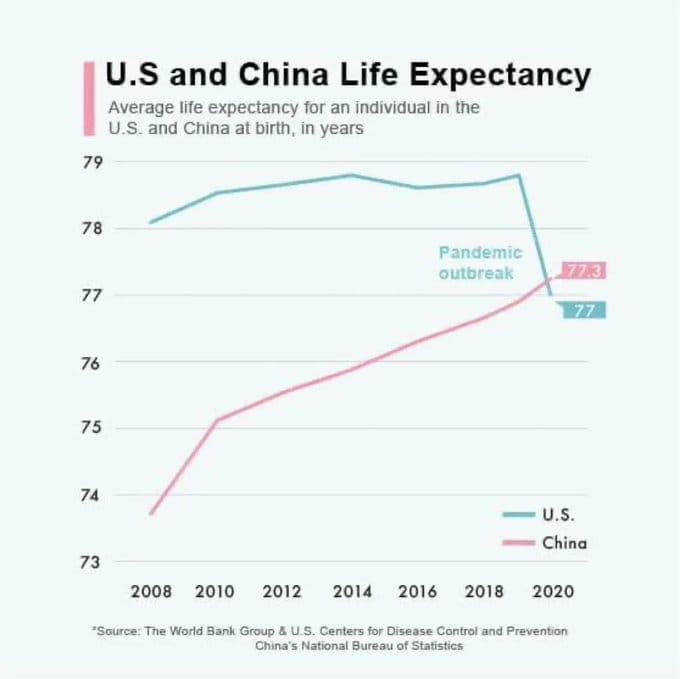
Life expectancy has dropped in the US to undeveloped world levels. Biden blames COVID and racism. I think it’s too much drugs, and too few opportunities.

I’m struck by the fact that US life expectancy is uncommonly low, lower than in most developed countries. Lower too than in many semi-developed countries, and our life expectancy is decreasing while other countries are not seeing the same. It dropped by about 3 years over the last 2 years as shown. I wonder why the US has suffered more than other countries, and suspect we are over-prescribed. Too much of a good thing, typically isn’t good.

Robert Buxbaum, September 16, 2022. As a side issue, low dose aspirin may forestall Alzheimers and other dementias. See current article here. Also another study here.

Atenolol, not good for the heart, maybe good for the doctor.

Atenolol and related beta blockers have been found to be effective reducing blood pressure and heart rate. Since high blood pressure is a warning sign for heart problems, doctors have been prescribing atenolol and related beta blockers for all sorts of heart problems, even problems that are not caused by high blood pressure. I was prescribed metoprolol and then atenolol for Atrial Fibrillation, A-Fib, beginning 2 yeas ago, even though I have low-moderate blood pressure. For someone like me, it might have been deadly. Even for patients with moderately high blood pressure (hypertension) studies suggest there is no heart benefit to atenolol and related ß-blockers, and only minimal stroke and renal benefit. As early as 1985 (37 years ago) the Medical Research Council trial found that “ß blockers are relatively ineffective for primary treatment of hypertensive outcomes.”

End point. Relative risk. 95% CI. All-cause mortality Cardiovascular mortality MI Stroke Carlberg B et al. Lancet 2004; 364:1684–1689.

There lots of adverse side-effects to atenolol, as listed at the end of this post. More recent studies (e.g. Carlsberg et al., at right) continue to find no positive effects on the heart, but lots of negatives. A review in Lancet (2004) 364,1684–9 was titled, “Review: atenolol may be ineffective for reducing cardiovascular morbidity or all cause mortality in hypertension” (link here). “In patients with essential hypertension, atenolol is not better than placebo or no treatment for reducing cardiovascular morbidity or all cause mortality.” It further concluded that, “compared to other antihypertensive drugs, it [atenolol] may increase the risk of stroke or death.” I showed this and related studies to my doctor, and pointed out that I have averaged to low blood pressure, but he persisted in pushing this drug, something that seems common among medical men. My guess is that the advertising or doctor subsidies are spectacular. By contrast, aspirin has long been known to be effective for heart problems; my doctor said to go off aspirin.

The graph at right is from “Trial of Secondary Prevention with Atenolol after transient Ischemic Attack or Nondisabling Ischemic Stroke”, published in Stroke, 24 4 (1993), (see link here). a Thje study involved 1473 at-risk patients, randomly prescribed atenolol or placebo. It found no outcome benefit from atenolol, and several negatives. After 3 years, in two equal-size randomized groups, there were 64 deaths among the atenolol group, 58 among the placebo group; there were 11 fatal strokes with atenolol, versus 8 with placebo. There were somewhat fewer non-fatal strokes with atenolol, but the sum-total of fatal and non-fatal strokes was equal; there were 81 in each group.

“Trial of Secondary Prevention with Atenolol after transient Ischemic Attack or Nondisabling Ischemic Stroke”, published in Stroke, 24 4 (1993).

Newer beta blockers seem marginally better, as in “Effect of nebivolol or atenolol vs. placebo on cardiovascular health in subjects with borderline blood pressure: the EVIDENCE study.” “Nebivolol (NEB) in contrast to atenolol (ATE) may have a beneficial effect on endothelial function …. there was no significant change in the ATE and PLAC groups.” My question: why not use one of these, or better yet aspirin. Aspirin is shown to be beneficial, and relatively side-effect free. If you tolerate aspirin, and most people do, beneficial has to be better than maybe beneficial.

Among atenolol’s ugly side effects, as listed by the Mayo Clinic, there are: tiredness, sweating, shortness of breath, confusion, loss of sex drive, cold fingers and toes, diarrhea, nausea, and general confusion. I had some of these. There was no increase in heart stability (decrease in A-fib). My heart rate went as low at 32 bpm at night. My doctor was unconcerned, but I was. I suspected the low heart rate put me at extreme risk. Eventually, the same doctor gave me ablation therapy, and that seemed to cure the A-Fib.

Following my ablation, I was told I could get off atenolol. I then discovered another negative effect of atenolol: you have to ease off it or your heart will race. If you have A-fib, or modest hypertension, consider aspirin, eliquis, ablation, or exercise. If you are prescribed atenolol for heart issues and don’t have symptoms of very-high blood pressure, consider other options and/or changing doctors.

Robert Buxbaum, August 14, 2022

Curing my heart fibrillation with ablation.

Two years ago, I was diagnosed with Atrial fibrillation, A-Fib in common parlance, a condition where my heart would sometimes speed up to double its normal speed. I was prescribed metopolol and then atenolol, common beta blockers, and a C-Pap for sleep apnea. None of this seemed to help, as best I could tell from occasional pulse measurements with watch and a finger pulse-oxometer. Besides, the C-Pap was giving me cough and the beta blockers made me dizzy. And the literature on C-Pap did not impress.

So, some moths ago, I bought an iWatch. The current versions allows you to take EKGs and provides a continuous record of your heart rate. This was very helpful, as I saw that my heart rate was transitioning to chaos. While it was normally predictable, it would zoom to 130 or so at some point virtually every day. Even more alarming, it would slow down to the mid 30s at some point during the night, bradycardia, and I could see it was getting worse. At that point, I agreed to go on eliquis, a blood thinner, and agreed to a catheter ablation. The doctor put a catheter into my heart by way of a leg vein, and zapped various nerve centers in the heart. The result is that my heart is back into normal behavior. See the heart-rate readout from my iWatch below; before and after are dramatically different.

My heart rate for the last month, very variable before the ablation treatment, 2 weeks ago; a far less variable range of heart rates in the two weeks following the treatment. Heart rate data is from my iPhone and iwatch — a good investment, IMHO.

The reason I chose ablation over drugs or no therapy was that I read health-studies on line. I’ve go a PhD, and that training helps me to understand the papers I’ve read, but you should read them too. They are not that hard to understand. Though ablation didn’t appear as a panacea, it was clearly better than the alternatives. Particularly relevant was the CABANA study on life expectancy. CABANA stands for “Catheter ABlation vs ANtiarrhythmic Drug Therapy for Atrial Fibrillation – CABANA”. https://www.acc.org/latest-in-cardiology/clinical-trials/2018/05/10/15/57/cabana.

2,204 individuals with persistent AF were followed for 5 years after treatment, 37% female, 63% male, average age 67.5. Prior hospitalization for AF: 39%. The results were as follows:

  • Death: 5.2% for ablation vs. 6.1% for drug therapy (p = 0.38)
  • Serious stroke: 0.3% for ablation vs. 0.6% for drug therapy (p = 0.19)
  • All-cause mortality: 4.4% for ablation vs. 7.5% for drug therapy (p = 0.005)
  • Death or CV hospitalization: 51.7% for ablation vs. 58.1% for drug therapy (p = 0.002)
  • Pericardial effusion with ablation: 3.0%; ablation-related events: 1.8%
  • First recurrent AF/atrial flutter/atrial tachycardia: 53.8% vs. 71.9% (p < 0.0001)

I found all of this significant, including the fact that 27.5% of those on the drug treatment crossed over to have ablation while only 9.2% on the ablation side crossed to have the drug treatment.

I must give a plug for doctor Ahmed at Beaumont Hospital who did the ablation. He does about 200 of these a year, and does them well. Do not go to an amateur. I was less-than impressed with him pushing the beta-blocker hard; I’ll write about that. Also, get an iWatch if you think you may have A-Fib or any other heart problem. You see a lot, just by watching, so to speak.

Robert Buxbaum, August 3, 2022.

Girls are doing better, Boys are doing far worse.

When I began college in 1972, the majority of engineering students and business students were male. They from the top of their high school classes, and from stable homes mostly; they went on to high paying jobs. Boys also dominated at the bottom of society. They were the majority of the criminals, drug addicts, and high-school dropouts. Many went off to Vietnam. Some, those who were handy, went to trade schools and a reasonable life, productive life. Society did not seem bothered by the destruction of boys in prison, or Vietnam, or by drugs, but there was an outcry that so few women achieved high academic levels. A famous presentation of the problem was called “for every 100 girls.” An updated version appears below showing the status as of October, 2021. A more detailed version appears further down.

From the table above, you can see that women are now the majority of those in college, the majority of those with a bachelors degree or higher, and a majority of those with advanced degrees. Colleges added special tutoring, special grants, and special programs. Each college had a Society of Women Engineers office, and similar programs in law and math. All of these explicitly excluded men or highly discouraged their presence. The curriculum was changed too; made more female-friendly. Dirty, and physical experiments were removed, replaced with group analysis of the social interactions — important aspects of engineers that boys were far-less adept at doing well. Perhaps society and engineering is better off now, but boys (men) are far worse off. This is particularly seem by the following chart, looking at the bottom. Boys/men provide the vast majority of the prison population, of those diagnosed as learning disabled, of those expelled, or overdosed, and among the war dead.

I’ve previously noted that a majority of boys in school are considered disruptive, and that these boys are routinely diagnosed as ADHD and drugged. It is not at all clear that this is a good thing, or that the drugs help anyone but the teacher. I’ve also noted that artwork and attitudes that were considered normal for boys are now considered disturbing and criminal like saying I wish the school was blown up. The cure here, perhaps is worse than the disease. I’m not saying that we should encourage boys to say such things, but that we should acknowledge a difference between an active and a passive wish. And we should find a way to educate boys/men so they don’t end up unemployed, addicted, or dead. Currently boy, particularly those at the bottom are on the scrap-heap of society.

Here is some source material for the above:

Robert Buxbaum, May 28, 2022

Biden stops fracking and gas prices go up 300% — Surprise!

Natural gas prices for June 2022 as of May 6, 2022.

Natural gas prices have quadrupled in the last 17 months. It’s gone from $2.07 per million BTU in mid January 2021 when Joe Biden took office, to nearly $9 today. It’s a huge increase in the cost to heat your home, and adds to the cost of any manufactured product you buy. Gasoline prices have risen too, going from $2/gallon when Biden took office to about $4.40 today. Biden blames the war with Russia, but the rise began almost as soon as he took office, and it far outstrips the rise in the price of wheat shown below (wheat is grown in Ukraine — it’s their major export). The likely cause is Biden’s moratorium on fracking, including his decision to stop permitting oil exploration and drilling on federal land. In recent weeks Biden has walked back some of this, to the consternation of the environmentalists. On April 15, 2022, the Interior Department announced this significant change including its first onshore lease sale since the moratorium.

Biden also cancelled the Keystone XL oil pipeline that would have brought tar-sands oil from Canada and North Dakota to Texas for refining. Blocking the pipeline helped increase gas prices here and helped cause a recession in Alberta and North Dakota. The protesters who claimed to speak for the natives are not affected.

Another issue fueling price increases is that Biden is printing money. Bidenflation is running at 8%/year. It’s not hyperinflation, but it’s getting close. It’s money taken from your pocket and from your savings. Much of the money is given to friends: to groups that Biden thinks will use it virtuously, but inflation is money taken from us, from our pockets and savings. Another beneficiary are those who are rich enough to take no salary, but live by borrowing against their real estate and corporate equity. The richest people in the US do this, earning $1 per year or less, (here’s a list compiled by Bloomberg, it’s basically every rich person). They pay no taxes, as they have no income. The only way to tax them is by tariffs, taxing what they import, but the government is against tariffs.

What you can do, personally about energy-cost inflation is not much. I would recommend insulating your home. I plan to repaint the roof white, and put in a layer of roof insulation. I also have fruit trees: an apple tree and a peach tree, grapes and a juneberry. They provide summer shade, and you get a lot of fruit with minimal work. Curtains are a good investment. Another thought is to buy solar cells. A vegetable garden is fun too, but it’s unlikely to pay you back.

Winter wheat prices are up by about 40%, likely due to the loss of supply from Ukraine and Russia

Speaking of wheat prices, they are up. They increased 40% when Russian troops invaded Ukraine, and have held steady at that level since. This is far less increase than for natural gas. Corn and rice prices are up too, but nowhere near as much. Fertilizer prices are up 300%, though, and Biden has indicated he’d like to push for a sustainable alternative; is that poop? There is a baby formula shortage too. We can handle it, I think, unless Biden get involved, or starts a hot war with Russia.

Robert Buxbaum May 10, 2022. As a fun sidelight, here is Biden answering questions about Pakistan when someone in a Bunny costume grabs him and walks him away from the reporters. Who is that masked handler? What’s going on in Pakistan?