Tag Archives: tariffs

A fair price for Bitcoin: less than $33,300.

Some 8 years ago, 2018, I calculated that a fair price for Bitcoin was likely $11,000, with a maximum of perhaps 4x more, $44,000. I used Fischer’s formula from my economics textbook, perhaps the only useful formula there. It’s based on the idea that the total currency value times the speed of money has to match the value of the things people buy with it. See the analysis here. Based on this formula, you see that, if you print more money, you get inflation — a concept that seems forgotten today.

It’s eight years later, and while there has been some inflation in the price of everything, the price of bitcoin has outstripped most everything else. After years of Bitcoin staying in the price range I’d suggested, it jumped to over $120,000 in 2025 before dropping back to $70,500. I figured I should revisit my calculations, and again find about the same result corrected for normal inflation: a “true value”, of <$33,300. I show why I value it this much, and share why, I think the market is wrong.
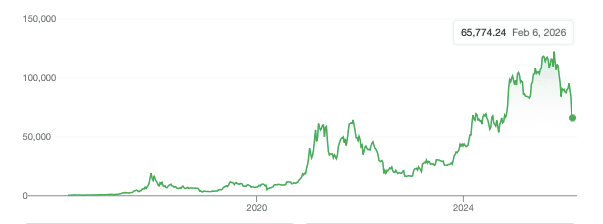
A history of Bitcoin prices

Bitcoin has only one “legitimate” use, as best I can tell, and that’s for illegal activities, like paying $6 million dollar to ransom Nancy Guthrie. The problems preventing a high bitcoin valuation, IMHO, are that there is not that much illegal trade, and there are other ways to pay for illegal things. Suitcases of cash can be used, or gold coins, or artwork. These are just as safe as bitcoin, and almost as easy to ship. For legitimate business, almost any pay method is better: easier, faster, and more secure.

Most people, I suspect, don’t use their bitcoin at all. They buy it as an investment, or as a gambling speculation, but that’s a zero-sum gamble, somewhat worse than gold, since gold have value above trade. Having no value aside from trade, Bitcoins are only as valuable as their use is.

One of the main use of bitcoin transactions is to avoid tariffs on legitimate goods – I explained how that was done, previously. I estimate the magnitude of this business to be $500 billion or so per year. The US collected about $220 billion in tariffs last year on a trillion dollars of trade, and I find it hard to believe that Bitcoins cover more than another 50%. Add to this, bitcoin is likely also used to hide payment for illegal, sanctioned oil from Iran and Russia. There are other ways to do this, but let’s assume it’s all bitcoin-trades. Since this oil trade seems to be about 8 million barrels per day, and since oil costs ~ $70 barrel, I calculate a business of $200 billion in world oil. Add a few more items that you don’t want traced: drugs, weapons, for a total of maybe $200 billion, add $100 billion to over-throw countries and for a kidnapping or two, and I find a total bitcoin trade of $1 trillion, or $1000 billion. If a bitcoin trades 1.5 times per year (a fairly low rate) the total value of bitcoin is $1000 billion /1.5 = $667 billion. Divide by the total number of bitcoins, 20 million, and I calculate a value of $33,300 per bitcoin or less.

A lot more value in bitcoins trade per year, about $10.5 trillion. The average Bitcoin price is three times higher than I estimate and it is spent 7.5 times per year. Most of this is churn: investment, plus some legitimate purchases based on illegal activity, like when the drug dealer buys a new car in Panama, but these sales are consequences of the other, illegal sales. I figured that each Bitcoin was used for an illegal purchase only 1.5 times per year because normal money is used ~4.5 times per year.

I should note that some illegal activity is done in US dollars, including most drug deals, and when Obama bought back US soldiers kidnaped by Iran, using bales of € 500 notes, and some is done using gold or silver. Bitcoin is easier to move but large quantity moves can still be traced, and there are other crypto currencies too. Bitcoin transactions aren’t free, either, or particularly cheap. And it takes time to process the transfer of bitcoin numbers, milliseconds, but that’s slow in world commerce. As a result. I don’t see bitcoin being used for legitimate business, and unless it can break out of the black market, the value seems limited to $33,300, and probably less.

Robert Buxbaum, February 15, 2026. Gold, by the way, is similarly overvalued, in my opinion. Like bitcoin, it’s a non-dividend investment that’s expensive to trade, but at least it has some other uses, as jewelry, and in electronics. Besides, it’s relatively hard to steal a billion dollars in gold from a Swiss bank – harder than stealing $1B in bitcoin.
James K. Polk, a great president who did what he said and made America great

One of my favorite presidents is James K. Polk. While running for president he claimed we would do four major things –and do them as a one-term president. He then did them, and left office — and died 103 days later at the age of 53. Mr Polk’s four stated objectives were: a reduction in the tariff, an independent treasury, settlement of the Oregon boundary dispute, and acquisition of California. Acquisition of California required admission of Texas, plus a war with Mexico and a cash payment, but he was ready. Settling the Oregon border required a compromise and a cash payment. But he did it and more. Modern professors are not happy with Polk, ranking him far below Obama, Kennedy, or Adams, but his aims were good, and he got hem done. Few presidents do that, and even fewer left office if they had the power to stay. No professor I know has ever willingly left if he had the power to stay, and didn’t have a better job to go to.

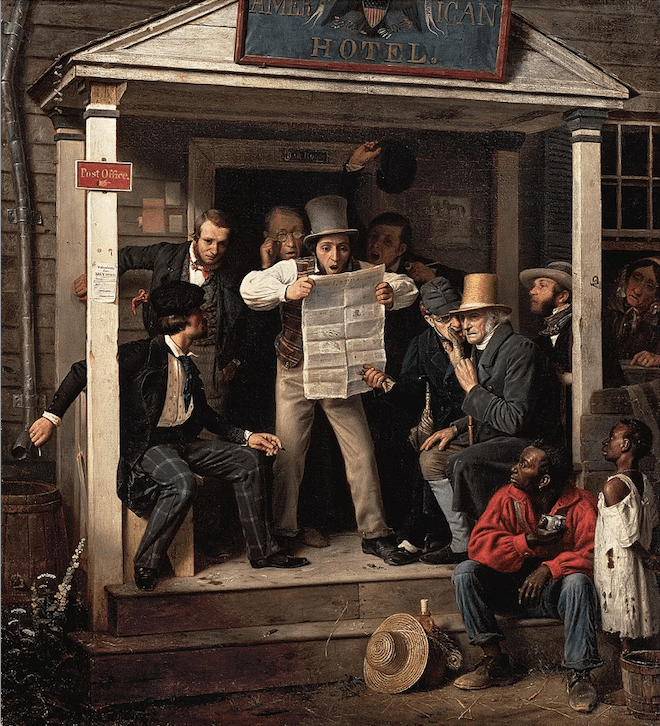
News from Mexico, oil on canvas painting by Richard Caton Woodville Sr., Düsseldorf, 1848. Polk was a god-send for newspaper sales.

I believe that the clarity of Polk’s four objectives was the reason he was a candidate at all, and the reason he won the election, and also the reason he achieved the objectives. There is a magic in clear objectives, repeated often, I find. It’s a formula that got Trump elected that few seem to understand: “Make America Great Again.” “Build the Wall”, “Drill baby Drill” “Deport illegals” “Tariffs. ” Like these ideas or not, you know Trump’s aims. Also, you know that, if. you oppose them, you oppose him. Trump’s pastor, Norman Vincent Peale promoted this approach, one I’ve thought of trying myself. I suspect that Polk died so shortly after leaving office because he had no further goal beyond relaxing; bad water hurt him too.. I suspect that Trump will die shortly after leaving office too- from lack of purpose.

Polk wasn’t expected to be a candidate, but was a “dark horse”, ex-governor of Tennessee, who had lost his past two elections. Martin Van Burin was expected to be the Democrats’ candidate, but he opposed slavery, and most Democrats were for it. What’s more, he was opposing annexation of Texas, at least south of the Nueces River, and many Democrats were for, as were some Whigs.

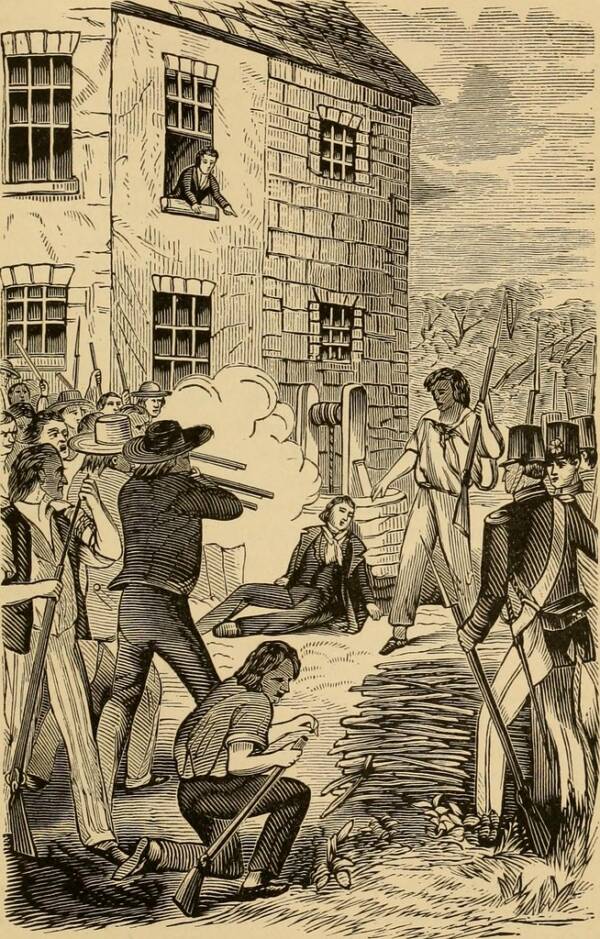
Joseph Smith was shot multiple times while campaigning for president.

Polk was pro-slavery, as was the Whig candidate, Henry Clay. But Polk said repeatedly that he would annex Texas — all the way to the Rio Grande, “no matter what any Mexican said.” He also said he’d fight for California and all of Oregon too: “Fifty four forty or fight”. You might not agree with this, Grant did not, but you knew where he stood. And Polk said he’d serve only one term. Thus, if you didn’t like him, he’d be gone in four years. After a few ballots, Polk became the Democratic Party candidate, with George Dallas as his VP. Like Polk, Dallas was pro Texas – they eventually named a city after him. Clay was Polk’s main opposition, anti Texas, and more vague about everything else.

At first John Tyler, the incumbent, also ran against Polk, but when he saw he was losing, he dropped out to help Polk. Also running for president, 1844 was Joseph Smith, the Mormon founder-profit. he ran as an independent because God told him to. He was shot multiple times, and died while campaigning. Finally there was James G. Birney, the Liberty party candidate. He gained few votes running on an abolitionist ticket. It’s been speculated that Polk won because Birney split the Whig vote. My take is that’s unlikely: Clay was pro-slavery. Polk’s win, I think, was in the power of his clarity.

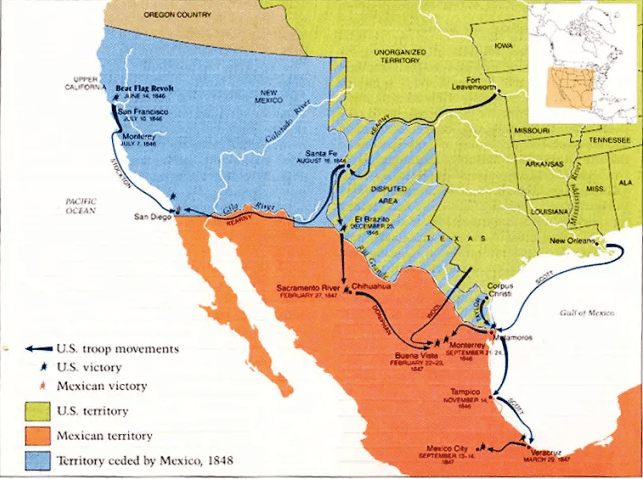
Map of the territory and war.

Once elected, Polk first moved to annex Texas, something he achieved with the help of expresident John Tyler. Tyler sent his Secretary of State, Abel Upsher to negotiat an annexation treaty with Sam Houston, but the Whig-controlled congress rejected it. After the election, Tyler resubmitted the treaty to the new, Democrat-controlled congress, and got two versions passed. The house passed a pro-slavery version, while the senate, pushed by Thomas Hart Benton (a favorite of mine) produced an annexation treaty that divided Texas in half, with a pro-slave and an anti-slave half. Polk liked the pro-slave, House version, returning it to Texas in his first week in office. He instructed the Texas legislature to accept it unconditionally, with no change so he could submit it directly to the Senate. The Texans did so, and congress approved this version later that year. Texas entered the union as one, large, slaveholder state.

With annexation not yet ratified by congress, Polk sent a diplomatic mission to buy California from Mexico along with all of the disputed Texas territory and everything in between for $25 million. Mexico refused, so Polk invited war. He sent 4000 soldiers into disputed Texas territory south of the Nueces River, under command of General Zachary Taylor. Mexican forces attacked them in April 1846, and Polk declared war. The war lasted to 1848, winning all the desired lands including California, and achieving a release of any rights Mexico might have on Oregon.

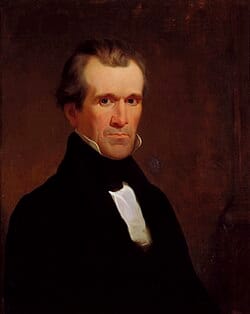
Polk, as governor of Tennessee

The next Polk goal was resolution of the Oregon dispute, ideally with us getting all of it: land that included the current states of Washington, Oregon, and Idaho, plus the Canadian Provence of British Columbia. Britain and Russia also claimed this land, so Polk’s first step was to buy off Russia. The British said they’d fight, noting that they had a larger army and navy and that the US was already at war with Mexico. Polk’s response was to back settlers going to Oregon. Americans had started migrating to Oregon in 1843. In his inaugural address, 1845, Polk said he would defend them “against the British and Indians.” By 1846 Britain recognized the difficulty of fighting US settlers so far from home. On June 15, they agreed to a deal that split the territory along the 49th parallel, giving the US the lower half, except for Vancouver Island, thus allowing Britain an opening to the sea. This deal had been proposed by Edward Everett, Tyler’s minister in London. Polk gave up nothing, beyond an informal agreement to lower tariffs on British goods, something he aimed to do anyway. It’s generally thought that Polk’s willingness for war allowed him to achieve so much without fighting. Polk said, in his inaugural, March 1845: “The world has nothing to fear from military ambition in our government,” a statement that clearly means the opposite of what it claims to say.

Polk’s third goal was lowering the “Black Tariffs”. High and uneven, they were 32% on average, with cut-outs to help specific, northern businesses. Polk’s secretary of the treasury, Robert Walker negotiated a flat advalorum tariff of 25%, with luxury goods, tobacco and alcohol tariffed higher. The “Walker tariff” bill was passed July, 1846, one month after the Oregon agreement. The British, reduced their “corn tariffs” against US grain, benefitting both countries. Our tariffs average 17%, currently, with many cut-outs. I think our tariffs should be more like the Walker tariff, perhaps 20% and simpler.

Polk’s 4th campaign promise was establishing an independent treasury. This was done to weaken “pet” banks, and stabilize the economy. The treasury would now hold all US assets; they would issue most currency, and would pay people directly, either in specie (gold or silver) or notes of debt. Independent banks could still issue notes, but only in amounts over $20. Polk passed this bill August 6, 1846, one week after the Walker Tariff bill. With this, Polk had already achieved all of his goals except California by the mid-term elections, 1846.

Having achieved so much, Polk set out to buy Cuba, but Spain said no. Some other accomplishments: opening the U.S. Naval Academy and the Smithsonian Institution, overseeing the groundbreaking for the Washington Monument, and the issuance of the first United States postage stamp. By the summer of 1848 Polk confirmed that he was satisfied and would not run for re-election. In his address to congress, December 1848, he said, “Peace, plenty, and contentment reign throughout our borders, and our beloved country presents a sublime moral spectacle to the world.” …. “I am heartily rejoiced that my term is so near its close. I will soon cease to be a servant and will become a sovereign.” I trust that was met with applause.

Robert Buxbaum. February 6, 2026. Edward Everett would go on to make the better received speech at Gettysburg. The officer who commanded the 4000 man Texas force, Zachary Taylor, became president in 1849. Like Polk, he died of bad water with too little alcohol added.

Tariffs raise $30 billion per month, but haven’t affected inflation

Economic experts claimed the tariffs would raise no signifiant money, would bring in no jobs, and would be so inflationary that the damage would far exceed any benefit. President Trump instituted them anyway, claiming they would benefit workers, raising wages, returning manufacturing to the US, and serving as a tool of diplomacy. Based on data so far, it appears the experts were completely wrong, and that Trump was right on all counts.

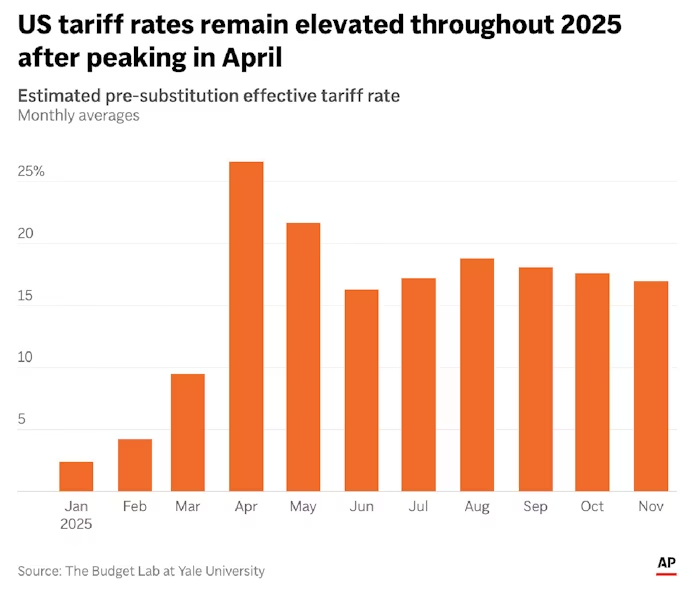
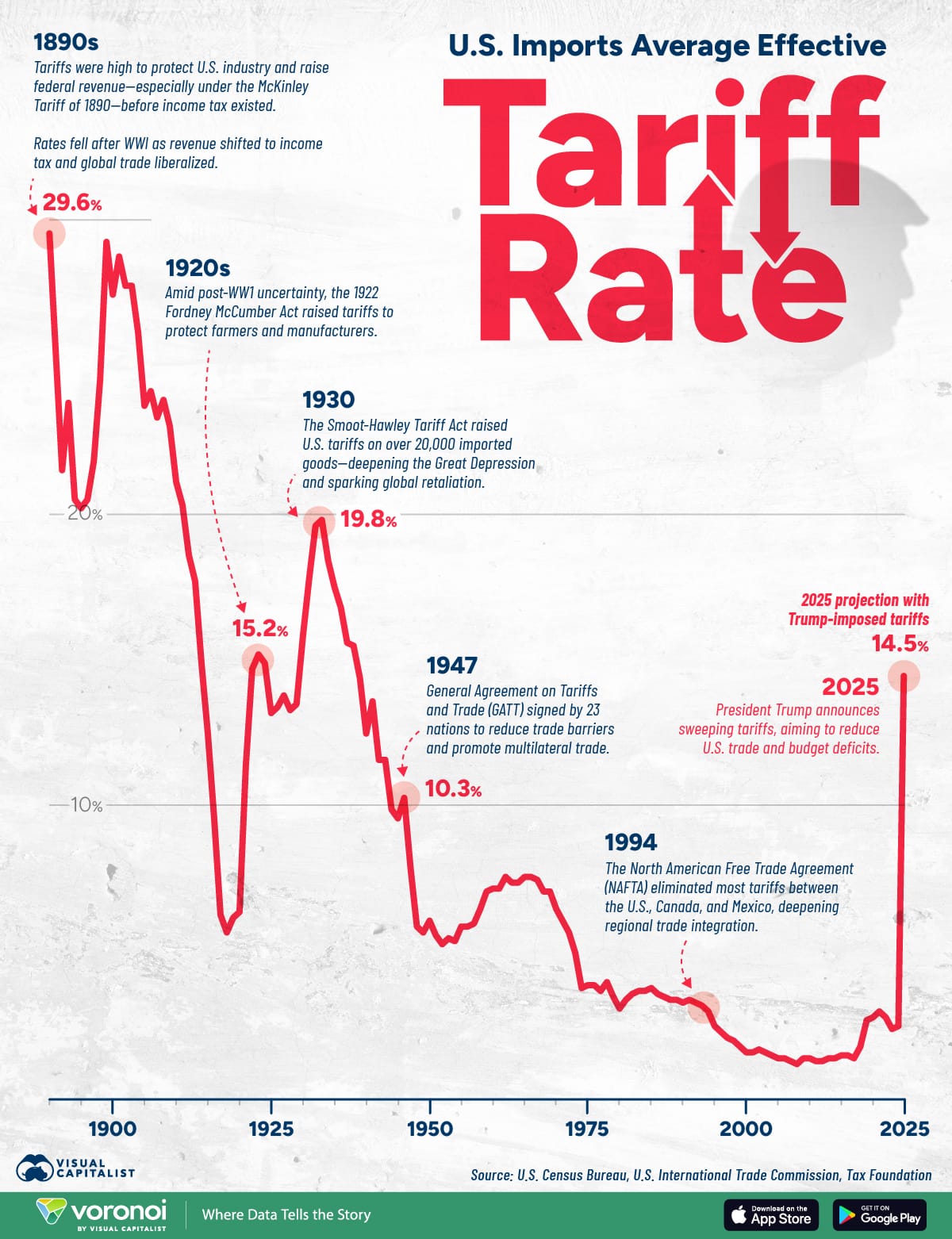
As an average, for the last nine months, our tariff rate has been about 17%, as shown in the chart above, bringing in about $30 billion per month. That tariff rate is as high as it’s been since the 1940s, but far lower than it was in the early 20th century. Chinese products are taxed more, at 47.5% on average, while goods from Mexico and Canada are taxed less, about 5%. High or low the tariffs generate complaints all around. Strangely, those complaining, in the US and out, see nothing amiss with the tariffs that our trading partners have placed on US products. The money from these tariffs came in handy, for example during the recent government shutdown, when we could not borrow money. This tariff money allowed us to pay the military and has helped reduce the annual deficit.

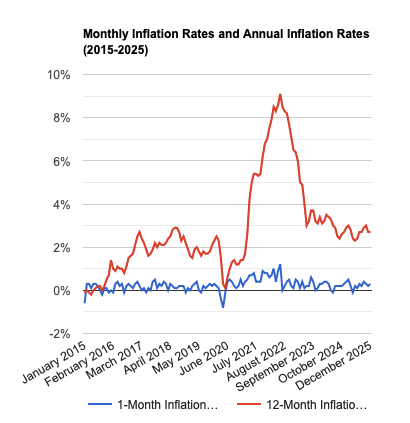
Despite the dire inflation prediction, there has been no noticeable uptick. Inflation has held constant for the last year, at about 2.7%. This is the same as during the last months under Biden, see chart, and is far lower than the 4-8% we saw for most of the Biden term. Basic commodities, in particular, remain cheap, with the price of gasoline and beer lower than in 2024, and luxury imports somewhat more expensive. Lower and middle income Americans don’t seem to mind since most of us don’t buy these goods. This year of inflation data supports Milton Friedman’s claim that taxes are inflation neutral, and that the cause of inflation is government overspending, as he says here. Liberal experts disagree, but the data says otherwise. I suspect the experts are blinded by overly simple theory, of Keynes, that they refuse to abandon. Alternately, they may be willfully lying to promote the agenda of university heads and all others who fund them. I noticed this pattern with global warming experts too. They don’t change their models and dire predictions though it’s way past 2014, and the arctic isn’t ice free.

There has been some job growth, but less than hoped for. There was a decrease in the tech sector and in government employment, but an uptick in services and healthcare. Unemployment has changed little, remaining at 4.4%. Several foreign businesses have moved manufacturing to the US. These include BASF, Volkswagen, LG, and Hanwha to name a few. Hanwha just completed its purchase of the Philadelphia shipyard, and committed $5B to its modernization. I consider this very important. It provides jobs, but beyond this, improved shipbuilding will help us commercially and militarily.

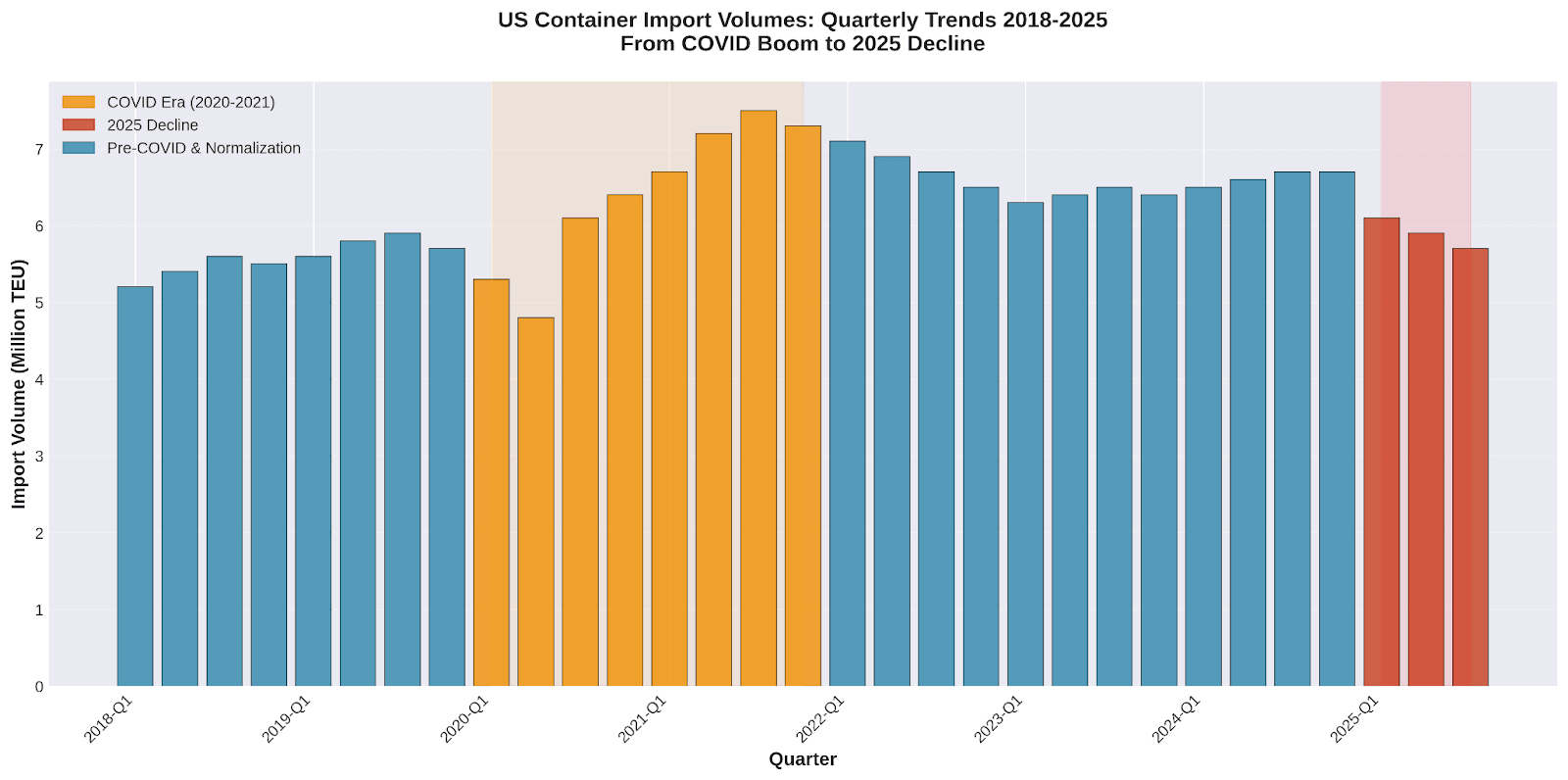
The reason that employment has not gone up as much as hoped seems to be that we’re still buying the same amount from abroad as before, containerized are the same as in the pre-COVID years, see chart below. There’s been some switching of sources, with more coming from Mexico, Taiwan, and Vietnam, and less from Canada and India. Import volumes from China have hardly changed though, since last year, nor have the prices that Americans pay risen. This suggests that China is “eating the tariffs”. I suspect they’ve undervalued their currency to make this happen. We’re selling a little more too, causing the trade imbalance to narrow, but the sales increase are largely precious metals (gold) to China, about 1000 tons in 2025. I’m not sure what China achieves by this; they’ve raised the price of gold to $4,675/oz currently, about double in 1.5 years, and kept the price of Chinese currency low. Perhaps that’s the intent — to keep their currency devalued relative to the dollar. Maybe they have some other idea, like to switch to a gold-backed currency? Who knows? Their purchases increase the value of our gold in Ft. Knox.

Trump’s other justification for the tariffs was as a tool of diplomacy. Trump is using tariffs somewhat this way, as a non-military stick to encourage friendly nations to do what he wants. He got Mexico to stop immigrants and drugs, encouraged the same from Canada and Columbia. He got the EU to spend more in their defense, and got them deal a little less with Russia. They’re still the biggest buyer of Russian natural gas. He also used tariffs to nudge for peace in the Middle East, and between Cambodia and Thailand. Recently, he’s using them to support the Iranian rebels by threatening countries that buy from Iran, or that help the mullahs launder their money and oil. All in all, the tariffs seem to be working for us. The experts are not impressed.

Robert Buxbaum, January 19, 2026

The shutdown will drag; we will win

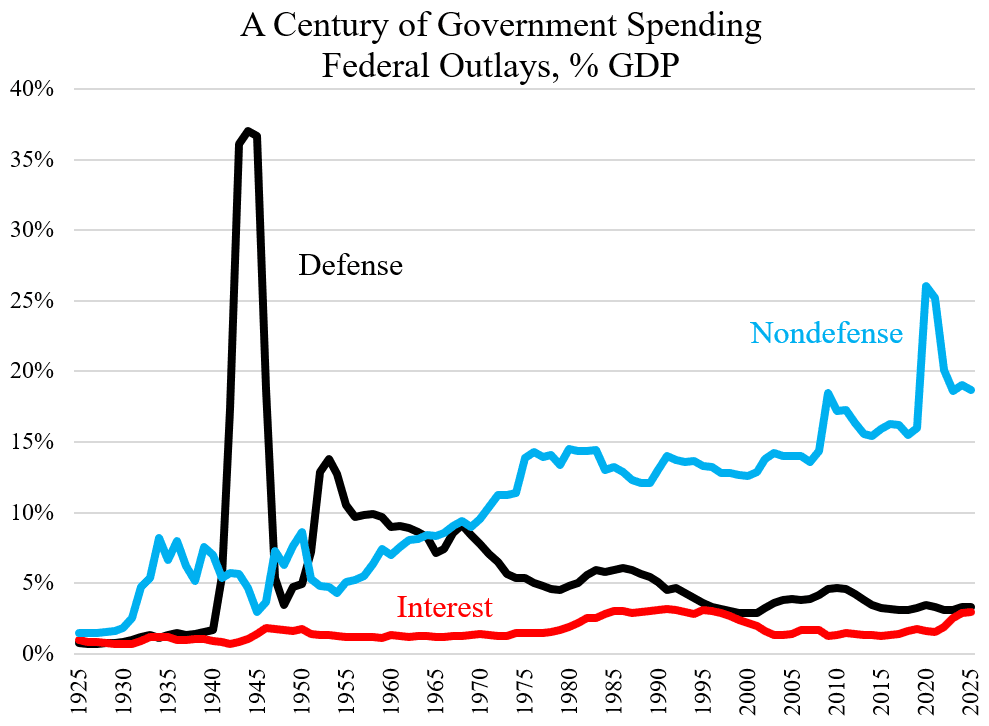
In theory, both US parties are committed to a balanced budget. Both claim they’ll tax as much as they spend, and we’ll pay our debts. In practice, both parties overspend wildly, year after year. The growth in non-defense spending (pork) is particularly egregious, see graph. For fiscal 2024, the 12 month period ending Sept. 30 2024, the government spent $6.75 trillion ($6750 billion), over 20% of GDP and 37% more than the $4.92 trillion we took in in taxes ($4,920 Billion). The difference, $1830 billion, was added to the national debt, already at $34 trillion, pushing it to $36 trillion, that’s more than 100% of our GDP. The interest cost alone is $1.22 trillion per year, 1/4 of our tax income.

Trump campaigned claiming he was going to balance the budget, but he has not (yet). There were some attempts via DOGE, saving about $214 billion, but the DOGE boys were outed, attacked, and gave up. And now the Democrats have forced a shutdown, using their power to prevent additional borrowing. This leaves Trump with a choice, either balance the budget or accept their spending demands. The expectation is that Trump will fold: there is no way he can find $1830 billion/year. Otherwise, many of the governments 4.2 million workers will go without pay, and many important services will stop.

So far, three weeks in, Trump seems fairly successful at keeping most things running while trying to balance the budget. Even if he fails, as seems likely, we will benefit from the attempt, I think.

Some government services are guaranteed to continue despite the shutdown: Social security and the post office because they are funded separately. Similarly, the patent office, the ports, and the airports. In the past some had to shut, but Trump has raised fees so they remain open and operating.

Essential workers, 800,000 people including customs agents and air traffic controllers continue working with most going unpaid. Trump committed to paying active duty military and for the WIC food program using money raised by new, 2025 tariffs. Tariffs are currently bringing in ~$300 Billion/ year, and so far tariffs mostly don’t affect ordinary folks, and help return manufacturing to the US. Some time soon we’ll have to pay the necessary workers and also some 750,000 non-necessary employees including: half the Dept. of Education, most of NASA and Energy.. They are not really useless, but are doing nothing essential to the day-to-day operation of the country.

Trump seems committed to removing many non-necessary workers in an effort to streamline and balance the budget. He fired 4200, bought out another 25,000 earlier this year, and has issued pre-termination notices to 75,000. A federal judge has blocked all firings as unlawful, but my sense is they are quite lawful and mostly beneficial. If you can’t fire non-working, un-necessary workers that you can’t afford to pay, who can you fire?

I suspect the shutdown will last well into November, well past the election, and that more folks will be fired or bought out. The key November crossroads will be food stamps, SNAP. These benefits are scheduled to end November 1 baring an end to the shutdown. Normally the bill is $110 billion/year, but Trump has eliminated benefits for illegal aliens and asylum seekers, and has instituted tougher work requirements. Democrats seem certain that Trump will fold. For the 11th time they scotched a bill to fund this and reopen the government and pay SNAP. I suspect that, at the last minute, Trump will find savings, or left-over funds and will keep SNAP funded through November.

Among the new savings, Trump ended the EV subsidy last month, saving about $7.5 billion/year ($7500 x 1 million EVs), and has negotiated some reductions in drug costs. He also increased the tariff on some Chinese and Canadian goods appropriate for rectifying trade imbalance, it’s been blocked by a federal judge. He’s also cancelled some rail work and research, saving $28 billion, and cancelled $20 billion for hydrogen hubs, and 83% of USAID. Also two navy ships that were years behind schedule and billions over budget. We need the ships, but don’t have the money. So far, this saved enough to pay all military servicemen.

Beyond this, I hope he cuts Biden’s high speed rail plans: $550 Billion for fast trains, Chicago to Seattle, Detroit to Toledo, San Francisco to LA, etc. The investment is $1,500 per person in the US. The eager thinkers overseeing this would never invest their own money, but are happy to invest everyone else’s. I also hope to see the end of NASA’s SLS rocket to the moon, nice but far more expensive than Falcon. We could also cancel some F35s ($0.1 Billion each to buy, and far more to maintain). Musk suggested replacing them with drones. I don’t know that these savings are enough. I don’t know how long we can continue, but each day shut, we move closer to a balanced budget, and that’s a good thing.

Robert Buxbaum, October 21, 2025

Tariffs on German cars are inflationary, but not for you.

As things stand, the major export of Germany to the US is high end cars: Mercedes, Audis, Porsches, BMWs, $100,000+ on average. The lower end models are made in the US, Mexico, and Canada. These high end cars are the biggest profit centers of their makers and of the German economy. Currently, they face an import tax (tariff) of 15%, the same as everything from Germany (or Italy or Japan). Liberal economists are furious at this; they claim it’s a tax and that it is inflationary. They are right on both counts except that this is only a tax and inflationary for the few Americans who buy new, high end cars.

The Americans who buy such cars are typically rich folks — poor and middle class folks can’t afford them. They are also folks with ‘taste’, folks who need a BMW, and would not be caught dead behind the wheel of a US car. Normally liberal economists would favor taxing such people, but these are often the who hire economists. They run the TV programs and newspapers, universities and hedge funds. They choose the economists and the economists are eager to see things their way.

Another high tariff item imported from Europe is art. Modern art for $1 million dollars that ends up in museums. For the average Americans the tariff on this, or on art is irrelevant or beneficial. The income it generates is used to offset other taxes, allowing Trump to remove the tax on tips, for example. That this tariff falls on rich people and replaces a tax that otherwise fell on poor workers. Liberal economists should favor of this, but their opinions are not their own.

A side benefit of these tariffs for ordinary folks, is that that they cause some buyers to switch to American-made products, cars and art. Perhaps not for themselves, but for for their children. They may buy a German car made in the US, rather than one made in Germany, or art from an American. This provides jobs for US workers — and an opportunity for Detroit to retool for the future. Detroit auto workers seem to understand this; they voted for Trump in 2016 and 2024. Detroit’s union leaders opposed tariffs. In Michigan, the union leaders get their power mostly from MI politicians, Democrats, who force union membership.

This is not to ignore the suffering of those who buy foreign products, the buyers of new BMWs, or French cheese, or high end art. As things stand, Columbian coffee is tariffed at 10%, and that may add 50¢/lb. Mexican coffee is not taxed, but many average Americans prefer Columbian. I hope they can be consoled by Trump’s tax breaks.

Some months ago, Trump showed off a tariff schedule that he considered ideal, with rates targeted to reduce our trade deficit by half. I derive here, Trump’s formula and rates, and give my opinions of the target. By the formula he presented, the EU tariff should be higher than it is, 20%. Trump has it at 15%, I think, for diplomatic leverage, to goad the EU into lowering their tariffs on us goods, now 15%. He’s also pushed them to spend more on defense, and pushed to end the war between Cambodia and Thailand. He threatened them with near 100% tariffs if they didn’t stop fighting.

Robert Buxbaum, September 2, 2025. Here’s a Bob Dylan song, union sundown, making a musical case against free trade. Once upon a time that was a liberal view. Now not. The NY appeals court ruled to block Trump’s tariffs to stop the horrible damage being done. My guess is the judges drink high-end coffee, eat French cheese, and drive new, German cars.

Deriving Trump’s tariff formula, and correcting it.

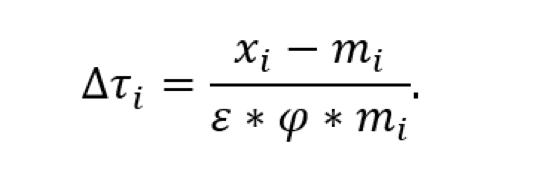
We have a trade imbalance with many countries, it causes a loss of American jobs, and a transfer of currency abroad. This imbalance is not all negative, of course, it provides US consumers with cheaper consumer goods. Trump would like to eliminate the imbalance using tariffs. He hopes that this will create jobs, and that the money raised will help balance the US budget. He’s already moved to end income taxes on tips expecting to replace that tax with tariff income. Trump claims that the tariffs are not inflationary compared to current the tax system that he claims has been hacked by the elites. In past essays, I’ve discussed the pluses and minuses of tariffs here, and here. Now I’d now like to derive the formula Trump uses, see below. The proposed tariff for any country or region, i, he calls ∆τi.

In the equation at left, χi = our exports to country, i. Similarly, mi = our imports from that country. The difference between these two is our trade imbalance, something he’d like to set to zero. There are two other greek terms that I will discuss, ε and φ. These are the elasticity of elasticity of consumption to price, and the elasticity of price to tariffs. Trump uses an asterix here to indicate multiplication. I will use a, more normal, “dot” symbol, •, to the same purpose. For most countries, he takes the two elasticities to cancel to 2, and produces a chart.

Let’s say that the dollar amount we currently buy from some country, i, = m = ni • Pi, where ni is the number of items bought from this country, and Pi is the average price. The intended effect of tariffs is to reduce mby raising Pi, the price consumers pay for goods from that country. This increase is certainly inflationary in terms of the consumer: a consumer of French wine will pay more per bottle unless he/she switches to US wine. Typically this price rise is not inflationary in terms of the country as a whole, because the producer likely swallows some of the tariff, so for the country as a whole, we pay less per bottle of French wine. The customer does not see that, but it’s worth noting. Trump sees things this way.

Back to the formula, we need to figure out how much the price will go up and how much sales will change. Economists have elasticity numbers for both these relations, denoted φ and ε. We can say that, for any country, I, the rise in the price of the average product is ∆Pi = Pi•∆τi •φ. Where Pi is the original price, ∆τi is the tariff, and φ is the fraction of this tariff that gets passed on to the consumer. A typical value is φ= 1/2 though some claim less. Assuming φ= 1/2 , if we add a 20%=∆τi tariff, as on on French wine, the consumer price will rise by 10%, a change that will cause him/her to buy less.

How much less will the consumer buy? That’s determined by the elasticity of sales, ε. This is the fractional decrease in the number items bought per fractional rise in the price. In math terms, ∆ni /ni = -ε∆Pi/Pi where ε is the elasticity. Now, since ∆Pi = Pi•∆τi •φ, we find that:

∆ni = -ni•ε•∆τi •φ.

There is evidence to suggest that, for the average product, ε equals about 2, and also evidence that it’s 4. Trump prefers 4, and uses it for his calculations. I prefer 2, and will get nearly the same tariffs at the end. Whatever our preferred value for ε, our next step is to use the following approximation, accurate for small ∆(mi);

∆mi  = ∆(ni•Pi) = ∆ni•Pi, +  ni•∆Pi

Trump seems to ignore the second term. Perhaps because it can either be positive or negative, as I’d mentioned above, depending on whether you look at things in terms of the customer or of the US as a whole. I’ll keep it in, writing this term in lighter text. In the end I will calculate a fairly similar tariff to Trump:

∆mi = -ni•ε•∆τi •φ•Pi  + ni•Pi•∆τi •φ.

Rearranging the above, and recalling that ni•Pi• =mi, you can find the appropriate tariff to eliminate the trade imbalance.

∆τi =   -∆m/(ε • φ• mi  + φ•mi) .

To make the trade imbalance go away, you need -∆mi = χi-mi . Thus,

∆τi =   χi-m /(ε • φ • mi  + φ•mi)

This is the Trump formula with an extra term in light text. If you ignore that term and use the values Trump prefers, ε =4 and φ=1/2, you get the exact values of the tariffs he listed on the chart for most countries — those with positive trade imbalances.

∆τi =   χi-m/ 2 mi  

Now, I’d like to put back in the missing term, and use the (better) values, values I would trust, ε =2 and φ=1/2. Using those values, I find the tariff should be slightly higher.

∆τi =   χi-m/ 3/2 mi  .

I should note that some countries are creating to these trips by raising their own tariffs, and some are lowering theirs. This will cause a change in the imbalance of trade, and Trump will have to change the tariff schedule periodically to keep up.

Robert Buxbaum, April 10, 2025.

Coal and nuclear power, the secret to China’s cheap products

We’ve become accustomed to buying cheap products from China: items made of glass, plastic, and metal come to the US by the ship-load, approximately $600 B worth last year, the highest from any country. Labor isn’t cheaper in China, certainly not when compared to Mexico or India, nor are the machines that make the products more advanced. What’s behind China’s ability to produce at their low prices is cheap energy—specifically, coal and nuclear-based electricity. While the US and most western countries have shut down coal plants to stop global warming, and have even shut working nuclear reactors for no obvious reason, China has aggressively expanded coal and nuclear energy production. The result? They are the largest single source of CO2, and have some of the lowest electricity prices in the world, Chinese electricity prices are about 1/4 of European, and 2/3 of U.S.

In recent years, the U.S. and Europe have increasingly relied on renewable energy sources like wind and solar. While these can work in certain areas, they require far more land than nuclear or coal, and expensive infrastructure because the power is intermittent, and generally not located close to the customer. The UK and Germany, countries with long periods of cloudy, windless conditions, have switched to solar and wind, leading to soaring electricity prices and a moribund industrial sector. Germany shut down all of its nuclear plants, 17 of them, largely to rely on electricity imported from its neighbors, and coal-fired sources that are far more polluting and unsafe than the nuclear plants they shut. The UK shut 5 nuclear reactors since 2012.

Meanwhile, China continues to build nuclear and coal plants. China is the largest user of coal power, and is planning to build 100 more coal-fired plants this year. Beyond this, China is building nuclear power rectors, including the world’s first 4th generation reactor (a pebble bed design). China has built 20 nuclear plants since 2016, and has 21 under construction. With this massive energy advantage, China produces things at low price for export: appliances, clothes, furniture, metal and plastic goods, all at a fraction of our cost. By selling us the things we used to make, China imports our jobs and exports pollution from their coal plants.

Many people instinctively understand that outsourcing production to China is harmful to both US employment and world pollution. Yet, until recently, US politicians encouraged this transfer through trade agreements like the TPP. Politicians bow to high-spending importers, and to environmental activists. It seems we prefer cheap goods to employment, and we’re OK with pollution so long as we don’t see the pollution being made. But, by outsourcing production, we’ve also outsourced control over critical industries, we’ve limited out ability to innovate, and we make ourselves dependent on China. Likely, that was part of China’s intent.

Russia has followed a similar path, keeping electricity costs mostly through low through coal, but also nuclear power, exporting their goods mostly to the EU. Before the Ukraine war, Germany in particular, relied on Russian gas, electricity, and fertilizer, products of Russian cheap power. By cutting off those energy, Germany has dealt a severe blow to its economy. Not everyone is happy.

Transfer of electricity, GWh, between European countries, 2023. Energy is most expensive in importer-nations, and GDP growth is slowest.

The incoming Trump administration has decide that, to compete with China’s manufacturing power, we need to develop our own through tariffs, and we need to increase our energy production. Tariffs can help balance the budget, and bring production back home, but without more energy, our industries will struggle to produce. I’m generally in support of this.

US production is more energy efficient than Chinese production, and thus less polluting. Besides, making things here saves on transport, provides jobs, and helps to build US technology for the future. I’m happy to see us start to build more nuclear power reactors, and restart some old plants. Solar and wind is good too, but is suited to only in some areas, windy and sunny ones, and even there, they need battery storage so that the power is available when needed.

Robert Buxbaum, January 21, 2025

This is not the most important election, 1860 was

Every year we hear the same claim: that this the most important election of America’s history. This year is among the more contentious than most, but the issues dividing the candidates are few. Both, for example, claim they will protect the border and spur the economy. In lieu of issues, there’s name calling. Trump claims Harris is as incompetent buffoon and Harris claims Trump is a fascist dictator. The rancor practically guarantees as they’ll be riots whoever wins but, as these things go, the election is less important, and divisive than ’64 and ’68, and in particular, the election of 1860.

Following the 1860 election, election seven states ceded from the union and we had a Civil War. Even the most bleak prediction for 2024-25 is for a more peaceful transfer of power. The election of 1860 had two major issues on the ballot; one was slavery or rather the expansion of slavery to the territories, and the other was implementation of the Morrill tariffs. These import taxes, proposed by Justin Morrill and passed but not yet implemented, would have raised the average agricultural duty from 15% to to 47%. Duties on durable goods wool rise to 65%, with the burden falling disproportionately on the southern states. Duties on durable goods. There was also a price schedule that would have prevented British shippers from minimizing the effect by falsely claiming a price far below market, something China currently does. In September 1860, Republican Leader Thaddeus Stevens told a New York City audience that “the Tariff would impoverish the southern and western states, but that was essential for advancing national greatness and the prosperity of industrial workers.”

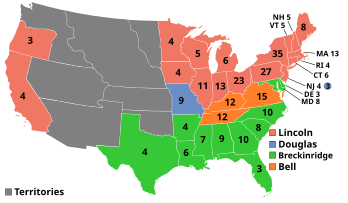
Matching the two sides to the two major issues of the day, there were four major candidates for president in 1860. All of them won states. Lincoln carried the greatest number, 18, and won the most electoral votes, 180. He was for high tariffs and against the expansion of slavery. Second was John Breckinridge, the Southern Democrat, who carried 11 states and got 72 electoral votes. He was for the expansion of slavery and against the higher tariffs. Then there was Stephen Douglas, the Northern Democrat, who was for allowing the expansion of slavery, considering it a “states right,” and also for the higher tariffs. Douglas carried only one state, Missouri, with 12 electoral votes. Finally, there was John Bell, the Constitutional Union candidate, who carried three states, Virginia, Tennessee, and Kentucky, representing 39 electoral votes. He opposed the expansion of slavery and also the increased tariff, but he generally believed that compromise was always possible. This was the worst vote split in US history. The worst split I’ve seen was 1968, when three candidates carried states.

Had either Bell or Douglas won, I suspect that the Civil War could have been avoided, at least temporarily. Virginia, the most important of the slave states, had shown it was willing to accept an anti-slavery president so long as he did not impose high tariffs — tariffs that benefitted the northern industrial workers and manufacturers at the expense of southern consumers and agricultural producers. Lincoln’s victory precipitated the immediate secession of 3 states. Another 4 seceded after inauguration.

The south imagined they could walk away because that’s how they read the constitution before the 13th amendment. They imagined they could win a civil war because they imagined they had British military support. “Cotton was king,” they claimed. The UK prime minister, Lord Palmerston, had told secretary Adams, “We do not like slavery, but we want cotton, and we dislike very much your Morrill tariff.” As it was, the British stayed on the sidelines, in part because of diplomacy. Besides, the gunship Monitor showed that the North could sink most any British ship that entered US waters.

As for 2024, I expect there will be riots whoever wins, but nothing more. The parties are realigning significantly, as happened in 1964-68, and neither side much understands the appeal of the other. This seems like less of a wrenching election than in 1964 and 1968, though. In ’64-’68 US boys were dying in Vietnam in numbers, and black folks and their white friends were being lynched in the south. Nothing like that is happening today. Today’s riots have been fueled by nothing more than name-calling, fear, and the occasional assassination attempt. Mild, even compared to 1968.

Robert Buxbaum, November 4, 2024. Justin Morrill is mostly remembered today for the Land-grant college act of 1862. This created an agricultural -technical college in each state. I taught at Michigan State University, Michigan’s land grant university. I’m generally a fan of tariffs, both as an aid to the domestic economy and as a tool of foreign policy. I present these views here. I got these views from Peter Cooper.

7% of new US vehicles were EVs in 2023. Expect slow growth in 2024.

About 7% of new US car and truck sales in 2023 were electric, 1.2 million vehicles. Of these, about 55% were Teslas. These numbers make sense based on US manufacturing and driving habits, so I don’t expect fast sales growth in 2024.

Currently home owners are the only major group of private drivers that save on fuel cost from owning an EVs. Home owners pay relatively little for electricity, about 11¢ per kWh, and they can generally charge their EVs conveniently, at home, overnight. Charging is more expensive and inconvenient for apartment dwellers. As a result, in 2023, some 95% of US EV sales went to home owners. Over 2 to 3 years they could hope to recover in gasoline savings the $7000 more that their EVs cost compared to petrol-powered vehicles, but they still have to drive a fair amount. A full charge of 80kWh EV at home will cost about $8.80 at current rates. This will power about 250 miles at a cost of 3.5¢/mile = $8.80/250.

Home, level 2 Chargers will cost about $1500 including the electrician cost.

The cost of gasoline is about 16.5¢/mile = $3.80/gal/ 23mi/gal) suggesting that you save 13¢ per mile by owning an EV. In order to recover the extra $7000 cost of the car in two years, you’d have to drive 27,000 miles per year, or 74 miles per day. To recover the difference in three years, you must drive 50 miles per day or 18,000 miles per year. This is more than most people drive.

EVs also offer reduced maintenance, but customers can balance this against the inconvenience of long charge times and spotty availability of chargers. My sense is that the fraction of Americans who benefit and drive 50-75 miles per day is about 7%. This fraction will increase as EVs get cheaper, but families that can benefit already own an EV.

The average Tesla costs today about $3000 more than the equivalent petrol car, but that still makes it relatively expensive, and it seems that the price differential was intentionally set to match sales to Tesla’s production capacity. Tesla could make EVs cheaper than petrol cars and still make a profit on each, but if they did this, they would have too much demand. Other US auto makers are mostly lose money on EVs and are unmotivated to lower prices. Based on this, my sense is that it is unlikely that sales will be much higher in 2024 than the 1.2 million sold in 2023.

The Chinese have plenty of new EVs, and they are eager to export. Their car market is currently about 50% EV, with companies like BYD selling EVs for as little as $12,000. The Chinese government subsidizes production and powers their EVs with cheap electricity by burning coal. These cars do not seem very good, compared to Tesla, but at this price they would flood the market if allowed to compete. The US government has kept them out with tariffs and with complaints about slave labor. Trump has promised a yet higher tariff, 100% on Chinese cars, if elected. The intent is to preserve US jobs and manufacturing. This is one of those situations where tariffs are good, IMHO.

Toyota Prius, the most popular hybrid.

Hybrids are a third option, cheaper than EVs, high mpg than normal engines. Though they are sometimes touted as a transition to EVs, to me they’ seem to suit a completely different demographic: those who don’t own their own home and drive a lot. Toyota makes the most popular hybrids in the US. They cost about $4000 more than the equivalent petrol car, $30,000 for a Prius vs $26,000 for a Corolla. When using a Prius in the city, you’ll get about 50 mpg, spending 7.5¢ per mile ($3.80/gal / 50 mpg = 7.5¢). This implies a gas savings of about 9¢ per mile vs an ordinary Corolla. Based on this, you have to drive about 27,000 miles per year in the city to recover the cost difference in two years. That’s a lot, and your performance is typically worse with a hybrid: you have a heavier car with a small engine. Maintenance cost is also higher with a hybrid than with an EV: you still need oil changes, fluid changes, belts, etc. and the mpg advantage vanishes on the highway. A hard driving home owner is better off with an EV, IMHO, an apartment dweller with a hybrid. Hybrids also should make sense for taxis and local-haul trucks. I can imagine hybrid sales rising in 2024, perhaps as high as 15% of vehicle sales. What we’re all waiting for is more near-shore manufacturing (or mandates), and this is not likely in 2024.

Robert Buxbaum April 28, 2024

Why did the UK reject Trump’s trade deals?

When the UK left the EU, they gained some economic freedom, but lost easy access to their largest trade partner. They avoided having to follow the weird green policies of the EU, and no longer had to take low cost workers from Poland, Bulgaria, Tec, but having lost easy access to European trade, the assumption was that they would want a trade deal soon, with someone, and the likely someone was the USA.

At first things went pretty well. there was the predicted crash didn’t come, showing that the top economists were talking out their hats, or trying to scare people to stay in the EU. And then Trump proposed the first of four attempts at a trade deal, and things got ugly. All four attempts were rejected in a most-forceful and insulting way.

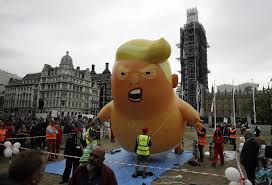
When Trumps first forays at a trade deal were rejected, he attempt a visit in the summer of 2017. The British Parliament forbidding the visit, accepting it only by a slim majority with the PM, May making no strong case. The mayor of London protested with a blimp of Trump as a big baby, and the Queen was not sure she had time for tea (she had time for Obama). Trump cancelled the visit, and May made deals with Norway, Switzerland, Israel, Palestine, and Iceland. Why these but not the US? Pride, I guess, or UK’s leaders thought they could do better.

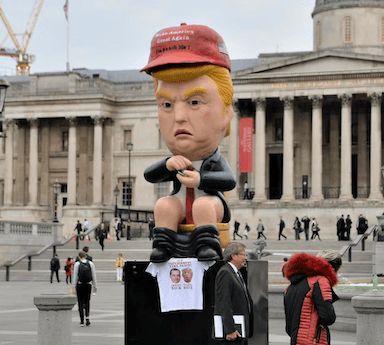
Over the next two years Trump made trade deals with Mexico, Canada, Japan, and Korea, trying The UK again in July, 2019. This time, Theresa May was more welcoming — she was facing an election — but the blimp was brought out again, and allowed to follow Trump around England, along with a statue of Trump on the toilet, tweeting, and making fart sounds while saying “witch hunt,” “no collusion*”, and other comic comments. All rather insulting, and no deal with the UK was signed.

I suspect Trump’s offers to the UK were similar to those with Japan, and Japan seemed very happy with the deal (Biden offered them an exit from Trump’s deal, but Abe stayed — and proposed Trump for the Nobel Prize. So why the British antagonism? Even if they had to say no, why didn’t they arrange to say no politely. India said no to Trump’s trade deal, politely, in 2020, and to the UK too.

My theory is that Theresa May was taken by the anti-Trump propaganda of the German press (see magazine covers of the time). Germany was the leader of Europe (this status has diminished), and its press presented Trump as a racist murderer. May kept trying to get back into the EU, and may have thought that ill-treating Trump would help. It didn’t. Boris Johnson followed May as UK prime minister. He was pro-Trump, but his cabinet was not. They acted as if they could recreate the British empire of Queen Victoria — a silly thought, and tried for free trade deals with India, Turkey, and Saudi Arabia. These members of the old empire said no, politely. Then COVID came and the UK economy stalled. Johnson was removed, and Biden replaced Trump. The current PM, Rishi Sunak, seems to have got nowhere with Biden.

The UK needs free trade, it seems to me, soon, and with some substantial countries. Britains is a hub with hardly and spokes — of manufacturing, information, and banking, currently without any good suppliers or customers. India likely turned them down because the UK no longer has the power to protect them, nor to protect their trade. Aside from rejoining the EU (good luck there), the US is the obvious partner. If personality clashes were the problem, you’d think there would have been a deal signed between Rishi Sunak and Joe Biden. I think it’s national ego now. They don’t like feeling second-best to India, Brazil, etc.

Since leaving the EU, the UK is doing better than Germany, but that’s not saying much. British exports were helped by the cut off of trade between the EU and Russia, but London is having trouble remaining a financial center, beset by difficult travel and work rules, and the decline of the pound. Maybe it’s Biden’s fault that there is no deal. Last week, the British Foreign secretary, David Cameron, came to visit Trump at Mar a Lago for a good feelings chat and to start on a trade deal should Trump become president. It’s not clear that Trump will become president, but there are at least hopes for a deal, ideally signed at a distance from the baby balloon.

Robert Buxbaum, April 18, 2024 *”Russian collusion” was a big deal at the time. A dossier was supposed show that Trump was a Russian agent. It turned out the dossier was created by Democrats working with the FBI.