You may have heard that the universe is not endless, ending at a brick wall, perhaps, some 15 billion light years out. But what you may not know is that this understanding is backed by a classic proof, going back to the middle ages. What follows is that proof.
Consider an endless universe with a fairly uniform distribution of stars. In any large-enough volume of this universe we expect to find many stars, e.g. in the spherical shell between 100 and 101 trillion miles from earth. At this distance, each of these stars is close enough to see individually; the combination of them (the sum in this volumetric shell) sheds a small amount of heat on the earth. Now consider another shell, the same thickness but twice as far from us, that is between 200 and 201 trillion miles from earth. If the universe is uniform, there will be 4 times as many stars in this shell, but since these stars are twice the distance from us, each star will present us with ¼ as much heat. Now, with 4 times the stars, the total effect is to radiate as much heat to us as from the first shell.
The same argument goes for each spherical shell of this 1 trillion miles thickness: each one presents us with the same amount of heat. If the universe is infinite and uniform, we find there will be an infinite number of shells radiating this amount of heat, and therefore an infinite amount of heat bathing us. We should expect to roast from all of it. Since we have not roasted, we conclude that the universe is not an endless, uniform expanse.
Based on this proof, the universe could be uniform, but only if it’s not endless. It could end with a brick wall, as in the Hitch-hikers guide. Alternately, the universe could have an end because it’s expanding from a big bang. This latter is suggested by the observed red shift showing that stars far from us move away faster in proportion to their distance. I’d expect this to be a favored answer of creationists because a point of creation suggests a creator. Creationists hate this finding, and dismiss the data too because the observed redshift suggests creation happened 15 Billion years ago. Atheists, needless to say, hate this “Big Bang” explanation.
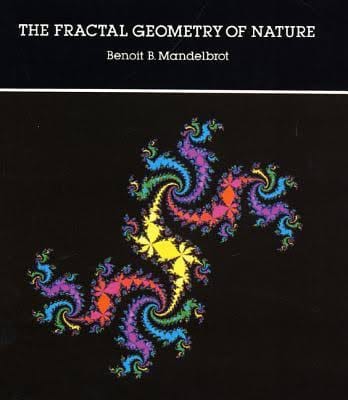
The mathematician Bernard B Mandelbrot noticed that much of nature has a distribution that scaled by fractional dimensional, like 2.5
Another thought, more acceptable to atheists, is that the universe is a closed, oscillating four dimensional hypersphere, where time is oscillating along with space. Einstein liked this view, but never fleshed it out, perhaps because there was no way for this expansion to bounce in, and periodically reverse time and entropy.
A fairly recent view that I like is that the universe could be fractal in distribution. (Mandelbrot). It isn’t clear how the universe got that way, or how it fits with the observed redshift, but it easily allows for a universe that isn’t endless nor possessing a clear limit, a last star as it were. It also provides a uniform/ non-uniform model of mass distribution. Besides, this matches much of nature. As it turns out to be fractal. Chaos of this sort is sort of God’s fingerprint.
For another unsolved cosmological question, consider why are there stable galactic arms, see here. Robert Buxbaum, October 22, 2012.