Tag Archives: China

China won’t invade Taiwan, perhaps Vietnam

For 2000 years Chinese rulers have either fixed the problems caused by their predecessors, or become the absolute ruler who brings new problems and a war. Eighteen times over the last 2000 years, the absolute ruler has chosen is to invade Vietnam. Chairman Xi Jinping took full power over China five years ago, and as I predicted then, purged the party of all other competent leaders, including his predecessor, Hu. He now has to do something, and that’s typically a war. Xi talks like he’d like to invade Taiwan, but I believe he’ll invade Vietnam instead, as so many others did before him. Taiwan (Formosa) is separated from mainland China by 100 miles of open sea. There’s been only two successful, modern invasions; by the Qing Chinese in 1683 with the help of the Dutch fleet, and in 1895 by Japan against the 5 month old Republic of Taiwan. Vietnam is much easer to invade: you just have to walk in.
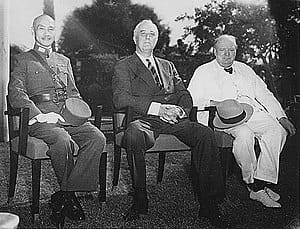
Chiang KaiShek with Roosevelt and Churchill. He took power after WWII.Taiwan is now a Republic

Here’s my brief summary of 60 years of cyclical Chinese history: In the last decade of his life, 1966-76, Mao Zedung brought a horrible cultural revolution, killing 100 million or so by violence and famine, targeting anyone who might disagree with him. He was followed by Hua Kuofeng, Hu Yaobang, and Zhao Ziyang. They removed “the Gang of Four” and brought reform, toleration, and some rapprochement with the west. Hu also returned some autonomy to Tibet. Deng Xiaoping followed, put Zhao under house arrest, removed Hua and Hu (only recently buried), absorbed Tibet, invaded Vietnam, instituted a brutal on-child policy with, forced abortions and sterilizations, and put down the Tiananmen uprising 1989 -an uprising caused by the removal of Hu. Deng was followed by Jiang Zemin and Hu Jintao who exited Vietnam, lightened the one-child policy, and brought back some measure of freedom. This lead to Xi Jinping who appears to be in the mold of Mao and Deng. He’s removed Hu publicly during a communist party meeting, has taken absolute control, arrested China’s business innovators, and (likely) caused a pandemic by unsafe research at the Wuhan bio-research facility. His response to the pandemic is worthy of Mao: he welded people into their homes. Xi now needs a war to unify the country, and talks like he’ll invade Taiwan. Xi might do it; he has increased military spending by 2.5 times, to double that of the EU (equal to US spending). His army is likely to be used somewhere soon. But where?

At first glance, it makes some sense to think he’ll invade Taiwan. He has the same justification as Deng had for Vietnam, “to punish the wayward province.” Taiwan is small, 23 million people, and very rich (GDP = $1.3T, 10-15% of China). It’s especially rich in high-tech areas that Xi seems to want, and China ruled the island (Formosa) for 212 years between 1683 and its brief independence in 1895. I expect that Xi will invade Vietnam though, for many of the same reasons that Deng did: it’s easier, and the invasion won’t destroy US trade. Vietnam will not be super easy to conquer, of course, Putin’s invasion of Ukraine looks like it will go on for years, but Xi has 100 million men of military age. Driving these men into Vietnam is a lot easier than an amphibious invasion. Vietnam now, as then, has few friends -perhaps only India -while Taiwan has many (The US and Japan, primarily), and they have naval breakwaters that would make an amphibious landing difficult. Vietnam is only about half as rich as Taiwan (GDP = $650 B), but it has two things China needs more than technology: oil and food.

The Japanese invasion of independent Taiwan, The Republic of Formosa, in 1895. It took 5 months despite lopsided advantages. Plus 7 years to pacify the population.

Japan’s invasion of the Republic of Formosa in 1895 would have to be the model for a Chinese invasion today, assuming that’s the route Xi would take. Japan used a small force of 20,000 highly trained men, and a surprise landing at two sites. The formosan army of 75,000 was hardly armed, but it still took the Japanese 5 months to defeat them. It took another 7 years to pacify the population. Taiwan today is a lot better prepared than it was, with modern missiles and drones, a well-trained army of 500,000, and an active navy. Japan, Philippines, and the US would likely try to resupply Taiwan, and would have to be blockaded to prevent delivery. This is not so easy, since the nearest Japanese island is closer to Taiwan than Taiwan is to mainland China, and the Philippines is not far either. Then there are the sanctions that would follow an invasion of Taiwan, but not an invasion of Vietnam: the freezing of assets and the closing of markets. Susch sanctions have been tough on Russia but they would be devastating to China since China imports most of its oil and half of its food, much of it by sea. Whatever Xi gets from invading Taiwan will not match these losses, and I think Xi know it.
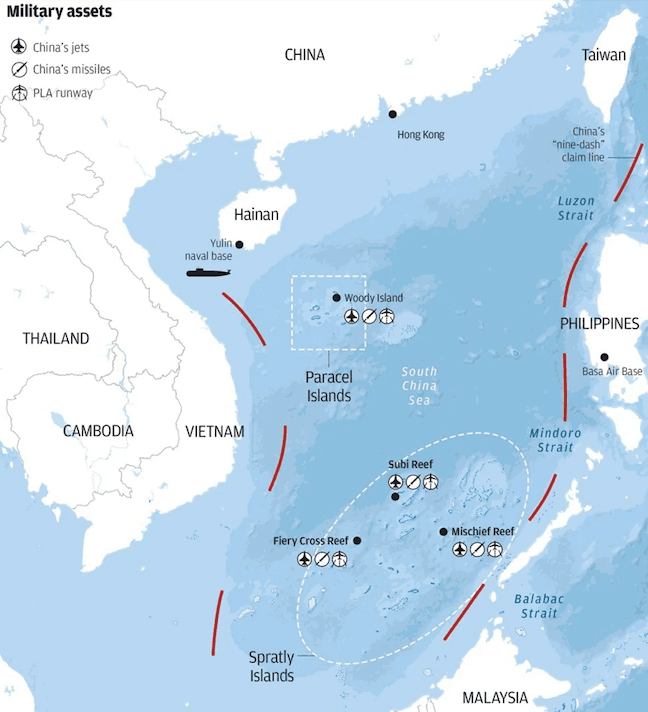
China’s new military bases are located around Vietnam, not around Taiwan

I suspect that Xi has already concluded that Vietnam is the smart place to invade. Supporting this view is a look at his preparations. Xi has not built the landing fleet that he’d need for Taiwan, but has instead militarized Hainan Island, plus four other, newly constructed, illegal islands in the South China Sea. These islands surround Vietnam, and are well suited to cut off the country from western aid. They are too far south to be effective in an action against Taiwan. You can tell a lot about what a person will do from what he has done, and what Xi has done is to prepare for an invasion of Vietnam.

Robert Buxbaum, April 27, 2023.
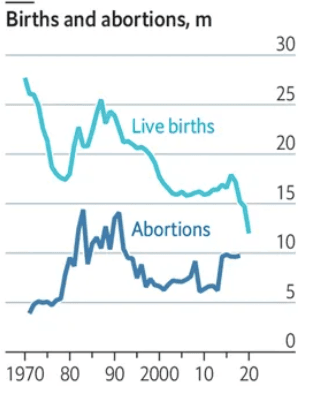
Abortion and Childbirth in the US vs China

There are a lot of abortions in China, and not many births. Last year, there were about 9.7 million abortions in the major clinics and almost 12 million live births. That’s about 8.5 live births per 1000 Chinese population and 79.7 abortions per 100 live births. If you include the minor clinics and the abortion pill, it’s likely that there are more abortions than live births in China. It’s the preferred method of birth control. In the US, the ratio of abortions to births has grown but we have only about 1/4 as many abortions as births.

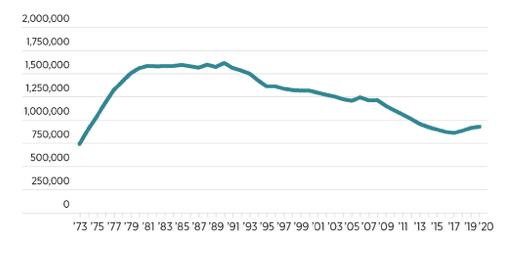
Births and abortions per year in China to 2020, from The Economist, 2023. The biggest change is decreased births, not increased abortions.

The birthrate in China is low and decreasing. China had pushed for one-child families as a cure for overpopulation and a route to a richer China with abortion promoted as a safe, painless way to end an unwanted pregnancy. Billboard ads continue to show happy women who are leading their best life now that they’ve had an abortion. Of course, during the one-child years, if you had that extra baby, the state might take your baby him or her. Condom ads were forbidden, and remain so to this day.

China seems to have succeeded too well. The population has leveled out, and has began to decline this year — likely too fast. Meanwhile the economy has grown by an average of 10% per year for 40 years, so that China is now, likely the second largest economy on the planet, but has such an old population that this is unlikely to continue. One down-side of the heavy reliance on abortion is that it’s produced a severe sex imbalance. The Chinese chose to abort mostly girls. It’s also resulted in an active sex trade. I’ve claimed it will lead to war, famine, or an economic collapse in the next ten years.

Add for a Chinese abortion clinic. See how happy the lady is. Chinese ads have English because it’s cool — it suggests that this clinic serves Americans and British too.

In the US, there were 3,664,000 births in 2022, 12.012 births per 1000 people. That’s 1.5 times the birth rate of China, and a 1% increase from 2020, but significantly below the birthrate of the boomer generation. In the last year, there were 928,000 abortions, see graph below, or 25.3 abortions per 100 live births. Our population is as old as China’s, but the additional children suggests that our society will continue longer.

In America, the case for abortion is that it’s a woman’s right, see ad below. Anti-abortion is presented as slavery and a Republican plot for male domination. Politically, this has been a winning argument for Democrats; helping them win big in elections. They made good on the argument and amended the Michigan constitution to allow abortion till birth with the father having no say. The legal and religious establishment has gone along. They may want some limitations, but there is no consensus on what the limitation should be.

Abortions per year, US, Guttmacher Inst. report, 2022.

It’s been suggested that a good way to lower the abortion rate would be higher taxes to provide more healthcare and child benefits. That may be, though I’m not sure it’s the direct, sure route. China has free healthcare and benefits. I suspect that the preachers should do more personally to deal with the vulnerable. Another thought is to promote is rural living. In the US and China, rural areas have higher birth rates, while the cities have low birth rates and high abortion rates. The highest abortion rate in the US is in Washington DC.

In the US, abortion is presented as a right, and as a Republican anti-woman plot.

My overall sense is that Children are good: Admittedly, they are expensive hobbies, but they are worth it, for the parents, for the nation, and in particular for the child. Children are a beautiful part of life and a beautiful part of any environment, IMHO. They like to grow amid sunshine and fresh air.

Robert Buxbaum, March 14, 2023

Birth dearth in China => collapse? war?

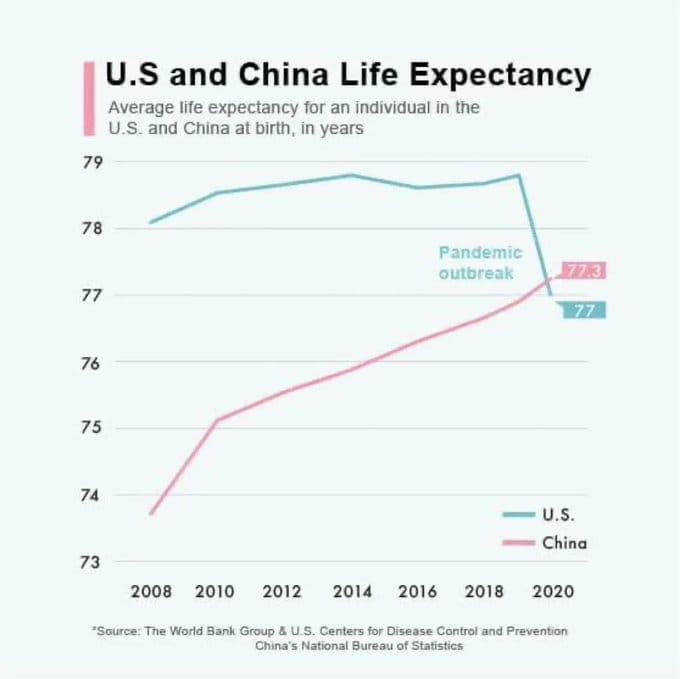
China passed us in life-expectancy in 2022, and also in fertility, going the other way. In China lifespan at birth increased to 77.3 years. In the US it dropped an additional 0.9 years, to 76.8. US lifespans suffered from continuing COVID and an increase in accidents, heart disease, suicide, drugs, and alcohol abuse. Black men were hit particularly hard, so that today, a black man in the US has the same life expectancy as he would in Rwanda. China seems to have avoided this, but should expect problems due to declining fertility and birth rates.

China passed us in life expectancy in 2022.

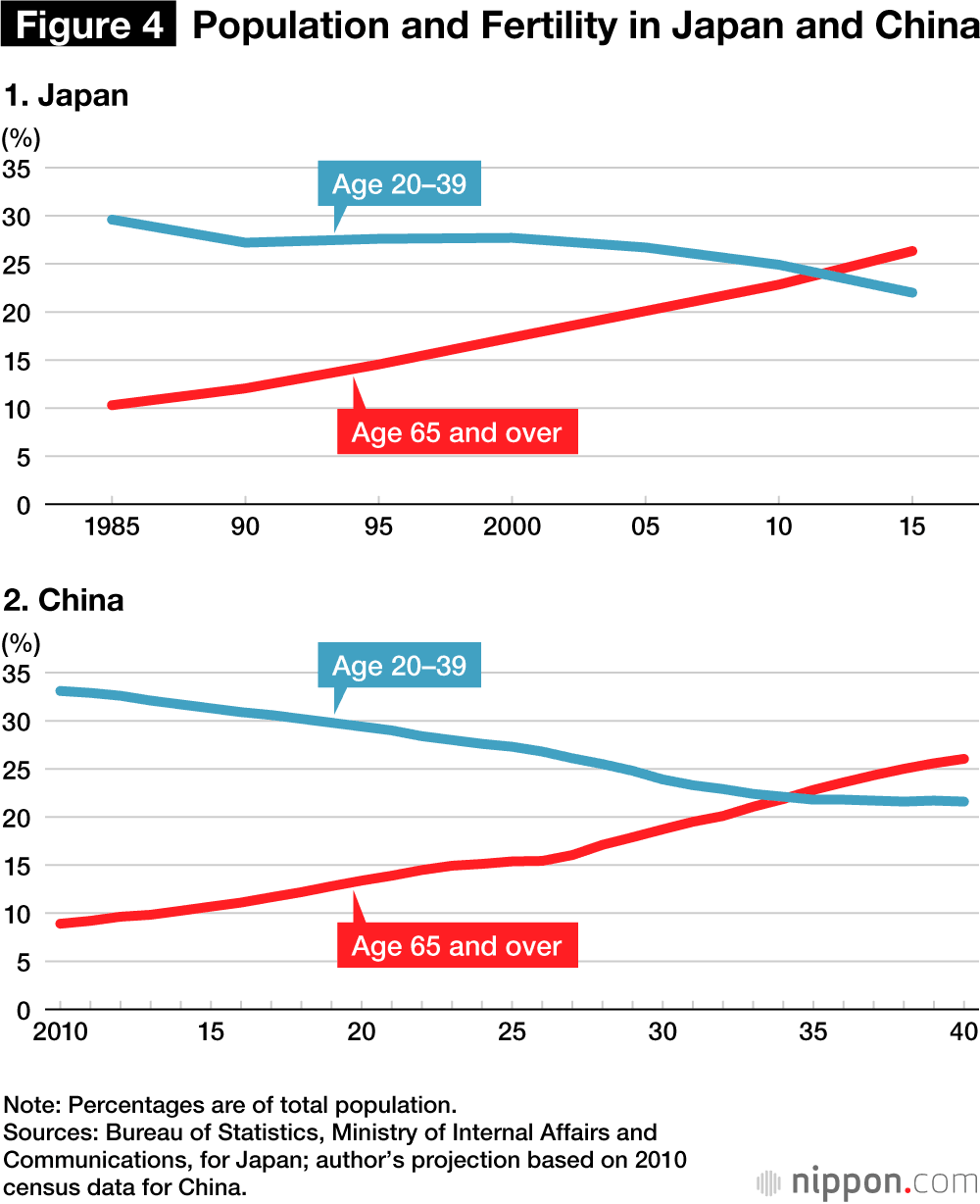
Fertility rates will eventually burden the US too, as US fertility is only slightly greater than in China, 1.78 children per woman, lifetime, compared to 1.702 in China. But China has far fewer people of childbearing ages, relatively, and only 47% are women. Three decades of one child policy resulted in few young adults and a tendency to abort girls. Currently, the birthrate in China is barely more than half ours: 6.77 per 1000, compared to 12.01 per 1000. And the proportion of the aged keeps rising. China will soon face a severe shortage of care-givers, and an excess of housing.

Years of low birthrate preceded the “Lost decades” of financial crisis in Japan and the USSR. Between 1990 and 2011, business stagnated and house prices dropped. China faces the same; few workers and more need for care: it’s not a good recipe.

Beginning about 1991, Japan saw a major financial collapse with banks failing, and home values falling. China seems over-due.

Few children also signals a psychic lack of confidence in the country, and suggests that, going forward, there will be a lack of something to work for. Already Chinese citizens don’t trust the state to allow them to raise healthy children. They have stopped getting married, especially in the cities, and look more to have fun.

Affluent women claim they can’t find a good man to marry: one who’s manly, who will love them, and who will reliably raise their standard of life. Women seem less picky in China’s rural areas, or perhaps they find better men there. However it goes, urban women get married late and have few children, both in China and here. China produces great, sappy, soap operas though: a country girl or secretary in a high-power job meets a manly, urban manager who lovers her intensely. A fine example is “The Eternal Love” (watch it here). It involves time travel, and a noble romance from the past. Japan produced similar fiction before the crisis. And a crisis seems to be coming.

While Japan and Korea responded quietly to crisis and “the lost decades,” allowing banks to fail and home values to fall, Russia’s response was more violent. It went to war with Chechnya, then with Belarus and Ukraine, and now with NATO. I fear that China will go to war too — with Taiwan, Japan, and the US. It’s a scary thought; China is a much tougher enemy than Russia. There is already trouble brewing over new islands that they are building.

Robert Buxbaum January 25, 2023. If you want to see a Korean soap opera on the Secretary – manager theme, watch: “What’s wrong with Secretary Kim”. (I credit my wife with the research here.) I suspect that Americans too would like sappy shows like this.

A new, higher efficiency propeller

Elytron biplane, perhaps an inspiration.

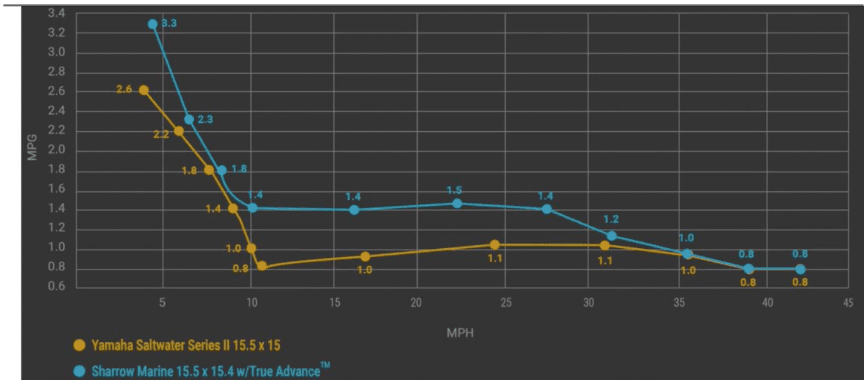
Sharrow Marine introduced a new ship propeller design two years ago, at the Miami International Boat show. Unlike traditional propellers, there are no ends on the blades. Instead, each blade is a connecting ribbon with the outer edge behaving like a connecting winglet. The blade pairs provide low-speed lift-efficiency gains, as seen on a biplane, while the winglets provide high speed gains. The efficiency gain is 9-30% over a wide range of speeds, as shown below, a tremendous improvement. I suspect that this design will become standard over the next 10-20 years, as winglets have become standard on airplanes today.

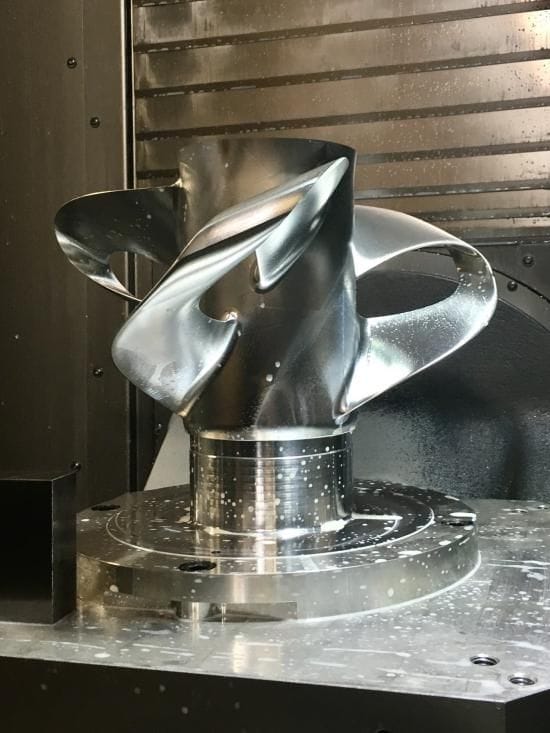
A Sharrow propeller, MX-1

The high speed efficiency advantage of the closed ends of the blades, and of the curved up winglets on modern airplanes is based on avoiding losses from air (or water) going around the end from the high pressure bottom to the low-pressure top. Between the biplane advantage and the wingtip advantage, Sharrow propellers provide improved miles per gallon at every speed except the highest, 32+ mph, plus a drastic decrease in vibration and noise, see photo.

The propeller design was developed with paid research at the University of Michigan. It was clearly innovative and granted design patent protection in most of the developed world. To the extent that the patents are respected and protected by law, Sharrow should be able to recoup the cost of their research and development. They should make a profit too. As an inventor myself, I believe they deserve to recoup their costs and make a profit. Not all inventions lead to a great product. Besides, I don’t think they charge too much. The current price is $2000-$5000 per propeller for standard sizes, a price that seems reasonable, based on the price of a boat and the advantage of more speed, more range, plus less fuel use and less vibration. This year Sharrow formed an agreement with Yamaha to manufacture the propellers under license, so supply should not be an issue.

Vastly less turbulence follows the Sharrow propeller.

China tends to copy our best products, and often steals the technology to make them, employing engineers and academics as spys. Obama/Biden have typically allowed China to benefit for the sales of copies and the theft of intellectual property, allowing the import of fakes to the US with little or no interference. Would you like a fake Rolex or Fendi, you can buy on-line from China. Would you like fake Disney, ditto. So far, I have not seen Chinese copies of the Sharrow in the US, but I expect to see them soon. Perhaps Biden’s Justice Department will do something this time, but I doubt it. By our justice department turning a blind eye to copies, they rob our innovators, and rob American workers. His protectionism is one thing I liked about Donald Trump.

The Sharrow Propeller gives improved mpg values at every speed except the very highest.

Robert Buxbaum, September 30, 2022

COVID is 1/50 as deadly in China, Hong Kong, Taiwan, Korea…

I may be paranoid, but that doesn’t mean I’m crazy. COVID-19 shows a remarkably low death rate in Asia, particularly Eastern Asia, compared to the US or Europe or South America. As of this month, there have been 734,600 US deaths from COVID-19, representing 0.22% of all Americans. Another way of stating this is 2.2 deaths per thousand population. In one year, COVID has lowered the life expectancy of US men by 2.1 years; with the decline worst among hispanic men. The COVID death rate is very similar in Europe, and higher in South America (in Peru 0.62%), but hardly any deaths in East Asia. In China only 4,636 people, 0.003% of the population. That’s 1/700th the rate in the US, and almost all of these deaths are in western China. They no longer bother with social distancing.

The low death rate in East Asia. was noted by the BBC over a year ago. Based on today’s data from Worldometer, here, the low death rates continue throughout East Asia, as graphed at right. In Hong-Kong the death rate is 0.03 per thousand, or 1/70th the US rate. In Taiwan, 0.04 per thousand; in Singapore, 0.01 per thousand; in S. Korea 0.04 per thousand; Cambodia and Japan, 0.1 per thousand. The highest of these countries shows 1/20 the death rate of the US. This disease kills far fewer East Asians than Westerners. This difference shows up, for example in a drop in the lifespan of male Americans by 2.16 years. The lifespan of male Hispanics dropped more, by 4.58 years. In China, Japan, and Korea the lifespans have continued to increase.

Life expectancy for US males has dropped by 2.16 years. It’s dropped more for Hispanic and Black Americans. Data for women is similar but not as dramatic.

My suspicion is that this was a racially targeted bio-weapon. But perhaps the targeting of westerners reflects a cultural lifestyle difference. Mask use has been suggested, but I don’t think so. In many high mask countries the death rate is high, while in low mask Taiwan and Korea it’s low, only 0.04 COVID deaths per thousand. Even Sweden, with no masks reports only 1.4 per thousand deaths; that’s 2/3 the death rate of the US. Masks do not seem to explain the difference.

Another lifestyle difference is obesity; Americans are fat. Then again, Peru was hit far worse than we were, and Peruvians are thin. Meanwhile, in Hong Kong, folks are fat, but the death rate is small. Another cultural difference is medicine, but I don’t believe Sweden, Germany, and France have worse healthcare than Taiwan or Cambodia. Cambodia saw 1/20 the US COVID death rate.

My suspicion is that this disease targets by race because it was designed that way. If it isn’t a bio weapon, it certainly behaves like one. I may be paranoid here, but that’s the way it seems.

As a side issue, perhaps related, I note that China keeps pushing for the to close its manufacturing in the interest of CO2 abatement, while they keep building coal burning power plants to fill the manufacturing need that we abandon. I also notice that they hit us with tariffs while protesting our tariffs, that they steal our intellectual property, and that they are building islands in the sea between China and Japan. There is war-tension between our countries, and Western-targetting virus appears right outside of China’s top-security virus lab — their only level 4 lab — I’m guessing it’s not a total coincidence.

Robert Buxbaum, October 12, 2021

Chinese billionaires keep disappearing with facebook twitter’s help. Alibaba’s Jack Ma is the latest.

Jack Ma, disappeared billionaire owner of Alibaba.

Every 25 years or so, for the past 1500 years China gets a new dictator who rounds up the rich and famous for loyalty trials, imprisonment. and worse. This was true of Li Ping following Tianamin Square, and Mao Zedong who killed some 75 million as part of his 10,000 flowers, great leap purges. The current dictator, Jenping Xi. Like, has been rounding up anyone he worries about, and that’s basically anyone he might worry about. The latest is Jack Ma, the founder of Alibaba, China’s version of e-bay and Amazon. Until his disappearance, he was the richest person in China.

Ma had not been seen in public since October 2020, when he and two top lieutenants of Alibaba were called to meet with regulators. He reappeared months later in a 40 second video (some say a hostage video) to say he is more rested now, and that he is positive that China’s regulators do not stifle innovation. As typical for China, there is no information about his whereabouts. What’s novel is that US media companies are involved helping Xi to trace potential opposition and keep questions out of the press. This includes Google, Twitter, and Facebook, as well as US media outlets.

71st Cannes Film Festival - Screening of the film "Ash Is Purest White" (Jiang hu er nv) in competition - Red Carpet Arrivals - Cannes, France, May 11, 2018. Fan Bingbing poses.
China’s biggest starlet, Fan Bingbing, vanished from sight and the internet for months. She may have said something critical, but has reappeared and recanted it.

In the past the news and social media would have been full of negative comments about China, and Ma’s detention , both from within and without. Now there is hardly anything and what little there is, is mildly positive about Xi. For three months there have been no e-mail or published tweets or Facebook posts from Ma or his lieutenants. Similarly, there is no room for negative speculation within China, and little within the US. The company’s planned IPO was cancelled, one that could have been the richest in history, but this fact got virtually no press, not in China, not in the US. Regulators cancelled it just two days before the start of trading. You’d expect screams from inside and outside China; instead, the story has been covered only briefly by CNN and the Financial Times, generally putting a pro-China spin on it. They stress the importance of regulations and avoiding monopolies, and don’t mention that Alibaba competes with Amazon, e-bay and Walmart. The expectation is that Ma and his higher-ups will be found guilty of monopoly trading and abuse of power. Under Xi, these crimes that have sent corporate leaders to prison for 12 to 20 years.

Ren Zhiqiang, missing billionaire, sentenced to 18 years.

Consider the fate of Ren Zhiqiang, the 69 year old chairman of Huayuan property conglomerate. It was one of the largest property groups in China, but Ren vanished in March 2020 after being heard to have complained about how the government was handling COVID-19. He was expelled from the communist party, and in September 2020 sentenced to 18 years in jail for “taking bribes and abuses of power.” There was hardly a trial, and as with Jack Ma, Facebook and Twitter helped the party silence Ren and his supporters. The result is that he had no recourse to the court of public opinion. About a month later, Facebook and Twitter did the same to Donald Trump, banning him for life from Facebook, Twitter. All other platforms joined, these included Snap and Reddit. As in China they also banned his main lieutenants and his main supporters, including the my-pillow man. The internet services also closed (deplatformed) Parler, the only competing web-service that allowed Trump and his supporters to post.

It can help to have public outcry, as Xi found after he disappeared China’s most popular movie starlet, Fan Bingbing in July 2018. Fan is a star of Chinese TV and movies and appears in Iron Man II and X-Men. As with Ma and Ren, Facebook and Twitter removed all posts, comments, questions, and complaints about Fan, releasing only the official statement that she was under investigation and taking a break. Unlike Ren, Fan reappeared a year later, April 2019 with no official charges filed. Nor has there been any official report. She has apologized for misdoings. and is supposed to have paid some $150 million, but she’s free. My guess is that the pressure of 100 million Chinese fans is what helped Ms Fan to un-vanish.

Chairman of Anbang Insurance Group Wu Xiaohui attends the China Development Forum in Beijing, China
Had Wu Xiaohui, former chairman of Anbang Insurance Group, and owner to the Waldorf Astoria.

A less positive outcome is when there is no outcry. When Wu Xiaohui, chairman of the Anbang Insurance Group, and the owner of New York’s Waldorf Astoria hotel vanished for two years. When he reappeared, he faced a quiet trial that sentenced him to 18 years in prison. The usual charges: fraud and abuse of power. Wu’s mother claimed she had no access to her son for those two years. Anbang, once one of the largest insurers in China, was taken over by its insurance regulator who has applied to liquidate the company. Why liquidate? Probably because it’s the easiest way to remove potential Wu loyalists.

In the US, there are some claims that Facebook, Twitter, Reditt and a few other companies have too much control of public discourse. Others claim that these companies exercise too little control. These companies claim the right to silence opinion they consider untrue, or inflammatory, and they have been allowed to deplatform their competition. Congress is moving to be in charge of who they silence. I’ve found they don’t like pro-Israel sentiments. While they don’t put words in my mouth, I don’t like it that they take words out of my mouth. As a result, I’ve cut back on my use of these platforms.

Jack Ma reappeared after 3 months in this 40 second video, shot from an unknown location. To me, it looks like a hostage video, “I’m well and being well treated …” Biden has argued that now is the time to move closer to China.

As I write this, Trump is impeached for the second time. The charge is inflammatory speech. Like with abuse of power, there is no way to prove you didn’t do it, especially after the internet giants silence you and anyone stupid enough to support you. Among Biden’s first acts is to undo Trump dictates that kept China from providing the technology underlying the US power and water system. Clearly Biden feels it is important that China should have a hand in this. I surely am not going to suggest that the bribes Biden is supposed to have received from China played any role. I will say that, when I ran for water commission, one of my goals was to help make the water system more resistant to cyber attack.

Dr. Robert E. Buxbaum. February 8, 2021. As an update, I see that Jimmy Li was arrested. He’s the founder of Hong-Kong’s most popular newspaper, Apple daily. No comment in the US, or from the Vatican. Li is Catholic, and the Vatican used to chime in when prominent Catholics were arrested.

China keeps building coal-fired plants so we can close ours.

Part of the mandate to the 2020 election was to join with Europe and the rest of the western world in agreeing to stop the use of coal. It’s a low cost way to generate energy. Of course we still like to buy things, and we’ve largely turned to China, a country that still burns coal, and thus makes things cheap. The net result of this shift to Chinese goods is that China keeps building coal-fired plants while we shut ours. As it happens, China is worse than the US in terms of CO2 per output, but at least when China pollutes, we don’t see the smoke directly, and we don’t see their new coal plants at all. So we feel better buying things from China than from the US. Besides, slave labor is cheap.

From th eEconomist, December 2020.

Buying Chinese goods is good for the importers, and for the non-manufacturing consumer, at least in the short term. It has the effect of exporting jobs though, and eventually we have to support the displaced workers. It also means we don’t keep up our manufacturing technology. Long term, that affects innovation, and that starts to displace other industries. Antibiotic production has already left the US and along with it semiconductors. Still, we feel good about it since the Chinese don’t let us see the slave labor camps. We do get to see the haze of the pollution.

The Chinese expect this pattern to continue. China is building new coal-fired plants at a furious rate. Presently China has most of the world’s coal-fired power plants. Mostly these are only 4 to 12 years old, far younger than our forty year old plants China plans to build more, and keeps encouraging us to shut down ours. Even 10 years ago, China lead the world in CO2 output. And their fraction of the CO2 keeps climbing.

China is popular with the press. In part, I expect, that’s because they pay the international experts. lAlso, writers and editors are consumers industrial products, but not manufacturers. Consumers benefit from slave labor, or maybe not, but displaced American workers certainly suffer. Also, of course, the news requires pictures and personal stories to keep viewer interest. If you can’t get pictures of young protesters, like Grey Thunberg, you can get an interesting story. Our Chinese pollution is out of sight, and not in the press.

Robert Buxbaum, January 6, 2021. BTW, if we wanted preserve jobs and stop CO2 pollution, we’d go nuclear.

COVID E. Asian death rate is 1/100th the Western rate.

COVID-19 has a decided racial preference for Western blood, killing Americans and Europeans at more than ten times the rate of people in Japan, China, Hong Kong, Taiwan, Korea, or Vietnam. The chart below shows the COVID-19 death rate per million population in several significant countries countries. The US and Belgium is seen to be more than 100 times worse than China or Hong Kong, etc., based on data from http://www.worldometers.info. IN the figure, the death-rate rank of each country is shown on the left, next to the country name.

For clarity, I didn’t include all the countries of Europe, but note that European countries are the majority of the top ten in terms of deaths per million. Belgium is number one with over 1,400. That is somewhat over 0.14% of the population has died of COVID-19 so far.

Peru has the highest COVID-19 death rate in South America at over 1000 per million, 0.1%. The US rate is similar, 0.082%. These are shockingly high numbers despite our best efforts to stop the disease by mandating masks, closing schools, and generally closing our economies. Meanwhile, in China and Japan, the economies are open and the total death rate is only about 1/100 that of Europe or the Americas. Any health numbers from China are suspect, but here I tend to believe it. Their rates are very similar to those in Hong Kong and Taiwan. At 3 per million, China’s death rate is 1/400 th the rate of the US, and Taiwan’s is lower.

This is not for lack of good healthcare systems in Europe, or lack of preparation. As of December 1-10, Germany, a country of 80 million, is seeing a COVID death rate of 388 per day. Japan, a country of 120 million, sees about 20. These are modern countries with good record keeping; Germany is locked down and Japan is open.

The question is why, and the answer seems to be genetics. A British study of the genetics of people who got the disease particularly severely found a few genes responsible, among these, TYK2. “It is part of the system that makes your immune cells more angry, and more inflammatory,” explained Dr Kenneth Baillie, a consultant in medicine at the Royal Infirmary in Edinburgh, who led the Genomicc project. He’s theory is that versions of this gene can allow the virus to put your immune response “into overdrive, putting patients at risk of damaging lung inflammation.” If his explanation is right, a class of anti-inflammatory drugs could work. (I’d already mentioned data suggesting that a baby aspirin or two seems helpful).

As reported in Nature this week, another gene that causes problems is IFNAR2. IFNAR2 is linked to release of interferon, which helps to kick-start the immune system as soon as an infection is detected.

It could be accidental that Asians are just lucky interns of not having the gene variations that make this disease deadly. Alternately, it could be that the disease is was engineered (in China?) and released either as a bio-attack, or by accident. Or it could be a combination. Whatever the cause of the disease, that east Asians should be spared this way is really weird.

Suggesting that this is not biowarfare is the observation that, in San Francisco, the Asian, per case fatality rate is as high as for white people or higher. One problem with this argument is that there is a difference between death rate per confirmed case and death rate per million population. It is possible that, for one reason or another Chinese people in San Francisco do not seek to be tested until they are at death’s door. Such things were seen in Iran and North Korea, for example. It pushed up the per-case death rate to 100%. Another possibility is that the high death rates in the west reflect disease mutation, or perhaps eastern exposure to a non-deadly variant of COVID that never made it west. If this is the case, it would be just as odd as any other explanation of a100x difference in death rates. Maybe I’m being paranoid here, but as the saying goes, even paranoids have enemies.

I think it’s worth noting this strange statistical pattern, even if I have no clear explanation. My advice: take vitamin D and a baby aspirin; and get a pneumonia shot,. I plan to take the vaccine when it’s offered. If a home test becomes available, I’d use that too. Stay safe folks. Whatever the source, this disease is a killer.

Robert Buxbaum, December 16, 2020.

Great mistakes: Sultan Mohammed II steals from Temujin, a Mongol also known as Genghis

There are small errors and great mistakes. Small mistakes can derail a career, great mistakes can kill thousands and lose an empire. I’d previously written about the mistakes that caused Britain to lose America — e.g. when General Tarleton started burning colonial churches because he thought the sermons were antimonarchist. They were, but if he thought they were antimonarchist before burning the churches, they were far more so after… He’d misjudged the American character, something that I think the Democrats are doing today with BLM. Another example was the British attack on Bunker Hill. They spent the lives of 600 soldiers, won a hill they didn’t need, and lost the colony. It’s a mistake we would make repeat in Vietnam.

A larger mistake was made by Mohammad II, ruler of Persia and Eastern Islam, from Turkey to Kazakhstan, Uzbekistan, and Afghanistan. He ruled from the great, walled city of Samarkand, supported by an army of 100,000. Mohammed’s uncle, Inalchuq, served as a governor in Kazakhstan. With an army of 40-50,000, he ruled from the walled city of Otrar. A Mongol leader named Temujin contacted them asking to trade goods along the Silk Road. Mohammed II ignored the request, but his uncle accepted it and offered safe passage. When the goods arrived, 100 camels and 450 men, he stole the items and enslaved or killed the men. Inalchuq saw no down-side to this, since Temujin was an infidel who ruled a Mongol community of perhaps 100,000 people. He was 2000 miles away with only a small horse army of perhaps 20,000. But these Mongol horsemen were uncommonly mobile and warlike, and Temujin, also known as Genghis Kahn, was an uncommonly talented leader, not someone to ignore or steal from.

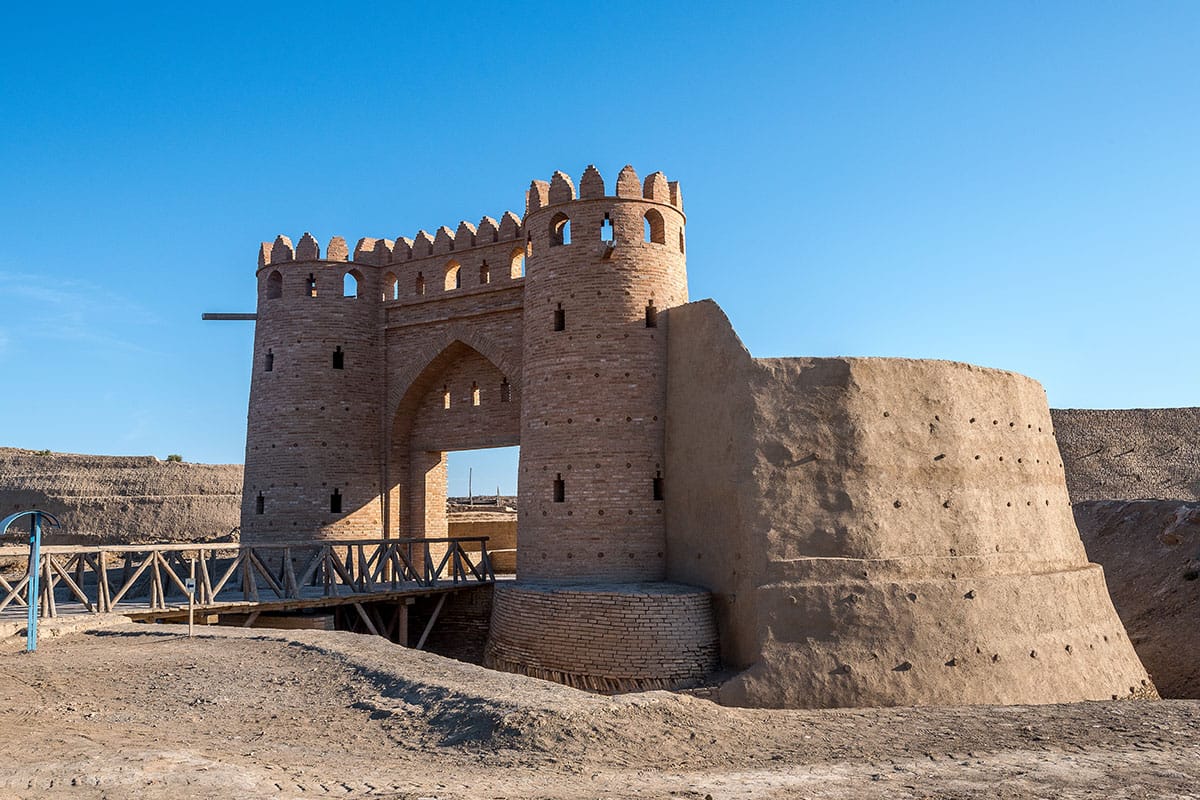
Gate of the mighty, walled city of Otrar. It’s now a ghost town.

At this point, Temujin/ Ghenghis had laid waste to northern China, defeating an army of over 1 million. The Chinese emperor’s lackey had demanded Temujin come to Peking with a grift for the emperor, then bow low and pledge allegiance. That is, Temujin was expected to kowtow, a request that emperors had made to every tribal leader for centuries. Temujin took it as an insult, and defeated the Chinese army using methods that are discussed in Mongol literature, but are almost unknown in the west, or highly perverted, as in Mulan. I’ve written in speculation about the arrows, one aspect of Mongol success here. Another aspect was psychological: Genghis Kahn would surround an enemy town after driving additional locals in – a pseudo kindness. He used the additional locals to co-opt the army, so that they effectively fought for him. I call this feminist warfare in this essay; I noticed that the West Point bookstore and museum had absolutely nothing on the Mongols or their methods.

Temujin’s first trade caravan arrived in 1218 with 100 laden camels and 450 men including an ambassador. Inalchuq executed most of the men, sold the items and the rest of the men as slaves in markets of Bukhara. Mohammed II and his uncle were sure that Temujin would do nothing, but Temujin sent a peace delegation of 3 men directly to Mohmmed II asking for his goods back and for the punishment of those responsible. Mohammad II killed the lead ambassador, blinded one of the others, and had the face of the third disfigured. A year later, 1219, Genghis Kahn showed up in Otrar with siege engines. He arrived from the west, while his sons arrived from the east. Genghis had travelled through Russia to get there.

Otrar held out for 5 months, falling when a traitorous general opened the gates and defected with part of the army. The Mongols took the city and let most people live, though he killed Inalchq and most of his army, as well as the traitorous general. Genghis Kahn figured he could not trust a soldier who defects this way. Inalchq was killed by having molten silver poured into his eyes and ears.

Death of Sultan Mohammed II, Picture from the History of Rashad Al-Din.

Genghis then went after Mohammed II, but first defeated the Assassin sect. Mohammed had the sense to run. It bought him some years of life. When caught, Genghis locked him in a prison fed him gold coins. His death is shown at left. Genghis is supposed to have explained that, had Mohammad II not hoarded this gold, but shared it with his soldiers, they would have fought for him as Genghis’s soldiers had. It was a message, and Genghis Kahn was nothing if not practical.

The Mongols brought many innovations: paper, stirrups, the blast furnace, the number zero, “islamic numerals” (they’re really Mongol /Tibetan numerals), the compass, the printing press, the triangular plow, gun powder, and a new way in war (The Germans called it ‘Blitz Kreig’). I find that schools don’t teach much about Genghis Kahn or our debt to the Mongols, nor do they properly contextualize these innovations as means for a small nation to dominate many larger ones. Perhaps that’s because we find the whole idea of management disturbing, or it’s embarrassing. Western scholars used to write like we invented these things. There are several histories of the Mongols, one was written by Rashid Al-Din (Aladin), vizier over all Persia, the person responsible for renaming it Iran. He wrote an illustrated history of the world, particularly of the Mongols, called Jāmiʿ al-Tawārīkh (“Compendium of Chronicles”). I suspect it would be worthwhile reading but like much of Mongol literature, it is not available in any local library, nor is it referred to by most histories. Another Mongol history, also not available in libraries, is called the Secret History of the Mongols. This was likely written for and by Genghis’s third son, Ogedei, to describe for his children and grandchildren the true story of the early years, the conquests, his father’s and his management methods (some fairly brutal) and as a review of what Ogedei thought worked and what did not. It sounds like an honest book, worthwhile book — the sort modern readers would rather forget exists.

Rashid Al-Din (Aladin), Vizier of Persia. He renamed Persia Iran, and wrote a history of the world from the Mongol perspective. Known as a fictional character, or not at all today.

In general, I find our scholars would like to ignore the more unpleasant lessons of history, including that family matters, and that people like honor over kowtowing, and that they get surly if they’re not rewarded,. Much of our society is built by warriors for the purpose of destruction, as in this engineering joke. We are now in the process of destroying statues of warriors because we find they were often non-nice people who often did not-nice things, or held not-nice views. That’s the way it is with warriors, especially the successful ones. While I’m not a fan of having statues to bums, I think that ignoring successful warriors is worse than honoring them. I discuss the dilemma of military statues here. Without statues to important wars and warriors, modern leaders might repeat the mistake of Mohammed II, or Bunker hill , or of Mohammed IV, or of the Chinese emperor.

Robert Buxbaum, September 20, 2020. I’ve come to wonder if Mohammed II would have fared better if he didn’t steal from the Mongols. He would likely have put off the attack as he learned more about them, and they learned more about him. When the war came, as likely it would, he might have had gun powder, paper, the compass, and the stirrup. Then again, war might have come immediately. The proud Polish officers who collaborated/ surrendered to the Soviet Russians, were quickly murdered in the Katyn forest.

Package postage from China: 70¢ for 2 oz.

The minimum US postage rate to send a 1 oz to 8 oz package across the street is $8.30. This is the price for any size package going in “zone 1”. That is, to a nearby, instate address. It costs more to send a package to nearby states or across the country, zones 2,3,4,5,6,7, 8 You don’t get shipping updates or delivery confirmation unless you pay more. By comparison the US post office charges no more than $1.50 to Chinese companies to deliver packages of up to 4.4 lbs (2 kg) and they get shipping and delivery confirmation thrown in free. The high US rates are, in part, because the post office is losing money to subsidize postage from China.

On the internet folks are amazed at how cheap things are shipped from China (I copied this post from this Forbes article)

US producers can not compete on the sale of small items, in part, because we subsidize the shipping costs. Go to Amazon or e-Bay and you can buy from China packaged items shipped by air for a total price of $1 or so. That includes the price of the item, the shipping cost, and some profit for Amazon or eBay. A US supplier could not sell this cheap even if it were a box of air. The low shipping costs result from a poorly negotiated postage deal of 2011 between us (Obama’s negotiator) and the Chinese. Until 2021, we are committed to deliver a package of 50g or less, (2 oz) for 5 Chinese Yuan, or 70¢ at the current exchange rate of 14¢/NCY. Additional ounces are billed at 35¢ up to 4.4 lbs; use the following table of prices and apply the dollar to CNY conversion. We threw in tracking services and an e-mail confirmation for free, in part because China was poor, and we were rich. Also, the deal was pushed by e-Bay and Amazon, two big supporters of Obama’s presidency.

US suppliers cannot compete.

Adding insult to injury, Obama raised the de minimis amount for billing tariffs from the normal $100 to $800 making almost all purchases from China duty free. Obama made some complaints about unfair trade, and about the counterfeits and knockoffs but no major enforcement. In 2012 and 2014, the Obama administration signed similar postage deals with Korea, Hong Kong, and the EU. The Germans applauded as it allows them to ship goods to the US for far less than the cost of us shipping to Germany. The US post office loses money on this and makes up for it by charging us more for domestic mail.

The Washington Post praised Obama on these deals claiming that they benefitted US customer and promoted democracy. Of course, the Washington Post is owned by Amazon’s main stock holder, Jeff Bezos– someone who benefits very much by the deal. He is among the relatively few people and organizations that own the media outlets. The Post loses money on newspaper sales but benefits the owners by the propaganda value of the stories, a situation also found with Al Jazeera and the emir of Qatar.

Trump has informed China that these special rates will end when the treaty runs out in January 1, 2021. A per-package ship fee will be $3.00 for a one ounce package, with 11¢ per additional once. This is less than the domestic rate, but far higher than the current 35¢ for 1 oz. I’d probably have raised their postage even more, but this is an election year, and Biden may well reverse any deal Trump signs.

Robert Buxbaum, July 14, 2020. Though I’m appalled by this postage deal, I just bought a 50 lb kayak from China, $99.99 including shipping. The prices are too low to pass up.