There are small errors and great mistakes. Small mistakes can derail a career, great mistakes can kill thousands and lose an empire. I’d previously written about the mistakes that caused Britain to lose America — e.g. when General Tarleton started burning colonial churches because he thought the sermons were antimonarchist. They were, but if he thought they were antimonarchist before burning the churches, they were far more so after… He’d misjudged the American character, something that I think the Democrats are doing today with BLM. Another example was the British attack on Bunker Hill. They spent the lives of 600 soldiers, won a hill they didn’t need, and lost the colony. It’s a mistake we would make repeat in Vietnam.
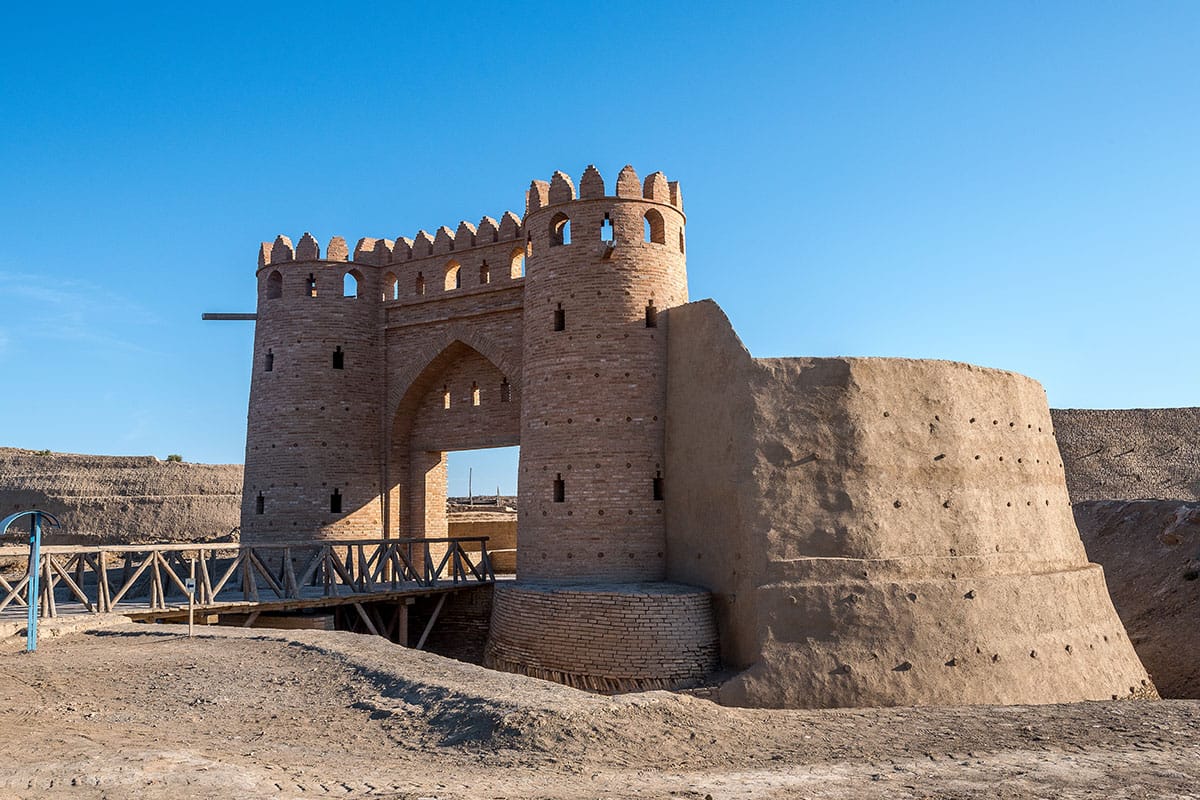
A larger mistake was made by Mohammad II, ruler of Persia and Eastern Islam, from Turkey to Kazakhstan, Uzbekistan, and Afghanistan. He ruled from the great, walled city of Samarkand, supported by an army of 100,000. Mohammed’s uncle, Inalchuq, served as a governor in Kazakhstan. With an army of 40-50,000, he ruled from the walled city of Otrar. A Mongol leader named Temujin contacted them asking to trade goods along the Silk Road. Mohammed II ignored the request, but his uncle accepted it and offered safe passage. When the goods arrived, 100 camels and 450 men, he stole the items and enslaved or killed the men. Inalchuq saw no down-side to this, since Temujin was an infidel who ruled a Mongol community of perhaps 100,000 people. He was 2000 miles away with only a small horse army of perhaps 20,000. But these Mongol horsemen were uncommonly mobile and warlike, and Temujin, also known as Genghis Kahn, was an uncommonly talented leader, not someone to ignore or steal from.
At this point, Temujin/ Ghenghis had laid waste to northern China, defeating an army of over 1 million. The Chinese emperor’s lackey had demanded Temujin come to Peking with a grift for the emperor, then bow low and pledge allegiance. That is, Temujin was expected to kowtow, a request that emperors had made to every tribal leader for centuries. Temujin took it as an insult, and defeated the Chinese army using methods that are discussed in Mongol literature, but are almost unknown in the west, or highly perverted, as in Mulan. I’ve written in speculation about the arrows, one aspect of Mongol success here. Another aspect was psychological: Genghis Kahn would surround an enemy town after driving additional locals in – a pseudo kindness. He used the additional locals to co-opt the army, so that they effectively fought for him. I call this feminist warfare in this essay; I noticed that the West Point bookstore and museum had absolutely nothing on the Mongols or their methods.
Temujin’s first trade caravan arrived in 1218 with 100 laden camels and 450 men including an ambassador. Inalchuq executed most of the men, sold the items and the rest of the men as slaves in markets of Bukhara. Mohammed II and his uncle were sure that Temujin would do nothing, but Temujin sent a peace delegation of 3 men directly to Mohmmed II asking for his goods back and for the punishment of those responsible. Mohammad II killed the lead ambassador, blinded one of the others, and had the face of the third disfigured. A year later, 1219, Genghis Kahn showed up in Otrar with siege engines. He arrived from the west, while his sons arrived from the east. Genghis had travelled through Russia to get there.
Otrar held out for 5 months, falling when a traitorous general opened the gates and defected with part of the army. The Mongols took the city and let most people live, though he killed Inalchq and most of his army, as well as the traitorous general. Genghis Kahn figured he could not trust a soldier who defects this way. Inalchq was killed by having molten silver poured into his eyes and ears.

Genghis then went after Mohammed II, but first defeated the Assassin sect. Mohammed had the sense to run. It bought him some years of life. When caught, Genghis locked him in a prison fed him gold coins. His death is shown at left. Genghis is supposed to have explained that, had Mohammad II not hoarded this gold, but shared it with his soldiers, they would have fought for him as Genghis’s soldiers had. It was a message, and Genghis Kahn was nothing if not practical.
The Mongols brought many innovations: paper, stirrups, the blast furnace, the number zero, “islamic numerals” (they’re really Mongol /Tibetan numerals), the compass, the printing press, the triangular plow, gun powder, and a new way in war (The Germans called it ‘Blitz Kreig’). I find that schools don’t teach much about Genghis Kahn or our debt to the Mongols, nor do they properly contextualize these innovations as means for a small nation to dominate many larger ones. Perhaps that’s because we find the whole idea of management disturbing, or it’s embarrassing. Western scholars used to write like we invented these things. There are several histories of the Mongols, one was written by Rashid Al-Din (Aladin), vizier over all Persia, the person responsible for renaming it Iran. He wrote an illustrated history of the world, particularly of the Mongols, called Jāmiʿ al-Tawārīkh (“Compendium of Chronicles”). I suspect it would be worthwhile reading but like much of Mongol literature, it is not available in any local library, nor is it referred to by most histories. Another Mongol history, also not available in libraries, is called the Secret History of the Mongols. This was likely written for and by Genghis’s third son, Ogedei, to describe for his children and grandchildren the true story of the early years, the conquests, his father’s and his management methods (some fairly brutal) and as a review of what Ogedei thought worked and what did not. It sounds like an honest book, worthwhile book — the sort modern readers would rather forget exists.
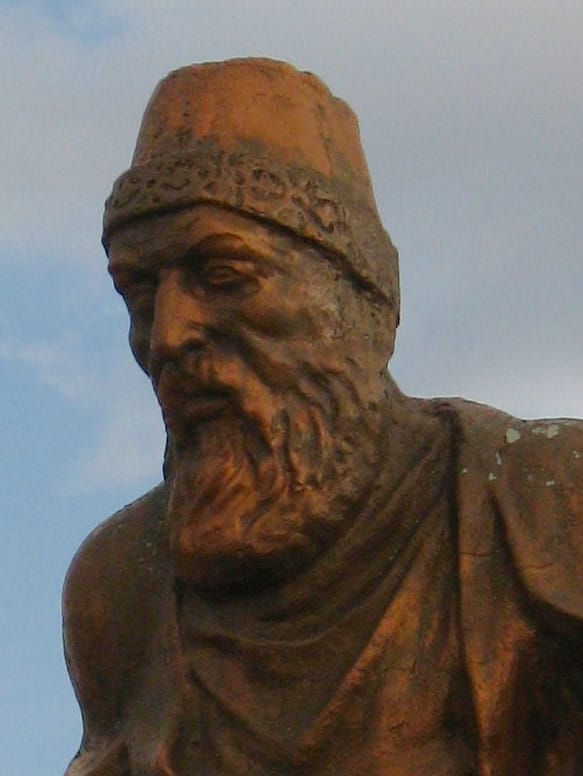
In general, I find our scholars would like to ignore the more unpleasant lessons of history, including that family matters, and that people like honor over kowtowing, and that they get surly if they’re not rewarded,. Much of our society is built by warriors for the purpose of destruction, as in this engineering joke. We are now in the process of destroying statues of warriors because we find they were often non-nice people who often did not-nice things, or held not-nice views. That’s the way it is with warriors, especially the successful ones. While I’m not a fan of having statues to bums, I think that ignoring successful warriors is worse than honoring them. I discuss the dilemma of military statues here. Without statues to important wars and warriors, modern leaders might repeat the mistake of Mohammed II, or Bunker hill , or of Mohammed IV, or of the Chinese emperor.
Robert Buxbaum, September 20, 2020. I’ve come to wonder if Mohammed II would have fared better if he didn’t steal from the Mongols. He would likely have put off the attack as he learned more about them, and they learned more about him. When the war came, as likely it would, he might have had gun powder, paper, the compass, and the stirrup. Then again, war might have come immediately. The proud Polish officers who collaborated/ surrendered to the Soviet Russians, were quickly murdered in the Katyn forest.
I’ve never heard of Islamic numerals. Dp you mean Arabic numerals – you know, the digits from 0 through 9)? They do not come from the Mongols, but rather from India. (I originally learned this from an Arab.) https://en.wikipedia.org/wiki/Arabic_numerals
Arabic numerals don’t look to my eyes like Indian but like Mongol – Tibetan numerals, and they came from India or tibet or wherever when the Mongols brought them. It’s the same with the compass, it’s not like the Mongols invented it. Their use came to the middle east with the invading Mongol armies.