Category Archives: politics

Seniors are not bad drivers.

Seniors cause accidents, but need to get places too

Seniors are often made fun of for confusion and speeding, but it’s not clear they speed, and it is clear they need to get places. Would reduced speed limits help them arrive alive?

Seniors have more accidents per-mile traveled than middle age drivers. As shown on the chart below, older Canadians, 75+, get into seven times more fatal accidents per mile than 35 to 55 year olds. At first glance, this would suggest they are bad drivers who should be kept from the road, or at least made to drive slower. But I’m not so sure they are bad drivers, and am pretty certain that lower speed limits should not be generally imposed. I suspect that a lot of the problem comes from the a per-mile basis comparison with folks who drive long distances on the same superhighways instead of longer, leisurely drives on country roads. I suspect that, on a per-hour basis, the seniors would look a lot safer, and on a per highway-mile basis they might look identical to younger drivers.

Canadian Vehicle Survey, 2001, Statistics Canada, includes drivers of light duty vehicles.

Deaths per billion km. Canadian Vehicle Survey, 2001, Statistics Canada, includes light duty vehicles.

Another source of misunderstanding, I find, is that comparisons tend to overlook how very low the accident rates are. The fatal accent rate for 75+ year old drivers sounds high when you report it as 20 deaths per billion km. But that’s 50,000,000 km between fatalities, or roughly one fatality for each 1300 drives around the earth. In absolute terms it’s nothing to worry about. Old folks driving provides far fewer deaths per km than 12-29 year olds walking, and fewer deaths per km than for 16-19 year olds driving.

When starting to research this essay, I thought I’d find that the high death rates were the result of bad reaction times for the elderly. I half expected to find that reduced speed limits for them helped. I’ve not found any data directly related to reduced speeds, but now think that lowered speed limits would not help them any more than anyone else. I note that seniors drive for pleasure more than younger folks and do a lot more short errand drives too — to the stores, for example. These are places where accidents are more common. By contrast, 40 to 70 year olds drive more miles on roads that are relatively safe.

Don't walk, especially if you're old.

Don’t walk, especially if you’re old. Netherlands data, 2001-2005 fatalities per billion km.

The Netherlands data above suggest that any proposed solution should not involve getting seniors out of their cars. Not only do seniors find walking difficult, statistics suggest walking is 8 to 10 times more dangerous than driving, and bicycling is little better. A far better solution, I suspect, is reduced speeds for everyone on rural roads. If you’re zipping along a one-lane road at the posted 40, 55, or 60 mph and someone backs out of a driveway, you’re toast. The high posted speeds on these roads pose a particular danger to bicyclists and motorcyclists of all ages – and these are folks who I suspect drive a lot on the rural roads. I suspect that a 5 mph reduction would do quite a lot.

For automobiles on super-highways, it may be worthwhile to increase the speed limits. As things are now, the accident fatality rates are near zero, and the main problem may be the time wasted behind the wheel – driving from place to place. I suspect that an automobile speed limit raise to 80 mph would make sense on most US and Canadian superhighways; it’s already higher on the Autobahn in Germany.

Robert Buxbaum, November 24, 2014. Expect an essay about death on tax-day, coming soon. I’ve also written about marijuana, and about ADHD.

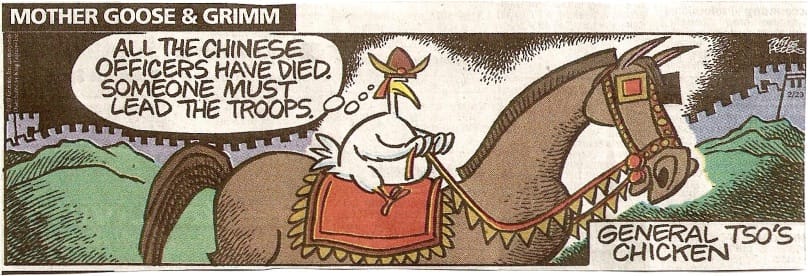
General Tso’s chicken

Self promotion. It's not for everyone.

Self promotion. It’s not for everyone.

Is funny because …. it’s classical metaphysical humor. The lowly chicken becomes the hero and leader, and the troops are following him/it (to victory).

We know that some unlikely leaders are successful, perhaps just because they’ve the pluck to get up and do something (that’s the secret of American success). Presumably the troops are too timid to lead, and are following this chicken because of his determined air, and his hat and horse: clothes make the man. You should not follow every leader with determination, a fancy hat and a horse, by the way. Some leaders will devour their followers, and most do not care for self promoting underlings.

Robert Buxbaum, Nov.12, 2014.

Loyalty, part 2: power hurts the leader

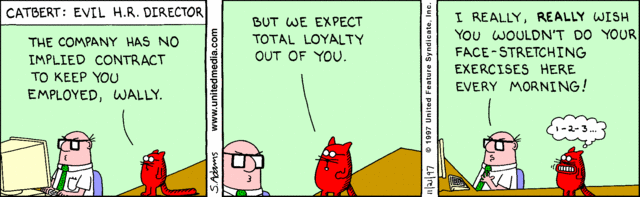
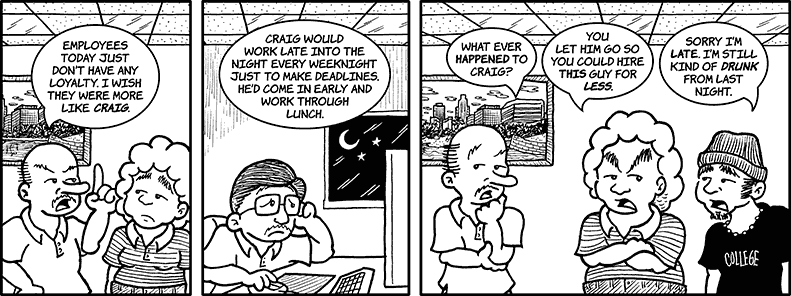
In a previous post, I made the case that one should avoid accepting loyalty requests as these are generally requests for your self-destruction. Someone who asks for loyalty is not saying he’ll provide you with good pay, a comfortable environment, empowerment, and good security. Rather that he wants your service despite little or not pay, discomfort, enslavement, and likely death or disgrace. There are some, few exceptions, but loyal service of this type rarely serves the servant.

Your chance of surviving as a minion is low; your chance as master is lower.

Your chance of surviving as a minion is low; your chance as master is lower.

I’d now like to claim that having loyal followers hurts the leader, too, costing him good service, and separating him from health, friends, and family. Most leaders are better off as half of a duopoly, without minions, and only loose control of their workers. The first reason for this is to note that minions don’t do good work relative to free men. They die for no good reason (e.g. you forgot to feed them), or they stop work and wonder what you’d like next, or they get drunk and gripe, or they beat each other up over fervor or small territorial issues. They very rarely innovate or work together, and for any complex project like taking over the world (or the tristate area) needs workers who do. Good work requires pride in achievement, and a loyal slave has none.

Having loyal followers precludes one from having a close relationship with the followers (you can’t appear weak), and also with friends (your minions must have one leader, not two). The leader gets used to being surrounded by sycophants, and begins to doubt those who behave otherwise. The boss will begin to distrust friends and allies, those he needs to stay in power, as these are the very people who could most easily assist others to take leadership from him. Over time, the king, boss, monopolist and dictator share less and less. As a result they end up secret and bitter, with many fears and none he can call close. And what pleasure is there in power, if one can’t share the rewards with friends and family, or share the burden with others.

Only support someone who could rule reasonably honestly and well. Chaos is worse than a dictator. Kanin from the New Yorker.

Only support someone who could rule reasonably honestly and well. Chaos is worse than a dictator. Kanin from the New Yorker.

A great number of kings have killed themselves in one way or another, very often because of overly large ambitions (see cartoon). King Saul, in the Bible is perhaps the first, Hitler is perhaps the most famous, and Colonel Qadhafi of Libya is perhaps the most recent. More often, maximum leaders are murdered, typically by friends and family. Famous examples include Julius Caesar, Augustus Caesar, and Nero; Charles I, Louis XVI, Richard III, and Tzar Alexander. Both the king of rock (Elvis) and the king of pop (Michael Jackson) killed themselves with drugs. Yet others died in needless wars or were exiled. Napoleon was defeated, exiled, returned, re-exiled and then murdered by an associate.  It’s not that safe to be the infallible king. Perhaps the wisest move is that of Pope Benedict, who last year left Rome for a life of monk-like solitude. Machiavelli points out, in “The Prince”, that only two Roman Emperors died of natural causes, one because he became emperor at a very old age, and the other was Marcus Aurelius, an advanced ruler who empowered his subjects.

The great leaders create so much space for others to lead that they are almost invisible: they lead by offering encouragement.

Political bosses and monopolist businessmen, though lower in power, don’t fare much better in life. Boss Tweed died in jail, as did Capone, Boss Pendergast. Even if they avoid jail, the fact that no one likes you takes a toll. No one liked Vanderbilt or Rockefeller, Carnegie, Morgan, or Fisk. While they lived, they could expect nothing more than senate investigations and ugly lampoons in the free press, plus an unfavorable memory after death. William Hearst and Howard Hughes died as virtual hermits, best remembered as the inspiration for “Citizen Kane” and “The Navigator.” Peter Cooper and Steve Jobs are different,  industrialists liked in life and in death; and Bill Gates may join them too. Their secret was to empower others.

He's being eaten alive by his power, money, and respect. In the end, he had none.

He’s being eaten alive by his power, money, and respect, as are all those he might love.

Woe to the wife, child or friend of the dictator. The wife and children of a king or king-pin rarely enjoy much of the power. The king-pin doesn’t trust them (often with good reason), and neither do the people. Stalin killed his wife and children as did Nero, Frederick the Great, Herod, Hitler, and quite a few others. It was said that is was preferable to be an animal in the courtyard of these greats than a son at their table. And even if the king or king-pin doesn’t kill his wife child or son, the people often do e.g. Marie Antoinette was killed shortly after Louis XVI and the Tzarina of Russia alongside Alexander III. Similarly, the wife of Hitler, the Mistress of Mussolini, and the wife of Nicolae Ceausescu all died at their husband’s side, sharing the punishment for their husband’s ambition.

The kings of Sparta fared relatively well, as did their wives, despite the militarism of Sparta. Their trick was that Sparta was a du-archy, a country with two kings. Sparta was strong and stable, and their kings (mostly) died at home. In business too, it seems the selfish leader should step back and become almost invisible. It helps him, and helps the people too. If the leader can’t share power this way, he or she should at least give people a simple choice between two things he controls and accepts (chocolate and vanilla; Democrat and Republican). Workers with a choice, even a small one, learn to act somewhat independently, and customers (or citizens) don’t complain as much either if they have some control over their fate. All will come to like the leader more, and the leader will like himself more. People stopped resenting Microsoft when there was a viable alternative, Apple, and Microsoft engineers benefitted by having a competitor to their products. I suspect that Bill Gates realized this would happen when he helped fund Apple’s return to the market. Unfortunately, most monopolists, bosses, and king-pins are too stupid, or too afraid to do this. In the end, it’s the trapped employee or follower who shoots the leader from behind.

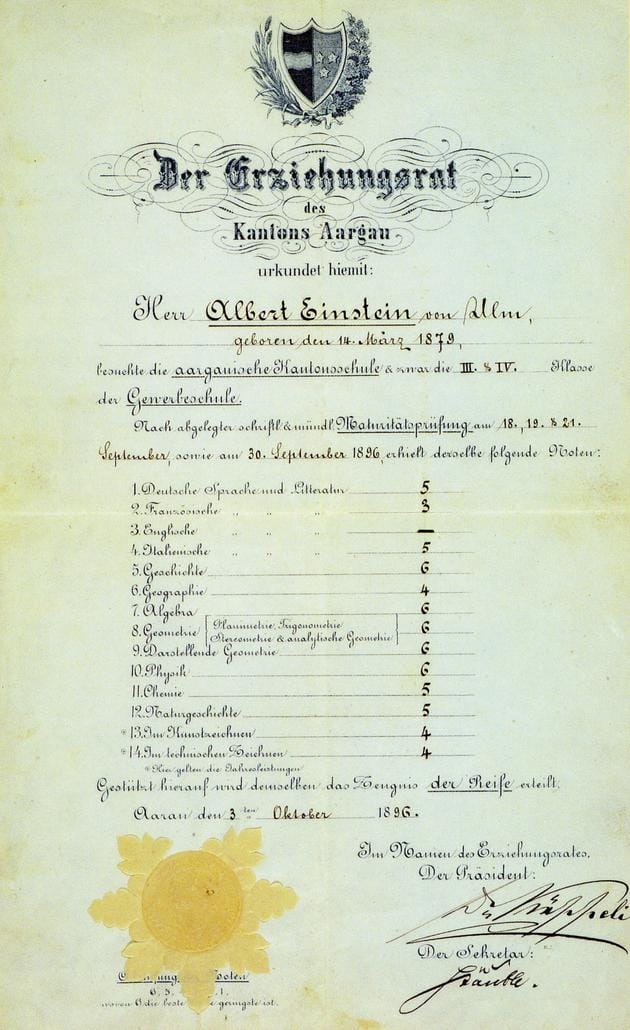
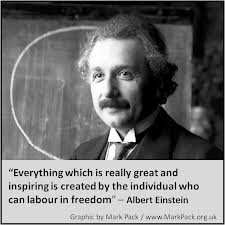
Einstein on freedom producing good. I'd say freedom is also a good in itself

The ideal situation is a delicate balance between control and freedom. A great leader will empower those around him and support the opposition. That was the unrealized sense of Mao Tse Tung’s hundred flowers movement (let 100 flowers bloom; left 100 schools of thought contend). It’s political tensegrity. Most leaders can not let go to do this (Mao could not). Still, there IS a sanity clause, Virginia. And a leader should know that there is no benefit to the king who gains the whole world and loses his friends, family and sleep.

Robert Buxbaum. Remember, remember the 5th of November; those oppressed, and those imagining themselves oppressed rise and plot.

When is loyalty a good thing? pt. 1

Loyalty to a person or institution is generally presented as a good thing — a sign of good character. Disloyalty, by contrast, is considered one of the basest of character traits — the sign of a dastard, a poltroon. But I’d like to make the case that the loyalty that leaders demand (the most common loyalty situation) isn’t real loyalty, but stupidity or worse, toadyship disguised as loyalty. I’d further like to suggest that this attachment hurts the leaders as much as the followers in most situations — well, nearly as much. That is, a sane leader is better off where there is a viable alternative to his product, leadership, or service — a loyal opposition party, as it were.

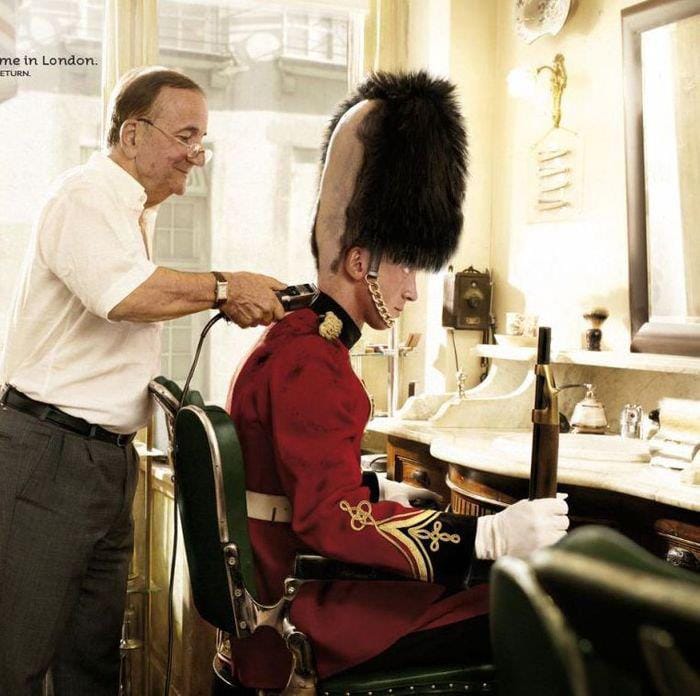
If you give loyalty for free don't expect it in return.

If you give loyalty above your self interest, don’t expect it in return. If you don’t value yourself, no one else will.

But first, what is Loyalty? If I believe a teacher because he makes sense, or serve a boss because he pays me well, this is not loyalty, but common self-interest. Similarly, if I eat at a restaurant or buy a product regularly, it isn’t loyalty if the quality is particularly good and the prices particularly reasonable. Loyalty is when you eat at a place despite the quality being bad, or the prices high; or follow a leader who pays poorly and provides only danger and hardship. Or who’s crooked and damaging to your sense of self.

If you give a company or group loyalty for free, they are likely to take it and you for granted; if you don't value yourself, no one else will.

If you give a company or person loyal service, they are likely to take it and you for granted; Matt Johnson, 2010.

In general, there are only two reasons why any person would follow a leader like this. One is an attachment to the leader’s vision of the horrible future if you do not. Tales of grisly torture from a distant enemy are good to keep the underlings in their place. An even better reason is attachment to a brilliant future if you do suffer in the present. Tales of the glorious messianic future where you and those you love benefit from the current struggle and sacrifice. It doesn’t have to be a godly messiah; communism presents a messianic vision without a god, but it’s glorious, and the sun always shines. Generally speaking leaders who ask for loyalty ask from both perspectives: a horrible enemy at the gates, and a glorious future if you follow.

There may be a rational basis to fear a grisly enemy, or to suffer and follow in hopes of a glorious future, but if you find you are being asked to follow a single individual or a group that’s controlled by one individual, it’s worthwhile worrying that the leader may not be loyalty to you. Ask yourself: does the leader share real power and information? Does the leader make you feel worthless for the heck of it? If you have a leader like that, it might be worth considering: if the messianic vision ever does materialize (unlikely) the leader may forget to reward your part. History has quite a few examples of this.

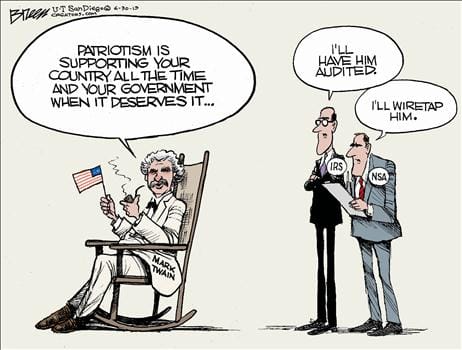
Loyalty to country includes the imperative to try to improve the leadership.

Loyalty to country requires one try to improve the leadership. Leadership rarely agrees.

Where real loyalty shows up as a sign of a fine personality, is in marriage where both parties share power, money, and information. Or in loyalty to a country where you (or your child) has a real, rational chance of being leader. If you really trust the significant other (a good marriage) or where there is reason to think one’s home and family will benefit from one’s personal sacrifice, one might rationally give up ones comfort and life following to protect one’s significant others. Even so, the real loyalty is not to the leader, but rather to an organization that one believes will protect one’s children and community. A leads who asks you to kill innocents (Al Qaeda, Stalin, HItler, Jonestown), or who amuses himself by your suffering, e.g. (Stalin) probably has lost the connection between your loyalty and the goal. (Cue the song– we don’t get fooled again).

An honest military leader will have a soldier council or protective group above him to keep him (and others) from over-reaching. There will also be a time limit on the loyalty commitment and an explicit understanding that service does not include suicide, genocide, immolation, or personal embarrassment for the amusement of others. There is an also understanding that the follower’s life and well-being will not be sacrificed in vain, and that no one will be expected to accept suicide rather than capture. On the other hand, a soldier who runs away from all danger and thus endangers his fellows or mission should expect punishment or courts-marshal.

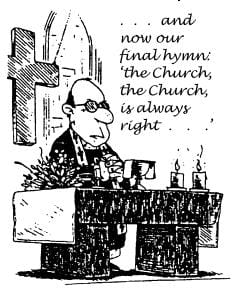
Church groups don't often look favorably on oversight

Church groups don’t often look favorably on oversight

Many groups don’t tolerate oversight of this type, and these groups should be viewed with suspicion. Church groups for example, are often led by those would like you to believe that suspicion of them is suspicion of God, it isn’t — it’s suspicion of a person. An honest leader gives the option of going to the police or the union representative, or the newspaper if necessary. Without redress, the worker/soldier/churchman may come to suffer needlessly or come to commit atrocities because of the power of the organization or the personal charisma of the leader. Any organization with a messianic vision of the future is dangerous; all the more so if there is no half-way point, no real sharing of power in the way to get there, and no real oversight for the grand-high pooh-bah (or whatever the grand leader’s title). Let the follower beware.

A Parable: The Donkey and the Brigands, by I don’t know who (I can’t find a source, but know this isn’t my own creation).

There once was a farmer who had a donkey — a talking donkey, as is the way with these parables. At one point, as they were traveling through the woods, they heard the approach of brigands (thieves). “Move quickly,” the farmer said to the donkey, otherwise we’ll be captured.” “Will the brigands treat me any worse than you do?” asked the donkey. “No,” said the farmer, about the same.” “Will they feed me any less than you do, or beat me any more?” “No,” said the farmer, about the same, I’d guess.” Will they load me any heavier, or make me go on longer journeys?” No, said the farmer, about the same, I’d guess.” “When I’m too old to work, will they keep me in my old age, or will they kill me, as you likely will for animal feed and for my bones and skin?” “Probably they’ll do as I would,” said the farmer. “In that case,” said the donkey, “I’ll go at my pace and what will be with the capture will be.” The moral: loyal service has to be a two-way street.

In part 2 of this essay, I’ll explain why even the leader doesn’t benefit from your complete loyalty.

Robert Buxbaum, October 20, 2014. I run my own business, and sometimes think about it, and life.

Political tensegrity: the west is best

We are regularly lectured about the lack of kindness and humility of the western countries. Eastern and communist leaders in Russia, Iran, Saudi Arabia point to Western pollution, consumerism, unemployment as prof you need a strong leader and central control to do good by regulation, thought policing, and wealth redistribution.

Let me point out that the good these leaders provide is extracted from the populace, and the advantage of central control is rarely as clear to the populous as to the leadership. When leaders redistribute wealth or place limits on the internet, movies or books, the leaders are generally exempted, and the populous are not made more moral or generous either. One does not say a prisoner or slave-worker is more generous of moral than one on the outside despite the prisoner working for free. The leaders feel certain they are protecting their people from thought and greed, but it isn’t clear outside of the leadership that these dangers are as great as the danger of despotism or rule by whim.

Authors and thoughts are blocked in the East by the whim of a supreme leader who also determines who is an infidel or enemy, or friend, and which businesses should flourish, and who should be rich (his buddies). By contrast, two fundamentals of western society — things that lead to purported immorality, are citizen rights and the rule of law: that citizens can possess things and do things for their own reasons, or no reason at all, and that citizens may stand as equals before a bar of law, to be judged by spelled-out laws or freed, with equal believability and claim.

In Russia or Iran, the Commissar and Imam have special rights: they can take possessions from others at whim, shut down businesses at whim; imprison at whim  — all based on their own interpretation of God’s will, the Koran, or “the good of the state.” Only they can sense the true good, or the true God well enough to make these decisions and laws. And when they violate those laws they are protected from the consequences; the masses can be prosecuted to the full extent of the law, and then some, not even requiring a trial in many places (Gaza, for example) if the leader feels speed is needed. The rule of law with equal treatment is a fundamental of western civilization (republicanism). It is commanded by Moses in the Bible at least seven times: Numbers 15:15, Numbers 15:16, Numbers 15:29, Exodus 12:49, Numbers 9:14, and Leviticus 24:22, “One law and one ordinance you should have, for the home-born, and the foreigner who dwells among you.”

The equal treatment under the law: for rich and poor, king and commoner, citizen and foreigner is a revolutionary idea of the west; that justice is blind. Another idea is personal possessions and freedoms. There is no concept of equality under business law unless there is a business that you can own, and personal possessions and rights. These are not in place in eastern theocracies: they tend to treat the preachers (imams) better than non preachers because they are presumed smarter and better; similarly men are treated better than women, who have few rights, and the state religion is treated better than infidels. In communist countries and dictatorships the dictator can get away with anything. Admittedly, in capitalistic states the rich and powerful find loopholes while the poor find prison, but not always (our Detroit’s ex-mayor is in prison) and it’s not the law. A feature of Eastern theocracies and dictatorships is that they lack a free press, and thus no forum for public exposure of legal mischief.

Einstein on freedom producing good. I'd say freedom is also a good in itself

Einstein on freedom producing good. I’d say freedom is also a good in itself.

The strongest arguments for socialist dictatorship and theocracy is that this is needed to protect the weak. Clement Attlee (labor socialist British Prime Minister, 1945 -56) explained his government’s take over of almost all British business: “There was a time when employers were free to work little children for sixteen hours a day… when employers were free to employ sweated women workers on finishing trousers at a penny halfpenny a pair. There was a time when people were free to neglect sanitation so that thousands died of preventable diseases. For years every attempt to remedy these crying evils was blocked by the same plea of freedom for the individual. It was in fact freedom for the rich and slavery for the poor. Make no mistake, it has only been through the power of the State, given to it by Parliament, that the general public has been protected against the greed of ruthless profit-makers and property owners.”  (Quotes from Spartacus.edu). it’s a brilliant speech, and it taps into the government’s role in the common defense, but it’s not at all clear that a chinless bureaucrat will be a better boss than the capitalist who built the firm. Nor is it clear that you help people by preventing them from work at a salary you decide is too low

England suffered a malaise from public ownership and the distribution of profit by those close the liberal party. Under Attlee there was lack of food and coal while the rest of Europe, and particularly Germany prospered, and passed England in productivity. Germany had no minimum wage, and  still doesn’t have one. In eastern countries, ingenuity is deadened by the knowledge that whatever a genius or worker achieves is taken by the state and redistributed. A cute joke exchange: Churchill and Attlee are supposed to have found themselves in adjoining stalls of the men’s room of Parliament. Churchill is supposed to have moved as far as possible from Attlee. “Feeling standoffish, Winston” Attlee is supposed to have said. “No. Frightened. “Whenever you see something large you try to nationalize it.” Perhaps more telling is this Margret Thatcher’s comment, and exchange. Making everyone’s outcome equal does more to penalize those with real pride in their ideas and work than it does to help the truly needy.

While there is a need for government in regards to safety, roads, and standards, and to maintain that equality of law. It seems to me the state should aid the poor only to the extent that it does not turn them into dependents. There is thus a natural tension between private good and public service similar to the tensegrity that holds cells together. Capitalists can only make money by providing desired goods and services at worthwhile rate, and paying enough to keep workers; they should be allowed to keep some of that, while some must be taken from them to get great things done. I’ve related the tensegrity of society to the balance between order and disorder in a chemical system.

Robert E. Buxbaum August 27, 2014. This essay owes special thanks to a Princeton chum, Val Martinez. Though my training is in engineering, I’ve written hobby pieces on art, governance, history, and society. Check out the links at right.

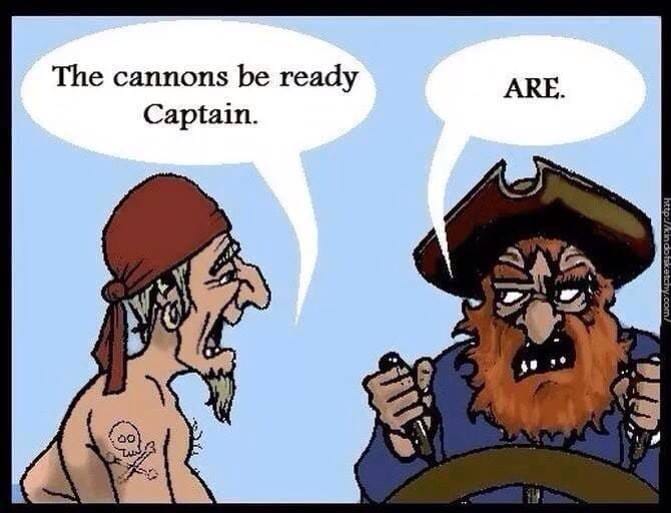
Grammar on the high seas, pirate joke

Grammar Pirate by Scott Clark, 2013.

Grammar Pirate by Scott Clark, 2013.

Pirate grammar has a special place in American English. The father of our country’s navy was likely John Paul Jones, a pirate; he redesigned our ships, captured some 16 British merchant vessels in the Revolution, and helped supply Washington’s army with guns and powder. Jean Lafitte, pirate hero of the war of 1812, may have been Jewish! The state of Michigan officially celebrates “Talk LIke a Pirate Day” September 19, the day before national pickle day.

No other country states in their constitution that a purpose of the government is to give out letters of marque — that is to mint pirates. Piracy is a great way to fight a war –severely underestimated. ISIS does it quite well. By taking supplies from the other side you weaken them while strengthening yourself. Assuming you need the stuff, you avoid the cost of manufacture, shipping, and logistics, and even if you don’t need some of it, you can usually trade these items you for items you need. It’s a great way to make foreign friends and allies. Ben Franklin sold our pirates’  captured stuff for them during the American Revolution making himself and us better liked — we had no direct need for red uniforms, for example. Pirates should not kill captured merchant seamen, I think, but ransom them , or put them to service in the cause. The Somali pirates do this; not everyone is impressed. Pirate beards may encourage bravery by showing commitment to a revolution. Here’s a song relating beards to piracy: mannen met baarden (men with beards). Bet your aaars, it’s in Dutch.

Pirate grammar is a dialect, not a sign of poor education or lack of success. I suspect that pirate grammar is more useful than standard for referring to people on the fringes of society. For example, how would you introduce a patent lawyer who’s a some-time cross-dresser? It’s simple in pirate-speak: ‘Ms Smith, pleased to meet Johnson, arrrgh patent lawyer.’ Pirate speak can also avoid the uncomfortable he/she by use of the pirate “e”: ‘E’s a scurvy sea dog, e is.’

Robert Buxbaum, July 2, 2014. I think I’ll be havin’ a rum now, and toast to Arrrgh country.

My solution to the world’s problems: better people

Most of the problems of the world are caused by people. Look at war, it’s caused by people; look at pollution, people; look at overeating, or welfare, or gun violence. You name it, the problem is people. My simple solution, then: better people. Immigration is a simple solution for a county that can do it selectively (take in the best, leave the rest); it’s worked for the US and it doesn’t have to beggar the third world. Education is another way to help, but we’re not quite sure what sort of education makes people better. “An uneducated man may steel from a boxcar, an educated one may steal the whole railroad.” Theodore Roosevelt is supposed to have quipped.

Those who claim they are uncommonly moral and good at teaching it have barely any proof that they are. American schools produce financially successful people, but not particularly moral ones; Europe’s approach is different, but there’s no indication they’ve done better at moral education. We look to the 18th century, or the Greeks, but they were no more moral than us, as best I can tell. The Taliban, the communists, or similar fundamentalists claim moral superiority over the west, but from my perspective, they look even worse. 

I notice that people learn morality from one another — that is each person acts like his neighbor. I also note that people tend to act better when they are involved, and feel part of whatever country, city or group they are in. Targeted immigration might bring in better people–honest, hard working, non-violent — and these people might help improve and motivate the locals. And even if we don’t improve by interaction, perhaps lazy Americans will ride on the backs of the hard-working immigrants. But it strikes me that the disconnect between world problems of high unemployment, world hunger, and lots of open, US jobs is a moral problem that could be solved by targeted love. Allowing some increased mobility from country to country and job to job (plus better preaching?). If you can move you are more-likely to find a job or place where you feel fulfilled, and you are likely to do better and more there. Even the countries and jobs that are left might benefit by being rid of their malcontents. And we don’t have to take everyone.

From "Hispanic-hope."

From “Hispanic-hope.”, an interesting combination of Bible-study and immigration morality.

Living in America is desirable for most people from most countries. Far more people want to live here than we can accept. As a result, we are in a position to target the bright, honest, hard-working Peoples from virtually any country. These folks are helpful to industry and to the US tax base as these immigrants tend to work out — or get deported. In the short-term they might displace Americans or depress salaries, but even that is not certain. There is no fixed slate of US jobs nor a fixed amount of work need. Yesterday’s job taker is tomorrow’s job creator. Our country is built on immigrants, and has not suffered from it. We should not take those who hate the US, or those who hate freedom, or have no skills, criminals and the sick. Nor should we give citizenship immediately. But that still leaves plenty who we’d want, and who want to be here. Th. Roosevelt said, “you can not take in too many of the right people, and even one of the wrong type is too many.” I suspect this is true.

I suspect we’d have 90+% odds picking good people from a crowd. The Immigration system does a good job now, and the great colleges have done better for years. The past is usually a great indicator. If someone is well, and has worked for years, or has been here in school; if they’ve managed to stay productive and out of trouble, he/she is a good candidate. A first step would be a work permit, and in a few years they can apply for permanent residence or citizenship. Many of the most successful people in America are either immigrants or descendents of immigrants. The founders of Google and Facebook; the builders and the shakers. These people have the ‘get-up and go.’ You can tell because they’ve gotten up and gone.

Dr. Robert Buxbaum, June 16, 2014. I’m a child of an immigrant, went to public school, got a PhD at Princeton, have built my own company, and have (so far) avoided arrest, imprisonment or serious scandal. With the help of my Canadian-immigrant wife, I’ve produced three Buxbaum clones, my biggest contribution to improving the US and the world.

American education how do we succeed?

As the product of a top American college, Princeton University, I see that my education lacks in languages and history compared to Europeans. I can claim to know a little Latin and a little Greek, like they do, but I’m referring to Manuel Ramos and Stanos Platsis, two short people, one of Spanish descent, the other of Greek.

Americans hate math.

Americans hate math.

It was recently reported that one fourth of college-educated Americans did not know that the earth spun on an axis, a degree of science ignorance that would be inconceivable in any other country. Strange to say, despite these lacks, the US does quite well commercially, militarily, and scientifically. US productivity is the world’s highest. Our GNP and GNP per capita too is higher than virtually any other country (we got the grossest national product). How do we do it with so little education?

One part of US success is clearly imported talent, Immigration. We import Nobel chemists, Russian dancers, and German rocket scientists but we don’t import that many. They help our per-capita GNP, but the majority of our immigrants are more in the wretched refuse category. Even these appear to do better here than the colleagues they left behind. Otto von Bismark once joked that, “God protects children, drunks, and the United States of America.” But I’d like to suggest that our success is based on advantages our outlook our education provides for our more creative citizens.

Most of our successful businesses are not started by the A students, but by the C student who is able to use the little he (or she) knows. Consider the simple question of whether the earth goes round the sun. It’s an important fact, but only relevant if you can use it, as Sherlock Holmes points out. I suspect that few Europeans could use the knowledge that the earth spins (try to think of some applications; at the end of this essay I’ll provide some).

Benjamin Jowett. His students included the heads of 6 colleges and the head of Eaton

Benjamin Jowett, Master of Balliol College, Oxford.

A classic poem about European education describes Benjamin Jowett, shown at right. It goes: “The first come I, my name is Jowett. There is no knowledge, but that I know it. I am master of this college. What I don’t know isn’t knowledge.” Benjamin Jowett was Master of Balliol College, Oxford. By the time he died in 1893, his ex-student pallbearers included the heads of 6 colleges, and the head of Eaton. Most English heads of state and industry were his students directly or second-hand. All learned a passing knowledge of Greek, Latin, Plato, law, science, theology, classics, math, rhetoric, logic, and grammar. Only people so educated were deemed suited to run banks or manage backward nations like India or Rhodesia. It worked for a while but showed its limitations, e.g. in the Boer Wars.

In France and continental Europe the education system is similar to England’s under Jowett. There is a fixed set of knowledge and a fixed rate to learn it. Government and industry jobs go largely to those who’ve demonstrated their ability to give the fixed, correct answers to tests on this knowledge. In schools across France, the same page is turned virtually simultaneously in the every school– no student is left behind, but none jump ahead either. As new knowledge is integrated, the approved text books are updated and the correct answers are adjusted. Until then, the answers in the book are God’s truth, and those who master it can comfort themselves to have mastered the truth. The only people hurt are the very few dummies who see a new truth a year before the test acknowledges it. “College is a place where pebbles are polished but diamonds are dimmed.” The European system appears to benefit the many, providing useful skills (and useless tidbits) but it is oppressive to many others with forward-thinking, imaginative minds. The system appears to work best in areas that barely change year-to-year like French grammar, geometry, law, and the map of Europe. It does not work so well in music, computers, or the art of war. For these students, schooling is “another brick in the wall. For these students, the schools should teach more of how to get along without a teacher.

The American approach to education leans towards independence of thought, for good or bad. American graduates can live without the teacher, but leave school knowing no language but English, hardly and maths or science, hardly any grammar, and we can hardly find another country on a map. Teachers will take incorrect answers as correct as a way to build self-esteem, so students leave with the view that there is no such thing as truth. This model works well in music, engineering, and science where change is fast, creativity is king, and nature itself is a teacher. American graduate-schools are preeminent in these areas. In reading, history and math our graduates might well be described as galumphing ignorants.

Every now and again the US tries to correct this, by the way, and join the rest of the world. The “no child left behind” movement was a Republican-led effort to teach reading and math on the French model. It never caught on. Drugs are another approach to making American students less obstreperous, but they too work only temporarily. Despite these best efforts, American graduates leave school ignorant, but not stupid; respectful of those who can do things, and suspicious of those with lengthy degrees. We survive as managers of the most complex operations with our bumptious optimism and distain for hierarchy. As viewed from abroad, our method is to greet colleagues in a loud, cheerful voice, appoint a subordinate to “get things done,” and then get in the way until lunchtime.

In any moment of decision, the best thing you can do is the right thing, the next bet thing is the wrong thing, and the worst thing you can do is nothing. An American attitude that sometimes blows up, but works surprisingly well at times.

Often the inability to act is worse than acting wrong.

The American-educated boss will do some damage by his ignorance but it is no more than  comes from group-think: non-truths passed as truths. America stopped burning witches far sooner than Europe, and never burned Jews. America dropped nobles quicker, and transitioned to electric lights and motor cars quicker, perhaps because we put less weight on what nobles and universities did.

European scholars accepted that nobility gave one a better handle on leadership, and this held them back. Since religion was part of education, they accepted that state should have an established religion: Anglican, in England, Catholicism in France; scientific atheism now. They learned and accepted that divorce was unnecessary and that homosexuality should be punished by prison or worse. As late as the early 60s, Turing, the brilliant mathematician and computer scientist, was chemically castrated as a way to cure his homosexuality. In America our “Yankee ingenuity,” as we call it, had a tendency to blow up, too (prohibition, McCarthyism, and disco), but the problems resolved relatively soon. “Ready, fire, aim” is a European description of the American method. It’s not great, but works after a fashion.

The best option, I think, is to work together with those from “across the pond.” It worked well for us in WWI, WWII, and the American Revolution, where we benefitted from the training of Baron Von Steuben, for example. Heading into the world cup of football (fifa soccer) this week, we’re expected to lose badly due to our lack of stars, and general inability to pass, dribble, or strategize. Still, we’ve got enthusiasm, and we’ve got a German coach. The world’s bookies give us 0.05% odds, but our chances are 10 times that, I’d say: 5%. God protects our galumphing side of corn-fed ignorants when, as in the Revolution, it’s attached to German coaching.

Some practical aspects of the earth spinning: geosynchronous satellites (they only work because the earth spins), weather prediction (the spin of hurricanes is because the earth spins), cyclone lifting. It amazes me that people ever thought everything went around the earth, by the way; Mercury and Venus never appear overhead. If authorities could have been so wrong about this for so long, what might they be wrong about today?

Dr. Robert Buxbaum, June 10, 2014 I’ve also written about ADHD on Lincoln’s Gettysburg Address, on Theodore Roosevelt, and how he survived a gun shot.

Criminal Punishment Theory

I’ve often wondered about the theory of criminal punishment. How long should sentences be? For which crimes and external circumstances should people be let off, for which should there be alternative punishments, like civic work, or a fine instead of jail time. I’ve a few ideas, but here are some thought cases:

Someone steals an expensive handbag from a clothing store. What should the punishment be for (a) a ghetto black with no job, (b) a middle-class, college sophomore (c) a famous actress? Should it be the same for all? Is jail the best punishment — it costs money, and doesn’t help the criminal or the store. If jail, how long is appropriate? Should the length of stay correspond to the cost of the bag? If the punishment is money or civic service, how should the fine vary with the wealth of the thief, or if the person is a repeat offender? Many countries have corporal punishment — why or why not?

My sense is that sentences should be shorter for less-expensive items, and longer for more expensive. My sense is that a fine or civic service is appropriate for most first offenses, and while jail seems necessary for serious crimes, if only to keep criminals off the streets, the sentences should be reasonably short and include rehabilitation. I suspect that long sentences don’t help the criminal or society. I suspect that victimless crimes, e.g. prostitution or drug sales should have very short sentences or non-jail punishments, and I’m not quite sure what to do if the thief reforms in prison or appears to.

The US leads Russia, China, South Africa, and all of Europe in terms of percent of population is prison.

The US leads Russia, China, Cuba, India, and all of Europe in terms of percent of population in prison. It’s caused byvery long sentences, a product of fixed minimums. Strangely, our crime rate is low. Chart from the international business times.

Regarding prostitution perhaps it should be policed by the clergy, that’s why they get tax breaks. And why is sex between consenting adults punished as prostitution if money changes hands but not otherwise, or if the only pay is dinner? Why should the professional offender (the prostitute) pay more than the casual (the john). Why is drug use punished more than alcohol. Many drug and alcohol users live happy productive lives. To the extent that these crimes should be punished, it seems to me that fines, community service, or corporal punishment might be appropriate — I can not see prison healing a moral failing or reforming a victimless criminal.

And then there is rape. As a crime, the definition of rape has a long slippery slope, but the punishment does not. It isn’t quite clear where consensual become criminal, but the punishment is strict and undivided. We treat some cases as extreme crimes and others are let completely free. We have cases where the sex-criminal man or woman marries his or her underage partner, but is still guilty of statutory rape, and is then listed forever as a sex-criminal.

Children under 21 can not drink alcohol in the US, but they can in many other countries, and in some countries even older people can not drink at all. Is Saudi Arabia a very productive country; is Germany falling apart because of young drinkers? It seems not, so why is 21 the drinking age when you can choose to marry or join the army at 18. Soldiers are allowed to drink earlier than non-soldiers, but young marrieds are not afforded the same benefit. I don’t see why. The punishment for underage drinking varies too, as does the punishment for underage driving.

The Bible has some enlightened ideas on punishment, prescribing the use of fines of double or four or five times the value going to the victim (the thief pays 4 times for a stolen sheep, 5 times for a stolen cow, for example), but in other cases, it’s positively draconian prescribing death for homosexuality, violating the sabbath or for taking God’s name in vain. A seducer has to marry his seducee, but can not divorce her (assuming she agrees) but what if it’s an unhappy marriage? There is no room for judicial leniency in the bible, but there is in traditional applications; I’m not sure that’s not an improvement.

Robert E. Buxbaum, May 30, 2014. I’ve been wondering about the theory of appropriate punishment for at least 35 years. Are we protecting society, extracting vengeance, helping the criminal or doing some vague combination. My sense is we’re just bumbling blindly, and sorry to say, I have no answers.

Dada, or it’s hard to look cool sucking on a carrot.

When it’s done right, Dada art is cool. It’s not confusing or preachy; it’s not out there, or sloppy; just cool. And today I found the most wonderful Dada piece: “Attention”, by Gabriel -Belladonna, shown below from “deviant art” (sorry about the water-mark).

At first glance it’s an advertisement against smoking, drinking, and eating sweets. The smoker has blackened lungs, the drinker has an enlarged liver, and the eater of sweets a diseased stomach. But something here isn’t right; the sinners are happy and young. These things are clearly bad for you but they’re enjoyable too and “cool” — Smoking is a lot cooler than sucking on a carrot.

Dada at it's best: Attention by Mio Belladonna. The sinners are happy.

Dada at it’s best: “Attention” by Dadaist Gabriel (Mio) Belladonna, 2012; image from deviant art. If I were to choose the title it would be “But it’s hard to look cool sucking on a carrot.”

At its best, Dada turns advertising and art on its head; it uses the imagery of advertising to show the shallowness of that, clearly slanted medium, or uses art-museum settings to show the narrow definition of what we’ve come to call “art”. In the above you see the balance of life- reality and the mind control of advertising.

Marcel Duchamp's fountain and "Manikken Pis" Similar idea, Manikken is better executed, IMHO.

Marcel Duchamp’s fountain and “Manikken Pis.”

Any mention of dada should also, I suppose, mention Duchamp’s fountain (at right, signed fancifully by R. Mutt). In 2004, fountain was voted “the most influential artwork of the 20th century” by a panel of artists and art historians. The basic idea was to show the slight difference between art and not-art (to be something, there has to be a non-something, as in this joke). Beyond this, the idea would be that same as for the Manikken Pis sculpture in Brussels. Duchamp’s was done with a lot less work — just by signing a “found object.” He submitted the work for exhibition in 1917, but it was rejected as not being art — proving, I guess, the point. Fountain is related to man: his life, needs, and vain ambitions; it’s sort-of beautiful, so why ain’t it art? (It has something to do with skill, I’d say.)

Duchamp designed two major surrealist exhibitions — a similar approach, but surrealism typically employs more skill and humor than Dada, with less shock. Below is another famous work of dada, Oppenheim’s fur-lined tea-cup (Breakfast in fur — see it at the Modern Museum in NYC) compared to a wonderful (and in my mind similar) surreal work, “Ruby lips” by Dali. Oppenheim made the tea-cup and spoon disgusting by making it out of a richer material, fur. That’s really cool, and sort-of shocking, even today.

Duchap's tea cup (left), and Dali's ruby lips (right). Similar ideas treated as Dada or Surreal.

Meret Oppenheim’s fur tea-cup (Breakfast in fur) and Dali’s ruby lips; the same idea (I think); dada vs surreal.

Dali’s “ruby libs” brooch took more skill than gluing fur to a cup and spoon; that adds to the humor, I’d say, but took from the shock. It’s made from real rubies and pearls: hard materials for something that should be soft; it’s sort of disgusting this way, and the message is more or less the same as Oppenheim’s, I’d say, but the message gets a little lost in the literal joke (pearly teeth, ruby lips…). I could imagine someone wearing Dali’s brooch, but no one would use the fur-lined cup. 

There is a lot of bad dada, too unfortunately, and it tends to be awful: incomprehensible, trite, or advertising. An unfortunate tendency is to collect some found pieces of garbage, and set it out in an attempt to scandalize the art world, or put down “the man” for his closed mindset. But that’s fountain, and it’s been done. A key way to tell if it’s good dada — is it cool; is it something that makes you say “Wow.” Christo’s surrounded islands certainly have the wow-cool factor, IMHO. 

Christo's wrapped Islands. Islands near Miami Beach wrapped in pink (fuscha) plastic.

Christo’s surrounded Islands: Islands near Miami Beach wrapped in pink (fuchsia) plastic.

A nice thing about Christo is that he takes it down 2 weeks or so after he makes the sculptures. Thus, the wow factor of his work never has a chance to go stale. Sorry to say, most dada stays around. Duchamp’s “fountain” sits in a museum and has grown stale, at least to me and Duchamp. What was scandalous and shocking in 1917 is passé and boring in 2014. The decline in shock is somewhat less for “breakfast in fur,” I think because the work is better crafted, a benefit I see in “Attention” too; skill matters.

Paris Street art. I don't know the artist, but it's cool.

Paris Street art; it’s just cool.

At the height of his success, Duchamp left art for 30 years and played chess. He became a chess grand master (life is as strange as art) and played for France in international tournaments. He later came back to art and did one, last, final piece, a very fine one, seen only through a peephole. Here’s some further thoughts on good vs bad modern art, and on surrealism, and on the aesthetic of strength in engineering: what materials to use; how strong should it be, and on architecture humor

Robert E. Buxbaum. April 4-7, 2014. Here is a link to my attempt at good Dada: Kilroy with eyes that follow you, and at right some Paris street art that I consider good dada too. As far as what the word “dada” means, I translate it as “cool,” “wow,” “gnarly,” or “go go.” It’s dada, man, y’ dig?