Russia is a collapsing, corrupt state with no meaningful elections. It is also the biggest exporter of food, fertilizer, gas, and oil. Nearly 2 years ago, it invaded Ukraine, another collapsing, corrupt, food-exporting state with suspended elections.
Both countries are in the midst of demographic collapse, with Ukraine worse off. Ukraine was invaded though, and thus has the better claim to our support. Then again Russia has atomic bombs. It’s also the largest exporter of wheat (or was), while Ukraine is only the 5th largest (or was before the war). The other three big exporters are the US, Canada, and France. We have benefitted financially, but don’t have enough output to make up for lost Russian and Ukrainian production. A likely result is famine unless the war can be brought to a quick end.
Ukraine’s grain terminals in flames, Odessa..
Food and energy prices have gone up too, and will probably continue to rise as the war stretches on. This adds to the risk of a global famine, particularly in the poorest areas of Africa, the Mid East, and India. Unfortunately, the war is still popular in Europe, Russia, Ukraine, and the US. It’s good business for our armaments industry, and for our recent mega-farmers (like Bill Gates). Also, for our political and spy class. They spend with little government oversight, and just recently misplaced $16 billion. Surely some of that lost money snuck back to the CIA and our politicians’ pockets. We’d have oversight, but “there’s a war on.”
As wars go, the death toll is low, a total of 354,000 dead and injured on both sides, as revealed by recently leaked documents. This is a small fraction of the countries population. Russia has lost 223,000 soldiers killed or wounded, 0.2% of the population, while the Ukrainians had lost 131,000, 0.3%, many of them civilians. While the war rages, the total death rate in the these two countries was 3.1 million people, 1.8% of the population; they’re dying mostly from heart disease, accidents, and alcoholism.
The Ukrainian population. Lots of retirees, few kids, very few of military age. This is a disaster, not a country.
More destructive than disease, alcoholism and the war is the demographic collapse. The fertility rate in Russia is 1.5 child per woman. In Ukraine it’s even lower, 1.21 per woman. For a stable population, you need at least 2.1 children per woman. Russia and Ukraine have had these low rates for at least 30 years. The net result is that we can expect that Russia’s population will drop by a third or so over the next generation, to about 50 million. This is the equivalent of killing 1/2 of the population; for Ukraine, the prognosis is worse. With few children and decent food supply, we can expect few workers, and increasingly many elderly. This will produce a cultural shift that virtually guarantees the breakup of Ukraine and the Russian federation in 20-30 years. Europe has this problem too, but with no war and some net immigration. The result is a cultural shift of a different type (to Islam). Russia has no immigration, and recently resorted to kidnapping Ukrainian children.
The loss of Russian and Ukrainian exports means famine for the poor importers and food inflation for all.
Europe has stopped taking delivery of Russian food and energy, in solidarity with Ukraine. This benefits the US, but hurts others. Meanwhile Russia has been destroying Ukrainian fields and food infrastructure, blowing a dam last month, flooding Ukraine’s fields, and yesterday destroyed the grain terminals at the port of Odessa,. This was tit-for-tat since Ukraine destroyed a key bridge, and Crimea’s irrigation canal. What’s more, evidence suggests that Ukraine blew up the Nord Stream pipeline — a key source of finance for Russia and Germany. This sort of tit-for-tat escalated to WWI, fueled by a belief, on both sides, that they would win “decisively and quickly.”
The result of WWI is that Germany was the biggest loser, losing men and land, and suffering a killing famine in 1916. In response, it militarized to prevent war from happening again, and this prevention helped cause WWII. Germany is the biggest loser so far, I’d say, aside from Ukraine, and I fear/expect they will militarize again. Russia too claims a need to increased military production. Biden’s promise that Ukraine’s will join NATO is a threat to Russia, as is our delivery of F16s, missiles and cluster bombs. We are killing Russians, and Putin doesn’t like it. Add to this, that Ukraine’s claim for independence rests mostly on its Nazi collaboration. For the good of everyone, maybe we can dial back, and stop adding gasoline to this fire.
Ukraine deserves our support, but I think that support need not go beyond small-ish arms, energy deliveries, and tariffs on Russian goods. Let’ s not push WWIII. Instead, we should help Ukraine and Russia export food and energy to avoid a famine. And a military Germany does no one any good.
Robert Buxbaum, July 20, 2023. When I was a teen, it was a given that war was bad. Now, for some reason, kids are in for war — here, and jehad in the Mid-East — especially the liberal classes. I find this absolutely bizarre.
Among TV psychiatrists, the universal opinion of Trump, Putin, and Musk, that these individuals are narcissists, a psychological disease related to “toxic masculinity.” Musk, for his part claims the excuse of Asperger’s disease, high-functioning Autism. I half agree with the Narcissist diagnosis, and I’m confused by the Asperger’s claim because I don’t believe these folks are diseased. My sense is they have a leadership personality trait, common in all visionary leaders including Disney, Martin Luther King, and Genghis Khan. I’ve argued that it is important for a president to be a narcissist, and have explained Trump’s vision, “Make America great again” as independence.
Psychological narcissism, short for Narcissistic Personality Disorder, is a disease when it hurts the narcissists life. It is defined as a pattern of exaggerated feelings of self-importance, along with an excessive need for admiration. If it just annoys people it/s a disease, but it’s found among leaders, suggesting it’s not all bad. To get you to follow them, leaders present themselves as mini-messiahs, and try to get you to see them that way. They have a plan, a vision. If it’s successful, they’re visionaries. They fight to bring the vision into reality, which is very annoying to anyone who doesn’t see it or want it. But that’s leadership. Without it nothing big gets done.
Disney’s vision. Not everyone was pleased; quite a few considered him a tyrant.
For the narcissist to succeed, he or she must sell the vision, and his ability to get it done. The plan to get there is often vague and unattractive. These details are shared with only a few. You must see the leader there and yourself too, if you’re to fight for it. Disney was particularly visual, see photo. He got folks to buy into a building a magical kingdom with a private police force, where everyone is happy and cartoon characters glide among the paying visitors.
The majority of those who run into a narcissist reject both the vision and the narcissist. They fear any change, and fear that the success of the visionary will diminish them. For that reason, they run to no-bodies. But some see it, and follow, others throw stones. Disney got state officials to exempt him from state laws, and extend normal copyrights. Others smirked, and worked to stop him, but with less energy: it’s hard to be enthusiastic about no Disneyland. The conflict between doers and the smirkers is the subject of several Ayn Rand books, including The Fountainhead and Atlas Shrugged. She calls the opposing smirkers, “parasites”, “looters”, “moochers,” and my favorite: “do gooders.” It’s for the common good that the narcissist should fail, they claim.
Often these opponents have good reasons to oppose. The Ayatollah Khomeini had a vision similar to Disney: an Islamic Republic in Iran where everyone is happy being a devout Muslim of his stripe. The opponents feared, correctly, that everyone who was not happy would be flogged, hanged, or beheaded. I think it’s legitimate to not want to be forced to be devout. Similarly, with Genghis Khan, or Vladimir Putin. Putin compares himself to Peter the Great who expanded Russia and conquered Crimea. The opponents have legitimate fears of WWII and claim that Ukrainian independence is semi legit. Regarding Musk’s plans to colonize Mars, I note that Neil Armstrong and Gene Cernan have come out against it. There is no right or wrong here, but I have a soft spot for the visionaries, and a suspicion of the “smirkers” and “do gooders.”
Genghis Khan. He saw himself as a world changer. Some followed, some didn’t. Those who followed didn’t think he was crazy.
The smirkers and do-gooders include the most respectable people of today. They are thought leaders, who lose status if someone else exceeds them. They are surprised and offended by Martin Luther King’s dream, and Musk’s, Khomeini’s, Trump’s, and Lenin’s. Trump became president against formidable odds, and the smirkers said it was a fluke, he then lost, and they claimed it showed they were right. He may get a second term, though, and Musk may yet build a community on Mars. To the extent that the visionary succeeds, the smirkers claim it was easy; that they could have done the same, but faster and better. They then laud some fellow smirker, and point out aspects of the vision that failed. In any case, while the narcissist is definitely abnormal, it’s not a disease, IMHO. It’s what makes the world go round.
For 2000 years Chinese rulers have either fixed the problems caused by their predecessors, or become the absolute ruler who brings new problems and a war. Eighteen times over the last 2000 years, the absolute ruler has chosen is to invade Vietnam. Chairman Xi Jinping took full power over China five years ago, and as I predicted then, purged the party of all other competent leaders, including his predecessor, Hu. He now has to do something, and that’s typically a war. Xi talks like he’d like to invade Taiwan, but I believe he’ll invade Vietnam instead, as so many others did before him. Taiwan (Formosa) is separated from mainland China by 100 miles of open sea. There’s been only two successful, modern invasions; by the Qing Chinese in 1683 with the help of the Dutch fleet, and in 1895 by Japan against the 5 month old Republic of Taiwan. Vietnam is much easer to invade: you just have to walk in.
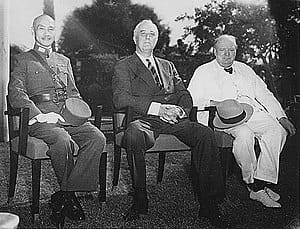
Chiang KaiShek with Roosevelt and Churchill. He took power after WWII.Taiwan is now a Republic
Here’s my brief summary of 60 years of cyclical Chinese history: In the last decade of his life, 1966-76, Mao Zedung brought a horrible cultural revolution, killing 100 million or so by violence and famine, targeting anyone who might disagree with him. He was followed by Hua Kuofeng, Hu Yaobang, and Zhao Ziyang. They removed “the Gang of Four” and brought reform, toleration, and some rapprochement with the west. Hu also returned some autonomy to Tibet. Deng Xiaoping followed, put Zhao under house arrest, removed Hua and Hu (only recently buried), absorbed Tibet, invaded Vietnam, instituted a brutal on-child policy with, forced abortions and sterilizations, and put down the Tiananmen uprising 1989 -an uprising caused by the removal of Hu. Deng was followed by Jiang Zemin and Hu Jintao who exited Vietnam, lightened the one-child policy, and brought back some measure of freedom. This lead to Xi Jinping who appears to be in the mold of Mao and Deng. He’s removed Hu publicly during a communist party meeting, has taken absolute control, arrested China’s business innovators, and (likely) caused a pandemic by unsafe research at the Wuhan bio-research facility. His response to the pandemic is worthy of Mao: he welded people into their homes. Xi now needs a war to unify the country, and talks like he’ll invade Taiwan. Xi might do it; he has increased military spending by 2.5 times, to double that of the EU (equal to US spending). His army is likely to be used somewhere soon. But where?
At first glance, it makes some sense to think he’ll invade Taiwan. He has the same justification as Deng had for Vietnam, “to punish the wayward province.” Taiwan is small, 23 million people, and very rich (GDP = $1.3T, 10-15% of China). It’s especially rich in high-tech areas that Xi seems to want, and China ruled the island (Formosa) for 212 years between 1683 and its brief independence in 1895. I expect that Xi will invade Vietnam though, for many of the same reasons that Deng did: it’s easier, and the invasion won’t destroy US trade. Vietnam will not be super easy to conquer, of course, Putin’s invasion of Ukraine looks like it will go on for years, but Xi has 100 million men of military age. Driving these men into Vietnam is a lot easier than an amphibious invasion. Vietnam now, as then, has few friends -perhaps only India -while Taiwan has many (The US and Japan, primarily), and they have naval breakwaters that would make an amphibious landing difficult. Vietnam is only about half as rich as Taiwan (GDP = $650 B), but it has two things China needs more than technology: oil and food.
The Japanese invasion of independent Taiwan, The Republic of Formosa, in 1895. It took 5 months despite lopsided advantages. Plus 7 years to pacify the population.
Japan’s invasion of the Republic of Formosa in 1895 would have to be the model for a Chinese invasion today, assuming that’s the route Xi would take. Japan used a small force of 20,000 highly trained men, and a surprise landing at two sites. The formosan army of 75,000 was hardly armed, but it still took the Japanese 5 months to defeat them. It took another 7 years to pacify the population. Taiwan today is a lot better prepared than it was, with modern missiles and drones, a well-trained army of 500,000, and an active navy. Japan, Philippines, and the US would likely try to resupply Taiwan, and would have to be blockaded to prevent delivery. This is not so easy, since the nearest Japanese island is closer to Taiwan than Taiwan is to mainland China, and the Philippines is not far either. Then there are the sanctions that would follow an invasion of Taiwan, but not an invasion of Vietnam: the freezing of assets and the closing of markets. Susch sanctions have been tough on Russia but they would be devastating to China since China imports most of its oil and half of its food, much of it by sea. Whatever Xi gets from invading Taiwan will not match these losses, and I think Xi know it.
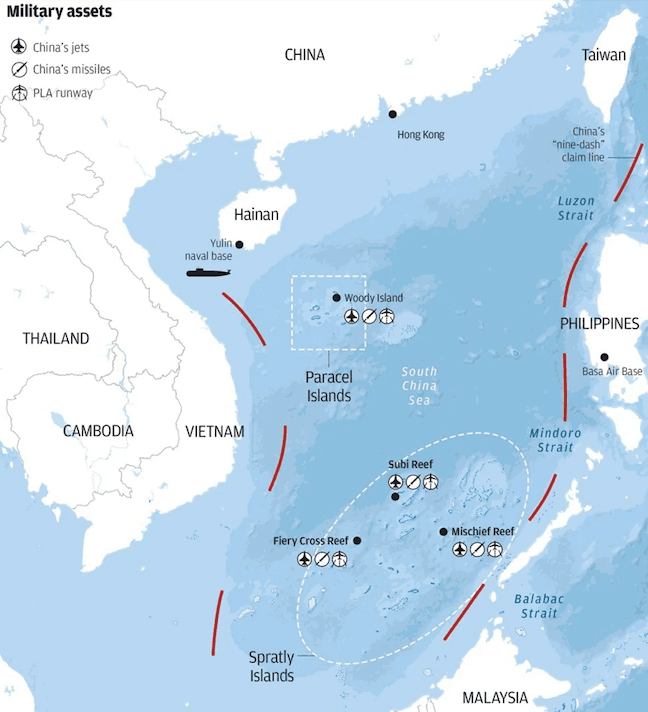
China’s new military bases are located around Vietnam, not around Taiwan
I suspect that Xi has already concluded that Vietnam is the smart place to invade. Supporting this view is a look at his preparations. Xi has not built the landing fleet that he’d need for Taiwan, but has instead militarized Hainan Island, plus four other, newly constructed, illegal islands in the South China Sea. These islands surround Vietnam, and are well suited to cut off the country from western aid. They are too far south to be effective in an action against Taiwan. You can tell a lot about what a person will do from what he has done, and what Xi has done is to prepare for an invasion of Vietnam.
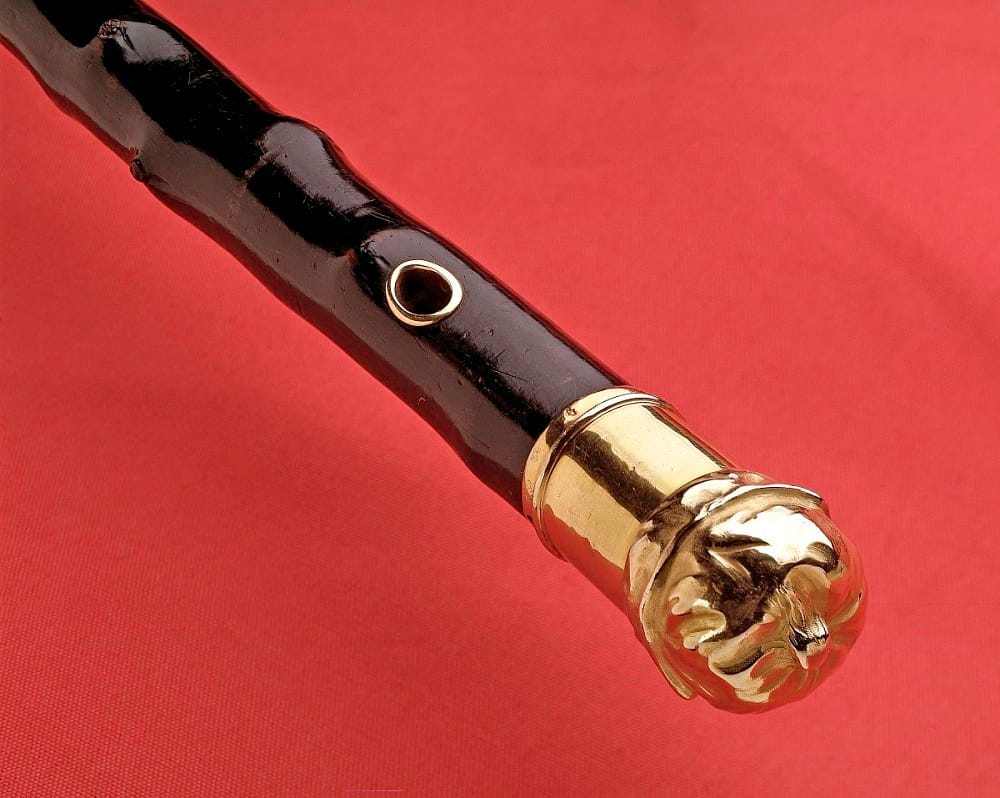
Franklin’s walking stick, willed to General Washington. Now in the Smithsonian.
Many famous people carried walking sticks Washington, Churchill, Moses, Dali. Until quite recently, it was “a thing”. Benjamin Franklin willed one, now in the Smithsonian, to George Washington, to act as a sort of scepter: “My fine crab-tree walking stick, with a gold head curiously wrought in the form of the cap of liberty, I give to my friend, and the friend of mankind, General Washington. If it were a Scepter, he has merited it, and would become it. It was a present to me from that excellent woman, Madame de Forbach, the dowager Duchess of Deux-Ponts”. A peculiarity of this particular stick is that the stick is uncommonly tall, 46 1/2″. This is too tall for casual, walking use, and it’s too fancy to use as a hiking stick. Franklin himself, used a more-normal size walking stick, 36 3/8″ tall, currently in the collection of the NY Historical Society. Washington too seems to have favored a stick of more normal length.
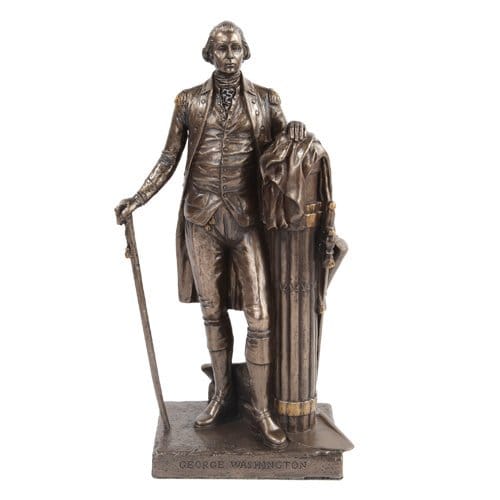
Washington with walking stick
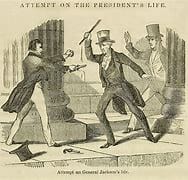
Walking sticks project a sort of elegance, as well as providing personal protection. Shown below is President Andrew Jackson defending himself against an assassin using his walking stick to beat off an assassin. He went on to give souvenir walking sticks to friends and political supporters. Sticks remained a common political gift for 100 years, at least through the election of Calvin Coolidge.
Andrew Jackson defends himself.
I started making walking sticks a few years back, originally for my own use, and then for others when I noticed that many folks who needed canes didn’t carry them. It was vanity, as best I could tell: the normal, “old age” cane is relatively short, about 32″. Walking with it makes you bend over; you look old and decrepit. Some of the folks who needed canes, carried hiking sticks, I noticed, about 48″. These are too tall to provide any significant support, as the only way to grasp one was from the side. Some of my canes are shown below. They are about 36″ tall, typically with a 2″ wooden ball as a head. They look good, you stand straight, and they provides support and balance when going down stairs.
Some of my walking sticks.
I typically make my sticks of American Beech, a wood of light weight, with good strength, and a high elastic modulus of elasticity, about 1.85 x10⁶ psi. Oak, hickory, and ash are good options, but they are denser, and thus more suited to self-defense. Wood is better than metal for many applications, IMHO, as I’ve discussed elsewhere. The mathematician Euler showed the the effective strength of a walking stick does not depend on the compressive strength but rather on elastic constant via “the Euler buckling equation”, one of many tremendously useful equations developed by Leonhard Euler (1707-1783).
For a cylindrical stick, the maximum force supported by a stick is: F = π3Er4/4L2, where F is the force, r is the radius, L is the length, and E is the elastic modulus. I typically pick a diameter of 3/4″ or 7/8″, and fit the length to the customer. For a 36″ beech stick, the buckling strength is calculated to be 221 or 409 pounds respectively. I add a rubber bottom to make it non–scuff and less slip-prone. I sometimes add a rope thong, too. Here is a video of Fred Astaire dancing with this style of stick. It’s called “a pin stick”, in case you are interested because it looks like a giant pin.
Country Irishmen are sometimes depicted with a heavy walking stick called a Shillelagh. It’s used for heavier self-defense than available with a pin-stick, and is generally seen being used as a cudgel. There are Japanese versions of self defense using a lighter, 36″ stick, called a Han-bo, as shown here. There is also the wand, as seen for example in Harry Potter. It focuses magical power. Similar to this is Moses’s staff that he used in front of Pharaoh, a combination wand and hiking stick as it’s typically pictured. It might have been repurposed for the snake-on-a-stick that protects against dark forces. Dancing with a stick, Astaire style, can drive away emotional forces, while the more normal use is elegance, and avoiding slips.
Humans are funny little creatures. I suspect that God keeps us around for our entertainment value. Each culture provides God its own entertainment. The British by invading basically every country on earth wearing tall, furry hats. We Americans provide grand stunts, like landing on the moon, or an automobile race around the world in 1908 when there were no roads or gas stations. And the French took love, dining, and dueling to a high, almost comic level. In France, the great and near great dueled well into the 20th century. The great French mathematician, Galois dueled to the death over love or politics. The great rationalist philosopher, Descartes, fought a duel, disarmed his opponent, and forgave him because of love. The science fiction writing philosopher, Cyrano de Bergerac, was famous for many duels, typically over the insults in his writing (or his nose).
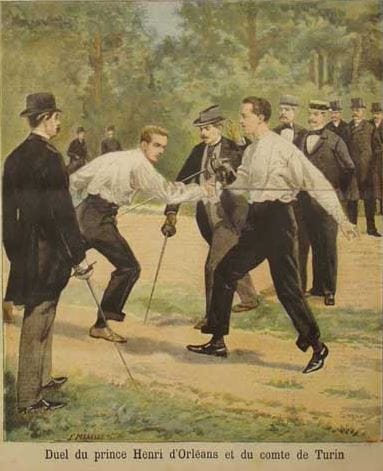
In France, the great and near-great dueled well into the 20th century.
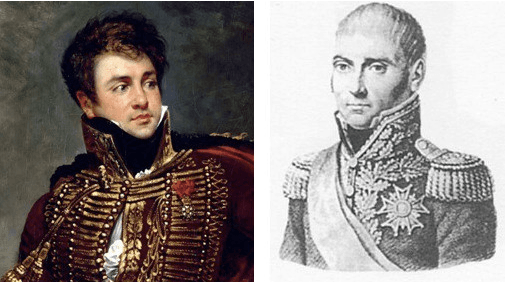
Instead of writing about those fellows, this post is about two Napoleonic generals, Pierre Dupont de l’Étang and François Fournier-Sarlovèze, who fought 30 duels with each other over 19 years writing a contract to kill each other whenever possible. They didn’t start as generals, of course, but rose through the ranks, though dueling was illegal, in theory, most of the time. They dueled on foot and horseback, mostly with swords, but also with pistols, and managed to wound each other at every meeting. They never quite managed to kill one another, or settle things, but they kept going at it till they became friends, of a sort. They were not that bad dualists, Fournier was a crack shot with a pistol and had killed others in duels. DuPont was better with the sword, but both were good at dodging death by blocking their vital organs.
The antaganism started with a duel, as one might expect. Fournier, a lieutenant at the time, had just killed a popular Strasbourg townsman named Blumm in a pistol duel. The townsman had no experience with pistols so this was sort-of murder, and resented. There was to be a party that evening, and Fournier’s commanding officer sent captain DuPont with a message to Fournier to keep him away until tempers subsided. Fournier attempted to attend anyway, and felt insulted by DuPont’s efforts to keep him out. Fournier challenged DuPont, and DuPont accepted, choosing military swords. Fournier would have challenged the commanding officer, but one does challenge so far above one’s station in France.
They met the next day at dawn. DuPont won the first duel, injuring Fournier by a severe cut to the shoulder. At this point, first blood, most American dualists would have called it quits, and might have become friends. In the duel between Thomas Hart Benton and Andrew Jackson, Benton put two bullets into Jackson but didn’t kill them, and they went on to become friends, and colleagues in congress. But for these two, one deadly meeting was not enough. They decided to duel again as soon as Fournier recovered. That took a month. Fournier rechallenged, they fought again with military swords. This time DuPont was injured. At the next duel, both were injured. Again and again, whenever they met, with swords, cutlases, lances, rapiers, and at last with pistols.
Fournier (left) and DuPont (right). Fournier fought for Napoleon in the Spanish and Russian campaigns, and went on to help write the military code of conduct. DuPont fought in the Austrian, Dutch, and Spanish campaigns, eventually becoming Minister of War for Louis XVIII and deputy of the Charente “The Dualsts” film was shot in and around Fournier’s home town. The painting at left hangs in city hall.
They drew up a contract that they would try to kill each other whenever they were 30 leagues from each other (90 miles) and not otherwise occupied with a war. The duels would pause whenever one of them was promoted since one didn’t duel with someone of higher rank. The two proved to be excellent officers and advanced at a good rate, with occasional stops in prison because of the political turmoil of the time, but not because of their dueling. Fournier went to jail for financial mismanagement and for insulting Napoleon after the Russian Campaign, DuPont went to jail too, for losing to the Spanish, and later for supporting the Royalists. They were released because the army always needs good officers who are brave and successful (Read about their lives on Wikipedia, or here).
Sometimes they would meet by accident and try to kill each other in bars, restaurants, and hotels. Mostly they would meet by arrangement at appointed times in the woods, sharing a hearty meal and good insults before dueling. Sometimes they chatted with each other through the duels. They appreciated each others skill and complimented each other on promotions, especially when it allowed them to try to kill one another (there is a comic movie like this — Mr and Mrs Smith?). During one encounter, DuPont stuck Fournier to the wall through the neck with his sword, and Fournier requested that he move closer so they could continue fighting this way. Now that’s dedication.
Eventually, DuPont got engaged and they decided to fight to the death, hunting each other in a woods with pistols (two each). As it happened, DuPont disarmed Fournier, and forced him to agree to fight no more. It was a happy ending suitable to a movie. Actually, a movie made about them, “The Dualists, 1967.” DuPont became minister for War for Louis XVIII (released for being too royalist), and wrote poetry including “the art of war”. Fournier helped write the French code of military conduct.
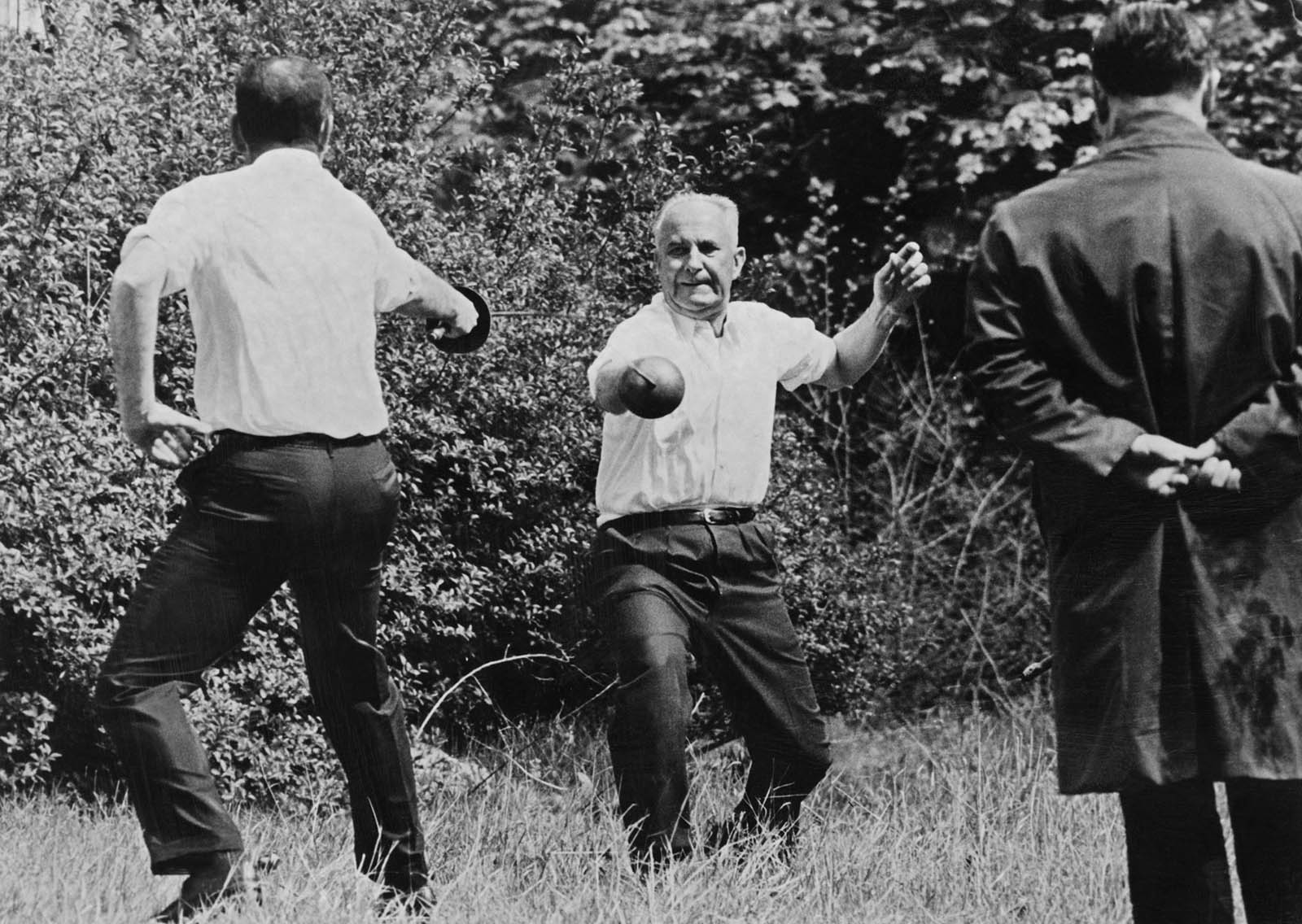
Dueling didn’t stop here, but continued in France well into the 20th century. The last dual between members of the government was in 1967, see photo below. René Ribière, Gaullist speaker of the National Assembly fought Gaston Differe, Mayor of Marseilles and Socialist candidate for the French presidency. They used epees, long, sharp swords. Differe wounded Ribiére twice, both times in the arm, and Jean de Lipkowskiin called an end to the duel “. Several French duels of the 20th century, are caught on film.
Le député maire socialiste de Marseille et bon escrimeur Gaston Defferre (C) et le député gaulliste du Val d’Oise René Ribière s’affrontent en duel le 21 avril 1967 dans le jardin d’une maison de Neuilly sous le regard d’un des témoins M. Cassagne (de dos). René Ribière avait demandé réparation par les armes à la suite d’un différend survenu à l’Assemblé nationale au cours duquel Defferre l’ayant traité d'”abruti” avait refusé de lui présenter des excuses. / AFP PHOTO
The point of this essay, assuming there is one, is the love of God for us. A less loving God would have had the comedy of the generals end after only two or three duals, or after one killed the other. Here, He allowed them to fight till friendship prevailed. Also of note is that that French are not surrender monkeys, as some claim. They are masters of honor and history, and we love them.
Robert E. Buxbaum, December 28, 2022. In the US, dueling is more like gang warfare, I include here pirates like William Kidd and John Lafitte, the Hamilton-Burr duel with trick pistols, the western shootouts of Jim Bowie, Wyatt Earp, etc., the Chicago rivalries of the 1930s and the drug wars of Detroit. At present, Detroit has four shootings per day, but only one death per day. The movie “8 Mile” includes fights, shooting, and several rap duels, fought with deadly words. If you won’t fight for something, there is a sense that it isn’t worth much.
This week, the Artemis I, Orion capsule splashed down to general applause after circling the moon with mannequins. The launch cost $4.1 Billion, and the project, $50 Billion so far, of $93 Billion expected. Artemis II will carry people around the moon, and Artemis III is expected to land the first woman and person of color. The goal isn’t one I find inspiring, and I feel even less inspired by the technology. I see few advances in Artemis compared to the Saturn V of 50 years ago. And in several ways, it looks like a step backwards.
The graphic below compares the Artemis I SLS (Space Launch System) to the Saturn V. The SLS is 10% lighter, but the payload is lighter, too. It can carry 27 tons to the moon, while the Saturn V sent 50 tons to the moon. I’d expect more weight by now. We have carbon fiber and aramids, and they did not. Add to this that the cost per flight is higher, $4.1 B, versus $1.49 B in 2022 dollars for a Saturn V ($185 million in 1969 dollars). What’s more there was no new engine development or production, so the flight numbers are limited: Each SLS launch throws away five, space shuttle engines. When they are all gone, the project ends. We have no plans or ability to make more engines.
Comparison of Apollo Saturn V and Artemis SLS. The SLS has less lift weight and costs more per launch.
As it happens, there was a better alternative available, the Falcon heavy from SpaceX. The Falcon heavy has been flying for 5 years now, and costs only $141 million per launch, about 1/30 as much as an Artemus launch. The rocket is largely reusable, with 3D printed engines, and boosters that land on their tails. Each SLS is expensive because it’s essentially a new airplane built specially for each flight. Every part but the capsule is thrown away. Adding to the cost of SLS launches is the fuel; hydrogen, the same fuel as the space shuttle. Per energy it’s very expensive. The energy cost for the SLS boosters is high too, and the efficiency is low; each SLS booster costs $290M, more than the cost of two Falcon heavy launches. Falcon launches are cheap, in part because the engines burn kerosine, as did the Saturn V at low altitude. Beyond cost hydrogen has low thrust per flow (low momentum), and is hard to handle; hydrogen leaks caused two Artemis scrubs, and numerous Shuttle delays. I discussed the physics of rocket engines in a post seven years ago.
This graph of $/kg to low earth orbit is mostly from futureblind.com. I added the data for Artemis SLS. Saturn V and Falcon use cheaper fuel and a leaner management team.
It might be argued that Artemis SLS is an inspirational advance because it can lift an entire moon project in one shot, but the Saturn V lifted that and more, all of Skylab. Besides, there is no need to lift everything on one launch. Elon Musk has proposed lifting in two stages, sending the moon rocket and moon lander to low earth orbit with one launch, then lifting fuel and the astronauts on a second launch. Given the low cost of a Falcon heavy launch, Musk’s approach is sure to save money. It also helps develop space refueling, an important technology.
Musk’s Falcon may still reach the moon because NASA still needs a moon lander. NASA has awarded the lander contract to three companies for now, Jeff Bezos’s Blue Origin, Dynetics-Aerodyne makers of the Saturn V, and Musk’s SpaceX. If the SpaceX version wins, a modified Falcon will be sent to the moon on a Falcon heavy along with a space station. Artemis III will rendezvous with them, astronauts will descend to the moon on the lander, and will use the lander to ascend. They’ll then transfer to an Orion capsule for the return journey. NASA has also contracted with Bezos’s Blue origin for planetary, Earth observation, and exploration plans. I suspect that Musk’s lander will win, if only because of reliability. There have been 59 Falcon launches this year, all of them with safe landings. By contrast, no Blue Origin or Dynetics rocket has landed, and Blue Origin does not expect to achieve orbital velocity till 2025.
As best I can tell, the reason we’re using the Artemis SLS with its old engines is inspiration. The Artemis program director, Charlie Blackwell-Thompson is female, and an expert in space shuttle engines. Previous directors were male. Previous astronauts too were mostly male. Musk is not only male, but his products suffer from him being considered a horrible person, a toxic male, in the Tony Stark (Iron Man) mold. Even Jeff Bezos and Richard Branson are considered better, though their technology is worse. See my comparison of SpaceX, Virgin Blue, and Blue Origin.
To me, the biggest blocks to NASA’s inspirational aims, in my opinion, are the program directors who gave us the moon landing. These were two Nazi SS commanders (SS Sturmbannführers), Arthur Rudolph and Wernher Von Braun. Not only were they male and white, they were barely Americanized Nazis, elevated to their role at NASA after killing off virtually all of their 20,000, mostly Jewish, slave workers making rockets for Hitler. Here’s a song about Von Braun, by Tom Lehrer. Among those killed was Von Braun’s professor. In his autobiography, Von Braun showed no sign of regret for any of this, nor does he take blame. The slave labor camp they ran, Dora-Mittelbau, had the highest death rate of all slave labor camps, and when some workers suggested that they could work better if they were fed, the directors, Rudolph and Von Braun had 80 machine gunned to death. Still, Von Braun got us to the moon, and his inspirational comments line the walls at NASA, Kennedy. Blackwell-Thompson and Bezos are surely more inspirational, but their designs seem like dead ends. We may still have to use Musk’s SpaceX if we want a lander or a moon program after the space shuttle’s engines are used up. As Von Braun liked to point out, “Sacrifices have to be made.”
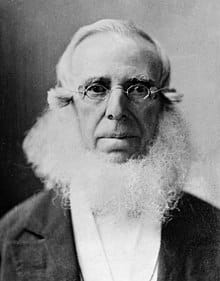
It’s good to have hero, someone whose approach to life, family and business you admire that you might reasonably be able to follow. As an engineer, inventor, I came to regard Peter Cooper of New York as a hero. He made his own business and was a success, in business and with his family without being crooked. This is something that is not as common as you might think. When I was in 4th grade, we got weekly assignments to read a biography and write about it. I tended to read about scientists and inventors then and after. I quickly discovered that successful inventors tended to die broke, estranged from their family and friends. Edison, Tesla, Salk, Goodyear, and Ford are examples. Tesla didn’t marry. Henry Ford’s children were messed up. Salk had a miserable marriage. Almost everyone working on the Atom Bomb had issues with the government. Most didn’t benefit financially. They died hated by the press as mass-murderers, and pursued by the FBI as potential spies. It was a sad pattern for someone who hoped to be an inventor -engineer.
The one major exception I found was Peter Cooper, an inventor, industrialist, and New York politician who was honest, and who died wealthy and liked with a good family. One result of reading about him was to conclude that some engineering areas are better than others; generally making weapons is not a path to personal success.
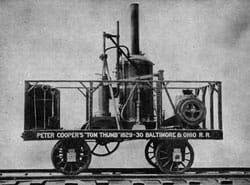
Tom Thumb, the blower at right is the secret to its light weight per power.
Peter Cooper was different, both in operation and outcome. Though he made some weapons (gun barrels) and inverted a remote control torpedo, these were not weapons of mass killing. Besides he but thee for “the good side” of the Civil War. And, when Cooper made an invention or a product, he made sure to have the capital available to make a profit on it too. He worked hard to make sure his products were monopolies, using a combination of patents and publicity to secure their position.
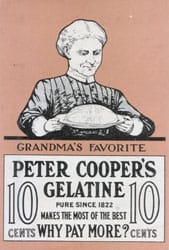
Brand management helps.
Cooper was a strong family man who made sure to own his own business, and made sure to control the sources of key materials too. He liked to invest in other businesses, but only as the controlling share-holder, or as a bond holder, believing that minor share-holders tend to be cheated. He was pro monopoly, pro trusts, and a big proponet of detailed contracts, so everyone knew where they stood. A famous invention of Cooper’s was Jello, a flavored, light version of his hide-glue, see the patent here. Besides patenting it, he sold the product with his brand, thus helping to maintain the monopoly.
Cooper was generous with donations to the poor, but not to everyone, and not with loans. And he would not sign anyone’s note as a guarantor. Borrowers tended to renege, he found, and they resent you besides. You lose your money, and lost them as a friend. He founded two free colleges, Cooper Union, and the Cooper-Limestone Institute, plus an inventor’s institute. (I got my education, free from Cooper Union.) Cooper ran these institutions in his lifetime, not waiting till he was dead to part with his money. Many do this in the vain hope that others will run the institution as they would.
Peter Cooper always sought a monopoly, or a near monopoly, patenting his own inventions, or buying the rights to others’ patents to help make it so. He believed that monopolies were good, saying they were the only sort of business that made money while allowing him to treat his workers well. If an invention would not result in a monopoly, Peter Cooper gave the rights away.
The list of inventions he didn’t patent include the instruments to test the quality of glue and steel (quality control is important), and a tide-powered ferry in New York. Perhaps his most famous unpainted invention was a lightweight, high power steam locomotive, “The Tom Thumb”, made in 1840. Innovations included beveled wheels to center the carriage on its rails, and a blower on the boiler fire, see photo above. The blower meant he could generate high-power in a small space at light weight. These are significant innovations, but Cooper did not foresee having a monopoly, so he didn’t pursue these ideas. Instead, he focussed on making rails and wire rope; he patented the process to roll steel, and the process for making coke from coal. Also on his glue/jello business. Since he made these items from dead cows and horses, he found he could also sell “foot oil” and steam-pounded leather, “Chamois”. He also pursued a telephone/ telegraph business across the Atlantic, more on that below, but only after getting monopoly rights for 50 years.
Cooper managed to stay friends with those he competed with by paying license fees for any patents he used (he tried to negotiate low rates), or buying or selling the patent rights as seemed appropriate. He also licensed his patents, and rented out buildings he didn’t need. He rented at a rate of 7% of the sale price, a metric I’ve used myself, considering rental to be like buying on loan. There is a theory of stock-buying that matches this.
The story the telegraph cable across the Atlantic is instructive to seeing how the pieces fit together. The first significant underwater cable was not laid by Cooper, by a Canadian inventor, Frederick Gisborne. It was laid in 1852 between Prince Edward Island and New Brunswick. Through personal connections, Gisborne’s company got exclusive rights for 30 years, for this and for a cable that would go to Newfoundland, but he didn’t have the money or baking to make it happen. The first cable failed, and Gisborne ran out of money and support. Only his exclusive rights remained. This is the typical story of an inventor/ engineer/businessman who has to rely on other peoples’ money and patience.
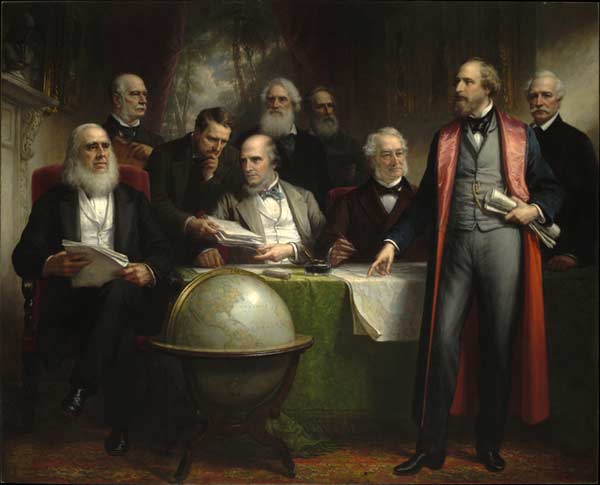
A few months after the failure, a friend of Cooper’s, Cyrus Field, convinced Cooper that good money could be made, and public good could be done, if Cooper could lay such a cable all the way to London. One thing that attracted Cooper to the project was that the cable could be made as an insulated iron-copper rope in Cooper’s own factory. Cooper, Field, and some partners (see painting below) bought Gisborne’s company, along with their exclusive rights, and formed a new company, The New York, Newfoundland & London Telegraph Company, see charter here. The founders are imagined* with a globe and a section of cable sitting on their table. Gisborne, though not shown in the painting, was a charter member, and made chief engineer. Cooper was president. He also traveled on the boat with Gisborne to lay the cable across the St. Lawrence – just to be sure he knew what was going on. This cable provided a trial for The Trans Atlantic cable.
The founding individuals to lay a transatlantic cable. Peter Cooper at left is the chairman, Cyrus Field is standing, Samuel Morse is at the back. Frederic Gisborne, a founder, does not appear in the paining. Typical.
Samuel Morse was hired as an electrician; he is pictured in the painting, but was not a charter member. Part of the problem with Morse was that he owned the patent on Morse-telegraphy, and Cooper didn’t want to pay his “exorbitant” fees. So Cooper and Field bought an alternative telegraph patent from David Hughes, a Kentucky school teacher. This telegraph system used tones instead of clicks and printed whole letters at a time. By hiring Morse, but not his patents, Cooper saved money, while retaining Morse’s friendship and expertise. The alternative could have been a nasty spat. Their telegraph company sub-licensed Hughes’s tone-method a group of western telegraph owners, “The Western Union,” who used it for many years, producing the distinctive Western Union Telegrams. With enough money in hand and credibility from the Canadian trial, the group secured 50 years monopoly rights for a telegraph line across the Atlantic. Laying the cable took many years, with semi-failed attempts in 1857, 1858, and 1865. When the eventual success came in 1866, the 50 years’ monopoly rights they’d secured meant that they made money from the start. They could treat workers fairly. Marconi would discover that Cooper wrote a good contract; his wireless telegraph required a widely different route.
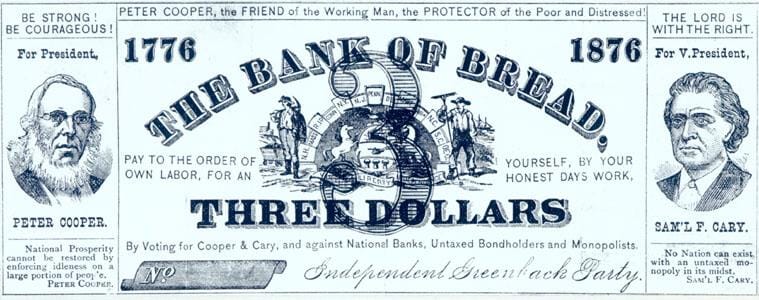
I should also note that Peter Cooper was politically active: he started as a Democrat, helped form the Republican Party, bringing Lincoln to speak in NY for the first time, and ended up founding the Greenback-Labor Party, running for president as a Greenback. He was strongly for tariffs, and strongly against inflation. He said that the dollar should have the same value for all time for the same reason that the foot should have the same length and the pound the same weight. I have written in favor of tariffs off and on. They help keep manufacturing in America, and help insure that those who require French wine or German cars pay the majority of US taxes. They are also a non-violent vehicle for foreign policy.
Operating under these principles, through patents and taxed monopolies, Peter Cooper died wealthy, and liked. Liked by his workers, liked by much of the press, and by his family too, with children who turned out well. The children of rich people often turn out poorly. Carnegie’s children fought each other in court, Ford’s were miserable. Cooper’s children continued in business and politics, successfully and honorably, and in science/ engineering (Peter Coper Hewitt invented the power rectifier, sold to Westinghouse). The success of Peter Cooper’s free college, Cooper Union, influenced many of his friends to open similar institutions. Among his friends who did this were Carnegie, Pratt, Stevens, Rensselaer, and Vanderbilt. He stayed friends with them and with other inventors of the day, despite competing in business and politics. Most rich folks can not do this; they tend to develop big egos, and few principles.
Robert Buxbaum, November 30, 2022. I find the painting interesting. Why was it painted? Why is Gisborne not in it and Morse in the painting — sometimes described as vice President? The charter lists Morse as “electrician”, an employee. Chandler White, holding papers next to Cooper, was Vice President. My guess is that the painting was made to help promote the company and sell stock. They made special cigars with this image too. This essay started as a 5th grade project with my son. See a much earlier version here.
Hillary Clinton famously called Trump supporters “a basket of deplorables” and went on to explain that half of them were “unredeemable”, Nazis and Klansmen, while the other half “needed reeducation.” Her statement was applauded on the left, and taken as an insult on the right. To this day, Biden and his group make the claim that Republicans are antisemites and a threat to American democracy. The proof here is a 2017 video of Klansmen carrying torches, saying “Jews will not replace us,” as they protested the removal of a statue of Robert E. Lee in Virginia. A further claim is that the rise in antisemitic incidents, shootings, beatings, etc., are the result of Trump and the Republicans. Things are not quite so black and white, or course, e.g. during the ANTIFA protests/riots four synagogs were attacked in LA alone, and the Crown-Heights neighborhood of Brooklyn was torched. Many of the attackers of Jews have Islamic names and left association, things that don’t suggest Republicans but Democrats.
CNN has claimed that the difference is intent: Trump’s intent is evil, while ANTIFA’s is to elevate black and Moslem lives by allowing them to vent their righteous anger (on Jews). The Moslems who attacked Jews in Monsey, India, Paris and elsewhere are acting for justice, while the marchers in Charlottesville march for hate. In a special program on “Antisemitism in American”, CNN made the claim that no Jew should support the Republicans or Jewish Israel, an apartheid, colonial occupation in their view. This appears to be the view of the Biden White House too. They have yet to congratulate the winner of Israeli presidential elections, 5 days after the election. They contacted Mahmoud Abbas, the Palestinian leader instead, to discuss joint efforts to enhance Palestinian security. Obama did the same, seven years ago, not congratulating the Israeli election winner (Netanyahu), and snubbed the Israeli delegation on their visit, leaving them to sit alone without food or photographs.
According to the CNN expert on Antisemitism, the lefts’ dismissal of Israel’s leaders is because European Jews are not Jews at all, but Russians with no connection to the land. To my thinking claims like this against a group’s identity are horribly hurtful — CNN’s expert was claiming, essentially, that the jews were lying about everything since the beginning. If Jews are not from Israel, why have we prayed in that direction for return, and in the language of that land. If we did not build the old synagogs, when did we displace the builders and take over their language and culture? Attacks on Jewish identity are more serious, in my mind, than any march for Robert E. Lee. (I’ve written in favor of the peace hammered out between Grant and Lee).
Perhaps even more damaging is the left’s attack on Jewish education. The New York Times ran three-page article claiming that Jewish education abuses the students by not teaching real science or history, and by enforcing religious and sexual norms that are counter to the children’s rights — rights that include LGBQT+ expression. While it is true that Jewish education is not a fan of LGBQT+, but neither is Moslem education, or Catholic, or Mormon. Education is how a culture survives. Some Catholic leaders have noted that they have a stake in this.
The left is anti Israel and anti Jewish education, yet claims to be the defenders of Jews because they can’t stand Trump.
Speaking of survival, about half of all Jews now live in Israel, a state established by the UN in 1947 in part as a response to the mass murder of Jews in Europe. Along with Europeans, about half of the Israelis today are exiles from communities wiped out by Moslem governments: from Egypt, Tunisia, Iran, Iraq, Turkey, and Yemen. If Israel becomes Islamic as Obama favored, they are likely to exile all the Jews as they did in 1968 in Jerusalem, and as the surrounding countries have done. Where would the Jews go? It’s not a problem for Obama-Biden, but it’s a survival problem for Israelis. My sense is that the left is, by far, the more antisemitic, both in terms of culture and physical safety.
Elite colleges strive to be selective, and they are, just not for the hard-working scholars they claim to select for. They claim to be color-blind, income-blind, and race-blind, aiming for the best: the most intelligent, most ethical, and hardest working scholar-candidates. Then, to their surprise and satisfaction, all the ivies find that the vast majority of the chosen come from the same rich families and prep-schools as 100 years ago. That happens because the selection is crooked with measures tilted to the rich, Protestant, and preppy.
Through most of the 1900s, most of the ivies had a Jewish quota, enforced formally or informally. They also did their best to discourage middle class, black, and Catholic students in the interest of maintaining the proper student mix. Under Woodrow Wilson, Princeton went further and admitted not one black student. When quotas became illegal, schools began to rely on athletics and tests, with blatant cheating as revealed by the “Varsity Blues” sting operation. In that sting, a dozen or more athletic coaches and high-school administrators were caught taking SAT tests for their richer, connected students, and/or making up phony athletic achievements. The Ivies claimed shock after the cheating was revealed, but it is beyond belief that no one had noticed that these top brains and athletes were neither.
Many top athletes are diagnosed as asthmatic. Some actually are. With the right doctor, you can get an advantage
Another version of this is that richer kids can get extra time to do SAT and ACT tests. The extra time doesn’t show up on the SAT or ACT score, you need a doctor to certify that you are dyslectic or have severe ADHD. Most boys are diagnosed with ADHD these days, itself something of a scam, but most boys don’t get extra test time. You need the right doctor and the right documentation, plus enough money and connections to get the test given by certified test-giver in your own private room. It used to be that the SAT and ACT would report the extra time, but this changed in 2004. Now the extra time, and the disease is not documented, just the higher score. There have been complaints, but the scam goes on. Similar to this, top Olympic athletes can be diagnosed with asthma, and allowed to use performance enhancing, anti-asthma steroids. Again complaints, but no change.
Ivy League schools also tilt to the right families by requiring signs of the right sort of leadership as evaluated by an interview and an essay (see my post on John Kennedy’s essay). You score high on leadership if you helped your relative run for governor. By contrast, if you organized a ping-pong or basketball tournament at your Catholic or Jewish school, you’re the wrong sort of leader. Eagle Scout is sort-of the right sort, and speaking against climate change on TV is. Greta Thernberg and Chelsea Clinton are climate leaders; you, probably are not.
The Ivys explicitly state that they choose for athleticism, but not all sports are equal. All the Ivies claim to need a good women’s lacrosse team, a good crew team, and some good high-divers. Are these sports unavailable at your high-school? What a shame, you’re not a real athlete. You can still try to get in based on extreme leadership and academics.
The Princeton alumni of 1993-1994 were primarily white, rich and preppy. Favoring their children helps insure that the class of 2024 is that way too.
There is no real reason that Harvard needs a top crew team, or needs to excel at women’s lacrosse or high-diving. Sport was not an admission criteria in the 1800s. It was added in the 1900s to avoid admitting Catholics, Jews, and Asians who tended to score well but could not compete on the selected sports. The president of Harvard, Abbot Lowell wrote, “Somehow or other the enrollment of the Jewish students must be limited”. The method he chose, and that all the Ivies came to use, included these tests of leadership and sport, plus a preference for legacies. The children and grand-children of alumni are given significant preferential selection at all the ivies. At Harvard, the acceptance rate for legacy students is about 33%, compared with an overall acceptance rate of under 6%. Since legacies are mostly white, rich, protestant, and preppy, the next generation is guaranteed to be the same.
The Ivies’ methods have been challenged many times over the years. Quotas were found to be illegal as early as 1964. Since then there have been claims of effective quotas, a cause that was pushed under the rug until Donal Trump took it up. Most recently, Harvard, Princeton, and UNC were sued by Asians. One of these, from a poor background scored at the top of his class with a 4.4 GPA and had near-perfect SAT scores, but was rejected for no obvious reason beyond race. The Supreme Court is expected to hear the case in 2023. Ahead of this decision, all eight Ivies have decided to dispense with testing for at least for now. The ivies claim that, by making tests optional, they will avoid locking out students who are great (though somewhat illiterate and innumerate). The real purpose seems to be to lock out pushy Asians who might sue them or be so bright they make the legacies feel dumb.
None of the above would matter if the Ivies were not so wonderful, at least the better ones are. I went to Princeton grad school, see photos. It was great despite its waspy leanings. If you can go there, or to Harvard, Yale, Cornell or Penn, go. My feeling for Brown and Columbia are rather the opposite: they’ve gone to the extreme and voted for BDS, see the text here for Brown’s version. Not only did they vote to boycott Israelis and Israeli produce, the “B” of BDS, the’ve also committed to suppress Zionists everywhere. That’s Jews who support Israel. Several, non ivy schools, have committed to the same. In their view, for open debate to flourish anywhere, proud Jews must be excluded. These are no longer colleges, but Klavens.
Photo and biographical background from Julian Wiles
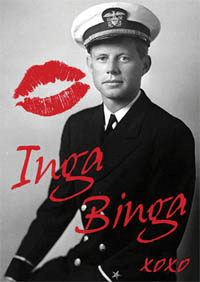
Kennedy was a well-liked president with several character flaws. The most famous were his sexual dalliances. One these was with a Nazi spy, Inga Marie Arvad, “Inga Binga”. He continued with her, on and off, from his days in Naval Intelligence through his election to congress in 1946 despite being informed of her background by the navy and the FBI. When they began their relationship, Inga Marie was beautiful, 28 and married. That didn’t seem to matter, as she was beautiful, the ex-Miss Denmark, charming and instantly in love with Kennedy. She was also a close friend of Hitler, Goring, and Göebbels, and in the employ of both The Washington Times-Herald and of Axel Wenner-Gren, a suspected Nazi spy master who owned the largest private yacht in the world. It was suspected that the fuel Wenner-Gren bought for his yacht was used to refuel German U-boats in the area.
Before becoming involved with Kennedy, Ms Arvand had married Kamak Abdel Nabi, an Egyptian diplomat, and then Paul Fejos, a Hungarian film-maker. She traveled the world with Fejos, financed by Wenner-Gren, meeting, greeting, and film-making. Still married, she left Fejos in 1936 to move to the US and study journalism at Columbia University. Getting a job at the Washington Times-herald, she wrote light hearted articles based on interviews with the movers and shakers of DC, supported by $5000 checks from her friend, Wenner-Gren.
The affair with Kennedy began in the fall of 1941. Kennedy was working at the Office of Naval Intelligence, a post he’d gotten with influence from his ambassador father, “Big Joe Kennedy”. Joe was an opponent of going to war. Ms. Arvand heartily agreed. She met Jack Kennedy through his sister, Kathleen, “Kick”.
The office of Naval Intelligence had rules against adulterous relationships. Kennedy ignored them. In this case it was particularly problematic as Inga was married, Protestant, and an associate of Hitler. The navy told Kennedy to stay away, and transferred him to Charlestown with orders to stay there, “not to venture more than 50 miles”. Ms Arvad visited him there often under an assumed name, Barbara White. They stayed together, took in movies, plays, and golf. The FBI watched as Arvad was thought to be a spy. Kennedy was again told to stay clear; he did not. Eventually, Hoover intervened and got Kennedy transferred to the South Pacific despite his bad back and other health problems. Inga broke off with Kennedy though he continued to write love letters. She ignored them. Perhaps she thought Kennedy was no longer interesting, even a liability. She was trying to get a job with US overseas intelligence, the forerunner of the CIA.
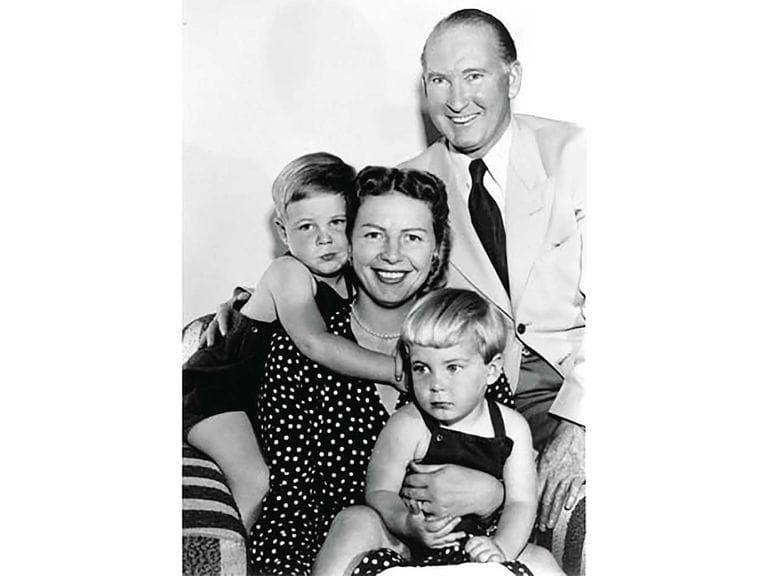
Inga with husband, and two children. Note that the older, Ronald, looks like J. Kennedy. Photo from Geoffrey Gray.
When Inga didn’t get the job, she moved to Los Angeles where she continued in journalism, working for Harpers Bazar, interviewing the movers and shakers in LA and New York, generally pushing for peace. In January, 1944, she started writing to Kennedy again. He was a hero with political ambitions. She reunited with Kennedy in LA, for a private interview, published, about the sinking of his PT boat. They continued dating well into 1946, after Kennedy was elected to congress. Inga got pregnant from someone (Kennedy?) and left to marry an actor she’d been dating, Tim McCoy. Some months later, Inga gave birth to a boy who looks a lot more like Kennedy than like her husband, see photo.
While Inga no longer contacted JFK, nor JFK her, it seems that Inga was a major factor influencing Kennedy to go into politics — where he could make the world more peaceful. Inga died of Colin cancer in 1973. She only revealed her part of the affair to her eldest son, the Kennedy look-alike, near the end of her life.
Regarding John Kennedy, I’m less-bothered by his sexual dalliances, than by his tendency to suddenly reverse himself. Kennedy called for an attack on Cuba, then reversed while the attack was in progress, dooming the attackers. He reversed again in South Vietnam, first first supporting the government then overthrowing it, and on civil rights. Vigorous persistence, even in the face of criticism is a good trait in a president, something I liked about LBJ, Nixon, Clinton, and Reagan.