Category Archives: Detroit

Why does water cost what it does?

Water costs vary greatly about Oakland county, and around the US, and I have struggled in vain to find out why. In part the problem is that each city gets to add as much maintenance and management costs as the city government thinks appropriate. High management and infrastructure fees can increase to the cost of water, but I also not that different cities about Oakland County Michigan get their water at different rates from the multi-county organization that oversees water in South East Michigan: GLWA, The Great Lakes Water Authority.

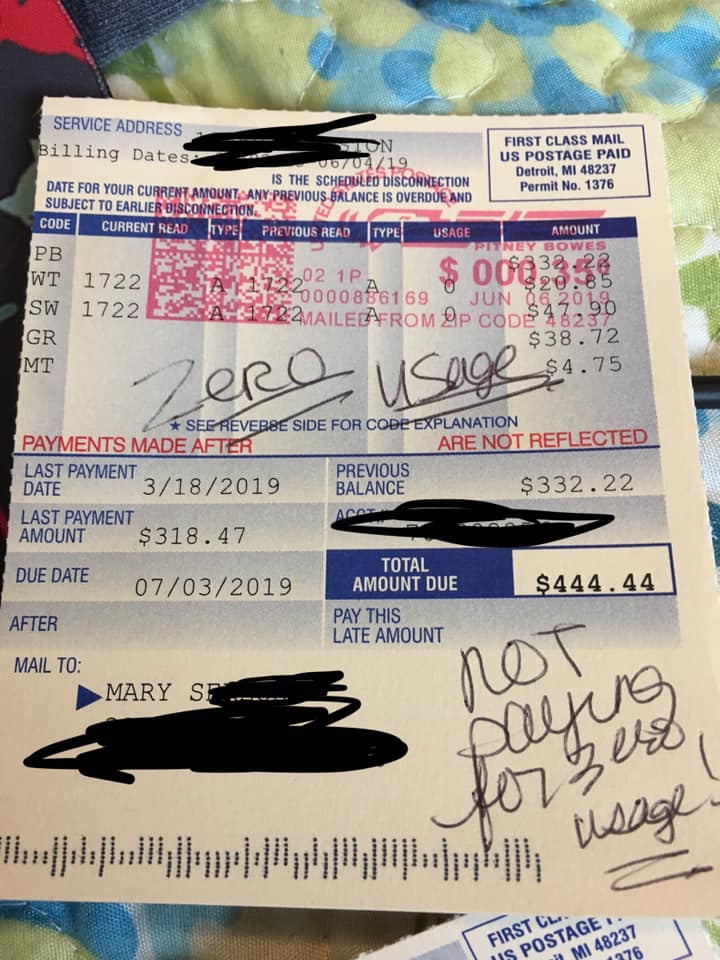
$112 water bill for zero usage. The base charge is so large that prices are essentially independent of useage.

I’ve attended meetings, both local and multi county and have tried to find out why one town gets its water at a far lower rate than another, near by. Towns get lower rates if they have a water tower, but it is not at all clear what the formula is. It also helps to separate the storm sewage from the sanitary sewage — something that I have proposed for all of Oakland county, but if there is fixed formula of how that affects rates, I’ve not seen it. And I wonder how well communities monitor the amount of storm sewage they generate.

The water itself is free. For the most part, in this county, we pump it from the Detroit river. Some of the rest of the water is pumped from wells. None of this costs anything. There is a pump cost, but it is manicure. Pumping 1 gallon of water up 75 feet, costs about 0.002¢ in pumping cost. The rest of the cost is infrastructure: the cost of the pumps, the pipes, the treatment, the billing and sewage. Among the sewage fees is a pollution penalty, and Oakland county pays plenty of pollution penalties. When it rains, we generate more sewage than the system will handle, and we dump the rest into the rivers and lakes. This results in closed beaches and poisoned fish, and fines too. The county pays the EPA when we do this, and the county passes the cost to the cities. I don’t know what the formula for fee distribution is, and don’t even know what it should be. What I do know is that we do this vastly too often. I’d really like us to stop this by moving to separate the sewers so that, as a city, we don’t spend so much on treating rainwater and we don’t pollute so often.

Another oddity is that we do a propaganda campaign to tell folks to use less water. Why? I’d much prefer if people would use more. We could then charge a lower base charge, and then collect the rest on per-gallon fees. As with much that is socialist, the current system is inefficient, but pleasant for the management. Or, for those cheapskates and environmentalists who wish to save water, here are some ideas.

August 21, 2019, Robert Buxbaum

The electoral college favors small, big, and swing states, punishes Alabama and Massachusetts.

As of this month, the District of Columbia has joined 15 states in a pact to would end the electoral college choice of president. These 15 include New York, California, and a growing list of solid-blue (Democratic party) states. They claim the electoral must go as it robed them of the presidency perhaps five times: 2016, 2000, 1888, 1876, and perhaps 1824. They would like to replace the electoral college by plurality of popular vote, as in Mexico and much of South America.

All the big blue states and some small blue states have joined a compact to end the electoral college. As of 2019, they are 70% of the way to achieving this.

As it happens, I had to speak on this topic in High School in New York. I for the merits of the old system beyond the obvious: that it’s historical and works. One merit I found, somewhat historical, is that It was part of a great compromise that allowed the US to form. Smaller states would not have joined the union without it, fearing that the federal government would ignore or plunder them without it. Remove the vote advantage that the electoral college provides them, and the small states might have the right to leave. Federal abuse of the rural provinces is seen, in my opinion in Canada, where the large liberal provinces of Ontario and Quebec plunder and ignore the prairie provinces of oil and mineral wealth.

Several of the founding federalists (Jay, Hamilton, Washington, Madison) noted that this sort of federal republic election might bind “the people” to the president more tightly than a plurality election. The voter, it was noted, might never meet the president nor visit Washington, nor even know all the issues, but he could was represented by an elector who he trusted, he would have more faith in the result. Locals would certainly know who the elector favored, but they would accept a change if he could justify it because of some new information or circumstance, if a candidate died, for example, or if the country was otherwise deadlocked, as in 1800 or 1824.

Historically speaking, most electors vote their states and with their previously stated (or sworn) declaration, but sometimes they switch. In, 2016 ten electors switched from their state’s choice. Sven were Democrats who voted against Hillary Clinton, and three were Republicans. Electors who do this are called either “faithless electors” or “Hamilton electors,” depending on whether they voted for you or against you. Hamilton had argued for electors who would “vote their conscience” in Federalist Paper No. 68.  One might say these electors threw away their shot, as Hamilton did not. Still, they showed that elector voting is not just symbolic.

Federalist theory aside, it seems to me that the current system empowers both large and small states inordinately, and swing states, while disempowering Alabama and Massachussetts. Change the system and might change the outcome in unexpected ways.

That the current system favors Rhode Island is obvious. RI has barely enough population for 1 congressman, and gets three electors. Alabama, with 7 congressmen, gets 9 electors. Rhode Islanders thus get 2.4 times the vote power of Alabamans.

It’s less obvious that Alabama and Massachussetts are disfavored compared to New Yorkers and Californians. But Alabama is solid red, while New York and California are only sort of blue. They are majority Democrat, with enough Republicans to have had Republican governors occasionally in recent history. Because the electoral college awards all of New York’s votes to the winner, a small number Democrat advantage controls many electors.

In 2016, of those who voted for major party candidates in New York, 53% voted for the Democrat, and 47% Republican. This slight difference, 6%, swung all of NY’s 27 electors to Ms Clinton. If a popular vote are to replace the electoral college, New York would only have the net effect of the 6% difference; that’s about 1 million net votes. By contrast, Alabama is about 1/3 the population of New York, but 75% Republican. Currently its impact is only 1/3 of New York’s despite having a net of 2.5 million more R voters. Without the college, Alabama would have 2.5 times the impact of NY. This impact might be balanced by Massachusetts, but at the very least candidates would campaign in these states– states that are currently ignored. Given how red and blue these states are, it is quite possible that the Republican will be more conservative than current, and the Democrat more liberal, and third party candidates would have a field day as is common in Mexico and South America.

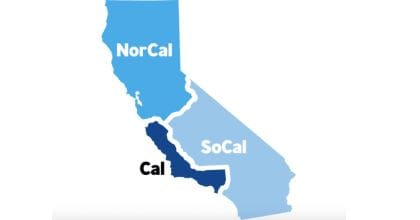
Proposed division of California into three states, all Democrat-leaning. Supposedly this will increase the voting power of the state by providing 4 more electors and 4 more senators.

California has petitioned for a different change to the electoral system — one that should empower the Democrats and Californians, or so the theory goes. On the ballot in 2016 was bill that would divide California into three sub-states. Between them, California would have six senators and four more electors. The proposer of the bill claims that he engineered the division, shown at right, so skillful that all three parts would stay Democrat controlled. Some people are worried, though. California is not totally blue. Once you split the state, there is more than three times the chance that one sub-state will go red. If so, the state’s effect would be reduced by 2/3 in a close election. At the last moment of 2016 the resolution was removed from the ballot.

Turning now to voter turnout, it seems to me that a change in the electoral college would change this as well. Currently, about half of all voters stay home, perhaps because their state’s effect on the presidential choice is fore-ordained. Also, a lot of fringe candidates don’t try as they don’t see themselves winning 50+% of the electoral college. If you change how we elect the president we are sure find a new assortment of voters and a much wider assortment of candidates at the final gate, as in Mexico. Democrats seem to believe that more Democrats will show up, and that they’ll vote mainstream D, but I suspect otherwise. I can not even claim the alternatives will be more fair.

In terms of fairness, Marie de Condorcet showed that the plurality system will not be fair if there are more than two candidates. It will be more interesting though. If changes to the electoral college system comes up in your state, be sure to tell your congressperson what you think.

Robert Buxbaum, July 22, 2019.

Bitcoin v cash to avoid Trump’s tariffs or ransom a sailor

The number and cash value of bitcoin transactions has surged in the last two years, and it seems that a lot of the driving motivation is avoidance of Trump’s tariffs. If you want to avoid Trump’s tariffs, claim that the value of the shipment is less than it really is. Pay part via the normal banking system through the bill of lading (and pay tariffs on that) and pay the rest in bitcoin with no record and no taxes paid. The average bitcoin transaction amount has increased to $33,504, and that seems to be the amount of taxable value being dodged on each shipment. As pointed outAs noted in Cryptopolitan, “smugglers attempting to export Chinese goods to the USA illegally have been found to be among the largest purchasers of Bitcoin.” https://www.cryptopolitan.com/is-us-china-trade-war-fueling-bitcoin-price-rally-to-7500/

Average transaction amount for several crypto currencies. The amount has surged for Bitcoin, blue line.

Bitcoin isn’t the only beneficiary, of course, but it is the largest. The chart at right shows the average transaction value of the major cryptocurrencies. The average for most are in the dollar range that you’d expect for someone evading tariffs in containerized shipments. Someone who wants to import $100,000 worth of Chinese printers will arrange to have them shipped with a lower price bill of lading. The rest of the payment, 1/3 say, would be paid by a bitcoin transfer whose escrow is tied to the legally binding bill of lading.

Number of transactions per day for several cryptocurrencies, data available from Bitinfocharts.com

Bitcoin does not stand out from the other cryptocurrencies so much in the amount of its average transaction, but in the number of transactions per day. As shown at left there are 333,050 bitcoin transactions per day at an average value of $33,504 per transaction. Multiplying these numbers together, we see that Bitcoin is used for some $11.2 billion in transactions per day, or $4.1 trillion dollars worth per year. The legitimate part of the US economy is only $58 billion per day, or $21 trillion per year. The amount will certainly rise if further tariffs are put into effect. 

Most other cryptocurrencies have fewer transactions per day, and the few that have similar (or higher) numbers deal in lower amounts. Etherium is used in 2.5 time more transactions, but the average Etherium transaction is only $679. This suggests that the total Etherium business is only $586 million per day. The dollar amounts of Etherium suggests that it is mostly used for drug trafficking, 

Cash-money is the old fashioned way to avoid tariffs, buy drugs, and do other illegal money transfers. This method isn’t going away any time soon. A suitcase of $100 bills gets handed over and the deal is done. Though it gets annoying as the amounts get large, there is a certain convenience at the other end, when you try to spend your ill-gotten gains. Thus, when Obama wanted to ransom the ten sailors that Iran had captured in 2016, he sent paper bills. According to the LA Times, this was three airplane shipments s of all non-US currency: Euros and Swiss Francs mostly. The first payment was $400 million, delivered as soon as Iran agreed to the release. The rest, $1.3 billion, was sent after the prisoners were released. Assuming that the bundles shown below contained only 100 Euro notes, each bundle would have held about $170 million dollars. We’d have had to send ten bundles of this size to redeem ten US sailors. The US ships, the laptops of sensitive information, and the weapons were granted as gifts to the Iranians. Obama claimed that all this was smart as it was cheaper than a war, and it likely is. The British had 15 sailors captured by Iran in 2009 and paid as well. In the late 1700s, John Adams (an awful president) paid 1/4 of the US budget as ransom to North African pirates. He paid in gold.

These are supposedly the pallets of cash used to ransom our sailors. Obama has justified the need to transfer the cash this way, and indeed a ransom is a lot cheaper than a war.

Obama could have ransomed the sailors with Bitcoin as there was hardly enough Bitcoin in existence, and the Iranians would have had a hard time spending it. In general, it is hard to spend Bitcoin on anything legal. Legitimate sellers want proof that they’ve paid. As a result, a buyer generally has to exchange bitcoin for bank checks — and the financial watchdogs are always sniffing at this step. Things are simpler with paper money, but not totally simple when there is no apparent source.

Iranian released this picture of the US sailors captured. Obama ransomed them for $1.7 billion in Euros.

To get a sense of the amount of paper money used this way, consider that there are $1.1 trillion in hundred dollar bills in circulation. This is four times more money’s worth than the value of all Bitcoin in circulation. Based on the wear on our $100 bills, it seems each bill is used on average 30 times per year. This suggest there are $33 trillion dollars in trade that goes on with $100 bills. Not all of this trade is illegal, but I suspect a good fraction is, and this is eight times the trade in Bitcoin. The cost of transferring cash can be high, but it’s easy to make change for a bundle of $100 bills. There is fee charged to convert Bitcoin to cash; it’s often in excess of 1%, and that adds up when you do billion-dollar kidnappings and billion dollar arms buys. In case you are wondering how German uranium enrichment centrifuges got to Iran when there is an export embargo, I’m guessing it was done through an intermediary country via cash or Bitcoin transactions.

It’s worth speculating on whether Bitcoin prices will rise as its use continues to rise. I think it will but don’t expect a fast rise. Over a year ago, I’d predicted that the price of Bitcoin would be about $10,500 each. I’d based that on Fisher’s monetary equation, that relates the value of a currency to the amount spent and the speed of money. As it happens I got the right dollar value because I’d underestimated the amount of Bitcoin purchases and the speed of the money by the same factor of four. For the price of a Bitcoin to rise, it is not enough for it to be used more. There also has to be no parallel rise in the velocity of transactions (turnovers per year). My sense is that both numbers will rise together and thus that the bitcoin price will level out, long term, with lots of volatility following daily changes in use and velocity.

As a political thought, I expect is that Bitcoin traders will mostly support Trump. My expectation here is for the classic alliance of bootleggers and prohibition police during prohibition. The police salaries and bonuses depended on liquor being illegal, and bootleggers knew that their high prices and profits depended on the same thing. I thus expect Bitcoin dealers will support Trump as a way of protecting Bitcoin profits and value. Amazon’s owner, Jeff Bezos is strongly anti-Trump, I suspect, because Amazon profits from no-tariff imports.

Robert Buxbaum,  July 10, 2019. Here are my thoughts about tariffs and free trade, and here is Satochi’s original article proposing Bitcoin and explaining how it would work. As for Iran, they’ve announced a fee for any ship in the Gulf of Hormuz. If you don’t pay, you might get attacked as a Japanese tanker recently was. My guess is payments are made in cash or Bitcoin to avoid embarrassing the payer.

How to avoid wet basements

My house is surrounded my mulch — it absorbs enough rainwater that I rarely have to water.

Generally speaking water gets to your basement from rain, and the basic way you avoid wet basements is by providing some more attractive spot for the rainwater to go to. There are two main options here: divert the water to a lake or mulch-filled spot at least 8 feet away from your home, or divert it to a well-operated street or storm drain. My personal preference is a combination of both.

At right I show a picture of my home taken on a particularly nice day in the spring. Out front is a mulch-filled garden and some grass. On the side, not shown is a driveway. Most of the rain that hits our lawn and gardens is retained in 4 inches of mulch, and waters the plants. Four inches of mulch-covered ground will hold at least four inches of rainwater. Most of the rain that hits the house is diverted to downspouts and flows down the driveway to the street. Keeping some rainwater in the mulch means you don’t have to pay so much to water the trees and shrubs. The tree at the center here is an apple tree. I like fruit trees like this, they really suck up water, and I like the apples. We also have blueberries and roses, and a decorative pear (I like pears too, but they are messy).

In my opinion, you want some slope even in the lawn area, so excess rainwater will run to the sewers and not form a yard-lake, but that’s a professional preferences; it’s not always practical and some prefer a brief (vernal ) lake. A vernal lake is one that forms only in the spring. If you’ve got one, you may want to fill it with mulch or add trees that are more water tolerant than the apple, e.g. swamp oak or red cedar. Trees remove excess water via transpiration (enhanced evaporation). Red Cedars grow “knees” allowing them to survive with their roots completely submerged.

For many homes, the trick to avoiding a flooded basement is to get the water away from your home and to the street or a retention area.

When it comes to rain that falls on your hose, one option is to send it to a vernal lake, the other option is to sent it to the street. If neither is working, and you find water in your basement, your first step is to try to figure out where your rainwater goes and how it got there. Follow the water when it’s raining or right after and see where it goes. Very often, you’ll discover that your downspouts or your driveway drain into unfortunate spots: spots that drain to your basement. To the extent possible, don’t let downspout water congregate in a porous spot near your house. One simple correction is to add extenders on the downspouts so that the water goes further away, and not right next to your wall. At left, I show a simple, cheap extender. It’s for sale in most hardware stores. Plastic or concrete downspout pans work too, and provide a good, first line of defense agains a flood basement. I use several to get water draining down my driveway and away from the house.

Sometimes, despite your best efforts, your driveway or patio slopes to your house. If this is the case, and if you are not quite ready to replace your driveway or patio, you might want to calk around your house where it meets the driveway or patio. If the slope isn’t too great, this will keep rainwater out for a while — perhaps long enough for it to dry off, or for most of the rainwater to go elsewhere. When my driveway was put in, I made sure that it sloped away from the house, but then the ground settled, and now it doesn’t quite. I’ve put in caulk and a dirt-dam at the edge of the house. It keeps the water out long enough that it (mostly) drains to the street or evaporates.

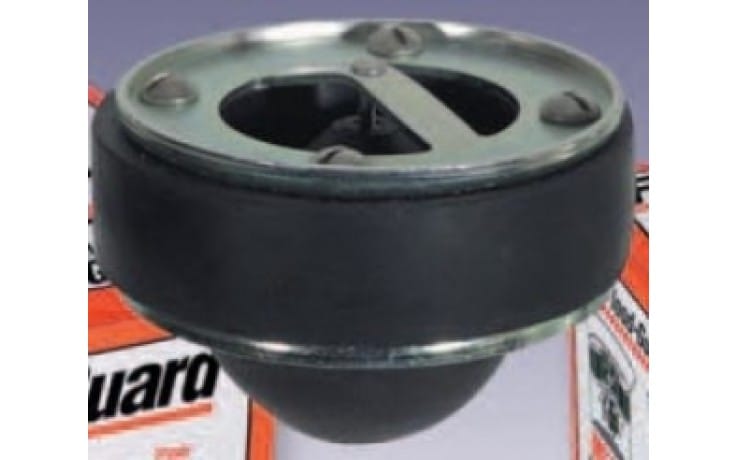
A drain valve. Use this to keep other people’s sewer water out of your basement.

There is one more source of wet basement water, one that hits the houses in my area once a year or so. In our area of Oakland county, Michigan, we have combined storm and sanitary sewers. Every so often, after a big rain, other people’s rainwater and sanitary sewage will come up through the basement drains. This is really a 3rd world sewer system, but we have it this way because when it was put in, in the 1900s, it was first world. One option if you have this is to put in a one-way drain valve. There are various options, and I suggest a relatively cheap one. The one shown at right costs about $15 at Ace hardware. It will keep out enough water, long enough to protect the important things in your home. The other option, cheaper and far more hill-billy, is to stuff rags over your basement drains, and put a brick over the rags. I’ll let you guess what I have in my basement.

Robert Buxbaum, June 13, 2019

How tall could you make a skyscraper?

Built in 1931, the highest usable floor space of the Empire State building is 1250 feet (381m) above the ground. In 1973, that record was beaten by the World Trade Center building 1, 1,368 feet (417 m, building 2 was eight feet shorter). The Willis Tower followed 1974, and by 2004, the tallest building was the Taipei Tower, 1471 feet. Building heights had grown by 221 feet since 1931, and then the Burj Khalifa in Dubai, 2,426 ft ( 739.44m):. This is over 1000 feet taller than the new freedom tower, and nearly as much taller than the previous record holder. With the Saudi’s beginning work on a building even taller, it’s worthwhile asking how tall you could go, if your only  limitations were ego and materials’ strength.

Burj Khalifa, the world’s tallest building, Concrete + glass structure. Dubai tourism image.

Having written about how long you could make a (steel) suspension bridge, the maximum height of a skyscraper seems like a logical next step. At first glance this would seem like a ridiculously easy calculation based on the math used to calculate the maximum length of a suspension bridge. As with the bridge, we’d make the structure from the strongest normal material: T1, low carbon, vanadium steel, and we’d determine the height by balancing this material’s  yield strength, 100,000 psi (pounds per square inch), against its density, .2833 pounds per cubic inch.

If you balance these numbers, you calculate a height: 353,000 inches, 5.57 miles, but this is the maximum only for a certain structure, a wide flag-pole of T1 steel in the absent of wind. A more realistic height assumes a building where half the volume is empty space, used for living and otherwise, where 40% of the interior space contains vertical columns of T1 steel, and where there’s a significant amount of dead-weight from floors, windows, people, furniture, etc. Assume the dead weight is the equivalent of filling 10% of the volume with T1 steel that provides no structural support. The resulting building has an average density = (1/2 x 0.2833 pound/in3), and the average strength= (0.4 x 100,000 pound/in2). Dividing these numbers we get a maximum height, but only for a cylindrical building with no safety margin, and no allowance for wind.

H’max-cylinder = 0.4 x 100,000 pound/in2/ (.5 x 0.2833 pound/in3) = 282,400 inches = 23,532 ft = 4.46 miles.

This is more than ten times the Burj Khalifa, but it likely underestimates the maximum for a steel building, or even a concrete building because a cylinder is not the optimum shape for maximum height. If the towers were constructed conical or pyramidal, the height could be much greater: three times greater because the volume of a cone and thus its weight is 1/3 that of a cylinder for the same base and height. Using the same materials and assumptions,

The tallest building of Europe is the Shard; it’s a cone. The Eiffel tower, built in the 1800s, is taller.

H’max-cone = 3 H’max-cylinder =  13.37 miles.

A cone is a better shape for a very tall tower, and it is the shape chosen for “the shard”, the second tallest building in Europe, but it’s not the ideal shape. The ideal, as we’ll see, is something like the Eiffel tower.

Before speaking about this shape, I’d like to speak about building materials. At the heights we’re discussing, it becomes fairly ridiculous to talk about a steel and glass building. Tall steel buildings have serious vibration problems. Even at heights far before they are destroyed by wind and vibration , the people at the top will begin to feel quite sea-sick. Because of this, the tallest buildings have been constructed out of concrete and glass. Concrete is not practical for bridges since concrete is poor in tension, but concrete can be quite strong in compression, as I discussed here.  And concrete is fire resistant, sound-deadening, and vibration dampening. It is also far cheaper than steel when you consider the ease of construction. The Trump Tower in New York and Chicago was the first major building here to be made this way. It, and it’s brother building in Chicago were considered aesthetic marvels until Trump became president. Since then, everything he’s done is ridiculed. Like the Trump tower, the Burj Khalifa is concrete and glass, and I’ll assume this construction from here on.

let’s choose to build out of high-silica, low aggregate, UHPC-3, the strongest concrete in normal construction use. It has a compressive strength of 135 MPa (about 19,500 psi). and a density of 2400 kg/m3 or about 0.0866 lb/in3. Its cost is around $600/m3 today (2019); this is about 4 times the cost of normal highway concrete, but it provides about 8 times the compressive strength. As with the steel building above, I will assume that, at every floor, half of the volume is living space; that 40% is support structure, UHPC-3, and that the other 10% is other dead weight, plumbing, glass, stairs, furniture, and people. Calculating in SI units,

H’max-cylinder-concrete = .4 x 135,000,000 Pa/(.5 x 2400 kg/m3 x 9.8 m/s2) = 4591 m = 2.85 miles.

The factor 9.8 m/s2 is necessary when using SI units to account for the acceleration of gravity; it converts convert kg-weights to Newtons. Pascals, by the way, are Newtons divided by square meters, as in this joke. We get the same answer with less difficulty using inches.

H’max-cylinder-concrete = .4 x 19,500 psi/(.5 x.0866  lb/in3) = 180,138″ = 15,012 ft = 2.84 miles

These maximum heights are not as great as for a steel construction, but there are a few advantages; the price per square foot is generally less. Also, you have fewer problems with noise, sway, and fire: all very important for a large building. The maximum height for a conical concrete building is three times that of a cylindrical building of the same design:

H’max–cone-concrete = 3 x H’max-cylinder-concrete = 3 x 2.84 miles = 8.53 miles.

Mount Everest, picture from the Encyclopedia Britannica, a stone cone, 5.5 miles high.

That this is a reasonable number can be seen from the height of Mount Everest. Everest is rough cone , 5.498 miles high. This is not much less than what we calculate above. To reach this height with a building that withstands winds, you have to make the base quite wide, as with Everest. In the absence of wind the base of the cone could be much narrower, but the maximum height would be the same, 8.53 miles, but a cone is not the optimal shape for a very tall building.

I will now calculate the optimal shape for a tall building in the absence of wind. I will start at the top, but I will aim for high rent space. I thus choose to make the top section 31 feet on a side, 1,000 ft2, or 100 m2. As before, I’ll make 50% of this area living space. Thus, each apartment provides 500 ft2 of living space. My reason for choosing this size is the sense that this is the smallest apartment you could sell for a high premium price. Assuming no wind, I can make this part of the building a rectangular cylinder, 2.84 miles tall, but this is just the upper tower. Below this, the building must widen at every floor to withstand the weight of the tower and the floors above. The necessary area increases for every increase in height as follows:

dA/dΗ = 1/σ dW/dH.

Here, A is the cross-sectional area of the building (square inches), H is height (inches), σ is the strength of the building material per area of building (0.4 x 19,500 as above), and dW/dH is the weight of building per inch of height. dW/dH equals  A x (.5 x.0866  lb/in3), and

dA/dΗ = 1/ ( .4 x 19,500 psi) x A x (.5 x.0866  lb/in3).

dA/A = 5.55 x 10⁻⁶ dH,

∫dA/A = ∫5.55 x 10⁻⁶ dH,

ln (Abase/Atop) = 5.55 x 10⁻⁶ ∆H,

Here, (Abase/Atop) = Abase sq feet /1000, and ∆H is the height of the curvy part of the tower, the part between the ground and the 2.84 mile-tall, rectangular tower at the top.

Since there is no real limit to how big the base can be, there is hardly a limit to how tall the tower can be. Still, aesthetics place a limit, even in the absence of wind. It can be shown from the last equation above that stability requires that the area of the curved part of the tower has to double for every 1.98 miles of height: 1.98 miles = ln(2) /5.55 x 10-6 inches, but the rate of area expansion also keeps getting bigger as the tower gets heavier.  I’m going to speculate that, because of artistic ego, no builder will want a tower that slants more than 45° at the ground level (the Eiffel tower slants at 51°). For the building above, it can be shown that this occurs when:

dA/dH = 4√Abase.  But since

dA/dH = A 5.55 x 10⁻⁶ , we find that, at the base,

5.55 x 10⁻⁶ √Abase = 4.

At the base, the length of a building side is Lbase = √Abase=  4 /5.55 x 10-6 inches = 60060 ft = 11.4  miles. Artistic ego thus limits the area of the building to slightly over 11 miles wide of 129.4 square miles. This is about the area of Detroit. From the above, we calculate the additional height of the tower as

∆H = ln (Abase/Atop)/ 5.55 x 10⁻⁶ inches =  15.1/ 5.55 x 10⁻⁶ inches = 2,720,400 inches = 226,700 feet = 42.94 miles.

Hmax-concrete =  2.84 miles + ∆H = 45.78 miles. This is eight times the height of Everest, and while air pressure is pretty low at this altitude, it’s not so low that wind could be ignored. One of these days, I plan to show how you redo this calculation without the need for calculus, but with the inclusion of wind. I did the former here, for a bridge, and treated wind here. Anyone wishing to do this calculation for a basic maximum wind speed (100 mph?) will get a mention here.

From the above, it’s clear that our present buildings are nowhere near the maximum achievable, even for construction with normal materials. We should be able to make buildings several times the height of Everest. Such Buildings are worthy of Nimrod (Gen 10:10, etc.) for several reasons. Not only because of the lack of a safety factor, but because the height far exceeds that of the highest mountain. Also, as with Nimrod’s construction, there is a likely social problem. Let’s assume that floors are 16.5 feet apart (1 rod). The first 1.98 miles of tower will have 634 floors with each being about the size of Detroit. Lets then assume the population per floor will be about 1 million; the population of Detroit was about 2 million in 1950 (it’s 0.65 million today, a result of bad government). At this density, the first 1.98 miles will have a population of 634 million, about double that of the United States, and the rest of the tower will have the same population because the tower area contracts by half every 1.98 miles, and 1/2 + 1/4 + 1/8 + 1/16 … = 1.

Nimrod examining the tower, Peter Breugel

We thus expect the tower to hold 1.28 Billion people. With a population this size, the tower will develop different cultures, and will begin to speak different languages. They may well go to war too — a real problem in a confined space. I assume there is a moral in there somewhere, like that too much unity is not good. For what it’s worth, I even doubt the sanity of having a single government for 1.28 billion, even when spread out (e.g. China).

Robert Buxbaum, June 3, 2019.

Vitamin A and E, killer supplements; B, C, and D are meh.

It’s often assumed that vitamins and minerals are good for you, so good for you that people buy all sorts of supplements providing more than the normal does in hopes of curing disease. Extra doses are a mistake unless you really have a mis-balanced diet. I know of no material that is good in small does that is not toxic in large doses. This has been shown to be so for water, exercise, weight loss, and it’s true for vitamins, too. That’s why there is an RDA (a Recommended Daily Allowance). 

Lets begin with Vitamin A. That’s beta carotene and its relatives, a vitamin found in green and orange fruits and vegetables. In small doses it’s good. It prevents night blindness, and is an anti-oxidant. It was hoped that Vitamin A would turn out to cure cancer too. It didn’t. In fact, it seems to make cancer worse. A study was preformed with 1029 men and women chosen random from a pool that was considered high risk for cancer: smokers, former smokers, and people exposed to asbestos. They were given either15 mg of beta carotene and 25,000 IU of vitamin A (5 times the RDA) or a placebo. Those taking the placebo did better than those taking the vitamin A. The results were presented in the New England Journal of Medicine, read it here, with some key findings summarized in the graph below.

Comparison of cumulative mortality and cardiovascular disease between those receiving Vitamin A (5 times RDA) and those receiving a placebo. From Omenn et. al, Clearly, this much vitamin A does more harm than good.

The main causes of death were, as typical, cardiovascular disease and cancer. As the graph shows, the rates of death were higher among people getting the Vitamin A than among those getting nothing, the placebo. Why that is so is not totally clear, but I have a theory that I presented in a paper at Michigan state. The theory is that your body uses oxidation to fight cancer. The theory might be right, or wrong, but what is always noticed is that too much of a good thing is never a good thing. The excess deaths from vitamin A were so significant that the study had to be cancelled after 5 1/2 years. There was no responsible way to continue. 

Vitamin E is another popular vitamin, an anti-oxidant, proposed to cure cancer. As with the vitamin A study, a large number of people who were at high risk  were selected and given either a large dose  of vitamin or a placebo. In this case, 35,000 men over 50 years old were given either vitamin E (400 to 660 IU, about 20 times the RDA) and/or selenium or a placebo. Selenium was added to the test because, while it isn’t an antioxidant, it is associated with elevated levels of an anti-oxidant enzyme. The hope was that these supplements would prevent cancer and perhaps ward off Alzheimer’s too. The full results are presented here, and the key data is summarized in the figure below. As with vitamin A, it turns out that high doses of vitamin E did more harm than good. It dramatically increased the rate of cancer and promoted some other problems too, including diabetes.  This study had to be cut short, to only 7 years, because  of the health damage observed. The long term effects were tracked for another two years; the negative effects are seen to level out, but there is still significant excess mortality among the vitamin takers. 

Cumulative incidence of prostate cancer with supplements of selenium and/or vitamin E compared to placebo.

Cumulative incidence of prostate cancer with supplements of selenium and/or vitamin E compared to placebo.

Selenium did not show any harmful or particularly beneficial effects in these tests, by the way, and it may have reduced the deadliness of the Vitamin A.. 

My theory, that the body fights cancer and other disease by oxidation, by rusting it away, would explain why too much antioxidant will kill you. It laves you defenseless against disease As for why selenium didn’t cause excess deaths, perhaps there are other mechanisms in play when the body sees excess selenium when already pumped with other anti oxidant. We studied antioxidant health foods (on rats) at Michigan State and found the same negative effects. The above studies are among the few done with humans. Meanwhile, as I’ve noted, small doses of radiation seem to do some good, as do small doses of chocolate, alcohol, and caffeine. The key words here are “small doses.” Alcoholics do die young. Exercise helps too, but only in moderation, and since bicycle helmets discourage bicycling, the net result of bicycle helmet laws may be to decrease life-span

What about vitamins B, C, and D? In normal doses, they’re OK, but as with vitamin A and E you start to see medical problems as soon as you start taking more– about  12 times the RDA. Large does of vitamin B are sometimes recommended by ‘health experts’ for headaches and sleeplessness. Instead they are known to produce skin problems, headaches and memory problems; fatigue, numbness, bowel problems, sensitivity to light, and in yet-larger doses, twitching nerves. That’s not as bad as cancer, but it’s enough that you might want to take something else for headaches and sleeplessness. Large does of Vitamin C and D are not known to provide any health benefits, but result in depression, stomach problems, bowel problems, frequent urination, and kidney stones. Vitamin C degrades to uric acid and oxalic acid, key components of kidney stones. Vitamin D produces kidney stones too, in this case by increasing calcium uptake and excretion. A recent report on vitamin D from the Mayo clinic is titled: Vitamin D, not as toxic as first thought. (see it here). The danger level is 12 times of the RDA, but many pills contain that much, or more. And some put the mega does in a form, like gummy vitamins” that is just asking to be abused by a child. The pills positively scream, “Take too many of me and be super healthy.”

It strikes me that the stomach, bowel, and skin problems that result from excess vitamins are just the problems that supplement sellers claim to cure: headaches, tiredness, problems of the nerves, stomach, and skin.  I’d suggest not taking vitamins in excess of the RDA — especially if you have skin, stomach or nerve problems. For stomach problems; try some peniiiain cheese. If you have a headache, try an aspirin or an advil. 

In case you should want to know what I do for myself, every other day or so, I take 1/2 of a multivitamin, a “One-A-Day Men’s Health Formula.” This 1/2 pill provides 35% of the RDA of Vitamin A, 37% of the RDA of Vitamin E, and 78% of the RDA of selenium, etc. I figure these are good amounts and that I’ll get the rest of my vitamins and minerals from food. I don’t take any other herbs, oils, or spices, either, but do take a baby aspirin daily for my heart. 

Robert Buxbaum, May 23, 2019. I was responsible for the statistics on several health studies while at MichiganState University (the test subjects were rats), and I did work on nerves, and on hydrogen in metals, and nuclear stuff.  I’ve written about statistics too, like here, talking about abnormal distributions. They’re common in health studies. If you don’t do this analysis, it will mess up the validity of your ANOVA tests. That said,  here’s how you do an anova test

The Japanese diet, a recipe for stomach cancer.

Japan has the highest life expectancy in the world, an average about 84.1 years, compared to 78.6 years for the US. That difference is used to suggest that the Japanese diet must be far healthier than the American. We should all drink green tea and eat such: rice with seaweed and raw or smoked fish. Let me begin by saying that correlation does not imply causation, and go further to say that, to the extent that correlation suggests causation, the Japanese diet seems worse. It seems to me that the quantity of food (and some other things) are responsible for Americans have a shorter life-span than Japanese, the quality our diet does not appear to be the problem. That is, Americans eat too much, but what we eat is actually healthier than what the Japanese eat.

Top 15 causes of death in Japan and the US in order of Japanese relevance.

Top 15 causes of death in Japan and the US in order of Japanese relevance.

Let’s look at top 15 causes of deaths in Japan and the US in order of significance for Japan (2016). The top cause of disease death is the same for Japan and the US: it’s heart disease. Per-capita, 14.5% of Japanese people die of this, and 20.9% of Americans. I suspect the reason that we have more heart disease is that we are more overweight, but the difference is not by that much currently. The Japanese are getting fatter. Similarly, we exceed the Japanese in lung cancer deaths (not by that much) a hold-over of smoking, and by liver disease (not by that much either), a holdover of drinking, I suspect.

Japan exceeds the US in Stroke death (emotional pressure?) and suicide (emotional pressure?) and influenza deaths (climate-related?). The emotional pressure is not something we’d want to emulate. The Japanese work long hours, and face enormous social pressure to look prosperous, even when they are not. There is a male-female imbalance in Japan that is a likely part of the emotional pressure. There is a similar imbalance in China, and a worse one in Qatar. I would expect to see social problems in both in the near future. So far, the Japanese deal with this by alcoholism, something that shows up as liver cancer and cirrhosis. I expect the same in China and Qatar, but have little direct data.

Returning to diet, Japan has more far more stomach cancer deaths than the US; it’s a margin of nine to one. It’s the number 5 killer in Japan, taking 5.08% of Japanese, but only 0.57% of Americans. I suspect the difference is the Japanese love of smoked and raw fish. Other diet-related diseases tell the same story. Japan has double our rate of Colon-rectal cancers, and higher rates of kidney disease, pancreatic cancer, and liver cancer. The conclusion that I draw is that green tea and sushi are not as healthy as you might think. The Japanese would do well to switch the Trump staples of burgers, pizza, fries, and diet coke.

The three horsemen of the US death-toll:  Automobiles, firearms, and poisoning (drugs). 2008 data.

The three horsemen of the US death-toll: Automobiles, firearms, and poisoning (drugs). 2008 data.

At this point you can ask why our lives are so much shorter than the Japanese, on average. The difference in smoking and weight-related diseases are significant but explain only part of the story. There is also guns. About 0.7% of Americans are killed by guns, compared to 0.07% of Japanese. Still, guns give Americans a not-unjustified sense of safety from worse crime. Then there is traffic death, 1.5% in the US vs 0.5% in Japan. But the biggest single reason that Americans live shorter lives  is drugs. Drugs kill about 1.5% of Americans, but mostly the young and middle ages. They show up in US death statistics mostly as over-dose and unintentional poisoning (overdose deaths), but also contribute to many other problems like dementia in the old. Drugs and poisoning do not shown on the chart above, because the rate of both is insignificant in Japan, but it is the single main cause of US death in middle age Americans.

The king of the killer drugs are the opioids, a problem that was bad in the 60s, the days of Mother’s Little helper, but that have gotten dramatically worse in the last 20 years as the chart above shows. Often it is a doctor who gets us hooked on the opioids. The doctor may think it’s a favor to us to keep us from pain, but it’s also a favor to him since the drug companies give kickbacks. Often people manage to become un-hooked, but then some doctor comes by and re-hooks us up. Unlike LSD or cocaine, opioid drugs strike women and men equally. It is the single major reason we live 5 1/2 years shorter than the Japanese, with a life-span that is shrinking.

Drug overuse seems like the most serious health problem Americans face, and we seem intent on ignoring it. The other major causes of death are declining, but drug-death numbers keep rising. By 2007, more people died of drugs than guns, and nearly as many as from automobile accidents. It’s passed automobile accidents since then. A first suggestion here: do not elect any politician who has taken significant money from the drug companies. A second suggestion: avoid the Japanese diet.

Robert Buxbaum, April 28, 2019.

Speed traps penalize the poor

On a street corner about 1/4 mile from my house, at the intersection of the two busiest of the local streets, in the center-median of the street, is parked a police car. He’s there, about 18 hours a day, looking to give out tickets. The cross-street that this officer watches is where drivers get off the highway. In theory, they should instantly go from 65 mph on the highway to 35 mph now. Very few people do. The officer does not ticket every car, by the way, but seems to target those of poor people from outside the city limits. The only time ai was ticketed, I was driving a broken-down car while mine was in the shop. As best I can tell, he choose cars for revenue, not for safety. It’s a speed trap. It’s appalling. And our city isn’t alone in having one.

Speed traps are an annoyance to rich, local folk who sometimes get ticketed, but they’re a disaster for the poor. Poor people are targeted, and these people don’t have any savings. They don’t have the means to pay a suddenly imposed bill of $150 or more. Meanwhile, the speed-trap officer is incentivized to increase revenue and look for other violations: expired registrations or insurance, seat-belt violations, open alcohol, unpaid tickets. Double and triple fines are handed out, and sometimes the car is impounded. A poor driver is often left without any legal way to get to work, to earn money to pay the fines. Police officers behave this way because they are evaluated based on the revenue they generate, based on the number of tickets they write. It’s a horrible situation, especially for the poor

Speed traps to little and cost much.

An article on the effect of speed traps. It appears they do little good and cause much pain, especially to the poor. Here is a link to the whole article.

The article above looks at the impact of speed traps on poor people. The damage is extreme. The folks targeted are often black, barely holding it together financially. They are generally not in a position to pay $150 for “impeding traffic,” and even less in a position to deal with having their car impounded. How are they supposed to pay the bill? And yet they are told they are lucky to have been given this ticket — impeding traffic, a ticket with no “points.” But they are not lucky. They are victims. Tickets with no points is are money generators, and many poor people realize it. If they were to get a speeding ticket, they would have the opportunity to void the penalty by going to traffic school. With a ticket for impeding traffic, there is no school option. Revenue stays local, mostly in that police precinct. Poor people know it, and they don’t like it. I don’t either. After a while, poor people cease to trust the police, or to even speak to them.

In what world should you pay $150 for impeding traffic, by the way? In what world should the police be taken from their main job protecting the people and turned into a revenue arm for the city? I’d like to see this crazy cycle ended. The first steps, I think, are to end speed traps, and to limit the incentive for giving minor tickets, like impeding traffic. As it is we have too many people in jail and too many harsh penalties. 

Robert Buxbaum, April 10, 2019. I ran for water commissioner in 2016, and may run again in 2020.

C-Pap and Apnea

A month of so ago, I went to see a sleep doctor for my snoring. I got a take-home breathing test that gave me the worst night’s sleep in recent memory. A few days later, I got a somber diagnosis: “You are a walking zombie.” Apparently, I hold my breath for ten seconds or more every minute and a half while sleeping. Normal is supposed to be every 4 to 10 minutes. But by this standard, more than half of all middle-aged men are sub-normal (how is this possible?). As a result of my breath-holding, the wrinkled, unsmiling DO claimed I’m brain-dead now and will soon be physically dead unless I change my ways. Without spending 3 minutes with me, the sleep expert told me that I need to lose weight, and that I need a C-Pap (continuous positive airway pressure) device as soon as possible. It’s supposed to help me lose that weight and get back the energy. With that he was gone. The office staff gave me the rest of the dope: I was prescribed  a “ResMed” brand C-Pap, supplied by a distributor right across the hall from the doctor (how convenient).

I picked up the C-Pap three months later. Though I was diagnosed as needing one “as soon as possible,” no one would release the device until they were sure it was covered by my insurance company. The device, when I got it, was something of a horror. The first version I tried fit over the whole face and forces air into my mouth and nose simultaneously, supposedly making it easier to inhale, but harder to exhale. I found it more than a bit uncomfortable. The next version was nose only and marginally more comfortable. I found there was a major air-flow restriction when I breath in and a similar pressure penalty when I breathed out. And it’s loud. And, if you open your mouth, there is a wind blowing through. As for what happens if the pump fails or the poor goes out, I notice that there are the tiniest of air-holes to prevent me from suffocating, barely. A far better design would have given me a 0-psi flapper valve for breathing in, and a 1/10 psi flapper for breathing out. That would also reduce the pressure restriction I was feeling every time I took a deep breath. One of my first blog essays was about engineering design aesthetics; you want your designs to improve things under normal conditions and fail safe, not like here. Using this device while awake was anything but pleasant, and I found I still hold my breath, even while awake, about every 5 minutes.

Since I have a lab, and the ability to test these things, I checked the pressure of the delivered air, and found it was 3 cm of water, about 1/20 psi. The prescription was for 5 cm or water (1/14 psi). The machine registers this, but it is wrong. I used a very simple water manometer, a column of water, similar to the one I used to check the pressure drop in furnace air filters. Is 1/20 psi enough? How did he decide on 1/14 psi by the way? I’ve no idea. 1/14 psi is about 1/200 atm. Is this enough to do anything? While the C-Pap should get me to breathe more, I guess, about half of all users stop after a few tries, and my guess is that they find it as uncomfortable as I have. There is no research evidence that treatment with it reduces stroke or heart attack, or extends life, or helps with weight loss. The assumption is that, if you force middle-aged men to hold their breath less, they will be healthier, but I’ve no clear logic or evidence to back the assumption. At best, anything you gain on the ease of breathing in, you lose on the difficulty of breathing out. The majority of middle-aged men are prescribed a C-Pap, if they go for a sleep study, and it’s virtually 100% for overweight men with an apple-shaped body.

I’d have asked my doctor about alternatives or for a second opinion but he was out the door too fast. Besides, I was afraid I’d get the same answer that Rodney Dangerfield got: “You want a second opinion? OK. You’re ugly, too.” Mr. Dangerfield was not a skinny comic, by the way, but he was funny, and I assume he’d have been prescribed a C-Pap (maybe he was). He died at 82, considerably older than Jim Fixx, “the running doctor,” Adelle Davis, the “eat right for health” doctor, Euell Gibbons “in search of the wild asparagus,” or Ethan Pritkin, the diet doctor. God seems to prefer fat comedians to diet experts; I expect that most-everyone does.

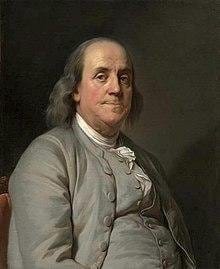
Benjamin Franklin and his apple-shaped body

Benjamin Franklin and his apple-shaped body; I don’t think of him as a zombie.

What really got my goat, besides my dislike of the C-Pap, is that I object to being called a walking zombie. True, I’m not as energetic as I used to be, but I manage to run a company, and to write research papers, and I get patents (this one was approved just today). And I write these blogs — I trust that any of you who’ve read this far find them amusing. Pretty good for a zombie — and I ran for water commissioner. People who use the C-Pap self-report that they have more energy, but self-reporting is poor evidence. A significant fraction of those people who start with the C-Pap, stop, and those people, presumably were not happy. Besides, a review of the internet suggests that a similarly large fraction of those who buy a “MyPillow.com” claim they have more energy. And I’ve seen the same claims from people who take a daily run, or who pray, or smoke medical marijuana (available for sleep apnea, but not from this fellow), or Mirtazapine (study results here), or  for electro-shock therapy, a device called “Inspire.” With so many different products providing the same self-reported results, I wonder if there isn’t something more fundamental going on. I’d wish the doc had spent a minute or two to speak to this, or to the alternatives.

As for weight loss, statistical analysis of lifespan suggests that there is a health advantage to being medium weight: not obese, but not skinny. I present some of this evidence here, along with evidence that extra weight helps ward off Alzheimer’s. For all I know this protection is caused by holding your breath every few minutes. It helps to do light exercise, but not necessary for mental health. In terms of mental health, the evidence suggests that weight loss is worse than nothing.

Jared Gray, author of the Alien movies, was diagnosed with apnea, so he designed his own sleep-mask.

Jared Gray, author of the Alien movies, was diagnosed with apnea, so he designed his own sleep-mask.

Benjamin Franklin was over-weight and apple-shaped, and he fell asleep at meetings, but he was no zombie, The same is true of John Adams, Otto Von Bismarck, and Alfred Hitchcock. All lived long, productive lives. Hitchcock was sort of morbid, it will be admitted, but I would not want him otherwise. Ed McMahon, Johnny Carson’s side-kick, apologized to America for being overweight and smoking, bu the outlived Johnny Carson by nine years, dying at 89. Henry Kissinger is still alive and writing at 95. He was always fatter than any of the people he served. He almost certainly had sleep apnea, back in the day, and still has more on the ball, in my opinion, than most of the talking-head on TV. The claim that overweight, middle-aged men are all zombies without a breath assisting machine doesn’t make no sense to me. But then, I’m not a sleep doctor. (Do sleep doctors get commissions? Why did he choose, this supplier or this brand device? With so little care about patients, I wonder who runs the doctor’s office.)

I looked up my doctor on this list provided by the American Board of Sleep Medicine. I found my doctor was not certified in sleep medicine. I suppose certified doctors would prescribe something similar but was disappointed that you don’t need sleep certification to operate as a sleep specialist. In terms of masks, I figure, if you’ve got to wear something, you might as well wear something cool. Author Jared Gray, shown above (not the author of the Alien) was diagnosed with Apnea 6 months ago and made his own C-Pap mask to make it look like the alien was attacking him. Very cool for an ex-zombie, but I’m waiting to see a burst of creative energy.

What do we zombies want? Brains.

When do we want them? Brains.

What do vegetarian zombies want? Grains.

Robert Buxbaum, March 15, 2019. In case real zombies should attack, here’s what to do.  An odd legal/insurance issue: in order to get the device, I had to sign that, if I didn’t use it for 20 days in the first month of 4 hours per night, and thus if the insurance did not pay, I would be stuck with the full fee. I signed. This might cost me $1000 though normally in US law, companies can only charge a reasonable restock fee, but it can’t be unreasonable, like the full  price. I also had to sign that I would go back to the same, quick-take doctor, but again there has to be limits. We’ll see how the machine pans out, but one difference I see already: unlike my pillow.com, there is no money back guarantee with the C-Pap treatment.

Water Conservation for Michigan – Why?

The Michigan Association of Planners joined several environmental groups to pass state legislation requiring water conservation for public, and private users.

Among the legislation are laws requiring low flush toilets, and prohibiting high-volume shower heads as in this Seinfeld episode. I suppose I should go along: I’m running for water commissioner, and consider myself a conservationist. The problem is, I can’t see a good argument for these laws here in Oakland County, or in neighboring Macomb and Wayne Counties. The water can’t run out because most users take it from the Detroit river and return it there, cleaned after it’s used; it’s all recycled.

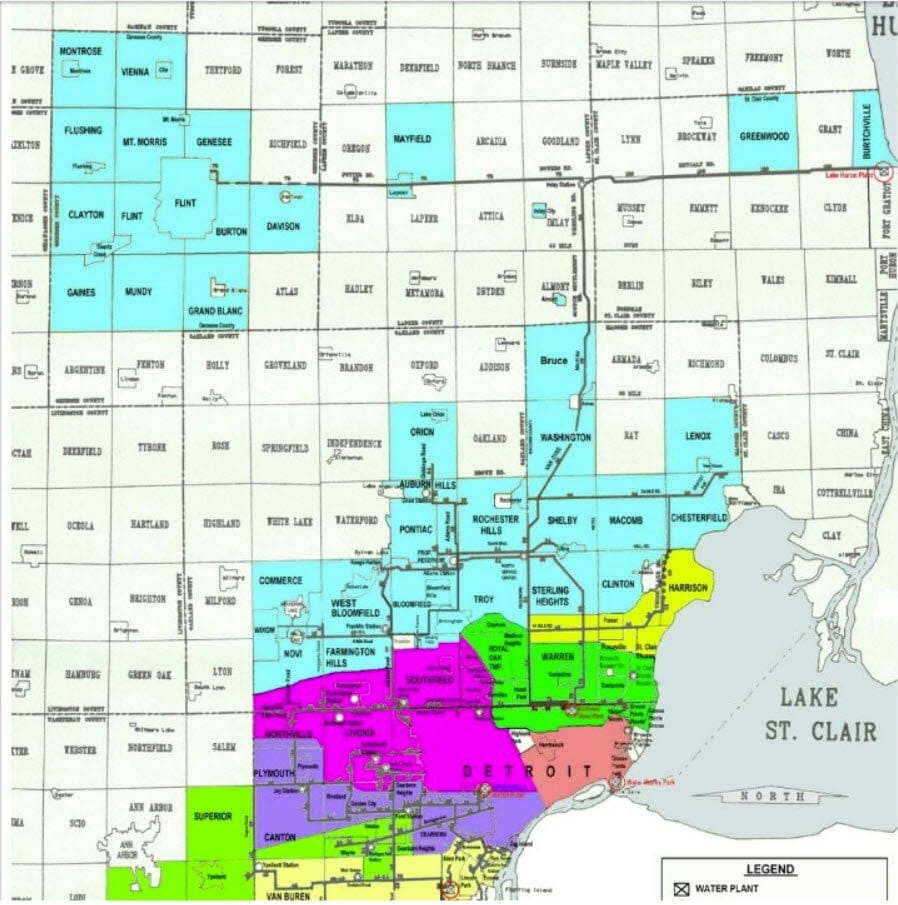
Map of the main drinking-water pipes serving south-east Michigan

Map of the main drinking-water pipes serving south-east Michigan

The map above shows the clean water system for south-east Michigan. The high-population areas, the ones that are colored in the map, get their water from the Detroit River or from Lake Huron. It’s cleaned, pumped, and carried to your home along the pipes shown. Then after you’ve used the water, it travels back along another set of pipes to the water treatment plant and into the Detroit River.

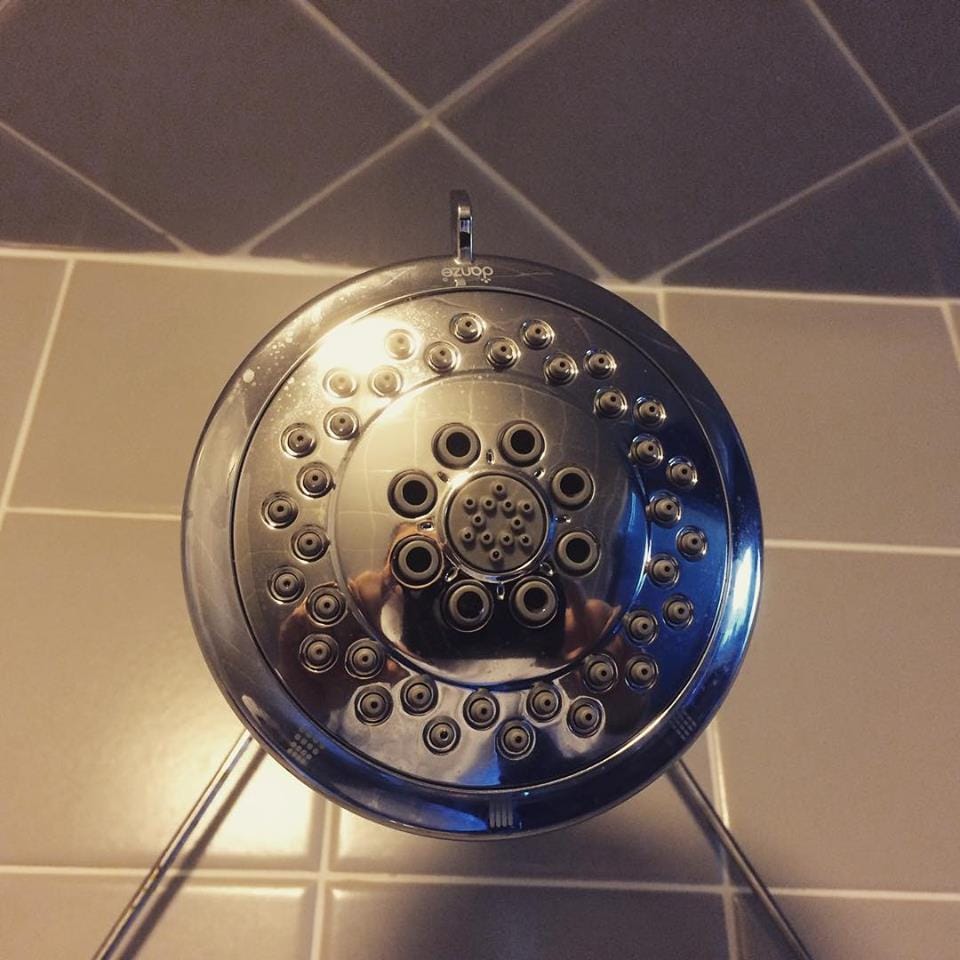
Three-position shower head -- a wonderful home improvement  I got it at universal plumbing.

Three-position shower head — a wonderful home improvement. I got it at universal plumbing.

When the system is working well, the water we return to the Detroit River is cleaner than the water we took in. So why legislate against personal use? If a customer wants to enjoy a good shower, and is willing to pay for the water at 1.5¢ per gallon, who cares how much water that customer uses? I can understand education efforts, sort-of, but find it hard to push legislation like we have against a high-volume shower head. We can not run out, and the more you use, the less everyone pays per gallon. A great shower head is a great gift idea, in my opinion.

The water department does not always work well, by the way, and these problems should be solved by legislation. We give away, for $200/year, high value clean water to Nestle company and then buy it back for $100,000,000. That’s a problem. Non-flushable toilet wipes are marketed as flushable; this causes sewer blockades. Our combined sewers regularly dump contaminated water into our rivers, lakes, and basements. These problems can be solved with legislation and engineering. It’s these problems that I’m running to solve.

Robert Buxbaum, January 6, 2019. If you want to save water, either to save the earth, or because you are cheep, here are some conservation ideas that make sense (to me).