Category Archives: History

Italian Engineering and the Kennedy assassination.

There are several unbelievable assertions surrounding the Kennedy assassination, leading many to conclude that Oswald could not have killed Kennedy alone. I believe that many of these can be answered once you realize that Oswald used an Italian gun, and not a US gun. Italian engineering differs from our in several respects that derive from the aesthetic traditions of the countries. It’s not that our engineers are better or worse, but our engineers have a different idea of what good engineering is and thus we produce designs that, to an Italian engineer, are big, fat, slow, and ugly. In our eyes Italian designs are light, fast, pretty, low-power, and unreliable. In the movie, Ford vs Ferrari, the American designer, Shelby says that, “If races were beauty contests, the Ferrari would win.” It’s an American, can-do, attitude that rings hollow to an Italian engineer. 

Three outstanding questions regarding the Kennedy assassination include: How did Oswald fire three bullets, reasonably accurately in 5 to 8 seconds. How did he miss the limousine completely on the first, closest shot, then hit Kennedy twice on the next two, after previously missing on a close shot at retired general, Edwin Walker. And how could the second shot have gone through Kennedy’s neck, then through his wrist, and through Connolly twice, emerging nearly pristine. I will try to answer by describing something of the uniquenesses of the gun and bullets, and of Italian engineering, in general. 

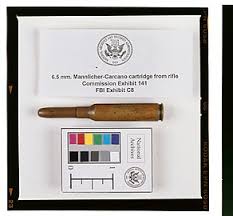
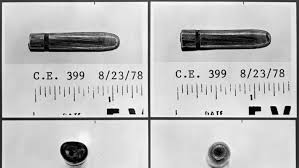
Oswald cartridge.

The rifle Oswald used was a Modello 91/38, Carcano (1938 model of a design originally used in 1891) with an extra-long, 20.9″ barrel, bought for only $19.95 including a 4x sight. That’s $12.50 for the gun, the equivalent of $100 in 2020). The gun may have been cheep, but it was a fine Italian weapon: it was small, fast, pretty, manual, and unreliable. The small size allowed Oswald to get the gun into the book depository without arousing suspicion. He claimed his package held curtain rods, and the small, narrow shape of the gun made the claim believable.

The first question, the fast shooting, is answered in part by the fact that loading the 91/38 Carcano rifle takes practice. Three American marksmen who tried to duplicate the shots for the Warren commission didn’t succeed, but they didn’t have the practice with this type of gun that Oswald had. The Carcano rifle used a bolt and clip loading system that had gone out of style in the US before WWI. To put in a new shell, you manually unlock and pull back the bolt. The old casing then flies out, and the spring–clip loads a new shell. You then have to slam the bolt forward and lock it before you can fire again. For someone practiced, loading this way is faster than with a semi-automatic. To someone without practice it is impossibly slow, like driving a stick shift car for the first time. Even with practice, Americans avoid stick shift cars, but Italians prefer them. Some time after the Warren report came out, Howard Donahue, an American with experience on this type of rifle, was able to hit three moving targets at the distance in 4.8 seconds. That’s less than the shortest estimate of the time it took Oswald to hit twice. Penn of Penn and Teller recreates this on TV, and shows here that Kennedy’s head would indeed have moved backward.

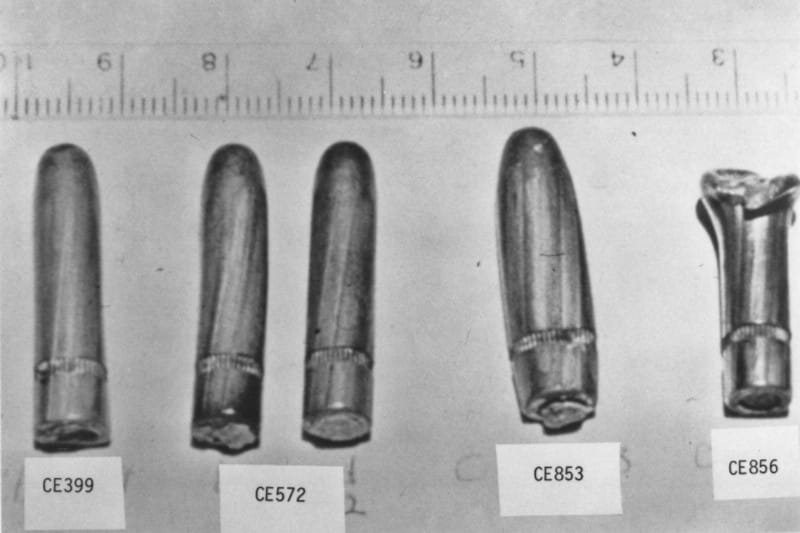
Oswald’s magic bullet, shot two.

That Oswald was so accurate is explained, to great extent by the way the sight was mounted and by the unusual bullets. The model 38 Carcano that Oswald bought fired light, hollow, 6.5×52mm cartridges. This is a 6.5 mm diameter bullet, with a 52 mm long casing. The cartridge was adopted by the Italians in 1940, and dropped by 1941. These bullets are uncommonly bullet is unusually long and narrow (6.5 mm = .26 caliber), round-nosed and hollow from the back to nearly the front. In theory a cartridge like this gives for greater alignment with the barrel., and provides a degree of rocket power acceleration after it leaves the muzzle. Bullets like this were developed in the US, then dropped by the late 1800s. The Italians dropped this bullet for a 7.5 mm diameter version in 1941. The 6.5 mm version can go through two or three people without too much damage, and they can behave erratically. The small diameter and fast speed likely explains how Oswald’s second shot went through Kennedy and Connolly twice without dong much. An American bullet would have done a lot more damage.

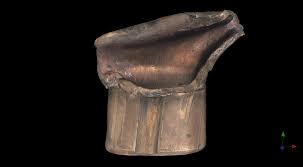
Because of the light weight and the extra powder, the 6.5 mm hollow bullet travels uncommonly fast, about 700 m/s at the muzzle with some acceleration afterwards, ideally. Extra powder packs into the hollow part by the force of firing, providing, in theory, low recoil, rocket power. Unfortunately these bullets are structurally weak. They can break apart or bend and going off-direction. By comparison the main US rifle of WWII, the M1, was semi-automatic, with bullets that are shorter, heavier, and slower, going about 585 m/s. Some of our bullets had steel cores too to provide a better combination of penetration and “stopping power”. Only Oswald second shot stayed pristine. It could be that his third shot — the one that made Kennedy’s head explode — flattened or bent in flight.

Oswald fragment of third bullet. It’s hollow and seems to have come apart in a way a US bullet would not.

The extra speed of Oswald’s bullets and the alignment of his gun would have given Oswald a great advantage in accuracy. At 100 yards (91 m), test shots with the rifle landed 2 12 to 5 inches high, within a 3-to-5-inch circle. Good accuracy with a sight that was set to high for close shot accuracy. The funky sight, in my opinion , explains how Oswald managed to miss Walker, but explains how he hit Kennedy accurately especially on the last, longest shot, 81 m to Kennedy’s head

Given the unusually speed of the bullets (I will assume 750 m/s) Oswald’s third shot would have taken 0.108 s to reach the target. If the sight were aligned string and if Kennedy were not moving, the bullet would have been expected to fall 2.24″ low at this range, but given the sight alignment we’d expect him to shoot 3-6″ high on a stationary target, and dead on, on the president in his moving vehicle. Kennedy was moving at 5 m/sand Oswald had a 17° downward shot. The result was a dead on hit to the moving president assuming Oswald didn’t “lead the shot”. The peculiarities of the gun and bullets made Oswald more accurate here than he’d been in the army, while causing him to miss Walker completely at close range.

comparison of the actual, second shot, “magic bullet,” left, with four test-shot bullets. Note that one of the test bullets collapsed, two bent, and one exploded. This is not a reliable bullet design.

We now get to the missed, first shot: How did he miss the car completely firing at the closest range. The answer, might have to do with deformation of the bullets. A hollow base bullet can explode, or got dented and fly off to the side. More prosaically, it could be that he hit a tree branch or a light pole. The Warren commission blamed a tree that was in the way, and there was also a light pole that was never examined. For all we know the bullet is in a branch today, or deflected. US bullets would have a greater chance to barrel on through to at least hit the car. This is an aspect of Italian engineering — when things are light, fast, and flexible, unusual things happen that do not expect to happen with slow, ugly, US products. It’s a price of excellence, Italian style.

Another question appears: Why wasn’t Oswald stopped when the FBI knew he’d threatened Kennedy, and was suspected of shooting at Walker. The simple answer, I think, is that the FBI was slow, and plodding. Beyond this, neither the FBI nor the CIA seem to have worried much about Kennedy’s safety. Even if Kennedy had used the bubble top, Oswald would likely have killed him. Kennedy didn’t care much for the FBI and didn’t trust Texas. Kennedy had a long-running spat with the FBI involving his involvement with organized crime, and perhaps running back to the days when Kennedy’s father was a bootlegger. His relation with the CIA was similar.

The Mateba, Italian semi-automatic revolver, $3000, available only in 357 Magnum and 44 magnum.

I should mention that the engineering styles and attitudes of a country far outlast the particular engineer.We still make big, fat, slow, ugly cars — that are durable and reasonably priced. Germans still overbuild, and Italian cars and guns are as they ever were: beautiful, fast, expensive, and unreliable. The fastest production car is Italian, a Bugatti with a top speed of 245 mph; the fastest rollercoaster is at Ferrari gardens, 149 mph, and in terms of guns, let me suggest you look at the Mateba, left, a $3000 beautiful super fast semi-automatic revolver (really), produced in Italy, and available in 357 magnum and .44 magnum only . It’s a magnificent piece of Italian engineering beautiful, accurate, powerful, and my guess is it’s unreliable as all get out. Our, US pistols typically cost 1/5 to 1/10 as much. A country’s cars, planes, and guns represent the country’s aesthetics. The aesthetics of a county changes only slowly, and I think the world is better off because of it

Robert Buxbaum, February 14, 2020. One of my favorite courses in engineering school, Cooper Union, was in Engineering Aesthetics and design.

Samuel Johnson and British elitism during the revolution.

A common opinion of Samuel Johnson was that “No man but a blockhead ever wrote except for money”. It’s recorded by Boswell on April 5, 1776 well into the revolution, and applied equally to the American revolutionaries and all other unpaid enthusiasts. Johnson wrote for money. He wrote sermons for priests, he wrote political speeches for Troys, he wrote serialized travel logs, and at one point a tearful apology for a priest about to be hanged for forgery. That he was paid was proof that he was good at writing, though not 100% convincing. The priest was forgiven and acquitted in the public eye, but he was hanged for the forgery none-the-less. 

Some Samuel Johnson Quotes about America

Johnson was unequivocal in his opinion of American independence. His pamphlet ,”Taxation no Tyranny” 1775 (read it here) makes a semi-convincing Tory argument that taxation without representation is in no way tyranny, and is appropriate for America. America, it’s argued, exists for the good of the many, and that’s mainly for the good of England. He notes that, for the most part, Americans came to the land willingly, and thus gave up their rights: “By his own choice he has left a country, where he had a vote and little property, for another, where he has great property, but no vote.” Others left other lands or were sent as criminals. They “deserved no more rights than The Cornish people,” according to Johnson. Non-landed people, in general had no vote, and he considered that appropriate. Apparently, if they had any mental value, they’d be able to afford an estate. His views of Irish Catholics were somewhat similar , “we conquered them.” By we, Johnson meant Cromwell over a century earlier, followed by William of Orange. Having beat the Irish Catholics at the battle of the Boyne meant that that the Protestants deserved to rule despite the Catholics retaining a substantial right to land. I am grateful that Johnson does not hide his claim to rulership in the will of God, or in some claim to benefit the Irish or Americans, by the way. It is rule of superior over inferior, pure and simple. Basically, ‘I’m better than you, so I get to rule.’

One must assume that Johnson realized that the US founders wrote well, as he admitted that some Whigs (Burke) wrote well. Though he was paid for writing “Taxation no Tyranny”, Johnson justifies the rejection of US founding fathers’ claims by noting they are motivated by private gain. He calls American leaders rascals, robbers, and pirates, but is certain that they can be beat into submission. The British army , he says, is strong enough that they can easily “burn and destroy them,” and advises they should so before America gets any stronger. He tells Boswell, “Sir, they are a race of convicts, and ought to be thankful for anything we allow them short of hanging.” Even after a treaty was signed, he confides, “I am willing to love all mankind, except an American.”

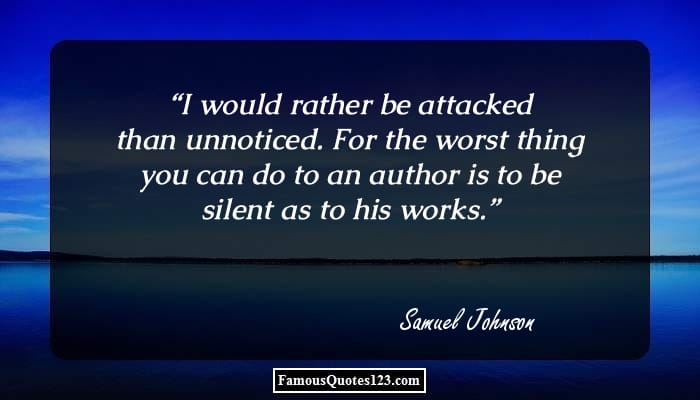
I’ve come to love Johnson’s elitism, his justification for rule and exploitation based purely on his own superiority and that of his fellow British. It allows him to present his prejudices uncommonly clearly, mixing in enough flattery to be convincing to those who accept his elitist perspective. That makes his words eminently quotable. It doesn’t make them right, nor does it mean that his was a useful way to deal with people or problems. Adam Smith was willing to admit that the Americans had a gripe, and suggests the simple remedy of giving Americans a voice in Parliament. His solution might have kept the empire whole. Edward Gibbon, an expert on Rome who opposed rights for Americans, at least admitted that we might win the war. Realistic views like this are more productive, but far less marketable. If you are to sell your words, it helps to be a pig-headed bigot and a flatterer of those who agree with you. This advantage of offending your opponents was not lost on Johnson as the quote below shows.

Johnson writing about notoriety, a very American attitude.

I’m left to wonder about the source of Johnson’s hatred for Americans though — and for the Irish, Cornish, and Scots. In large part, I think it stems from a view of the world as a zero-sum game. Any gain for the English servant is a loss to the English gentleman. The Americans, like the Irish and Cornish, were subject peoples looking for private benefit. Anything like low taxes was a hurt to the income of him and his fellows. The zero sum is also the view of Scrooge in a Christmas Carol; it is a destructive view.

As for those acted in any way without expectation of pay, those who would write for posterity, or would fight the Quixotic fight, such people were blockheads in his view. He was willing to accept that there were things wrong in England, but could not see how an intelligent person would favor change that did not help him. This extended to his beliefs concerning education of children: “I would not have set their future friendship to hazard for the sake of thrusting into their heads knowledge of things for which they might not perhaps have either taste or necessity. You teach your daughters the diameters of the planets, and wonder when you have done that they do not delight in your company. No science can be communicated by mortal creatures without attention from the scholar; no attention can be obtained from children without the affliction of pain, and pain is never remembered without resentment.” This is more of Johnson’s self-interest: don’t teach anything that will bring resentment and no return benefit. Teach the sons of the greats that they are great and that they are to lead. Anything more is a waste or an active harm to the elite.

But what happens when America succeeds? Johnson was still alive and writing in 1783. If the Americans could build an army and maintain prosperous independence, they would have to be respected as an equal or near-equal. Then what of the rest of the empire? How do you admit that this one servant is your equal and not admit that your other servants may be too? This is the main source of his hatred, I think, and also of the hatred the Scrooge has for mankind. It’s the hatred of the small soul for the large, of the sell-out for the enthusiast. If the other fellow’s sacrifice produces a great outcome, that suggests a new order in the stars — it suggests that everything you’ve done was wrong, or soon will be. The phrase “novus ordo seclorum” on our dollars alludes to just that idea, ‘there is a new order in the heavens.’. He must have realized the possibility, and trembled. Could there be something to the rabble, something beyond cash, safety and rule by the elite? I suspect the very thought of it insulted and angered poor Samuel. At his death, he could be comforted that, at least the Irish, Indians, and Canadians remained subservient.

Robert Buxbaum, December 2, 2019. This essay started out as a discussion of paid writing. But I’ve spent many years of my life dealing with elitists who believed that being paid proved they were right. I too hope that my writing will convince people, and maybe I’ll be paid as an expert (Water commissioner?) To hope for personal success, while trying to keep humble is the essential glorious folly of man.

Shakespeare’s plays, organized.

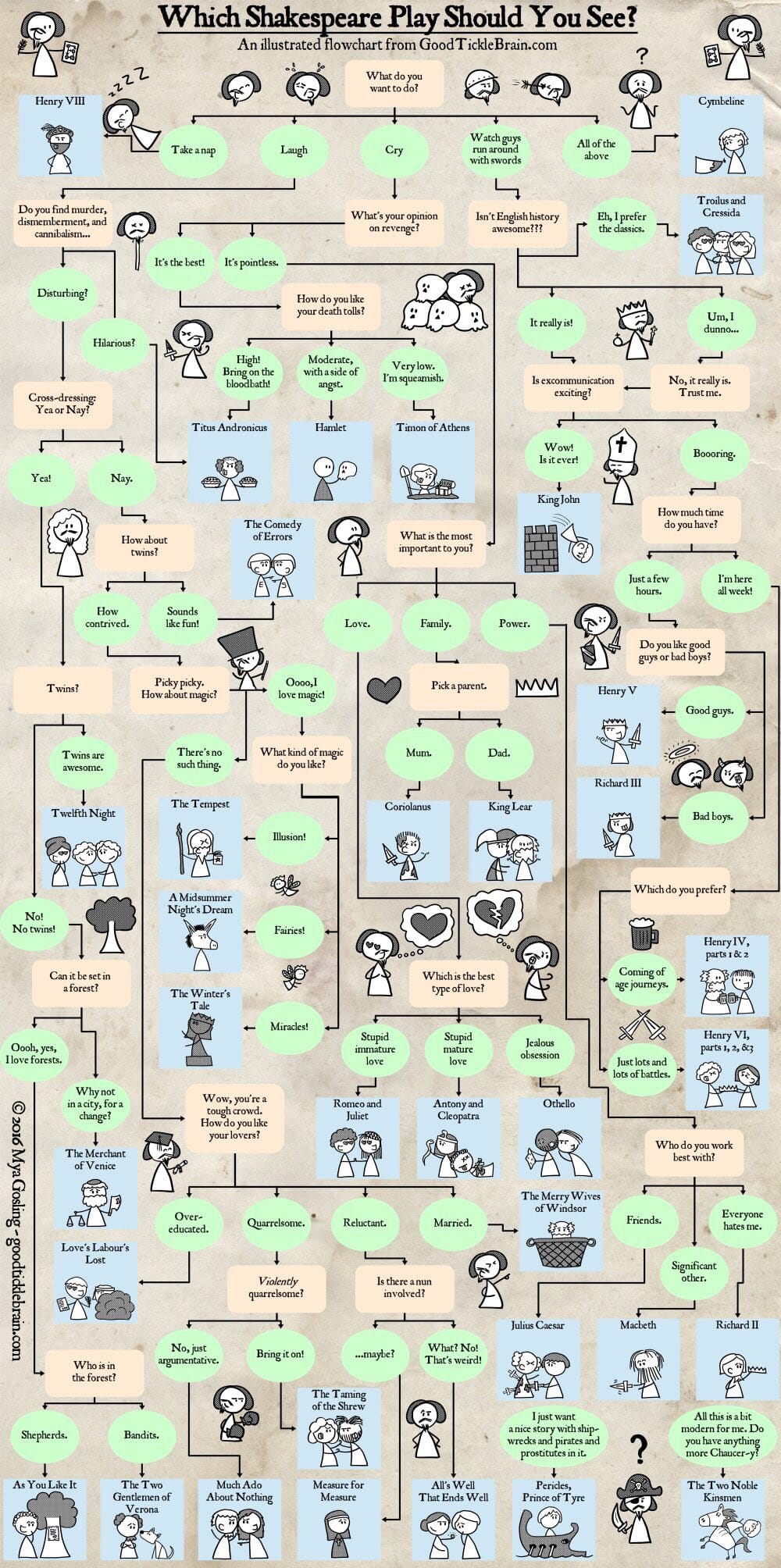
One remarkable thing about Shakespeare’s plays is how varied they are. There are comedies and tragedies; histories of England, and of Rome, musings on religion, and on drink, and lots of cross-dressing. He wrote at least thirty seven plays between 1590 and 1613, alone or as a major collaborator, and the chart below gives a sense of the scope. I have seen less than half of these plays, so I find the chart below both useful and humorous. The humor of the chart is partly that it presents the common man (us) access to the godly (Shakespeare). That access is the root of the best comedy, in my opinion. Shakespeare also has a comic dog, some total idiots, comic violence to women, and a few other cringeworthy laugh-getters, but we’ll not mention those; it’s low comedy. You’ll notice that Merchant of Venice is listed here as a comedy; I think it was seen that way by Shakespeare. The hero of the play in my opinion, is a woman, Portia, who outsmarts all others by her legal genius at the end. Tragedy is when the great individual can not access great things. At least that’s how I see it. As for History; it’s been said, that it starts as tragedy, and ends as comedy. Shakespeare’s histories include some of each. And as for our, US history, Lincoln was tragedy, like LBJ; Truman was comedy, and Andrew Jackson too. And, as for Trump, who knows?

By Myra Gosling, www.goodticklebrain.com
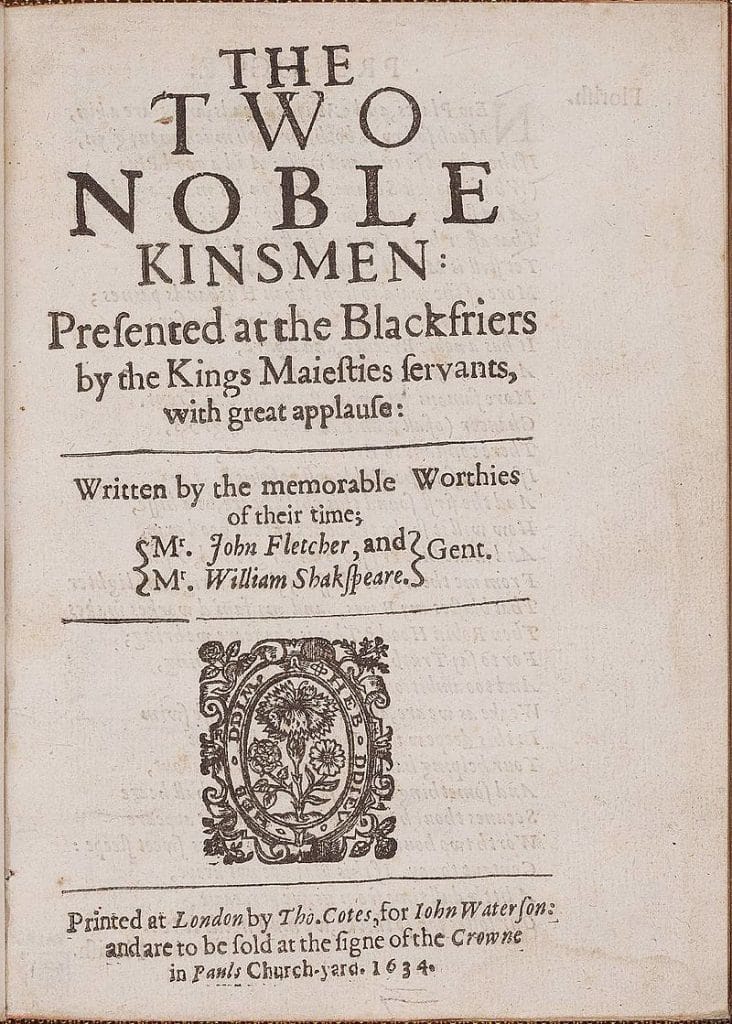
A Shakespeare collaboration. The collaborator, Fletcher, is cited by name.

Ms Gosling’s graphic, wonderful as it is, lists some but not all of Shakespeare’s collaborations. Two listed ones, “Henry VIII,” and “The Two Noble Kinsmen” were with John Fletcher. The cover shown at right, shows Fletcher named as first author. Since Fletcher outlived Shakespeare and took over the company after his death, I’ll assume these are later plays.

“Henry IV, part 1” is thought to be from Shakespeare’s early career, and seems to have been a mass collaboration: something written by a team the way situation comedies are written today. And “Pericles, Prince of Tyre,” listed near the bottom right, seems to have been a mid-career collaboration with George Wilkins. At least four of Shakespeare’s collaborations don’t appear at all in the graphic. “Edward III” and “The Spanish Tragedy”, appear to have been written with Thomas Kyd, likely early in Shakespeare’s career. Perhaps Gosling felt they don’t represent the real Shakespeare, or perhaps she left them off because they are not performed often. Another collaboration, “Sir Thomas More” (an intentional misspelling of Moore?), is well regarded today, and still put on. An existing manuscript includes 300+ lines written in Shakespeare’s hand. Still, Shakespeare’s main contribution seems to have been editing the play to get it past the censors. Finally, “Cardenio,” is a lost play, likely another collaboration with Fletcher. It got good reviews.

The cool thing about Shakespeare’s play writing, in my opinion, is his willingness to let the characters speak for themselves. Even characters who Shakespeare doesn’t like have their say. They speak with passion and clarity; without interruption or mockery. Writing this way is difficult, and most writers can’t avoid putting themselves and their opinions in the forefront. I applaud Ms Gosling for making Shakespeare accessible. Here’s this month’s issue of her blog, GoodTickleBrain.

Robert Buxbaum, June 26, 2019. As a side note, Shakespeare appears to have been born and died on the same date, April 23; in 1564 and 1616, respectively.

James Croll, janitor scientist; man didn’t cause warming or ice age

When politicians say that 98% of published scientists agree that man is the cause of global warming you may wonder who the other scientists are. It’s been known at least since the mid 1800s that the world was getting warmer; that came up talking about the president’s “Resolute” desk, and the assumption was that the cause was coal. The first scientist to present an alternate theory was James Croll, a scientist who learned algebra only at 22, and got to mix with high-level scientists as the janitor at the Anderson College in Glasgow. I think he is probably right, though he got some details wrong, in my opinion.

James Croll was born in 1821 to a poor farming family in Scotland. He had an intense interest in science, but no opportunity for higher schooling. Instead he worked on the farm and at various jobs that allowed him to read, but he lacked a mathematics background and had no one to discuss science with. To learn formal algebra, he sat in the back of a class of younger students. Things would have pretty well ended there but he got a job as janitor for the Anderson College (Scotland), and had access to the library. As janitor, he could read journals, he could talk to scientists, and he came up with a theory of climate change that got a lot of novel things right. His idea was that there were  regular ice ages and warming periods that would follow in cycles. In his view these were a product of the precession of the equinox and the fact that the earth’s orbit was not round, but elliptical, with an eccentricity of 1.7%. We are 3.4% closer to the sun on January 3 than we are on July 4, but the precise dates changes slowly because of precession of the earth’s axis, otherwise known as precession of the equinox.

Currently, at the spring equinox, the sun is in “the house of Pisces“. This is to say, that a person who looks at the stars all the night of the spring equinox will be able to see all of the constellations of the zodiac except for the stars that represent Pisces (two fish). But the earth’s axes turns slowly, about 1 days worth of turn every 70 years, one rotation every 25,770 years. Some 1800 years ago, the sun would have been in the house of Ares, and 300 years from now, we will be “in the age of Aquarius.” In case you wondered what the song, “age of Aquarius” was about, it’s about the precession of the equinox.

Our current spot in the precession, according to Croll is favorable to warmth. Because we are close to the sun on January 3, our northern summers are less-warm than they would be otherwise, but longer; in the southern hemisphere summers are warmer but shorter (southern winters are short because of conservation of angular momentum). The net result, according to Croll should be a loss of ice at both poles, and slow warming of the earth. Cooling occurs, according to Croll, when the earth’s axis tilt is 90° off the major axis of the orbit ellipse, 6300 years before or after today. Similar to this, a decrease in the tilt of the earth would cause an ice age (see here for why). Earth tilt varies over a 42,000 year cycle, and it is now in the middle of a decrease. Croll’s argument is that it takes a real summer to melt the ice at the poles; if you don’t have much of a tilt, or if the tilt is at the wrong time, ice builds making the earth more reflective, and thus a little colder and iceier each year; ice extends south of Paris and Boston. Eventually precession and tilt reverses the cooling, producing alternating warm periods and ice ages. We are currently in a warm period.

Global temperatures measured from the antarctic ice showing stable, cyclic chaos and self-similarity.

Global temperatures measured from the antarctic ice showing stable, cyclic chaos and self-similarity.

At the time Croll was coming up with this, it looked like numerology. Besides, most scientists doubted that ice ages happened in any regular pattern. We now know that ice ages do happen periodically and think that Croll must have been on to something. See figure; the earth’s temperature shows both a 42,000 year cycle and a 23,000 year cycle with ice ages coming every 100,000 years.

In the 1920s a Serbian Mathematician, geologist, astronomer, Milutin Milanković   proposed a new version of Croll’s theory that justified longer space between ice ages based on the beat frequency between a 23,000 year time for axis precession, and the 42,000 year time for axis tilt variation. Milanković used this revised precession time because the ellipse precesses, and thus the weather-related precession of the axis is 23,000 years instead of 25,770 years. The beat frequency is found as follows:

51,000 = 23,000 x 42,000 / (42000-23000).

As it happens neither Croll’s nor Milanković’s was accepted in their own lifetimes. Despite mounting evidence that there were regular ice ages, it was hard to believe that these small causes could produce such large effects. Then, in a 1976 study (Hayes, Imbrie, and Shackleton) demonstrated clear climate variations based on the mud composition from New York and Arizona. The variations followed all four of the Milankocitch cycles.

Southern hemisphere ice is growing, something that confounds CO2-centric experts

Southern hemisphere ice is growing, something that confounds CO2-centric experts

Further confirmation came from studying the antarctic ice, above. You can clearly see the 23,000 year cycle of precession, the 41,000 year cycle of tilt, the 51,000 year beat cycle, and also a 100,000 year cycle that appears to correspond to 100,000 year changes in the degree of elliptic-ness of the orbit. Our orbit goes from near circular to quite elliptic (6.8%) with a cycle time effectively of 100,000 years. It is currently 1.7% elliptic and decreasing fast. This, along with the decrease in earth tilt suggests that we are soon heading to an ice age. According to Croll, a highly eccentric orbit leads to warming because the minor access of the ellipse is reduced when the orbit is lengthened. We are now heading to a less-eccentric orbit; for more details go here; also for why the orbit changes and why there is precession.

We are currently near the end of a 7,000 year warm period. The one major thing that keeps maintaining this period seems to be that our precession is such that we are closest to the sun at nearly the winter solstice. In a few thousand years all the factors should point towards global cooling, and we should begin to see the glaciers advance. Already the antarctic ice is advancing year after year. We may come to appreciate the CO2 produced by cows and Chinese coal-burning as these may be all that hold off the coming ice age.

Robert Buxbaum, November 16, 2018.

Presidential drinks, smokes, and other vices

I’d written about presidential desks so now presidential drinking and related vices. The US colonials were hard drinkers, and their leaders lead on this front too. The colonials who fought at Lexington and Concord loaded up at Bradford’s Tavern before greeting the British. Meanwhile, safe in Philadelphia, each of the authors of the declaration of Independence drank, on average, two pint tankards of rum per day, likely mixed with water, a mixture called “grog,” or mixed with apple cider, a mix called “the stone fence.”

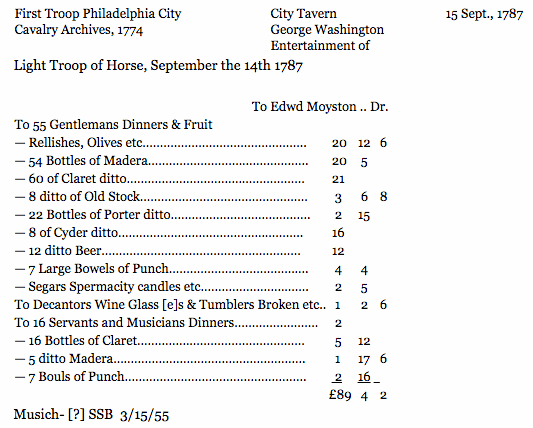
Washington's bar bill for 55 men.

Washington’s bar bill for 55 men; food was less than 1/4 of the bill, both for the officers and the servants. Note the “Segars” and broken crockery.

The standard of drinking for officers in the colonial army can be seen from the bill for the farewell dinner (right) held at City Tavern in New York. The average man drank more than two bottles of wine, about a quarter bottle of old stock (whiskey)  bottle of beer, porter or cider, and 1/2 bowl of punch. There is also a cost for “segars” and for broken cookery. The servants drank almost as much but not quite. George Washington was considered a very modest drinker in the crowd, avoiding rum mostly, and sticking to Madera wine or dark, “Philadelphia” porter, typically mixed with molasses. He smoked a pipe too, but didn’t have a mistress nor did he fight in any duels; a model for presidents to come. When Washington retired from the presidency, he become the premier distiller in the USA, making thousands of barrels of rye whiskey per year. A good man and a good president, IMHO.

John Adams considered himself a temperance man, and complained of Washington’s lack of refinement. He didn’t smoke at all, and drank only one tankard of hard cider to start the day, followed by beer, Madera and diluted rum (grog). He was priggish and disliked. He also started the pseudo war with France, spent massively to pay off the Barbary pirates, insulted most everyone, and passed the single worst law ever in US history, Our worst president, IMHO, but at least he didn’t overspend.

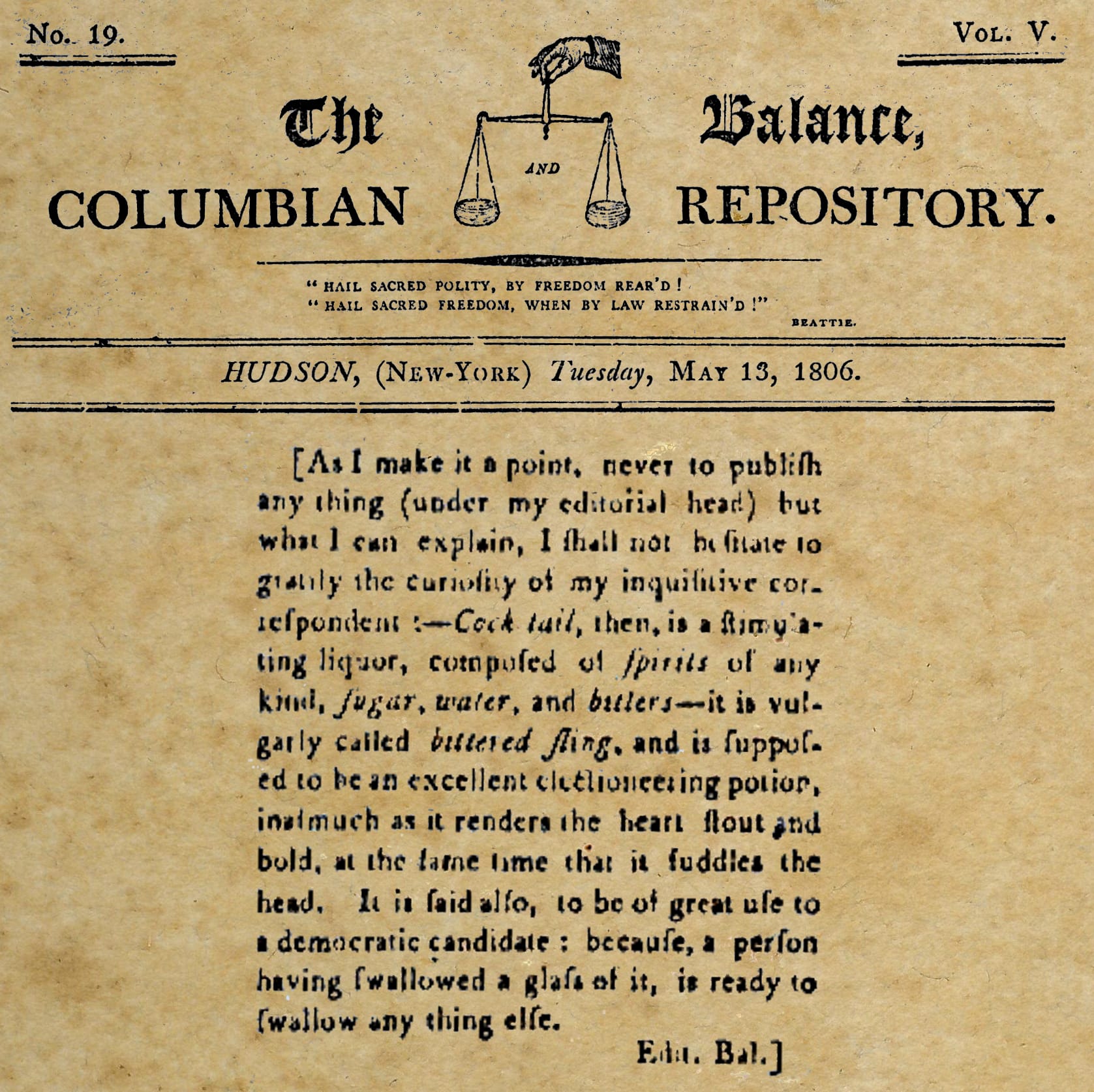
According to "The Balance, and Columbian Repository" 1806, "A cock tail is a stimulating liquor composed of spirits of any kind, sugar, water and bitters. It is supposed to be an excellent electioneering potion inasmuch as it renders the heart stout and bold, at the same time that it fuddles the head. It is said also, to be of great use to a democratic candidate: because, a person having swallowed a glass of it, is ready to swallow any thing else."

According to “The Balance, and Columbian Repository” May 15, 1806, “– Cock tail then is a stimulating liquor… an excellent electioneering potion inasmuch as it renders the heart stout and bold, at the same time that it fuddles the head… of great use to a democratic candidate: because, a person having swallowed a glass of it, is ready to swallow any thing else.”

Jefferson was a spendthrift who  spent $16,500 in the money of the day (well over $1 million today) on French wine; $11,000 for his time in the Whitehouse and $5,000 for the ministry in Paris. His wine habits, along with his book and furniture buying, led him to be bankrupt twice. The first time, he was bailed out by congress, the second time (at his death) his slaves and property were sold off to pay debts, including his red-haired, slave children. Not a good man, but a good president. He ended Adam’s the pseudo-war with France, defeated the Barbary pirates, and doubled the size of America through the Louisiana purchase.

James Madison, like Jefferson preferred French wine, mostly Champaign, but he didn’t drink much of it, according to the standard of the day. He said that, if he drank any more than 3 or so glasses or he’d wake up with a headache. He also smoked ‘seegars’ until his death at 85: a good man but a poor president. Who would declare war on the most powerful nation on earth without first preparing his army or navy? Dolly Madison is considered the first of the “First Ladies,” for her hostess prowess.

Monroe liked French Champaign and Burgundy. He was the last of the “gentleman presidents; liked as a man and as a president, doing little that was controversial, except perhaps stating the Monroe Doctrine — US control of the Caribbean. He oversaw an “era of good feelings,” where the US grew and wounds healed.

John Quincy Adams was as obnoxious and disliked like his father, “the bitter branch of the bitter tree.” He was a wine-snob who claimed to have conducted a blind taste test with 14 kinds of Madeira and correctly identified 11 of them. After his one-term as president he returned to congress where his last act was to vote against admitting Texas to the union. At least 17 male-line Adams’s have graduated from Harvard; few are remembered fondly.

Andrew Jackson was not a gentleman. He drank whiskey — home made — and smoked cigars along with his wife. He fought about 20 duels, served whiskey proudly to all his guests, and removed the requirement of land to vote. He was a drinker of coffee too, pairing it with cigars, and is reported to have said, “Doctor, I can do anything you think proper, except give up coffee and tobacco.” One famous duel was with his lawyer, Thomas Hart Benton. Benton shot him twice, and they become friends and allies for life. Jackson added the first running water in the white house. The source was soon contaminated by human waste but I can’t complain. We have similar problems in Oakland county today. He also paid down the national debt, leaving Van Buren with a surplus for the first and only time in America. I consider Jackson an excellent president, but have not decided about him as a man.

Van Buren was a heavy drinker, a pipe smoker, a corrupt Tammany man, and a bit of a spendthrift (“Martin Van Ruin”)  He is the only US president to grow up speaking Dutch, not English, and his favored drink was Schiedam, a blue-colored gin favored by New York’s Dutch. Most people could not stand Schiedam, and it led Van Buren to be called “Blue whiskey Van.” Gin is an acquired taste — one that several later presidents would acquire. My guess is that Schiedam is the reason that some modern gins come in blue bottles. Van Buren accomplished nothing of note as president.

William Henry Harrison smoked a pipe and drank nothing harder than cider. Modest drinking differentiated him from hard-drinking Van Buren. His campaign song — Tippicanoe and Tyler too — includes the line “Van is a used-up man”, but modest drinking may have killed him too. He likely died of infected water in the Whitehouse —  something that could have been cured by a bit of whiskey mixed into the infected water. (I’m running for water commissioner my campaign: clean water at an appropriate pressure for fire-fighting.
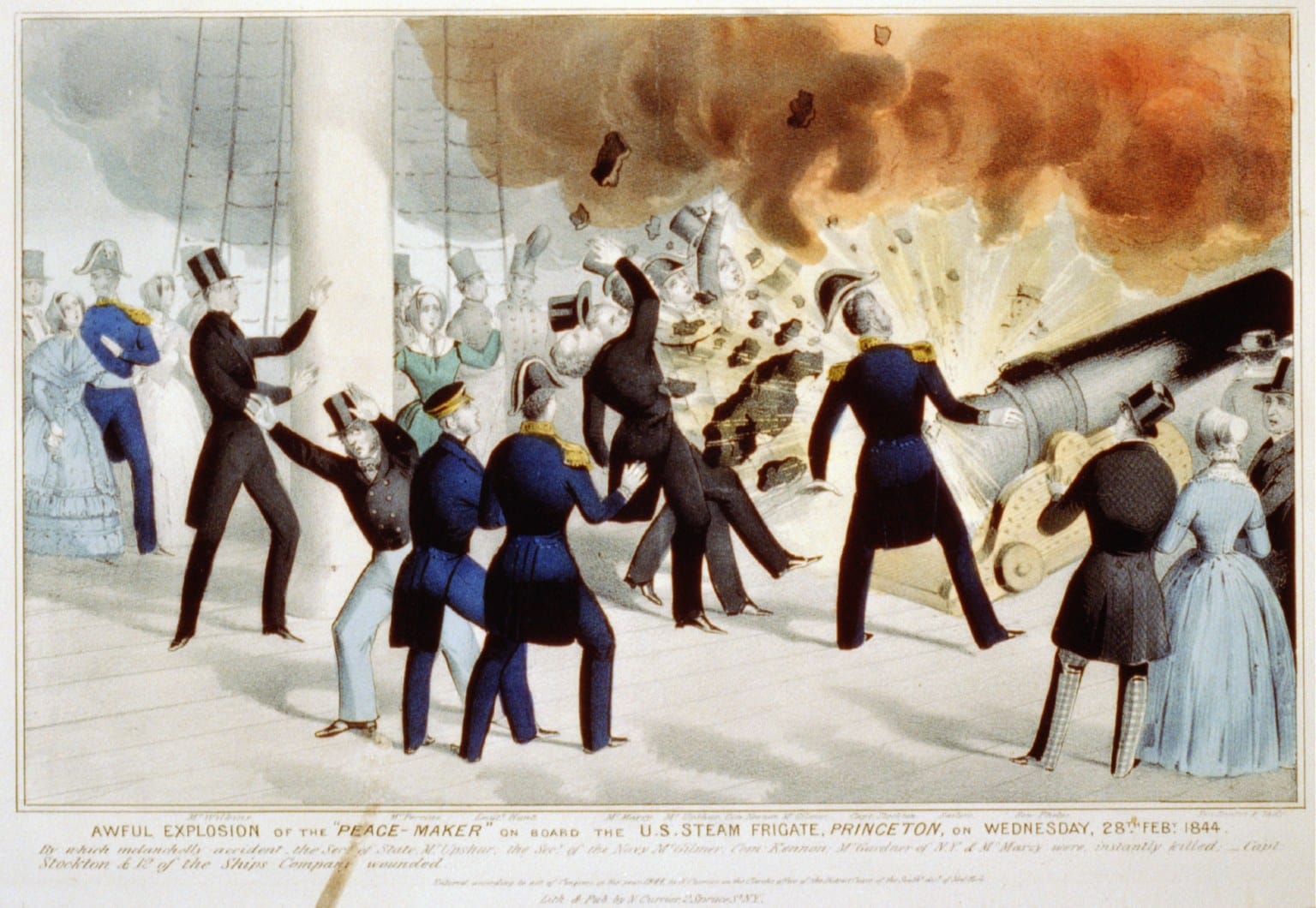
Explosion_aboard_USS_Princeton

John Tyler, Harrison’s VP, drank and smoked cigars. He kept two kegs of “Lieutenant Richardson’s whiskey” on hand, and Champaign for state dinners. He was a compromiser, who missed dying in an explosion on the USS Princeton because he’d stopped off for a drink. Most of the rest of his cabinet were not so lucky. He was rejected for re-election in favor of Polk, who promised to admit Texas.

James K. Polk was a modest drinker who favored the occasional wine or brandy. He survived his single term in the Whitehouse to die 105 days after leaving the Whitehouse of gastro-enteritis caused by infected water or fruit. A bit of whiskey might have helped. By admitting Texas, Polk started the Mexican – American War. This expanded the US further, all the way to California. I rather like Polk, but most historians do not.

Zachary Tayler, a Whig, “old rough and ready” had been a whiskey man in the army but never drank as president and rarely smoked in the white house. He died 1 1/2 years after taking office, likely killed by the bad water and lack of alcohol. Tayler was against all forms of secession and against the fugitive slave compromise that Clay. I like Tayler and agree with him.

Millard Fillmore was Tayler’s vice president and another non-smoker, he drank Madera wine as had some early presidents. Always concerned with his health, and is said to have installed the first bathtub, installing with it with copper and brass pipes. I suspect that the copper pipes saved Fillmore from DC’s bad water as copper is a fine anti-microbial. Though opposed to slavery, Fillmore signed the fugitive slave compromise that brought California into the union as a free state. The civil war is sometimes blamed on Fillmore, unfairly I think. It could not have been stopped. He died at the ripe age of 74, long after having left the Whitehouse.

Franklin Pierce, a Democrat and alcoholic, was “the hero of many a well-fought bottle”. Not a bad president, in my opinion. He saw the inevitable civil war coming and could not stop it, His wife lost her mind and his children all died. The last one, Benny, by beheading in front of him when a train Pierce and his wife were about to board broke its axle and slid down a hill. Pierce added the Gadson purchase, made the civil service less corrupt, made treaties with Britain and opened Japan. He too is blamed for the civil war by current historians as if they could have done better. He died of cirrhosis at 65, 13 years after leaving office.

James Buchanan, another Democrat was likely our only homosexual president. Buchanan was a life-long bachelor who drank quite a lot. His favorite was originally “Old Monongahela” but switched to J. Baer “finer than the best Monongahela,” buying ten gallons of J.Baer (rye) per week, direct from the distillery. “The Madeira and sherry that he has consumed would fill more than one old cellar, and the rye whiskey that he has ‘punished’ would make Jacob Baer’s heart glad.” Like Pierce, he is blamed by historians for not saving the union, as if this were an easy job that anyone could have done. Buchanan had no problem with the White House water, but was heart-broken when his housemate, William King left to become minister to France.

Lincoln didn’t drink or chew tobacco, nor did he have mistresses, or apparent trouble with the water. He was depressive though, told wonderful stories, some of them true, smoked a pipe, and once almost fought a duel with swords that broken up by the wives of the duelers. A good man and a great president. His son, Robert was present at his murder, and at two other presidential shootings.

Andrew Johnson drank and smoked occasionally, but had a low tolerance. Johnson added Alaska by purchase (Seward’s folly) but is not liked or respected by historians. I consider this unfair: he compares unfavorably to Lincoln, but don’t we all, and he could not smooth reconstruction, a near impossible task. His main impeachment crime was bombastic speech, by the way, a vice he shares with Andrew Jackson and Donald Trump. Like Buchanan and Pierce, I consider him a good president doing a near-impossible job.

Ulysses S. Grant was a Republican, a heavy cigar smoker, but a light drinker. Grant smoked as many as 20 cigars per day (a Grant cigar is 5″ long by 42 ring), but drank only brandy for his health, and not too much of that. Later in life he drank a mixture of wine and cocaine for throat pain from cancer. This stuff, a favorite of Pope Leo, was the inspiration for Coca-Cola. Grant’s campaign song, “Grant Grant Grant” specifically mentions his opposition to the KKK. He did a good job with reconstruction though the Democrats hated him for it. They mocked him as a drunk and worse: “I smoke my weed and drink my gin, playing with the people’s tin.” Grant wrote a great autobiography with the help of Mark Twain.

Hayes, a Republican, didn’t drink at all and opposed others’ drinking. Elected in 1876, he banned liquor of all sorts in the white house, and his wife was known as “Lemonade Lucy.” Hayes is criticized for corruption and for reducing the burdens of reconstruction. His opponent, Tammany Tilden, was at least as corrupt, and a stronger opponent of reconstruction.

Garfield was a beer man who “drank little else.” He tried to reform the civil service, but died from a gunshot and doctor-caused infection shortly after taking office. If his wound had been disinfected he would have probably lived. That’s what Roosevelt did when he was shot.

Chet Arthur, a cigar smoker and enthusiastic drinker, was Garfield’s vice president. When pressured for a no-liquor policy in the White House, he responded: “Madam, I may be the president of the United States, but what I do with my private life is my own damned business!” Arthur liked late night dining that he would finish with Champagne and a cigar. Though his background was in corrupt civil service, as president he did his best to remove this corruption from the civil service. A good president, IMHO.

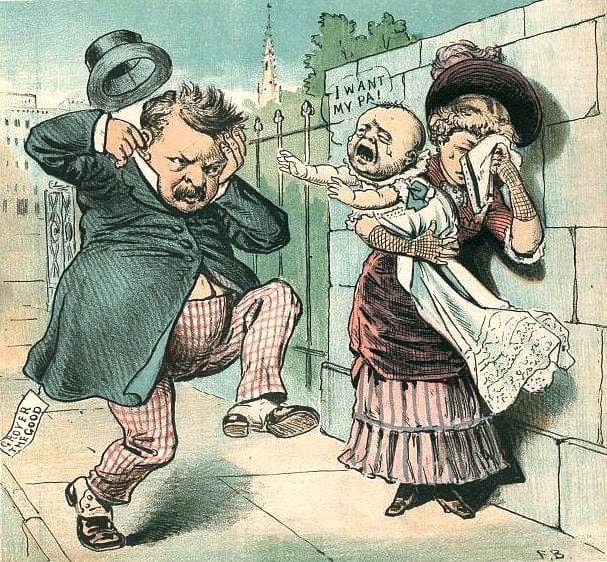
Ma ma, Ma ma, where's my pa?

Ma ma, Ma ma, where’s my pa?

Grover Cleveland was a cigar and beer man. Weighing 250 lbs, he was known as ‘Big Steve’ or ‘Uncle Jumbo,” In the white house, he limited himself to a gallon of beer a night. That is he drank four tankards of 1 liter each. He’d drank more before becoming mayor of Baltimore. He fathered a child at that time by seduction, perhaps date rape, of Maria Halpin, a 38-year-old sales clerk. She named the child Oscar Folsom Cleveland, the two last names suggesting she was not sure of the father. Cleveland and Folsom had Maria sent to an insane asylum (she was not crazy) and had Oscar was sent to an orphanage. In the end, Maria was freed and Oscar was adopted by Dr. King a trustee of the orphanage. None of this horrible behavior stopped Cleveland from becoming mayor and president. Cleveland married the 21-year-old daughter of his friend, Folsom. Rutherford Hayes was revolted by it all: “Cleveland … is a brute with women.” Cleveland smoked foot-long, ‘supercoronas’ that he received as gifts, using these cigars to influence people and conversations, similar to Churchill. Not a good man, nor a particularly good president, IMHO. Baby Ruth candy was not named after Cleveland’s daughter Ruth, but after the baseball player. IMHO, the candy company claimed otherwise only to avoid paying royalties. Cleveland is remembered fondly by historians, but not by me. I read two of his books.

Benjamin Harrison didn’t drink, but he did smoke cigars and he allowed liquor in the white house though prohibition was a growing issue. He annexed Hawaii, improved the navy, and replaced the “spoils system” for civil service jobs with a merit system. He also tried unsuccessfully to provide voting rights for African-Americans. The move failed in the senate. Cleveland defeated him in his run for a second term by pointing out that tariffs were too high. A tariff battle would dominate the Democrat / Republican split for a generation, and has recently reappeared. Modern historians don’t much like Harrison as he didn’t succeed in providing civil rights, as if that were an easy battle.

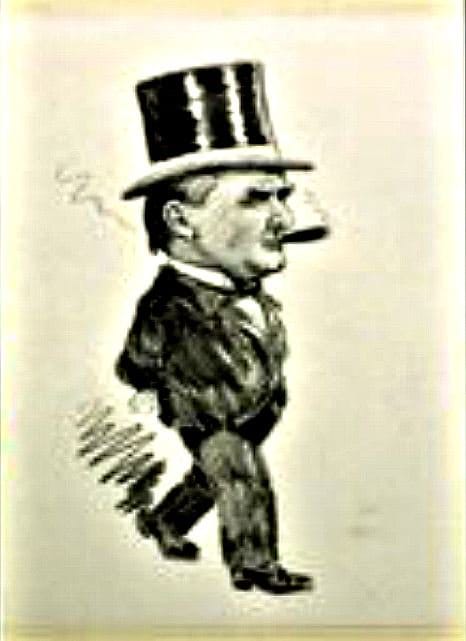
mckinleyMcKinley drank scotch whiskey — Dewar’s, a brand provided by Andrew Carnegie, and he smoked several cigars per day. He would not smoke in public though there is artwork, as at right, and the comment that “one never saw McKinley without a cigar in his mouth except at meals or when asleep.’. The McKinley delight is a variant of the Manhattan made with 3 oz of rye whiskey (at least 100 proof), 1 oz. sweet vermouth, 2 dashes of cherry brandy, and 1 dash absinthe. McKinley was shot and started to recover before dying from doctor-caused infection (he used the same doctor the Garfield had).

Theodore Roosevelt, was McKinley’s VP, and is one of the most beloved and colorful presidents in US history. He smoked cigars starting when he was 8, but swore off them later. He drank modestly, a version of the mint julep and served it to anyone who’d play tennis with him. Roosevelt’s version used rye plus brandy instead of Bourbon: 2-3 oz of rye whiskey, 10 to 12 fresh mint leaves “muddled” with a splash of water, a sugar cube, ¼ oz. of brandy and a sprig or two of mint as a garnish. The fresh mint was grown on the Whitehouse grounds. T. Roosevelt wrote some 30 books (I’ve read four or five) they are all wonderful. Roosevelt did daring things, like ride a moose, and survived being shot by leaving the bullet where is was; here’s a photo and essay. I don’t understand why so many US presidents drank rye and not Bourbon (Bourbon — corn whiskey — had been invented in the late 1700s and is tastier, IMHO). One of TR’s most famous speeches, “the man in the arena”, was given at the Sorbonne 1910. He claimed that being a critic was not much of an achievement.

William H. Taft smoked cigars and like Champaign, but rarely drank; he was on a perpetual diet. He tried to continue Roosevelt’s programs, but got little done. Still the country did well. He’s most remembered for the “7th inning stretch” break near the end of every baseball game.

Woodrow Wilson drank scotch and smoked cigarettes. His campaign slogan, “Wilson that’s all” was a whiskey slogan. Prohibition began during Wilson’s time in office: it was supposed to help women, but did not. It brought corruption and misery. Here’s an anti-alcohol song of the day: “behind those swinging doors.”

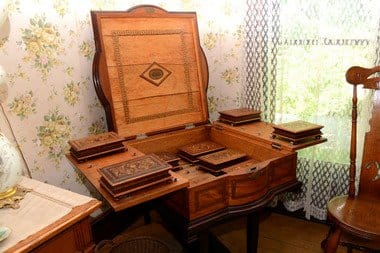
Harding's humidor - a massive thing

Harding’s humidor – a massive thing

Despite prohibition, Harding had poker nights twice a week where he smoked cigars, and the whiskey flowed freely. He also had at least 7 mistresses; he got two of them pregnant. Not a good man or a particularly good president. He died in office, perhaps killed by his wife or by his lifestyle.

Calvin Coolidge was Harding’s VP. Coolidge smoked cigars and drank sweet, Tokay wine. As president he cut spending and taxes, paid down the debt, and did not say much. Much of the detail work was done by his secretary of commerce, Herbert Hoover. Here is the Coolidge cooler: 1.5 oz. of Vermont White vodka, ½ oz. of American whiskey, 2 oz. of orange juice, Club soda. A good man and a good president, IMHO.

hoover

hoover

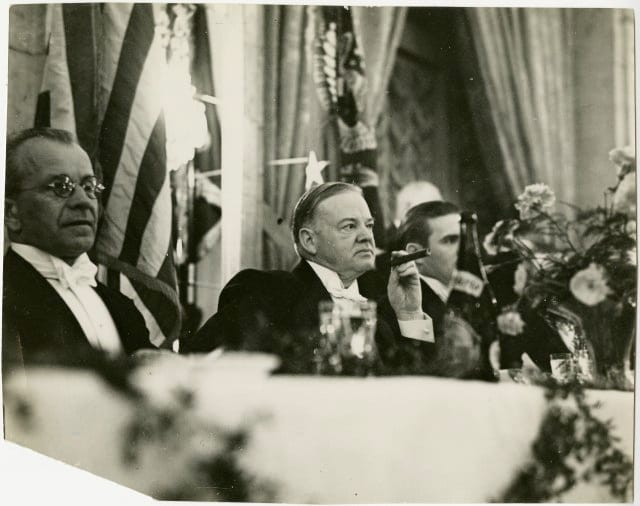
H. Hoover liked good wine and dry gin-martinis, but didn’t drink either in the white house as he respected prohibits as his predecessors did not. Also, his wife poured out his extensive wine collection. He is blamed for the great depression, unfairly I think. The depression hit all other industrial countries at the same time (most economies revered before ours did). Hoover’s dying request, at 80, was for a good, dry martini. He is the first gin man since Van Buren, but not the last.

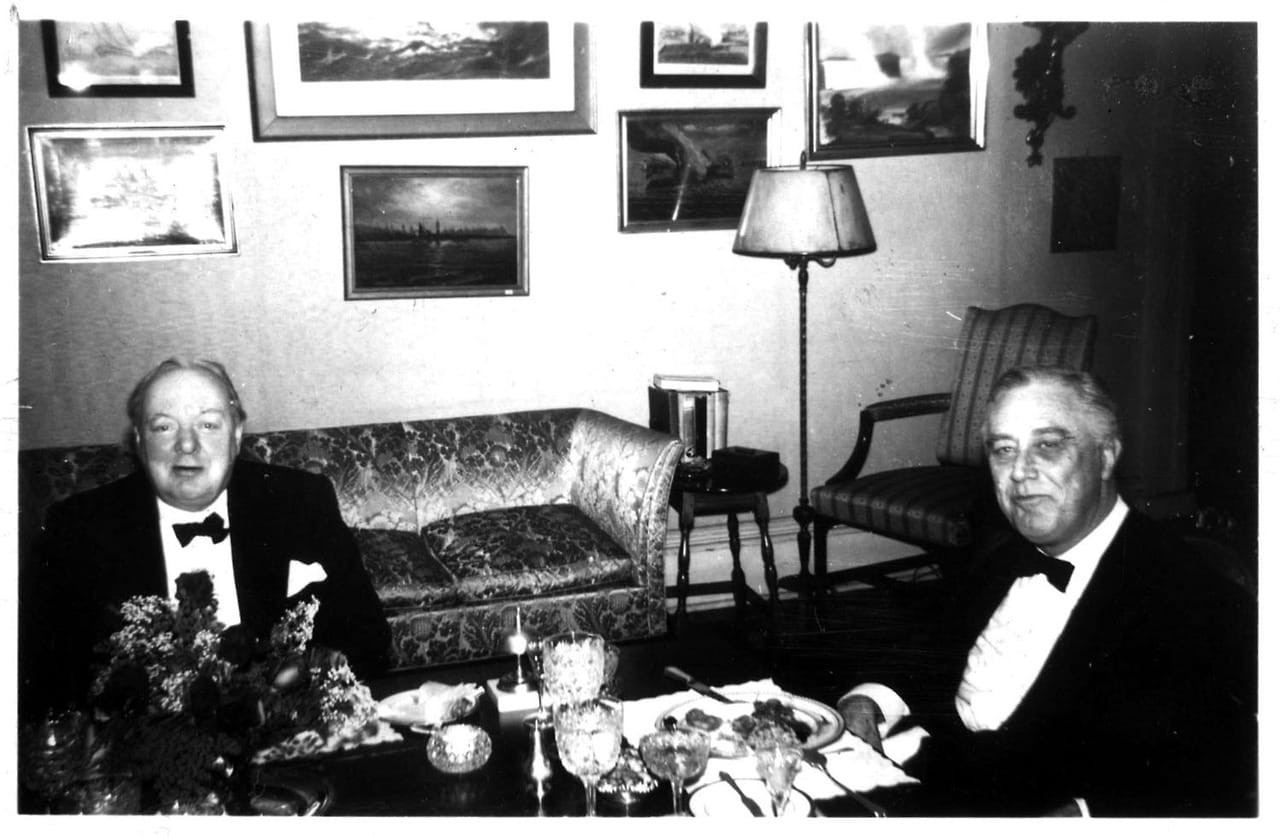
FDR and Churchill

FDR and Churchill. They drank Champaign and whiskey.

FDR was the first gentleman president since Monroe. He smoked 2 packs of cigarettes per day and drank gin martinis, very dry. Also, “old-fashioneds”, and daiquiris mixed with orange juice (a rum sizzle it’s called). The old-fashioned is made of whiskey, sugar, water, and bitters. FDR spent his last day with one of his mistresses (his wife had a mistress too) and his last words were to recount how much Churchill drank. FDR also took cocaine. It was a fairly normal medication at the time. He took some before giving the famous speech “December 7, 1941….” I question the harsh sentences we now give to users of this drug.

Truman was not a gentleman, but a fine president, IMHO. He swore with abandon, was a bourbon man, and liked to play poker with his buddies late into the night. He liked to include a shot of bourbon with his breakfast before his morning walk, took another shot “for freedom” when he entered the senate, drank bourbon with his poker buddies, and sometimes had bourbon with dinner. Truman’s buddies and colleagues were impressed that he was always up early though, and ready for work. He worked hard, didn’t smoke, and was true to his wife. He lived a long life, dying at 88 in 1972.

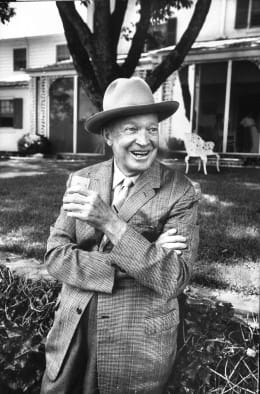
Eisenhower typically drank scotch with ice.

Eisenhower drank scotch over ice.

Eisenhower liked scotch, golf, smoking cigarettes and cigars, and entertaining. He had a mistress (his driver) and mostly entertained business men who he would sound out for advice on the issues of the day. He limited himself to only one drink a day or a bit of a second because of his health. It’s a good standard. Eisenhower was one of the first presidents to have a secret-service nickname, “scorecard” because of his love of golf. Before him, only Wilson played more golf.

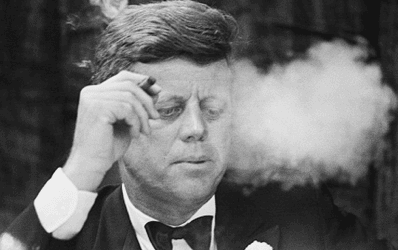
John F. Kennedy had many mistresses, and was the last to smoke cigars in public while president. He drank classy drinks like Daiquiris, Bloody Marys and Heineken beer, imported from Holland. The Daiquiri is made of rum, lime, sugar, and water. Kennedy lived on amphetamines from “Dr Feelgood,” his personal physician. He is supposed to have tried LSD and marijuana too, His secret service nickname was “Lancer”, a reference to Lancelot, the philandering knight of Camelot fame. A famous story of Kennedy is that, right before signing the embargo of Cuba, he instructed an assistant to buy up every Cuban cigar he could find. He bought over 1000 and then signed the embargo. Not one of my favorite presidents. Jacquline Kennedy smoked like a train, Salems.

Screen Shot 2018-09-13 at 10.58.11 PMLBJ was a cigarette smoker and a heavy drinker who’s responsible for “Bourbon and Branch” becoming the semi-official drink of Texans. Branch water is just another name for water, BTW. He also drank scotch: Cutty Sark or Teachers, and used his ability to hold liquor in negotiations. He’d greet congressional opponent with two bottles, requesting that they finish them before talking. After that, they were pliable, especially since, sometimes he’d have his diluted. A very good president, IMHO: he was able to implement civil right law that had eluded a century of presidents.
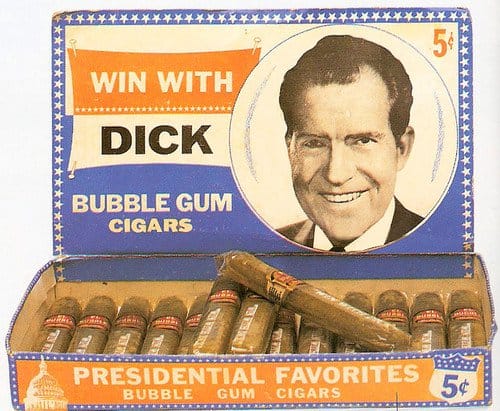
nixon-cigars

Nixon is hated, unfairly I think. He liked fine wine and fruity mixed drinks like Mai Tais, but served mediocre wine to guests. He was an ex-smoker of cigarettes – switched to cigars by the time he was president, but smoking them in private, and handing out bubble gum cigars as a campaign prop. Mai Tais are wonderful drinks, the recipe is 60 ml Jamaican and Martinique Rums, 25 ml Fresh Lime Juice, 15 ml Orange Curaçao, 15 ml Orgeat, 3-4 Crushed Ice Cubes. Nixon ended the Vietnam war and began good relations with Russia and China. I also started the EPA, and is the first president to deal well with the Indians, dividing Alaska land nicely. Watergate was his downfall, helped in part by Deep Throat, the second in command of the FBI who was bypassed for a promotion.

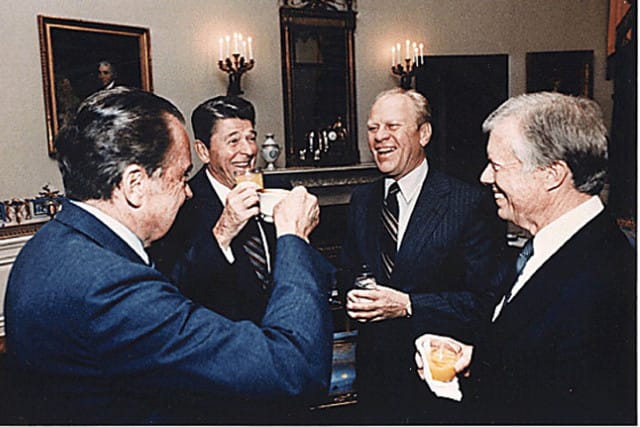
Gerald Ford smoked a pipe in public, and liked gin martinis during lunch or with friends, or gin and tonics in the summer. He didn’t drink to excess, and most people liked him. He’s criticized for thinking Russia was an enemy, and for not stopping inflation, as if anyone else could have done it.

Carter didn’t drink or smoke, and was critical of those who did, a possible swipe at Ford. When he had an arms summit with the Soviets, Carter toasted the soviets with a small glass of white wine. He’s the least favorite president of my life-time; he backed tyrants and thought that deficit spending would cure the economy. He got nothing more than foreign policy abuse and stag-flation (inflationary recession). Carter’s secret service name was “Deacon,” because of his church leanings. 114000446

Reagan liked California wine and the Orange Blossom Special: 1 oz. (or slightly less) vodka, 1 oz. of either grenadine or sweet vermouth, 2 oz. fresh orange juice, served over ice. Reagan smoked before becoming president, and ate jelly beans as a way of quitting. They became his signature dish. As president, Reagan was a deficit spender but he got better results than Carter had perhaps because he achieved his deficit by lowering taxes.

George HW Bush drank beer or vodka martinis in moderation, and smoked the occasional cigar. He may have had a mistress, too. A vodka martini is a mix of vodka and dry vermouth mixed in at about 4 to 1. I find it flavorless. He liked (likes) sailing and skydiving. Of the recent presidents, he is the fondest remembered by the white house staff. The soviet union collapsed in his day. A good president and a good man.

Screen Shot 2018-09-13 at 10.58.40 PMBill Clinton smoked pot in college and after, though he claims to have not inhaled. In the white house he smoked cigars, but not in public, and liked an English drink called a snake-bite: 50% beer, 50% hard cider. His secret service name was “eagle,” perhaps because of his eagle eye for women. Several women claimed that he’d pressured them into sex. Clinton denied all charges until one, a 22-year-old intern, turned up with the stained dress. He was a good president but a lousy person. His cigar of choice, the Gurkha Grand Reserve, is slightly longer and wider than the Grant cigar, 6 inches by 50 ring.

George W. Bush had been a heavy drinker in college but completely swore off by the time he was president. When his father had been president, his secret service name had been “Tumbler,” a reference to his drinking and its ill-effects. He requested a different nickname as president, Timberwolf. It sounds vaguely like Tumbler. His main presidential accomplishment was the war on terror, such as it is.

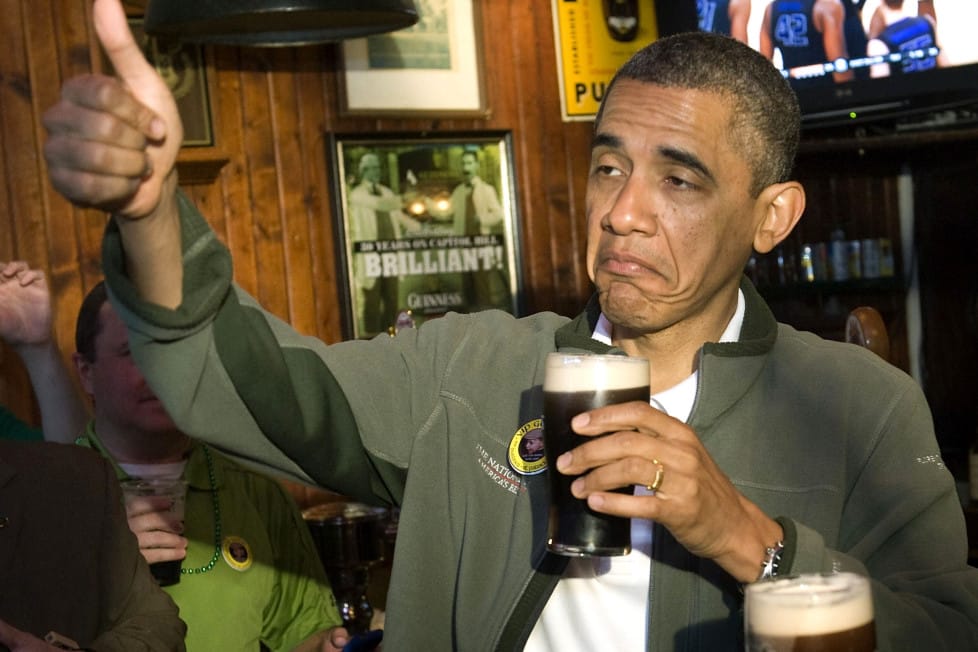
Obama, like Clinton, smoked pot in his youth. He switched to beer and cigarettes in the White house but doesn’t do either in public. The picture at right has him holding the glass. His secret service name is “Renegade,” and his main achievement, seems to have been a close rapport with the countries of Islam. While I can’t say that pot helped either of these men, it does not seem to have hurt them, or society. Thus, I can not favor harsh sentencesusa-whitehouse-beer-1

Trump does not drink or smoke. He has had some affairs before becoming president, but they seem to have been consensual, and he seems to have stopped by the time he entered the Whitehouse. Trump’s church leaning is positivist, and his secret service nickname is “Mogul.” He seems committed to tariffs as a way to restart the economy and as a way to bring down the debt. I wish him success.

It is not clear who is in charge when the president is drunk, nor is the law clear about presidential smoking in the Whitehouse: It is both a public building and a private residence

Robert E. Buxbaum, October 18, 2018. As a side note: The 23rd Prime Minister of Australia, Bob Hawke (1954) held the Guinness Record for fast beer drinking: 2.5 pints in under 11 seconds !

Feminism in law and middle east diplomacy

If you went to college in the last 40 years and learned there was a concept called “the rape culture” that was supposed to drive law and diplomacy. In terms of law the assumption was that all men – or most — were rapists or would be rapists. Along with this, women are weaker, and almost always the victim in male-female interactions. As such the woman has to be believed in all cases of “he-said, she-said.” To do otherwise was “rape-shaming” a form of blaming the victim. Male on female rape is supposed to have infected international affairs as well. War and peace are assumed to be rape situations where no country is assumed to want foreign influence or industry unless they say so, and any demand that you take your embassy or hotel out has to be met with immediate withdrawal. The female country is the weaker in these deals, and where that could not be determined, the raper country was determined by geography. Israel was always the raper country because of its shape and position within the Arab world. Israel was asked to withdraw — cease to exist as a non-Islamic nation — and admit that it was raping the Arab world just by existing.

Before World War I, there was no such thing as a world court. If one country attacked another, the attacked country could appeal to allies, or perhaps to public opinion, but there was no certainty of rescue. Without a world court, and without a world set of laws, claiming victim status did little. Weaker principalities could be divided up, and sometimes sold off or traded. Manhattan went from being a Dutch settlement to being an English settlement when the English traded an island in the Pacific for it. Napoleon acquired Louisiana from the Spanish by trading northern Italy, then promptly sold Louisiana to America. And all this was normal. The international version of human trafficking, I suppose.

After WWI, a world court was created along with a new diplomatic theory: the world should protect the weak and the wronged. In this context, feminist analysis of which country is wronged would have been important except that there was no army to do the enforcing. Woodrow Wilson championed a League of Nations, one of his 19 points. The weak and abused would be protected from the strong; democracy would be protected from the dictator. This is a softer, kinder view of the world, a cooperative world, a feminist world, and in academia it is considered the only good version — a one world order with academics at the top. Still, without an army or much of a budget, it was all academic, as it were. This changed when the United Nations was created with a budget and an army. If the army was to protect the victim, we had to determine who was the aggressor. In 95% of all cases considered before the UN, the aggressor was asserted to be Israel. This in not despite its small size, but because of it. By feminist analysis, the surrounding country is always the victim.

In feminist analysis, there is the need for a third type of person, almost a third gender. This is the male feminist. This is the warlike defender of the weak. Such people are assumed to make up the UN army and its management. When an outsider country appears within the boundaries of another nation, that’s national rape and has to be prevented by this third-gender army. Hitler’s takeover of Europe was rape, not because he was totalitarian (he was elected democratically) but because his was an unwelcome intrusion. The counter-invasion of Germany was/is only justified by assuming that the allies (the good guys) represented, not rape, but some third gender interaction. It all made a certain type of sense in college seminars, if not in life, and men were not quite expected to understand; we were just expected to become this third gender.

Being a Male Feminist is uncomfortable both in personal and international affairs. It is very uncomfortable to have to defend every victim, making every sacrifice no matter how personally objectionable the victim is, or how arbitrary the distinction of victim, or how much the victim hates her savior. In personal affairs, this is a theme in Bob Dylan song “It’s ain’t me, babe.”  Dylan agrees with a lady that she has a right to want all sorts of things, but says, “it ain’t me babe,” about him being the guy to provide them all.

In international affairs the discomfort is even worse. We found, with depressing frequency, that we were expected to donate the lives of countless soldiers in support of regimes that were objectionable, and that hated us. Jimmy Carter supported the PLO and Idi Amin, and the Ayatollah because they were weak regimes with incursions: by the oil companies or the CIA. The people we were helping hated us before Jimmy Carter, and they hated us more after. The Ayatollah in Iran captured or killed our diplomatic staff, and beheaded anyone with western sympathies.

I have come to think that a redefinition of rape is what is needed. I note that not all rape is male-on female, and not all wars are won by incursion. The Mongols won by surrounding. Similarly, the game of GO is won by surrounding. I would like to stop assuming that the surrounding nation is always the victim and that the woman is always telling the truth. In personal injury law, I’d like more freedom to try to decide which is right or wrong or maybe both have a case, and we may want to just sit back and wait to offer mediation. Here’s another Bob Dylan song on the difficulty of figuring out who is right or wrong: “God on our sides.”

Robert E. Buxbaum, September 21, 2018

God bless you Canada

Canada is a fine country, rarely appreciated in the USA because most of it is so similar to us — One of my favorite places to visit in Canada was the museum of Canadiana — a museum dedicated to the differences between the US and Canada. Differences do exist, but they are few and small, as you can tell perhaps from the song below, “God Bless You Canada,” by Lee Greenwood, the same fellow who wrote, “God Bless the USA.” The tunes and words are strongly similar, I’d say.

Canada is much easier to reach than Hawaii for the most part, or Alaska, Puerto Rico, or Guam, it’s just north of Montana and south of Alaska and Detroit. And Canadian English is at least as understandable as a southern drawl or a New Yorker twang. Canada has far fewer murders but far more rapes, armed robberies and assaults. It has the same suicide rate as we do, but by different means. And Toronto’s mayor was on crack like Detroit’s mayor.

Canadian $2 coin, Elizabeth II, by the grace of god, Queen. The last part is in Latin.

Canadian $2 coin, Elizabeth II, by the grace of god, Queen (it’s in Latin).

Canada has a Queen, Elizabeth II, that it shares with several other countries including England, Australia, and Barbados. This is no to say that Canada isn’t quite independent: the main power of Canada’s Queen, like with the US president, is “the bully pulpit”. As in The United States. The press does its best to rein in this power.

If Canada were to join the US as the 51 state, it be the 3rd largest state in population (after Texas and California) and the 3rd largest in GDP (after New York and California). Not that all of Canada is likely to join, but certain parts might (New Brunswick, Newfoundland, Labrador) if Quebec goes its separate way. Québécois like remember that they were originally French. “Je me Souviens” is the Quebec motto, and having an English Queen irks. One of my favorite Canada facts (maybe true) is that the name Canada is French for Ça nada (nothing here) but tit’s not sure, there is stuff and people there. My wife is from there. Listen to the song, “God Bless you, Canada”, I suspect you’ll like it.

Robert Buxbaum, September 17, 2018.

The Great, New York to Paris, Automobile race of 1908.

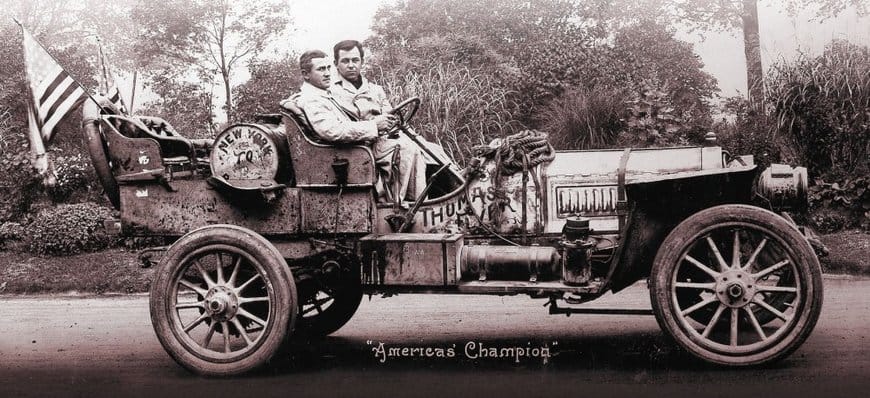
As impressive as Lindberg’s transatlantic fight was in 1926, more impressive was George Schuster driving and winning the New York to Paris Automobile race beginning in the dead of winter, 1908, going the long way, through Russia. As of 1908, only nine cars had ever made the trip from Chicago to California, and none had done it in winter, but this race was to go beyond California, to Alaska and then over the ice through Russia and to Paris. Theodore Roosevelt was president, and Americans were up to any challenge. So, on February 12, 1908 there congregated in Times Square, New York, a single, US-made production car, along with five, specially made super-cars from Europe; one each from Italy and Germany; and three from France. The US car, a Thomas Flyer (white), is shown in the picture below. The ER Thomas company sent along George Schuster, as an afterthought: he was a mechanic and test-driver for the company, and was an ex bicycle racer. The main driver was supposed to be Montague Roberts, a dashing sportsmen, but the fellow dropped out in Cheyenne, Wyoming. Schuster reached the Eiffel tower on July 30, 1908, 169 days after leaving New York. The Germans and Italians followed. None of the French super-cars got further than Vladivostok, and one dropped out after less than 100 miles.

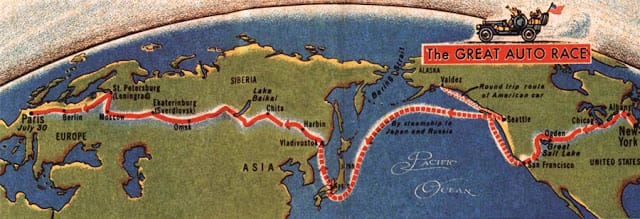
The race was sponsored by The New York Times and Le Matin, a Paris newspaper. They offered a large trophy, a cash prize of $1000, not enough to pay for the race, and the prospect of fame. The original plan was for drivers to go from New York to San Francisco, then to Seattle by ship, and Northern Alaska, driving to Russia across the Arctic ice. That plan was abandoned when Schuster, the first driver to reach Alaska, discovered ten foot snows outside of Valdez. The race was modified so that travel to Russia would be by ship. Schuster took his Thomas to Russia from Alaska, the other two drivers reached Russia from Seattle by way of Japan. Schuster was given a bonus of days to account for having taken the longer route. Because of his detour, he was the last to arrive in Russia. From Japan, the route was Vladivostok, Omsk, Moscow, St. Petersburg, Berlin, and Paris, 21,900 miles total; 13,341 miles driven. Schuster drove most of those 13,341 miles, protected by his own .32-caliber pistol, and mostly guided by the stars and a sextant. He’d taught himself celestial navigation as there were no roadmaps, and hardly any roads.

George Schuster driving the Thomas Flyer, the only American entry, and the only production motorcar in the race.

George Schuster driving the Thomas Flyer with another mechanic, George Miller, the Flyer was only American entry, and the only production motorcar in the race. Note that the flag has only 45 stars.

The ship crossing of the Pacific was a good idea given that, even in the dead of winter, global warming meant that the arctic could not be relied upon to be solid ice. As it was, Schuster had to content with crossing the Rockies in deep snow, and crossing Russia in the season of deepest mud. He reached the Eiffel tower at 6 p.m. on July 30, 1908. The German car had arrived in Paris three days ahead of Schuster, but was penalized to second place because the German team had avoided the trip to Alaska, and had traveled some 150 km of the Western US by railroad while Schuster had driven. The Italian team reached Paris months later, in September, 1908. That the win went to the only production car to compete is indicative, perhaps of the reliability that comes with mass production. That Mr. Schuster was not given the fame that Lindberg got may have to do with the small size of the prize, or with him being a mechanic while Lindberg was a “flyer”. Flyers were sexy; even the car was called a flyer. The Times saw fit to hardly mention Schuster at all, and when it did, it spelled his name wrong. Instead the Times headline read, “Thomas Flyer wins New York to Paris Race.” You’d think the car did it on its own, or that the driver was named Thomas Flyer.

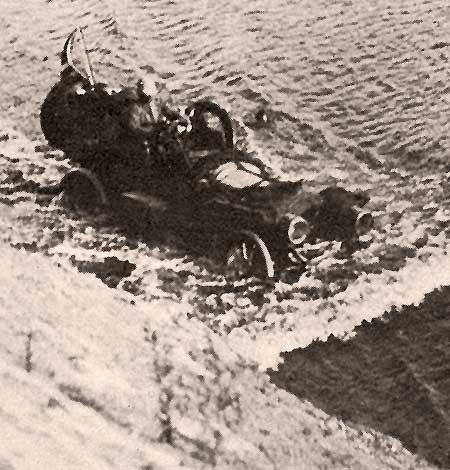
The Flyer crossing a swollen  river in Manchuria.

Schuster in his Flyer crossing a swollen river in Manchuria.

The Times could not get enough of Montague Roberts; the driver of the first leg was famous and photographic. They tried to get Roberts to drive the last few miles into Paris, “once the roads were good”. And Roberts was the one chosen to drive in the hero-parade in New York, Schuster rode too, but didn’t drive. Schuster was feted by Theodore Roosevelt, though, who said he liked people “who did things.” Schuster said he’d never do a race like that again, and he never did race again.

The race did wonders for the reputation of American automobiles, and greatly spurred the desire for roads, but it did little or nothing for the E.R.Thomas company. Thomas cars were high cost, high power models, and they lost out in the marketplace to Henry Ford’s, low-cost Model T’s. You’d think that, in the years leading up to WWI, the US Army might buy a high cost, high reliability car, but they were not interested, and the Thomas company did little to capitalize on their success. The Flyer design that won the race was discontinued. It was a 60 hp, straight 4 cylinder engine version, replaced by lower cost Flyers with 3 cylinders and 24 hp. Shortly after that, Edwin R. Thomas, decided to drop the Flyer altogether. His company went bankrupt in 1912, and was bought by Empire Smelting. The original Flyer was sold in 1913 at a bankruptcy action, lot #1829, “Famous New York to Paris Racer.”

ER Thomas went on to found another car company, as was the style in those days. Thomas-Detroit went on make similar cars to the Flyer, but cheaper. The largest, the K-30, was only 30 hp. The original Thomas Flyer is now in the National Automobile Museum, Reno Nevada. after being identified by Schuster and restored. Here is a video showing the original Flyer being driven by a grandson of George Schuster. There is a lower-power Thomas Flyer (black) in a back space of the Henry Ford museum (Detroit). Protos vehicles, similar to the one that came in second, were produced for the German military through WWI. Their manufacturer, Siemens, benefited, as did the German driver.

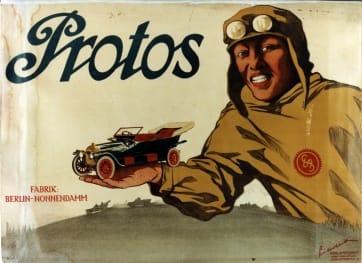
Advertisement for the Protos Automobile, a product of Siemens motor company. The race did not include a production Protos but one made specially for the race.

Advertisement for the Protos Automobile, a product of Siemens motor company. The race did not include a production Protos but one made specially for the race.

The Thomas engine (and the Protos) engine) live on in a host of cars with water-cooled, four-cylinder, straight engines. In 1922, Chalmers-Detroit merged with Maxwell and continued to produce versions of the old Flyer design, now with an internal drive-shaft. The original Flyer was powered via a gear-chain, like a bicycle. In 1928, Maxwell was sold to Chrysler. Chrysler persists in calling their high-power, four-cylinder engines by the name Chalmers. As for Schuster, when ER Thomas closed its doors, he had still not been paid for his time as a race driver. He went to work for Pierce-Arrow, another maker of large, heavy vehicles. The “cheaper by the dozen” family (two parents, 12 kids) drove a Pierce-Arrow.

The Great race appears in two documentaries and two general audience movies, both comedies. The first of these was Mishaps of the New York–Paris Race, released by Georges Méliès, July 1908, just about as the Flyer was entering Paris. The second movie version  “The Great Race” was released in 1965. It’s one of my favorite movies, with Jack Lemon as the Protos driver (called Dr. Fate in the movie), Tony Curtis as “The Great Leslie”, the Flyer driver. For the movie, the Flyer is called “The Leslie”, and with Natalie Wood as a female reporter who rides along and provides the love interest. In the actual race reporters from the New York Times, male, traveled in the Flyer’s rear seat sending stories back by carrier pigeon.

Path of the Great Race

Path of the Great Race

As a bit of fame, here’s George Schuster in 1958 on “What’s my secret.” He was 85, and no one knew of him or the race. Ten years later, in 1968, Schuster finally received his $1000 prize, but still no fame. A blow-by-blow of the race can be found here, in Smithsonian magazine. There is also an article about the race in The New York Times, February 10, 2008. This article includes only two pictures, a lead picture showing one of the French cars, and another showing Jeff  Mahl, the grandson of George Schuster, and a tiny bit of the flyer. Why did the New York Times choose these pictures? My guess is it’s the same reason that they reported as they did in 1908: The French car looked better than the Flyer, and Jeff Mahl looked better than George Schuster.

Robert Buxbaum, July 20, 2018. What does all this mean, I’ve wondered as I wrote this essay. There were so many threads, and so many details. After thinking a bit, my take is that the movie versions were right. It was all a comedy. Life becomes a comedy when the wrong person wins, or the wrong vehicle does. A simple mechanic working for a failing auto company beat great drivers and super cars, surpassing all sorts of obstacles that seem impossible to surpass. That’s comedy, It’s for this reason that Dante’s Divine Comedy is a comedy. When we see things like this we half-choose to disbelieve, and we half-choose to laugh, and because we don’t quite believe, very often we don’t reward the winner as happened to Schuster for the 60 years after the race. Roberts should have won, so we’ll half-pretend he did.

Wilsonian Obama vs the Trump Doctrine

As best I see it, Obama’s approach to world peace was a version of Woodrow Wilson’s: he consistently supported left-leaning, popular groups and governments, even when they were anti-American over pro-American kings, generals, and dictators. Obama heaped money and praise on elected leaders of Iran and the Palestinian Authority, while condemning Israel, and encouraging Democrats to walk out of a speech its PM. He then sent a statement to be read on the floor of congress that the Israeli PM  had nothing to say. Similarly, Obama refused to negotiate with Kim Jung Un of North Korea, a dictator in his eyes, but he had no problem with Raul Castro. Leftists, in his view, were for the masses, and thus democratic. Such democrats were on the side of the angels in his view, though Castro’s Cuba was not exactly free.

The co-head of the Democratic Party wears a shirt that reads "I don't believe in borders." It's a Moslem Brotherhood slogan. They do not believe in borders between Gaza and Israel, but do believe in them between Yemen and Saudi Arabia.

The co-head of the Democratic Party wears a shirt that reads “I don’t believe in borders.” It’s a globalist slogan, a Moslem Brotherhood slogan. The Trump doctrine requires boundaries between ‘turf.”

One of the most popular, if violent groups on the world stage was (is) the Moslem Brotherhood. A few months after becoming president, he gave his first foreign speech at Cairo University,  making the Wilsonian request to include the Brotherhood here and in all further negotiations. The Moslem Brotherhood was anti-American and left leaning, and they favored elections. On the other hand, they had assassinated Egyptian president Anwar el-Sadat and Egyptian prime minister Mohammad Pasha just a few years previous. They had also tried to overthrow the government of Egypt and Jordan by force, and had tried to assassinate Egyptian president Nasser and Jordan’s kings Abdullah and Hussein, unsuccessfully. Including the Brotherhood was symptomatic of a general problem of Wilsonian diplomacy; it provides no good way to tell the good guys from the bad without putting them in power. Some hints: the Brotherhood afforded no rights to women or gays; they had no clear distinctions from Hezbollah, Hamas, or Al Qaeda; and they were anti-American and anti Israel to the extent that they shouted death to both.

Even though the Moslem Brotherhood was Sunni-Moslem, a fair number in the mid-east cane to claim that Obama had included them because he was a Shiite Moslem, and just using them to overthrow more-stable Sunni governments of Egypt, Jordan, Turkey, and Saudi Arabia. Here’s a bit from an Iraqi MP, and from Saudi TV making this claim. Here too is a joke about Sunni and Shia to help you keep the two groups straight. Whatever his motivation, the outcome was the so-called Arab Spring (2011) uprisings that overthrew pro-American regimes in Egypt, Algeria, Tunisia and Turkey. It also brought the end of a free press in Turkey, and trouble for pro-American regimes in Bahrain, UAE, and Saudi Arabia. After the Brotherhood murdered the American ambassador in Libya and his (few) US guards, Obama blamed the death on some Jewish film-makers. My sense is that Obama was unwilling to believe that a fellow leftist of the Brotherhood would lie to him and murder our ambassador just to get at billions of dollars of Libya’s oil.

Trump, his daughter, el Sisi, and the King of Saudi Arabia. No Emir of Qatar.

Trump, Melania, the King of Saudi Arabia, and  el-Sisi of Egypt at a meeting in Riyadh with other friendly leaders; no Emir of Qatar, no Muslim Brotherhood.

Wilson lived to see the Mid-east parts of his 14 points lead to disaster in country after country (those were points V, XI, and XII for the Woody Woo fans). Obama similarly backed Kurdish and Hezbollah “moderates” only to see them turn sides and fight one another, or fight against our ally Turkey, or join together and form ISIS. He backed Palestinians in Gaza too, and saw them murder gays and suspected traitors on TV. He supported “moderate” Turkey, and found his Turkish allies killing his Kurds. Obama fueled a murderous tribal war, like Wilson had done, based on the best of intentions, and an American naiveté about how the world works.

Closer to home, at the very end of Obama’s presidency, he ended the registry of the National Security Entry-Exit System (NSEERS) intended to track terrorists. He closed this border program because it was racist in his view. Most of the illegals caught were Moslems or brown-skinned. Republicans seem to agree that a border-security program like this is problematic, especially where children are involved, but they claim it is better than letting in terrorists, or criminals, or the occasional human trafficker. Lacking anyone with a better answer, they elected Donald Trump, a man who claimed he’d bring peace by building a wall.

Trump made his first mideast speech in Saudi Arabia, but unlike Obama, he invited only pro-American, authoritarian leaders. He left out the Muslim Brotherhood and the rulers of any “republican” government that chanted “Death to America.” Trump announced that the US will not dictate how leaders should run their countries, or how people in these countries should live. Instead, we would be a friend to our friends, and that we would mediate disputes where necessary and helpful. There was also a threat against “bad guys” understood to be the enemies of America.

This “Trump doctrine” seems (to me) to have been borrowed from Charles (Lucky) Luciano, a New York mob boss who kept peace between the various mob families of New York and New Jersey by keeping the territories separate and clear (similar to Trump’s wall). Luciano allowed the various family heads to do what they wanted on their own turf, and offered to mediate disputes (see the similarity?). He also treated to hit those who hit him, and he took no guff. So far, Trump’s version of this seems to be working. The mideast is far calmer than when Obama was president, perhaps because its leaders understand Trump better, and Trump may have negotiated an end to the Korean war. Wilsonian Democrats (Obama) claimed that you can’t negotiate with a murderous thug like Kim Jung Un, but Trump has no problem — they both like walls. Besides, Trump points out that the alternative is nuclear war.

I suspect that Trump is hated by the Europeans is the comparison with Obama. Obama spent our money liberally, on them and on their issues, while Trump does not. A thought: if the Europeans think a president is spending enough, he's spending too much.

Obama spent our money liberally on the Europeans while Trump does not. A thought: if the Europeans think you spend enough, you’re spending too much.

How does Trump hit back? For one, he refuses to serve as free protector for those who can defend themselves. Trump has threatened Germany saying they must pay for their own defense, and has cut funding to the UN Human Rights commission and the Paris climate council, groups he considers pointless or worse. More recently, he ended Obama’s constraints on natural gas exploration and exports. In 2017 US gas exports rose by $4B, a factor of four from 2016, dramatically lowering the price of natural gas on the open market. Several oil nations were hit by this including Qatar the main gas exporter in 2014 (Russia is now) and a main funder of Al Jazeera, and of Al Qaeda, Hezbollah, and Hamas.

Robert Buxbaum, June 26, 2018. I’ve never understood why people expect Marxist leaders to be peaceful. Marx himself claims that the mode of production determines a country’s social, political and intellectual life. A leader hoping to control the latter must control the former with a war-like ferocity if he’s to be a Marxist, and even the most milk-toast Marxists have done so.

The worst president was John Adams

Every now and again a magazine incites a group of historians to pick the best and worst presidents. And there, at the bottom of their scale, I typically find James Buchanan, Franklin Pierce, Andrew Johnson; Warren Harding, and/or Ulysses Grant, none of whom deserve the dishonor, in my opinion. For Pierce and Buchanan, their high crime was to not solve the slavery /succession problem — as if this was a problem that any PhD historian would have been able to solve in a weekend. It was not so simple; the slavery question bedeviled the founding fathers, tormented Daniel Webster and Henry Clay; George Washington and Thomas Jefferson wrestled with it. None could solve it, and we accept that they served the country well, promoting prosperity and relative levels of good feeling. Now, in the 1850s, Pierce and Buchanan inherit this monster, the slave issue, and we blame them for not resolving it when the nation was at the boiling point and Kansas was burning. They did the best they could in impossible circumstance, buying us time. Pierce also bought us southern Arizona and helped open Japan.

Similarly, with Johnson: our historians’ complaint is that he didn’t manage reconstruction well — as if any one of them could have done better. You can’t blame a person for failing in a hopeless situation. Be happy they filled their terms, avoided war with our neighbors, and left the country richer and more populous than they found it.

Moving on to Grant and Harding, their crime was to be president at a time of scandal. But the very essence of this condemnation is that it presents the scandal, a non-issue in the large sweep of America, as if it were the only issue. Both Harding and Grant drank in the white house, and played cards while members of their cabinets stole money. These are major scandals to blue noses, but not so relevant to normal people. Most presidents drank, and many had corrupt associates. Both presidencies were periods of prosperity, employment, and growth. Both presidents paid down the national debt. Harding paid down $2,000,000 of debt, a good chunk of the debt from WWI. Grant paid down a similarly large chunk of the debts of the civil war. Both oversaw times of peace, and both signed peace treaties: Harding from WWI, Grant from the civil war and the Indian wars. Both left office with the nation far more prosperous than when they came in. No, these are not bad presidents except in the eyes of puritans who require purity in everyone but them, and care little for the needs of the average American.

The worst president, in my opinion, was John Adams, and I would say he set a standard for bad that’s not likely to be beat. How bad was Adams? He oversaw the worst single law ever in American history, the Sedition act. This act, a partner to the Alien act (almost as bad), was pushed though by Adams a mere 8 years after passage of the bill of rights. The act made it illegal to criticize the government in any way. In this, it made a mockery of free expression. Adams put someone in jail for calling him “his rotundancy” — that is, for calling him fat. The supreme court had to step in and undo this unbelievably horrible law, but this was only one of several horrible acts of president Adams.

Another horrible act of president Adams is his decision to pick a war with France, our ally from the revolution. Adams himself had signed the treaty of Paris guaranteeing that we would never go to war with France. So why did Adams do it? He was a puritan, literally. He didn’t like French immorality and hated French Catholicism. He was insulted that French officials had overthrown their king (not that we had done otherwise) that they wore fancy clothes, and that they wanted bribes. He leaked their request for bribes to the press (the XYZ affair) and presented this as the reason for war. So Adams, pure Adams, got us to war with our oldest ally, a war we could not win, and didn’t.

But Adams didn’t stop there. Having decided to go to war, he also decided to stop paying on US debt to the French. He was too pure to pay debt to a nation that overthrew its king and set up a more-egalitarian state than we had. One where slavery was abolished.

Adams, of course, did nothing to address slavery, though he berated others about it. And it’s not like Adams didn’t pay out bribes, just not to the despised Catholics. At the beginning of Adams’s single term a group of Moslems, the Barbary pirates, captured some American ships. Adams agreed to pay bribe after bribe to the Barbary Pirates for return of these US ships. But the more we paid, the more ships the Barbary pirates captured. So Adams, the idiot, just bribed them more. By the end of Adams’s term, 1/4 of the US budget went to pay these pirates. When Jefferson became president, he ended the war with France by the simple solution of buying Louisiana and he sent the US Marines to deal with the pirates of North Africa. Adams could have done these things but didn’t; Jefferson did, and is ranked barely above Adams as a result. So why is it that no historian calls out Adams as an awful president? I think it’s because Adams wrote beautifully about all the right sentiments, including to his wife. Historians like writers of high sentiment. According to 170 scholars, the top ten presidents, not counting those on Mount Rushmore are FDR, Truman, Eisenhower, Reagan, Obama, and LBJ, all of them fairly recent.

The bottom ten presidents. And there's Trump at the very bottom, with the usual suspects. Harrison was only president for a month.

The bottom ten presidents. And there’s Trump at the very bottom, with the usual suspects. Harrison was only president for a month.

And that brings us to the new poll. It puts William Henry Harrison among the worst. Harrison took office, became sick almost immediately, and died 31 days later of Typhoid. The white house water supply was just down river from the sewage outlet, something you find in Detroit as well. He did nothing to deserve dishonor except drinking the water. he ran a great presidential campaign, BTW. His campaign song, Tippecanoe and Tyler too is wonderful listening, even today.

And that brings us to the historian’s worst of the worst. The current president, Donald J. Trump. This is remarkable since it’s only a year into Trumps term, and since he’s done a variety of potentially good things: He ended a few trade deals and regulations that most people agree were bad, and made some that most people agree are good. A result is that the stock market is up, employment is up, people are back at work, and historians are unhappy. What they want is another FDR, someone who’ll tell us: “We have nothing to fear, but fear itself.” whatever that means; who overspends liberally and oversees 9 years of the Great Depression. By historian polls, FDR is the second or third best president ever.

Robert Buxbaum. April 25, 2018. Semi-irrelevant: here’s a humorous song about Harrison.  Two other bad presidents: James Madison and Zachary Taylor. Madison started a war against Britain without preparing, and Taylor crafted the horrible compromise of 1850.